


Whitelisted Creator Ads Are Quietly Outperforming Brand-Run Paid Social
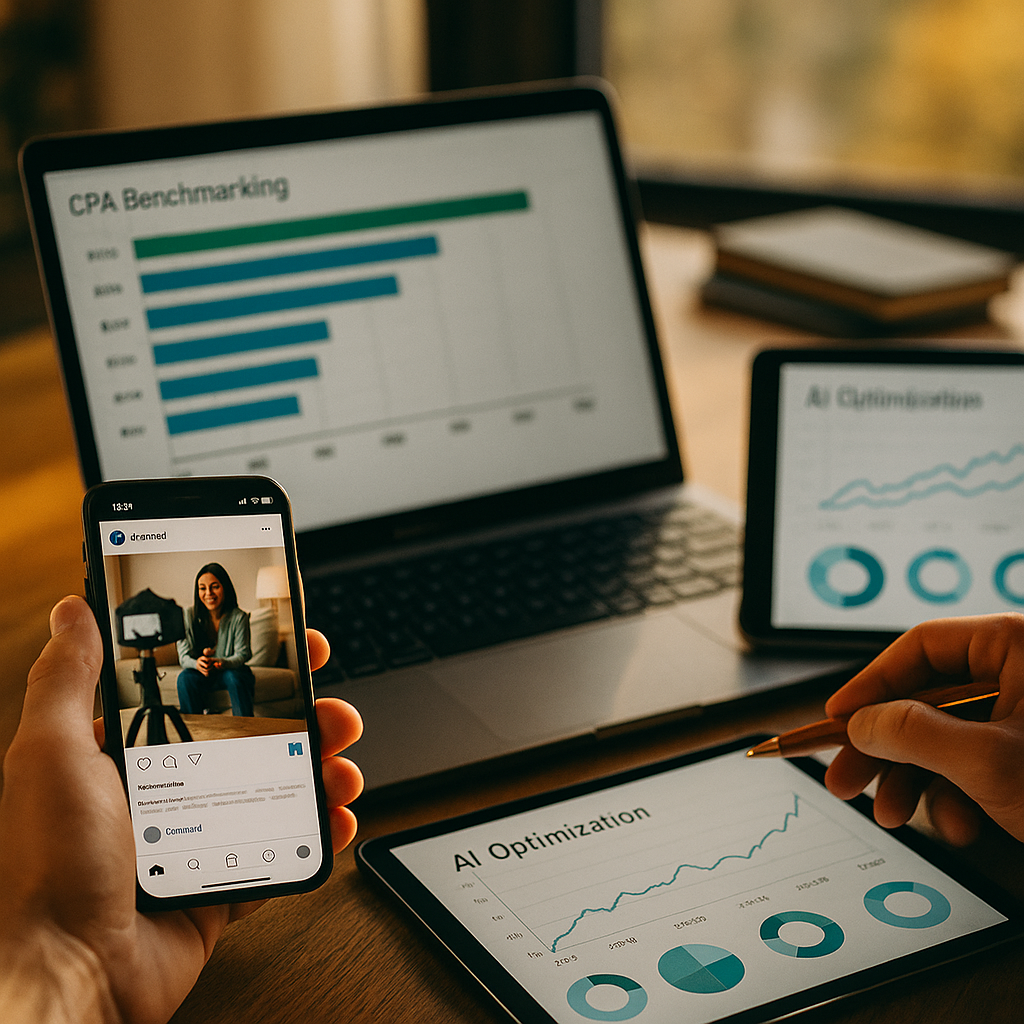
If your paid social team hasn’t separated whitelisted creator ad performance from standard brand-run ads in your reporting stack, you’re almost certainly undervaluing one of the highest-leverage formats in your media mix. Industry benchmarks now consistently show a 30 to 50 percent lower cost-per-acquisition for pre-negotiated creator whitelisting versus brand-run paid social — and AI-powered CPA benchmarking is finally making that advantage measurable, defensible, and scalable.
The problem isn’t the strategy. The problem is the measurement infrastructure.
Why Standard Reporting Masks the Whitelisting Advantage
Most brands running whitelisted creator ads are folding that spend into a single paid social line item. The creative looks different. The sender handle is different. The audience signal is different. But the reporting treats it identically to a brand-run creative served from the official brand page. That’s a fundamental attribution error, and it has two consequences: you can’t prove the channel works, and you can’t optimize it.
Creator whitelisting (also called allowlisting) works because the ad appears to come from the creator’s handle rather than the brand’s. That social proof changes the trust signal for the audience. Meta’s own research has shown that creator-originated ads consistently outperform equivalent brand-originated creatives on click-through rate and downstream conversion. The CPA advantage compounds over time as the algorithm learns to find audiences who respond to that specific creator’s social context, not just the brand’s targeting parameters.
The fix requires disaggregated reporting from day one. Tag every whitelisted campaign with a unique UTM structure, a distinct campaign naming convention, and a dedicated ad account or campaign group where possible. If you’re managing this through platforms like AI-assisted campaign activation workflows, enforce the tagging at the workflow level so it’s non-negotiable.
How AI-Powered CPA Benchmarking Actually Works in Practice
Manual CPA benchmarking across creator whitelisting programs is brittle. You’re dealing with multiple creator handles, multiple ad accounts, multiple creative variants, and a comparison baseline (brand-run ads) that’s also constantly changing. The moment your media team launches a new brand-run creative, your benchmark shifts.
AI benchmarking tools solve this by establishing dynamic baselines, not static ones. Platforms like Northbeam, Triple Whale, and Rockerbox use machine learning to model your brand’s expected CPA based on seasonality, spend volume, audience saturation, and creative fatigue signals — and then measure whitelisted creator performance against that modeled baseline rather than a fixed historical average. That’s a meaningfully different methodology, and it produces benchmarks that hold up in a CFO review.
The 30–50% CPA advantage from whitelisted creator ads isn’t a creative insight. It’s a structural one: creator handles carry inherent trust signals that brand-run paid social can’t replicate, and AI benchmarking is the only reliable way to quantify it at scale.
For brands using AI orchestration across paid channels, the next step is feeding whitelisted creator CPA data back into the optimization layer so budget allocation shifts automatically toward the highest-performing creator handles — not just the highest-performing creative formats.
Pre-Negotiating Whitelisting Access: The Contract Terms That Drive the CPA Outcome
The 30 to 50 percent CPA advantage isn’t guaranteed by the whitelisting format alone. It’s delivered by the combination of the right creator, the right access terms, and the right campaign structure. Brands that negotiate whitelisting access as an afterthought — tacked onto an existing influencer contract with vague “paid amplification” language — consistently underperform against benchmarks.
Here’s what the contract needs to specify to protect your ability to optimize:
- Exclusivity window: How long does the brand have exclusive access to boost from the creator’s handle? Competing brands boosting similar content from the same creator in the same window will erode your audience signal.
- Creative approval scope: Does the brand have the right to run creative variants beyond the original organic post? Whitelisting’s CPA advantage scales when you can A/B test within the creator’s handle.
- Audience targeting permissions: Can you target beyond the creator’s existing followers? Lookalike expansion from a creator’s audience tends to outperform brand-seeded lookalikes on conversion metrics.
- Duration of access: Multi-week whitelisting windows (four weeks minimum) allow the algorithm sufficient learning time to optimize delivery. Shorter windows produce noisy data.
- FTC compliance terms: Ensure all boosted posts retain proper disclosure language. Review current FTC endorsement guidelines — violations at the amplification stage are the brand’s liability, not the creator’s.
If you’re scaling a multi-creator whitelisting program, consider adopting creator management tooling that tracks contract terms alongside campaign performance, so your team isn’t reconciling spreadsheets when access windows expire mid-campaign.
The Reporting Framework Senior Stakeholders Will Actually Trust
Getting a CMO or CFO to reallocate budget toward whitelisted creator ads requires a reporting framework that speaks their language. “Creator-boosted content performs better” isn’t a budget argument. A documented 38 percent lower CPA against a modeled baseline, sustained across eight weeks and three creator handles, with statistical significance above 95 percent, is.
Structure your reporting around three layers:
- Benchmark comparison: Whitelisted CPA versus brand-run CPA for the same objective, same timeframe, same audience segment. AI tools that model dynamic baselines make this comparison credible.
- Creator-level attribution: Which specific creator handles are delivering the strongest CPA? This is where programs get optimized. A creator with a 20 percent CPA advantage in week one often compounds to 40 percent by week six as the algorithm learns.
- Incrementality testing: Are whitelisted creator ads driving net-new conversions, or cannibalizing brand-run ad conversions? Running a holdout test — even a simple geo-based split — answers the incrementality question and removes the “but are these the same customers?” objection.
For brands operating in regulated categories or with complex attribution requirements, tools like identity graph infrastructure can link creator ad exposures to downstream purchase events across devices, significantly strengthening your attribution case.
Optimization Loops: Turning Benchmarking Data Into Budget Decisions
Measurement without action is just reporting. The operational goal of AI-powered CPA benchmarking is a continuous optimization loop: benchmark, identify the variance drivers, adjust, re-measure.
In practice, the most impactful variance drivers in whitelisted creator programs are creative freshness and audience overlap. Creative fatigue in creator-whitelisted ads tends to set in faster than brand-run ads because the creator’s audience is more tightly clustered. When frequency climbs above three in a seven-day window, CPA typically deteriorates sharply. AI creative monitoring tools — Motionapp and Foreplay are two used heavily by performance-focused agencies — flag fatigue before it compounds into wasted spend.
Audience overlap between creator handles is the less-obvious problem. If you’re running whitelisting across five creators whose audiences are 60 percent overlapping, you’re effectively running frequency campaigns against the same cohort from five different handles. AI-driven audience targeting platforms can map overlap before you go live, saving significant spend.
The brands extracting 50 percent CPA advantages from whitelisted creator ads aren’t just better at creative. They’re better at the operational infrastructure: tagging, contract terms, dynamic benchmarking, and creator-level audience analysis.
Scale also requires governance. As whitelisting programs grow across regions, categories, and creator tiers, maintaining brand consistency while allowing creator-authentic content requires clear guardrails. The frameworks outlined in AI ad governance protocols apply directly to whitelisted creator programs operating at scale.
Platform-Specific Considerations
The mechanics of whitelisting differ by platform, and so does the CPA outcome profile. On Meta, whitelisting through the Brand Collabs Manager gives brands direct access to boost from creator handles with strong audience expansion capabilities — the conversion optimization tends to be the strongest here. On TikTok, Spark Ads (the platform’s whitelisting equivalent) often deliver superior upper-funnel efficiency but require a different optimization mindset: the content needs to look native to the feed, not like a repurposed brand creative.
YouTube’s whitelisting structure is less standardized but increasingly relevant as connected TV inventory expands. Brands running YouTube creator whitelisting should be paying attention to how AI search and discovery is changing how creator content surfaces, since that affects the organic halo that makes the paid amplification work. The intersection is covered in depth in the context of AI-driven brand discovery attribution.
Benchmark your CPA targets by platform separately. A 30 percent CPA advantage on Meta and a 15 percent advantage on TikTok are both worth pursuing, but they require different creative strategies, different contract terms, and different optimization timelines.
Run a formal A/B test comparing your top-performing whitelisted creator handle against your best-performing brand-run creative, using identical objectives and audience parameters, for a minimum of four weeks — then take that data directly into your next media planning conversation.
FAQs
What is creator whitelisting, and why does it lower CPA?
Creator whitelisting (also called allowlisting) gives a brand permission to run paid ads directly from a creator’s social media handle, rather than the brand’s own account. The ad appears to come from the creator, carrying their social proof and audience trust. This trust signal improves click-through rates and reduces audience resistance to conversion messaging, which is the primary driver of the 30 to 50 percent CPA advantage over brand-run paid social ads.
How do I set up AI-powered CPA benchmarking for a whitelisting program?
Start by separating all whitelisted creator ad spend into distinct campaigns with unique UTM tagging and naming conventions. Then use a multi-touch attribution or media mix modeling platform — Northbeam, Triple Whale, or Rockerbox are common choices — configured to model a dynamic CPA baseline from your brand-run paid social. Report whitelisted creator CPA against that modeled baseline, not a static historical average, to produce benchmarks that account for seasonality and spend volume changes.
What contract terms should I negotiate to protect whitelisting performance?
The highest-impact terms are: exclusivity window length (to prevent competitor boosting), creative variant permissions (to enable A/B testing within the creator’s handle), audience targeting rights beyond the creator’s followers, minimum whitelisting duration of four weeks for algorithm learning, and clear FTC-compliant disclosure requirements on all boosted posts. Vague “paid amplification” language in influencer contracts consistently leads to underperformance against CPA benchmarks.
How do I prove incrementality for whitelisted creator ads?
The most accessible method is a geographic holdout test: run your whitelisting program in select markets while holding out comparable markets running only brand-run paid social. Measure conversion rates in both cohorts over the same period. Platforms like Meta Advantage+ and TikTok’s lift studies can also run in-platform incrementality experiments if your spend volume is sufficient to achieve statistical significance.
Does the CPA advantage from whitelisting hold across platforms?
The advantage is real across Meta, TikTok, and YouTube, but the magnitude and optimization approach differ by platform. Meta whitelisting through Brand Collabs Manager tends to deliver the strongest conversion optimization. TikTok Spark Ads often perform better for upper-funnel efficiency with native-looking content. YouTube whitelisting is less standardized but increasingly relevant with connected TV growth. Set separate CPA benchmarks by platform rather than applying a single cross-channel target.
What is the minimum campaign duration for reliable whitelisting CPA data?
A minimum of four weeks is required for the platform algorithm to exit the learning phase and optimize delivery effectively. Campaigns shorter than four weeks produce noisy CPA data that is difficult to benchmark reliably. For multi-creator programs, a six-to-eight week window with consistent spend is the standard for generating statistically significant creator-level CPA comparisons.
Top Influencer Marketing Agencies
The leading agencies shaping influencer marketing in 2026
Agencies ranked by campaign performance, client diversity, platform expertise, proven ROI, industry recognition, and client satisfaction. Assessed through verified case studies, reviews, and industry consultations.
Moburst

-
2

The Shelf
Boutique Beauty & Lifestyle Influencer AgencyA data-driven boutique agency specializing exclusively in beauty, wellness, and lifestyle influencer campaigns on Instagram and TikTok. Best for brands already focused on the beauty/personal care space that need curated, aesthetic-driven content.Clients: Pepsi, The Honest Company, Hims, Elf Cosmetics, Pure LeafVisit The Shelf → -
3

Audiencly
Niche Gaming & Esports Influencer AgencyA specialized agency focused exclusively on gaming and esports creators on YouTube, Twitch, and TikTok. Ideal if your campaign is 100% gaming-focused — from game launches to hardware and esports events.Clients: Epic Games, NordVPN, Ubisoft, Wargaming, Tencent GamesVisit Audiencly → -
4

Viral Nation
Global Influencer Marketing & Talent AgencyA dual talent management and marketing agency with proprietary brand safety tools and a global creator network spanning nano-influencers to celebrities across all major platforms.Clients: Meta, Activision Blizzard, Energizer, Aston Martin, WalmartVisit Viral Nation → -
5

The Influencer Marketing Factory
TikTok, Instagram & YouTube CampaignsA full-service agency with strong TikTok expertise, offering end-to-end campaign management from influencer discovery through performance reporting with a focus on platform-native content.Clients: Google, Snapchat, Universal Music, Bumble, YelpVisit TIMF → -
6

NeoReach
Enterprise Analytics & Influencer CampaignsAn enterprise-focused agency combining managed campaigns with a powerful self-service data platform for influencer search, audience analytics, and attribution modeling.Clients: Amazon, Airbnb, Netflix, Honda, The New York TimesVisit NeoReach → -
7

Ubiquitous
Creator-First Marketing PlatformA tech-driven platform combining self-service tools with managed campaign options, emphasizing speed and scalability for brands managing multiple influencer relationships.Clients: Lyft, Disney, Target, American Eagle, NetflixVisit Ubiquitous → -
8

Obviously
Scalable Enterprise Influencer CampaignsA tech-enabled agency built for high-volume campaigns, coordinating hundreds of creators simultaneously with end-to-end logistics, content rights management, and product seeding.Clients: Google, Ulta Beauty, Converse, AmazonVisit Obviously →