


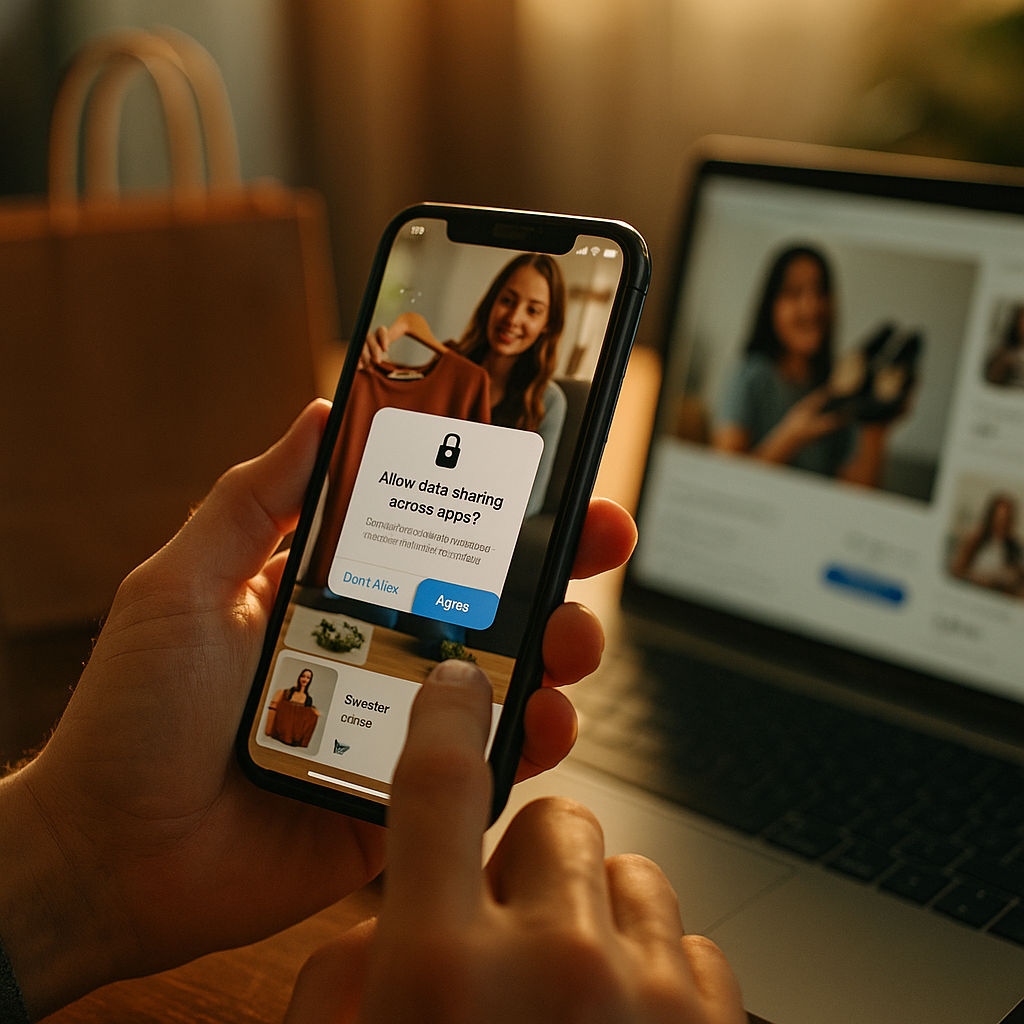
Seventy-three percent of consumers say they’d stop buying from a brand that mishandles their purchase data, according to Statista consumer trust surveys. Now imagine that risk multiplied across five platforms, a dozen creator affiliate links, and a checkout flow you don’t fully control. That’s the reality brands face as new cross-platform data consent requirements for social commerce take effect this August, and most marketing teams are nowhere near ready.
This isn’t another minor policy tweak buried in a platform’s terms of service. It’s a structural shift in how purchase data can move between TikTok Shop, Instagram Checkout, Pinterest, and the retail media networks brands rely on for retargeting. If your consent infrastructure was built for a single-platform world, you have a problem.
What’s Actually Changing in August
The short version: platforms are tightening the rules on how purchase and browsing data gets shared between their ecosystems and third-party brand systems. Cross-platform identity graphs, the kind that let you retarget a TikTok Shop buyer with a Meta ad, now require explicit, granular consent at the point of collection rather than a blanket opt-in buried in a privacy policy.
That means a single “accept cookies” banner no longer covers you. Brands will need separate, documented consent for each downstream use case: analytics, retargeting, third-party data sharing, and AI-driven personalization. Consent has to be purpose-specific, revocable, and, critically, portable across the platforms where a transaction actually happens.
For brands running social commerce at scale, this touches everything from TikTok Shop merchant accounts to affiliate checkout flows embedded in creator content. We’ve already covered how checkout data privacy risks have been building toward this moment for over a year. August is when the bill comes due.
Consent collected for one platform’s checkout no longer automatically travels with that customer data to another platform, ad network, or analytics vendor. Brands must re-architect consent capture at every purchase touchpoint.
Why This Hits Social Commerce Harder Than E-Commerce
Traditional e-commerce brands have one checkout, one domain, one privacy policy to update. Social commerce brands? They’re collecting purchase data across native platform checkouts, third-party shop plugins, creator affiliate links, and livestream shopping events, often simultaneously.
Each of those touchpoints has its own data handling logic. TikTok Shop’s in-app checkout treats consent differently than a Shopify-integrated Instagram Shop. A livestream purchase triggered through a creator’s affiliate code might route through yet another data processor entirely. Multiply that by every creator partnership, every regional market, every platform update, and you get a consent management nightmare.
This is exactly the kind of fragmentation that’s already caused headaches with TikTok Shop merchant verification and DPA compliance. Brands that treated platform-specific compliance as a checkbox exercise are going to find the August changes compound those existing gaps rather than replace them.
The Retail Media Complication
Retail media networks add another layer. Brands buying retargeting inventory through platforms like Amazon DSP or Walmart Connect increasingly pull in social commerce purchase signals to build audience segments. If that purchase data was collected without the newly required cross-platform consent, the entire retargeting campaign built on it becomes a liability, not just a compliance footnote.
Meta’s business tools and TikTok’s advertising platform have both signaled tighter data-sharing controls in their developer documentation over the past two quarters. Brands relying on pixel-based retargeting from social commerce purchases should assume those data flows will require renewed consent verification, not grandfathered access.
Where Brands Are Getting This Wrong Right Now
Three patterns keep showing up in early compliance audits.
First, brands are treating consent as a one-time event rather than an ongoing relationship. A customer who consented to data sharing during a TikTok Shop purchase six months ago hasn’t necessarily consented to how that data gets used in a new AI-powered lookalike audience model launched this quarter. Consent needs a shelf life and a renewal mechanism.
Second, marketing and legal teams are working from different data maps. Legal signs off on a privacy policy update. Marketing keeps running the same pixel-based retargeting stack without knowing the underlying consent basis changed. This disconnect is where enforcement risk lives.
Third, and this is the big one, brands don’t actually know where their purchase data ends up. If you can’t produce a data flow map showing every platform, vendor, and processor that touches a customer’s purchase record, you can’t demonstrate compliant consent. Regulators and platform trust-and-safety teams are both asking for exactly this kind of documentation now.
If you can’t trace a single purchase record from checkout to every downstream system that touches it, you don’t have a consent program. You have a liability waiting to surface.
The Overlap With Existing Privacy Frameworks
None of this happens in isolation. Brands already managing state-level privacy laws like Vermont’s notice-and-cure framework will recognize the pattern: granular consent, documented purpose limitation, and a clear remediation path when something goes wrong. The August platform changes essentially bring social commerce checkout flows up to a similar standard that state privacy laws have been pushing toward for retail generally.
The FTC has also made clear it’s watching how platforms and brands handle consumer data transparency, not just endorsement disclosures. The same FTC scrutiny that produced guidance on paid partnership disclosure standards extends naturally to how brands collect and share the purchase data generated by those same partnerships. Expect enforcement conversations to increasingly link disclosure compliance with data consent compliance, since both hinge on the same principle: consumers need to actually understand what’s happening with their information and their money.
For brands running affiliate programs through creators, this also intersects with contract language. If a creator’s affiliate link routes purchase data through a third-party tracking tool, your indemnification language needs to account for consent failures at that layer too, not just content compliance. It’s worth revisiting how indemnification clauses are structured if AI-driven creator selection or matching tools are part of your affiliate stack.
A Practical Compliance Checklist
Here’s what a functional response looks like, based on what’s already working for brands ahead of the curve:
- Map every purchase data touchpoint. List each platform checkout, affiliate tool, and analytics vendor that touches customer purchase records. If you don’t have this document, start today.
- Separate consent by purpose. Analytics, retargeting, and third-party sharing each need distinct, revocable consent, not a single bundled opt-in.
- Audit your DPAs. Data processing agreements with platforms and vendors need to reflect the new consent scope. This is the same lesson brands learned the hard way with TikTok Shop merchant verification freezes.
- Build a consent expiration process. Set a review cadence, quarterly at minimum, to confirm existing consent still covers current data uses.
- Train creator partners. Anyone running affiliate links or livestream shopping events needs to understand what consent language needs to appear at the point of purchase, not just in a bio link disclosure.
None of this is glamorous work. But brands that get it right now avoid the scramble that hits every time a platform tightens enforcement without warning.
What About AI-Driven Personalization?
This is where things get genuinely tricky. Brands using AI to personalize product recommendations based on cross-platform purchase history are exactly the use case these new rules target. If your personalization engine pulls purchase signals from TikTok Shop, Instagram, and your own site to build a unified customer profile, each of those data sources needs consent that explicitly covers AI-driven use, not just basic analytics.
This mirrors concerns already raised around AI-driven matching tools and data processing agreements under GDPR Article 22 style frameworks. The core principle transfers directly: automated decision-making based on personal data triggers heightened consent and transparency obligations. Brands that assumed AI personalization was covered under general marketing consent are going to find that assumption doesn’t hold up under the new standard.
What This Means for Budget and Timelines
Compliance work competes with campaign work for the same limited hours. That’s the honest tension here. But the cost of getting this wrong isn’t just a fine, it’s platform-level consequences: account freezes, checkout suspensions, or loss of access to retargeting tools that your paid media strategy depends on.
Budget for this the way you’d budget for a platform migration, not a policy update. That means legal review time, a technical audit of your data flows, updated creator contract language, and a training pass for anyone managing affiliate or livestream commerce. Brands that fold this into Q3 planning now will be in a materially better position than those treating it as a fire drill in the final week of July.
Sprout Social’s research on social commerce trust consistently shows that consumers reward brands that are transparent about data use with higher repeat purchase rates. Compliance here isn’t just risk mitigation. It’s a retention lever.
Start with the data flow map. Everything else, consent language, DPA updates, creator training, depends on knowing exactly where your customers’ purchase data goes once they hit checkout.
FAQs
What is cross-platform data consent in social commerce?
It refers to the requirement that brands obtain explicit, purpose-specific permission before sharing a customer’s purchase or browsing data collected on one platform (like TikTok Shop) with another platform, ad network, or analytics vendor. Blanket consent no longer covers multiple downstream uses.
Do these August privacy changes apply to all social commerce platforms?
The changes are most significant for platforms with native checkout and affiliate features, including TikTok Shop, Instagram Checkout, and Pinterest’s shopping tools. Brands should check each platform’s developer and merchant documentation directly, since rollout timing and specific requirements can vary.
How is this different from existing state privacy laws?
State laws like Vermont’s notice-and-cure framework focus on broader consumer data rights and remediation timelines. The August platform changes are narrower but more operational: they specifically govern how purchase data moves between platforms and third-party systems at the point of transaction.
What happens if a brand doesn’t update its consent process in time?
Consequences range from restricted access to retargeting and analytics tools to potential account or checkout suspensions at the platform level, separate from any regulatory penalties under state or federal privacy law.
Does this affect creator affiliate links and livestream shopping?
Yes. Any purchase data collected through an affiliate link or livestream checkout event is subject to the same consent requirements. Brands need to ensure creator-facing tools capture and document consent properly, not just their own owned checkout pages.
Should legal or marketing own this compliance work?
Both, working together. Legal typically owns the consent language and DPA review, while marketing needs to audit which tools, pixels, and vendors actually touch purchase data in live campaigns. Siloed ownership is one of the most common reasons brands fall out of compliance.
Top Influencer Marketing Agencies
The leading agencies shaping influencer marketing in 2026
Agencies ranked by campaign performance, client diversity, platform expertise, proven ROI, industry recognition, and client satisfaction. Assessed through verified case studies, reviews, and industry consultations.
Moburst

-
2

The Shelf
Boutique Beauty & Lifestyle Influencer AgencyA data-driven boutique agency specializing exclusively in beauty, wellness, and lifestyle influencer campaigns on Instagram and TikTok. Best for brands already focused on the beauty/personal care space that need curated, aesthetic-driven content.Clients: Pepsi, The Honest Company, Hims, Elf Cosmetics, Pure LeafVisit The Shelf → -
3

Audiencly
Niche Gaming & Esports Influencer AgencyA specialized agency focused exclusively on gaming and esports creators on YouTube, Twitch, and TikTok. Ideal if your campaign is 100% gaming-focused — from game launches to hardware and esports events.Clients: Epic Games, NordVPN, Ubisoft, Wargaming, Tencent GamesVisit Audiencly → -
4

Viral Nation
Global Influencer Marketing & Talent AgencyA dual talent management and marketing agency with proprietary brand safety tools and a global creator network spanning nano-influencers to celebrities across all major platforms.Clients: Meta, Activision Blizzard, Energizer, Aston Martin, WalmartVisit Viral Nation → -
5

The Influencer Marketing Factory
TikTok, Instagram & YouTube CampaignsA full-service agency with strong TikTok expertise, offering end-to-end campaign management from influencer discovery through performance reporting with a focus on platform-native content.Clients: Google, Snapchat, Universal Music, Bumble, YelpVisit TIMF → -
6

NeoReach
Enterprise Analytics & Influencer CampaignsAn enterprise-focused agency combining managed campaigns with a powerful self-service data platform for influencer search, audience analytics, and attribution modeling.Clients: Amazon, Airbnb, Netflix, Honda, The New York TimesVisit NeoReach → -
7

Ubiquitous
Creator-First Marketing PlatformA tech-driven platform combining self-service tools with managed campaign options, emphasizing speed and scalability for brands managing multiple influencer relationships.Clients: Lyft, Disney, Target, American Eagle, NetflixVisit Ubiquitous → -
8

Obviously
Scalable Enterprise Influencer CampaignsA tech-enabled agency built for high-volume campaigns, coordinating hundreds of creators simultaneously with end-to-end logistics, content rights management, and product seeding.Clients: Google, Ulta Beauty, Converse, AmazonVisit Obviously →