


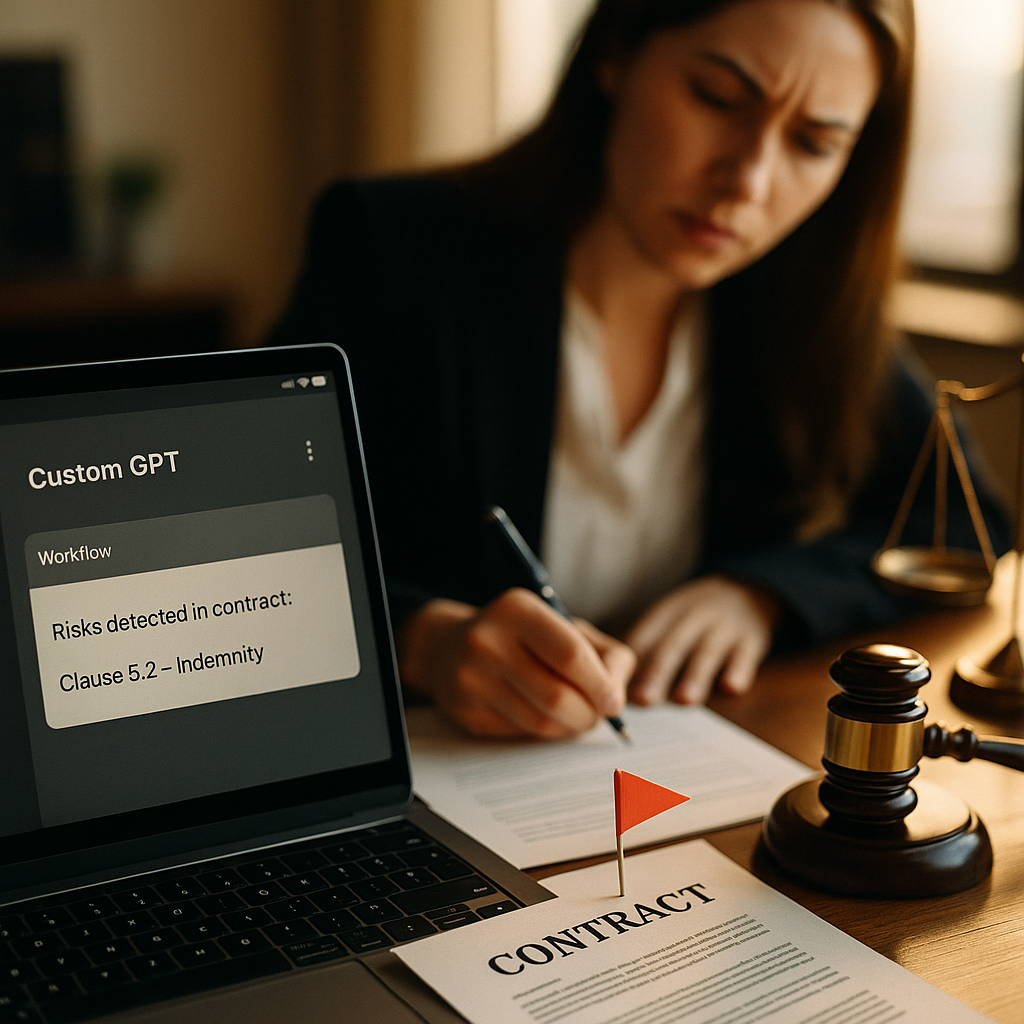
Fewer than half of brand-creator contracts get fully read before signature, let alone audited for compliance once a campaign goes live. That’s the quiet risk sitting inside most influencer programs today. Custom GPT workflows for creator contract compliance checks are gaining traction precisely because manual review can’t keep pace with volume anymore. When you’re managing two hundred creator agreements a quarter across five platforms, “we’ll catch it in review” isn’t a strategy. It’s a liability waiting for a complaint.
The Compliance Bottleneck Nobody Budgets For
Every brand marketer knows the drill. Contracts pile up in a shared drive, legal has a two week turnaround, and the campaign launch date doesn’t care about either. The creator economy has grown fast enough that contract volume outpaced legal headcount years ago, and the gap hasn’t closed. According to Statista’s creator economy tracking, the market has scaled well past what most in-house legal teams were staffed to handle when influencer budgets were a rounding error.
The result? Clauses get skimmed instead of read. Exclusivity windows overlap without anyone noticing until a competitor’s product shows up in the same creator’s feed two weeks later. Usage rights expire mid-flight while paid amplification keeps running. None of this is exotic. It’s just volume outrunning process, and it’s exactly the gap our earlier piece on how AI redlining cuts contract turnaround covers from the drafting side.
What Exactly Is a Custom GPT Workflow in This Context?
Not a chat window where someone pastes a PDF and asks “does this look okay?” That’s a party trick, not a workflow. A custom GPT workflow, done properly, is a structured pipeline built on top of a large language model that has been instructed with your specific compliance playbook: your standard clause library, your disclosure requirements, your brand’s risk tolerance, and the regulatory language you’re required to check for.
The GPT is configured (via a custom instruction set, a retrieval layer pulling from your contract templates, or both) to do four things every time a new agreement lands: extract key terms, compare them against your compliance checklist, flag deviations, and produce a structured summary a human can act on in minutes instead of hours. This isn’t fundamentally different from the logic behind AI contract redlining tools that flag risky clauses, but a custom GPT workflow is often cheaper to stand up because you’re building on infrastructure your team already has access to rather than licensing a dedicated legal tech platform.
Building the Pipeline: Five Checkpoints That Matter
A workflow without checkpoints is just an expensive way to summarize documents. Here’s what a functional compliance pass actually needs to verify on every creator contract:
- Disclosure language. Does the contract require FTC-compliant tagging (#ad, “paid partnership”) in the specific format your legal team requires, not just a vague reference to “applicable law”?
- Exclusivity conflicts. Does the exclusivity window overlap with a competing brand deal already on file for that creator?
- Usage rights scope. Does the paid media flight plan match what the contract actually licenses, or is marketing planning to boost content the contract never cleared for whitelisting?
- Payment terms. Do payout milestones align with deliverable dates, and does the schedule match how your finance team actually processes creator payments?
- Termination and morality clauses. Are these present, and do they match your current brand safety standards rather than a template from three years ago?
Payment term mismatches deserve their own flag category, since routing errors compound fast once automation enters the picture, a risk covered in more depth in our look at how AI payment agents route creator payouts.
A well-built GPT workflow doesn’t replace your legal review. It compresses a four hour first pass into fifteen minutes, so the human review that follows is faster, sharper, and focused on the clauses that actually carry risk.
The Three Clauses That Break Most Campaigns
Not every clause deserves equal attention. In practice, three areas cause the vast majority of post-launch headaches.
Disclosure ambiguity tops the list. The FTC’s endorsement guidance is specific, but contract language often isn’t, leaving creators to interpret “clearly and conspicuously” however they see fit. Usage rights scope creep comes second: a contract that licenses organic use gets treated as blanket permission for paid amplification, and nobody notices until an audit or a creator’s agent flags it. Exclusivity conflicts round out the trio, especially with mid-tier creators juggling five or six brand relationships at once across platforms like the ones covered by Meta’s business tools and TikTok’s ad platform.
A custom GPT workflow trained specifically to hunt for these three patterns catches the majority of costly errors before they ever reach a courtroom or a takedown notice.
Where Humans Still Have to Sign Off
Here’s the part vendors selling “fully automated compliance” conveniently skip. A GPT workflow is excellent at pattern matching against a known checklist. It is not excellent at judgment calls involving novel clause language, jurisdiction-specific nuance, or a creator’s agent pushing back on a term during negotiation. Those still need a lawyer, full stop.
This mirrors what we’ve seen across the broader shift toward agentic tools in influencer operations. Our reporting on how agentic AI vets creator prospects found the same pattern: automation handles volume, humans handle exceptions, and the programs that skip the human checkpoint end up with more risk exposure, not less.
There’s also an audit trail problem worth solving before you scale a GPT compliance workflow across your whole program. Regulators and internal counsel both want to know who flagged what, when, and what happened next. That’s the exact gap addressed by governance layers like the one detailed in our piece on how a governance layer adds audit trails without forcing a full CRM rebuild. Skip this step and you’ve automated the flagging but left yourself with no record of who acted on the flag.
Getting Started Without Blowing Up Your Legal Budget
You don’t need a six-figure legal tech contract to pilot this. Start smaller.
- Pull your last fifty signed creator contracts and build a checklist of the clauses that have actually caused problems, not a theoretical wish list.
- Configure a custom GPT with that checklist as its instruction set, plus your current disclosure and usage rights templates for reference.
- Run it against a batch of upcoming renewals, not live negotiations, so mistakes cost nothing.
- Have legal review the GPT’s flags against their own independent read for at least two cycles before trusting the output unsupervised.
- Track time saved per contract. If your legal team isn’t seeing at least a 50 percent reduction in first-pass review time, the instruction set needs work, not the tool.
Benchmarking your before-and-after numbers matters here. Marketing operations teams that track efficiency gains tend to justify further AI investment faster, a pattern HubSpot’s marketing research has documented across adjacent automation use cases, and one Sprout Social’s industry benchmarking echoes in creator-specific workflows.
Pilot the workflow on your next renewal batch, measure the hours it saves your legal team, and only then decide whether it’s worth building into your standard creator onboarding process. Compliance automation that isn’t tested against real contracts first is just a slower way to introduce new risk.
FAQs
What is a custom GPT workflow for creator contract compliance?
It’s a structured process built on a large language model, configured with your brand’s specific compliance checklist, contract templates, and disclosure requirements, that automatically extracts key terms from creator contracts and flags deviations for human review.
Can a custom GPT workflow replace legal review of creator contracts?
No. It compresses the first pass review from hours to minutes but should not make final compliance decisions. Legal review remains necessary for novel clauses, jurisdiction-specific issues, and negotiation nuance.
What clauses should a compliance workflow prioritize?
Disclosure language matching FTC guidance, exclusivity window conflicts across brand deals, usage rights scope for paid amplification, payment term alignment, and termination or morality clauses are the highest-risk areas to flag first.
How much time can automated compliance checks save?
Teams running a well-configured workflow typically report cutting first-pass contract review time by half or more, though actual savings depend on how specific and current the instruction set is.
Is it expensive to build a custom GPT workflow for contract compliance?
Not necessarily. Many teams start by configuring existing large language model tools with an internal checklist and template library rather than purchasing a dedicated legal tech platform, keeping initial costs low during the pilot phase.
FAQs
What is a custom GPT workflow for creator contract compliance?
It’s a structured process built on a large language model, configured with your brand’s specific compliance checklist, contract templates, and disclosure requirements, that automatically extracts key terms from creator contracts and flags deviations for human review.
Can a custom GPT workflow replace legal review of creator contracts?
No. It compresses the first pass review from hours to minutes but should not make final compliance decisions. Legal review remains necessary for novel clauses, jurisdiction-specific issues, and negotiation nuance.
What clauses should a compliance workflow prioritize?
Disclosure language matching FTC guidance, exclusivity window conflicts across brand deals, usage rights scope for paid amplification, payment term alignment, and termination or morality clauses are the highest-risk areas to flag first.
How much time can automated compliance checks save?
Teams running a well-configured workflow typically report cutting first-pass contract review time by half or more, though actual savings depend on how specific and current the instruction set is.
Is it expensive to build a custom GPT workflow for contract compliance?
Not necessarily. Many teams start by configuring existing large language model tools with an internal checklist and template library rather than purchasing a dedicated legal tech platform, keeping initial costs low during the pilot phase.
Top Influencer Marketing Agencies
The leading agencies shaping influencer marketing in 2026
Agencies ranked by campaign performance, client diversity, platform expertise, proven ROI, industry recognition, and client satisfaction. Assessed through verified case studies, reviews, and industry consultations.
Moburst

-
2

The Shelf
Boutique Beauty & Lifestyle Influencer AgencyA data-driven boutique agency specializing exclusively in beauty, wellness, and lifestyle influencer campaigns on Instagram and TikTok. Best for brands already focused on the beauty/personal care space that need curated, aesthetic-driven content.Clients: Pepsi, The Honest Company, Hims, Elf Cosmetics, Pure LeafVisit The Shelf → -
3

Audiencly
Niche Gaming & Esports Influencer AgencyA specialized agency focused exclusively on gaming and esports creators on YouTube, Twitch, and TikTok. Ideal if your campaign is 100% gaming-focused — from game launches to hardware and esports events.Clients: Epic Games, NordVPN, Ubisoft, Wargaming, Tencent GamesVisit Audiencly → -
4

Viral Nation
Global Influencer Marketing & Talent AgencyA dual talent management and marketing agency with proprietary brand safety tools and a global creator network spanning nano-influencers to celebrities across all major platforms.Clients: Meta, Activision Blizzard, Energizer, Aston Martin, WalmartVisit Viral Nation → -
5

The Influencer Marketing Factory
TikTok, Instagram & YouTube CampaignsA full-service agency with strong TikTok expertise, offering end-to-end campaign management from influencer discovery through performance reporting with a focus on platform-native content.Clients: Google, Snapchat, Universal Music, Bumble, YelpVisit TIMF → -
6

NeoReach
Enterprise Analytics & Influencer CampaignsAn enterprise-focused agency combining managed campaigns with a powerful self-service data platform for influencer search, audience analytics, and attribution modeling.Clients: Amazon, Airbnb, Netflix, Honda, The New York TimesVisit NeoReach → -
7

Ubiquitous
Creator-First Marketing PlatformA tech-driven platform combining self-service tools with managed campaign options, emphasizing speed and scalability for brands managing multiple influencer relationships.Clients: Lyft, Disney, Target, American Eagle, NetflixVisit Ubiquitous → -
8

Obviously
Scalable Enterprise Influencer CampaignsA tech-enabled agency built for high-volume campaigns, coordinating hundreds of creators simultaneously with end-to-end logistics, content rights management, and product seeding.Clients: Google, Ulta Beauty, Converse, AmazonVisit Obviously →