


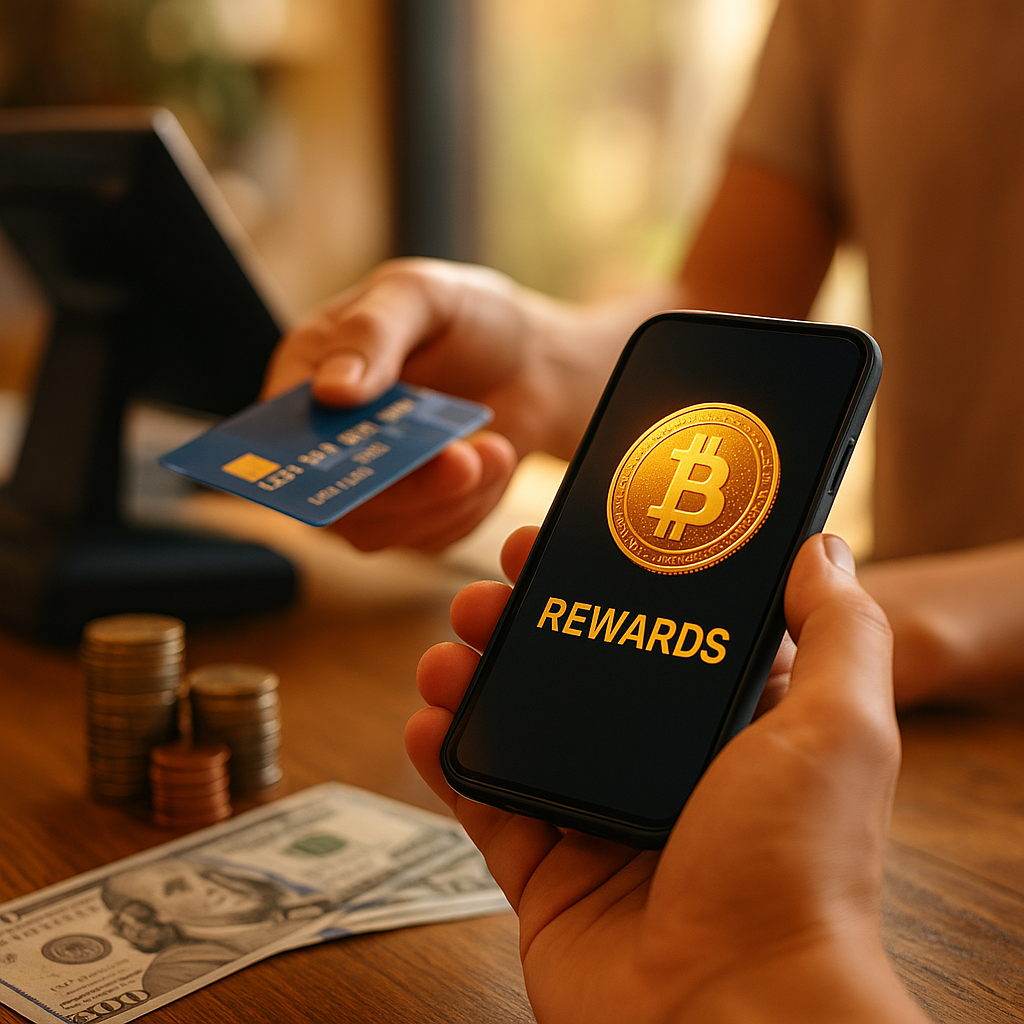
Mid-market retailers face rising customer acquisition costs and shrinking attention spans, making retention a board-level priority. This review of blockchain-based loyalty platforms explains what they do, how they differ from traditional points programs, and which capabilities matter most in 2025. You’ll see practical evaluation criteria, integration realities, and rollout advice so you can choose confidently—before competitors lock in your best customers.
Blockchain loyalty programs: what they are and why mid-market retailers care
A blockchain loyalty program uses a shared ledger to record loyalty value—typically as tokens, points, or verifiable credits—so customers can earn, redeem, and sometimes transfer benefits with clearer rules and auditable history. For mid-market retailers, the appeal is less about novelty and more about fixing common pain points: fragmented customer identities, limited partner interoperability, and opaque liabilities tied to unused points.
In practice, a blockchain-based program usually includes:
- Tokenized rewards that represent points, store credit, or status benefits with programmable rules (expiry, redemption constraints, tier upgrades).
- Customer-controlled identity signals (often wallet-based) that can reduce reliance on email/phone as the only identifier.
- Partner participation where multiple brands can issue or accept rewards without complex bilateral integrations.
- Auditability for issuance and redemption events, which supports reconciliation and reduces disputes across partners.
Mid-market retailers care because they need enterprise-grade outcomes—repeat purchases, higher lifetime value, lower churn—without enterprise-only budgets. Blockchain platforms promise faster partner onboarding and more flexible loyalty economics, but only when the program is designed around measurable retention goals and operational constraints.
Tokenized rewards and interoperability: the promise and the reality
Interoperability is the headline feature. Traditional loyalty systems are typically closed loops: points earned in one brand rarely work elsewhere, and partners require custom settlement. Tokenized rewards can enable a governed ecosystem where brands join under shared rules, customers experience “one wallet,” and the program scales without reinventing the rails each time.
What works well in 2025:
- Controlled interoperability: retailers allow redemption at selected partners with predefined exchange rates, avoiding uncontrolled value leakage.
- Programmable promotions: rewards can be issued conditionally (e.g., “double rewards on first purchase in a new category”) with automated enforcement.
- Unified customer experience: wallet-based identification can reduce friction across online and in-store touchpoints when paired with POS and eCommerce integrations.
What often disappoints:
- “Universal token” expectations: broad, open-market tradability can create accounting complexity and brand risk. Mid-market brands typically need strong guardrails.
- Partner mismatch: interoperability only delivers value if partners share customer overlap and redemption use cases. A technically integrated partner ecosystem that customers don’t use still fails.
- UX friction: if redemption requires multiple steps, wallet downloads, or confusing custody choices, adoption drops. The best platforms abstract blockchain details and keep the experience familiar.
A practical way to evaluate interoperability is to ask: Can we add a partner in weeks, with predictable settlement, while keeping customer redemption simple? If the answer is unclear, the “interoperability” claim is mostly marketing.
Customer data privacy and security: meeting trust and compliance expectations
Loyalty programs touch personal data, purchase history, and often payment-adjacent workflows. In 2025, shoppers are more sensitive to how data is used, and regulators expect demonstrable controls. Blockchain does not automatically make a program private or compliant; design decisions do.
Strong privacy and security patterns you should look for:
- Minimal on-chain personal data: avoid storing names, emails, phone numbers, or raw transaction details on a public ledger. The platform should use off-chain storage with strong access controls and keep only necessary references on-chain.
- Role-based access and audit logs for staff actions (tier overrides, manual adjustments, refunds, fraud reviews).
- Key management options: customers may use custodial wallets (platform-managed) for simplicity or self-custody for control. Mid-market retailers typically need a mainstream, low-friction custodial option with clear recovery flows.
- Fraud prevention: rate limiting, anomaly detection, device and identity signals, and controls for return fraud and synthetic accounts.
Trust is a retention lever. Retailers should be able to explain, in plain language, how the program protects customers and what data is shared with partners. A platform that supports privacy-by-design—while still enabling personalization through consented data—will outperform one that relies on broad data collection.
Integration with POS and eCommerce: what mid-market teams must validate
The biggest determinant of success is not the chain you choose—it’s whether the loyalty platform integrates cleanly with your selling channels and operational stack. Mid-market retailers often run a mix of POS, eCommerce, OMS, ERP, and CDP tools, and the loyalty system must work across all of them without creating reconciliation headaches.
Evaluate integrations through these questions:
- POS compatibility: Is there a certified integration for your POS, or will you rely on custom middleware? Can associates earn/redeem in a single screen without slowing checkout?
- Real-time earning and redemption: Can points apply immediately at checkout and online cart, including partial redemptions and returns?
- Returns and exchanges: How does the platform reverse rewards, handle restocking, and prevent “earn-and-return” abuse?
- Customer identity resolution: How does it match in-store and online customers—phone/email, QR code, wallet, or membership ID—and what happens when data is missing?
- APIs and webhooks: Are events emitted reliably (issuance, redemption, expiry, adjustments) for your data warehouse and analytics?
- Reporting and finance: Can finance track outstanding liability, breakage, and partner settlement in a way auditors can understand?
Also validate operational workflows. Store managers need simple tools to resolve edge cases. Customer service needs a clear “single source of truth” view. If your team can’t support exceptions, customers feel it immediately—and loyalty programs are judged at the worst moment, not the average moment.
Total cost of ownership and ROI: how to model value beyond hype
Mid-market retailers win when they model loyalty as a profit engine rather than a marketing perk. Blockchain-based platforms can reduce some costs (partner settlement complexity, manual reconciliation) while introducing others (wallet operations, compliance reviews, smart-contract audits, and customer support for new experiences). You should compare platforms on total cost of ownership (TCO) and measurable ROI drivers.
Core cost components to price explicitly:
- Platform fees: SaaS subscription, active member fees, or transaction-based pricing for issuance and redemption.
- Implementation: POS/eCommerce integration, data migration, and training. Ask for a fixed-scope plan with acceptance criteria.
- Ongoing operations: customer support, fraud monitoring, partner onboarding, and periodic rule changes.
- Compliance and security: penetration tests, smart-contract audits where applicable, and vendor risk management.
ROI typically comes from a few levers:
- Higher repeat purchase rate through better personalization, tiering, and timely incentives.
- Increased average order value via redemption thresholds, bundles, and category-based accelerators.
- Lower churn through status benefits and cross-brand utility when partners make sense.
- Lower promotional waste when rewards are targeted and rules are enforced automatically.
A credible business case includes a baseline (current retention and redemption rates), a pilot forecast, and a rollback plan. If a vendor can’t help you define success metrics—member activation, earn-to-redeem time, redemption rate by segment, and incremental margin—treat the ROI story as incomplete.
Vendor evaluation checklist: choosing the right loyalty platform in 2025
Mid-market retailers rarely need the most complex architecture; they need the most reliable outcomes. Use a structured checklist to separate mature platforms from experiments.
1) Customer experience
- Frictionless signup (store, web, app) with clear value proposition.
- Wallet optionality: custodial by default, self-custody supported for advanced users.
- Fast redemption with transparent balances and expiry rules.
2) Governance and controls
- Clear program rules, partner eligibility, and settlement terms.
- Ability to restrict transfers, cap redemptions, and adjust exchange rates.
- Strong admin tools with approvals and audit trails.
3) Technology and reliability
- Documented APIs, webhooks, and sandbox environment.
- Resilient uptime posture, monitoring, and incident response processes.
- Security posture: encryption, access controls, vulnerability management, and third-party audits.
4) Data and analytics
- Event-level exports to your warehouse and clean schema definitions.
- Attribution support to measure incremental lift, not just correlation.
- Segment-level reporting for earn, burn, breakage, and liability.
5) Partner ecosystem fit
- Partners that match your customers’ needs and geography.
- Proven ability to onboard partners quickly with minimal custom work.
- Defined dispute resolution and reconciliation workflows.
Finally, request references from retailers of similar size and complexity. Ask what went wrong during rollout, how long integration really took, and how customer service handled edge cases. That operational truth is where platform differences become obvious.
FAQs
Are blockchain-based loyalty platforms only for retailers with crypto-savvy customers?
No. The strongest platforms in 2025 hide blockchain complexity behind familiar experiences (accounts, QR codes, app balances). Customers shouldn’t need to understand tokens to earn and redeem rewards. Crypto-savvy options can exist, but mainstream usability should be the default.
Do tokenized rewards create accounting or liability complications?
They can. You still need clear rules for issuance, expiry, redemption, and breakage, plus reporting that supports your finance team’s liability tracking. Look for platforms that provide auditable ledgers, configurable expiry policies, and finance-ready exports.
Can a blockchain loyalty program work without sharing customer data with partners?
Yes. Many designs allow value transfer or partner redemption without exposing personal data. The platform should support privacy-by-design: minimal on-chain data, controlled access, and explicit consent flows for any cross-brand personalization.
How long does implementation typically take for a mid-market retailer?
Timing depends on POS and eCommerce complexity, but the critical path is integration, testing (including returns), and training. You should require a phased rollout plan with a pilot store group, success metrics, and a clear path to scale.
What should we pilot first to reduce risk?
Pilot a limited set of earn-and-redeem rules, one or two high-fit partners (if applicable), and a single identity method that works online and in-store. Measure activation, redemption rate, and incremental margin before expanding perks, tiers, or interoperability.
How do we avoid wallet friction and customer support overload?
Choose a platform with custodial wallets, simple recovery flows, and associate-friendly tools at the register. Provide clear customer messaging on balances, expiry, and redemption steps. Also ensure customer service has a unified view of transactions and adjustments.
Blockchain-based loyalty platforms can deliver real retention gains for mid-market retailers when they prioritize customer experience, governed interoperability, and tight integration with POS and eCommerce. In 2025, the best approach is practical: keep blockchain invisible to shoppers, protect data by design, and pilot against clear metrics. Choose a vendor that proves operational reliability, not just technical ambition.
Top Influencer Marketing Agencies
The leading agencies shaping influencer marketing in 2026
Agencies ranked by campaign performance, client diversity, platform expertise, proven ROI, industry recognition, and client satisfaction. Assessed through verified case studies, reviews, and industry consultations.
Moburst

-
2

The Shelf
Boutique Beauty & Lifestyle Influencer AgencyA data-driven boutique agency specializing exclusively in beauty, wellness, and lifestyle influencer campaigns on Instagram and TikTok. Best for brands already focused on the beauty/personal care space that need curated, aesthetic-driven content.Clients: Pepsi, The Honest Company, Hims, Elf Cosmetics, Pure LeafVisit The Shelf → -
3

Audiencly
Niche Gaming & Esports Influencer AgencyA specialized agency focused exclusively on gaming and esports creators on YouTube, Twitch, and TikTok. Ideal if your campaign is 100% gaming-focused — from game launches to hardware and esports events.Clients: Epic Games, NordVPN, Ubisoft, Wargaming, Tencent GamesVisit Audiencly → -
4

Viral Nation
Global Influencer Marketing & Talent AgencyA dual talent management and marketing agency with proprietary brand safety tools and a global creator network spanning nano-influencers to celebrities across all major platforms.Clients: Meta, Activision Blizzard, Energizer, Aston Martin, WalmartVisit Viral Nation → -
5

The Influencer Marketing Factory
TikTok, Instagram & YouTube CampaignsA full-service agency with strong TikTok expertise, offering end-to-end campaign management from influencer discovery through performance reporting with a focus on platform-native content.Clients: Google, Snapchat, Universal Music, Bumble, YelpVisit TIMF → -
6

NeoReach
Enterprise Analytics & Influencer CampaignsAn enterprise-focused agency combining managed campaigns with a powerful self-service data platform for influencer search, audience analytics, and attribution modeling.Clients: Amazon, Airbnb, Netflix, Honda, The New York TimesVisit NeoReach → -
7

Ubiquitous
Creator-First Marketing PlatformA tech-driven platform combining self-service tools with managed campaign options, emphasizing speed and scalability for brands managing multiple influencer relationships.Clients: Lyft, Disney, Target, American Eagle, NetflixVisit Ubiquitous → -
8

Obviously
Scalable Enterprise Influencer CampaignsA tech-enabled agency built for high-volume campaigns, coordinating hundreds of creators simultaneously with end-to-end logistics, content rights management, and product seeding.Clients: Google, Ulta Beauty, Converse, AmazonVisit Obviously →