


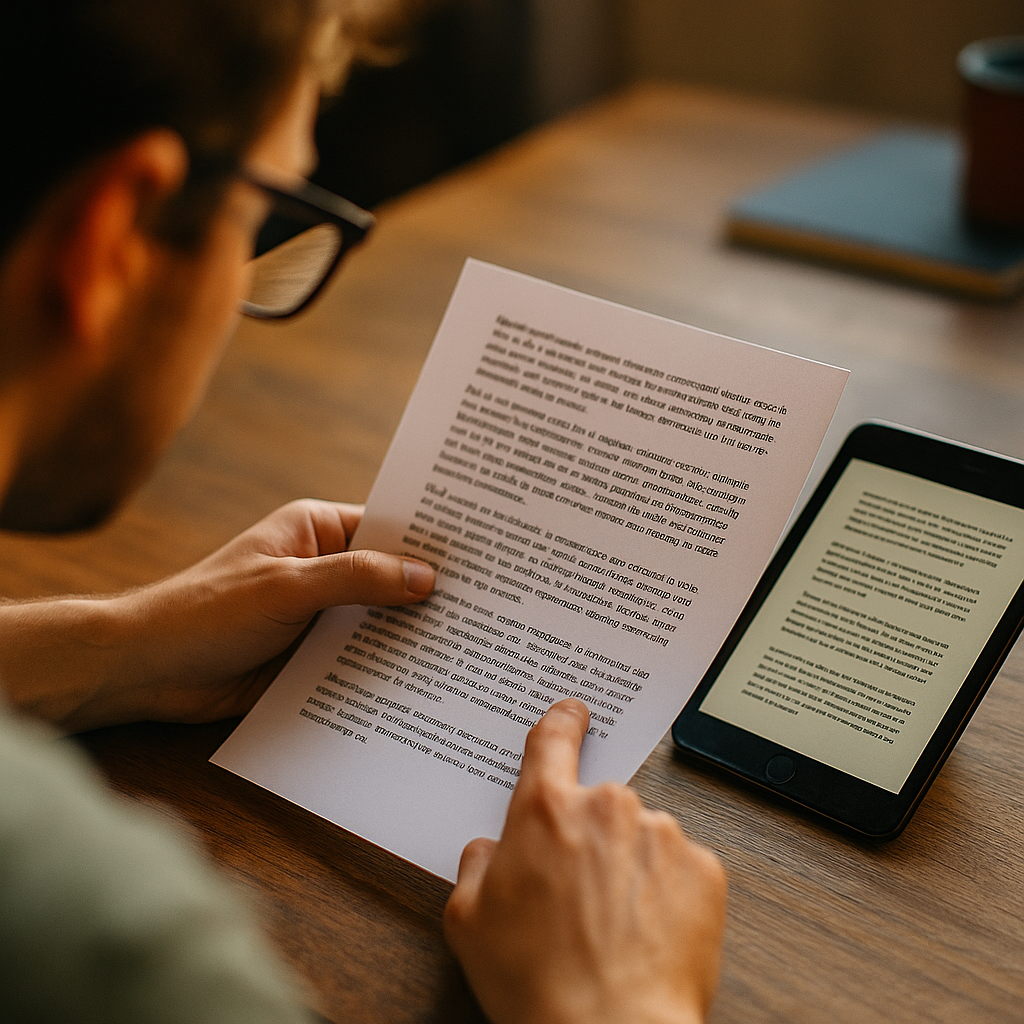
Designing for Neuro Diversity is no longer a niche concern in 2025; it is a practical path to clearer communication for everyone. High-legibility formats reduce cognitive friction, support different reading strategies, and make content easier to scan, understand, and trust. This article breaks down what to change, why it works, and how to validate decisions with real users—so your next design ships stronger than your last.
Neurodiversity-inclusive design: what “high legibility” really means
High legibility is often confused with “large text” or “simple layouts.” In practice, it is the measurable ease with which readers can decode and comprehend information under real conditions: different devices, lighting, stress levels, attention states, and reading skills.
Neurodiversity-inclusive design recognizes that audiences include people with dyslexia, ADHD, autism, dyspraxia, dyscalculia, traumatic brain injury, low vision, migraine sensitivity, and more—often in combinations. High-legibility formatting reduces the “cost” of reading by limiting avoidable complexity in typography, layout, language, and interaction patterns.
Helpful framing: Aim for “multiple easy ways to read” rather than “one best way.” Your design should support scanning, deep reading, and re-orientation after distraction. If your content still works after an interruption, it is more likely to work for diverse readers.
What to measure: comprehension accuracy, time to find key details, error rate (e.g., form mistakes), abandonment rate, and subjective effort (“How hard was this to read?”). These outcomes matter more than aesthetic preference.
Legible typography for dyslexia and beyond: type choices that reduce decoding effort
Typography can either smooth decoding or add constant friction. The goal is stable letterforms, predictable spacing, and sufficient size and contrast without visual harshness.
- Font selection: Choose a highly readable sans-serif or a well-crafted serif designed for body text on screens. Prioritize distinct letterforms (clear difference between “I/l/1” and “O/0”), open counters, and consistent stroke contrast. Avoid decorative faces for paragraphs.
- Font size: Default body text around 16–20px on web interfaces, with user-controlled scaling. Many readers benefit from larger default sizes, but forcing oversized text can increase scrolling and lose context. Offer zoom and responsive reflow.
- Line height: Use 1.4–1.7 for body text to prevent line skipping and crowding. Tighter lines can increase errors for many dyslexic readers; overly loose lines can make paragraphs feel disconnected.
- Line length: Keep comfortable measures, roughly 45–75 characters per line for body copy. Extremely wide lines raise tracking demands; very narrow columns can fragment sentences.
- Letter and word spacing: Avoid tight tracking. Moderate spacing can help some readers, but too much spacing can reduce word shape recognition. Use defaults, then validate with user testing rather than relying on myths.
- Text styling: Prefer bold for emphasis and reserve italics for short phrases. Large italic blocks reduce legibility for many readers. Avoid underlining in body text unless it is a link.
- Alignment: Left-align paragraphs. Fully justified text creates uneven spacing (“rivers”) that increases scanning difficulty.
Follow-up question readers often ask: “Should I use a dyslexia-specific font?” Sometimes it helps, sometimes it does not. Many users do fine with mainstream screen-optimized fonts, and some strongly prefer their own settings. The more robust approach is to ensure your design supports user preferences: zoom, spacing adjustments, and readable defaults.
Accessible color contrast and visual stress: designing for comfort, not just compliance
Color choices affect more than accessibility checklists. For neurodivergent readers, harsh contrast, glare, and busy backgrounds can trigger visual stress, migraines, or rapid fatigue—even when contrast ratios technically pass.
- Contrast: Meet recognized contrast standards for text, but also watch for “vibrating” color pairs (e.g., saturated red on saturated blue) that can cause discomfort. Dark gray on off-white often reads more comfortably than pure black on pure white for long passages.
- Backgrounds: Use solid, calm backgrounds behind text. Avoid patterned images, gradients with sharp transitions, and video backgrounds under paragraphs.
- Color meaning: Never rely on color alone to convey status (errors, required fields, categories). Pair color with text labels and icons so the message survives different perceptual profiles.
- Link styling: Make links clearly identifiable without forcing users to infer interactivity. Underline links or use a highly consistent link style; ensure hover/focus states are obvious.
- Dark mode: Offer it, but do not assume it is universally better. Some readers find light text on dark backgrounds harder to read due to halation. The best practice is user choice with well-tested palettes.
Practical comfort check: Ask users to read for two minutes and then report eye strain, headache risk, or “visual buzzing.” Comfort feedback catches problems that automated tools miss.
Clear layout and cognitive load reduction: structure that supports ADHD and executive function
High-legibility formatting is also about minimizing the mental overhead of finding your place, understanding what matters, and deciding what to do next. Readers with ADHD or executive function challenges often benefit from design that makes task boundaries and priorities explicit.
- Use strong information hierarchy: Short paragraphs, descriptive headings, and consistent spacing help readers predict structure and return after interruptions.
- Chunk content: Break complex instructions into steps. Each step should start with a verb and contain one action when possible.
- Reduce competing elements: Avoid sidebars, auto-rotating carousels, and dense modules next to key content. Attention is a limited resource; treat it as such.
- Consistent navigation: Keep navigation patterns stable across pages. Unexpected UI changes create re-orientation costs that compound for many users.
- Whitespace with intent: Whitespace is not “empty.” It prevents accidental line jumping, clarifies grouping, and supports scanning.
- Progress indicators: For multi-step tasks (forms, onboarding), show progress and time expectations. Uncertainty increases drop-off.
Answering a common follow-up: “Does simplifying layout mean removing helpful detail?” No. It means putting detail where it is discoverable and not blocking the main path. Use summaries first, then optional deeper sections, so both skimmers and deep readers succeed.
Plain language and readable content design: writing that improves comprehension for diverse readers
Even perfect typography cannot rescue unclear writing. Plain language is not “dumbing down”; it is precision. It reduces working-memory load and makes meaning easier to extract, especially for readers who process language differently.
- Lead with the outcome: Start sections by telling readers what they will learn or do. This supports goal-oriented reading.
- Prefer concrete verbs: “Download the form” beats “Obtain the documentation.” Concrete actions reduce ambiguity.
- Limit sentence complexity: Use shorter sentences, but vary rhythm to avoid choppiness. Reduce nested clauses that force readers to hold multiple concepts at once.
- Define terms once: If you must use jargon, define it near first use and keep usage consistent. Switching terms (“account,” “profile,” “membership”) causes confusion.
- Use lists for procedures and criteria: Lists reduce scanning time and help readers confirm they met requirements.
- Make error messages actionable: State what happened, why it happened (if known), and how to fix it. Avoid blame and vague messages like “Invalid input.”
Content formatting that boosts legibility: Put the key phrase at the beginning of headings, keep headings specific, and avoid clever titles that hide meaning. Readers should not have to “decode” your structure before they can read your content.
User testing and standards in 2025: validating high legibility with real neurodivergent readers
EEAT-aligned design decisions rely on evidence, not assumptions. Automated accessibility checks are necessary, but they do not reveal all neurocognitive friction. To build trust and outcomes, test with the people your content serves.
- Recruit inclusively: Include participants who self-identify with dyslexia, ADHD, autism, low vision, migraine sensitivity, or other relevant profiles. Offer remote options, flexible scheduling, and clear consent language.
- Test realistic tasks: Use real scenarios: “Find the eligibility requirements,” “Complete checkout,” “Understand this policy,” “Fix this form error.” Measure success rates, time, and confidence.
- Capture qualitative signals: Note where readers lose their place, reread lines, or abandon sections. Ask “What made this harder than it needed to be?”
- Iterate in small cycles: Change one variable at a time when possible (line height, contrast, layout density) so you can attribute improvements correctly.
- Document decisions: Maintain a design rationale: what you changed, why, what evidence supported it, and how it performed. This builds organizational trust and speeds future work.
Standards and alignment: Use established accessibility guidelines as a baseline, then layer neurodiversity-informed usability testing on top. Compliance is a floor; readable experience is the goal.
Implementation tip: Provide user controls where feasible: text size, spacing, theme choice, and reduced motion preferences. When readers can tune presentation, you avoid forcing a single reading mode on everyone.
FAQs: high legibility formats for neurodiverse audiences
What is the difference between readability and legibility?
Legibility is how easily people can recognize letters and words (typography and presentation). Readability is how easily people can understand the message (language and structure). High-legibility formats support both, but they start with reducing visual decoding effort.
Do I need separate designs for different neurotypes?
Usually no. Start with flexible, high-legibility defaults and add user controls. One well-structured design can support many needs when it provides choice, predictable patterns, and clear hierarchy.
Is dark mode better for dyslexia or ADHD?
It depends. Some users experience less glare in dark mode; others find it harder to focus due to halation and reduced letter clarity. Offer both modes and ensure each is tested for contrast and comfort.
What line spacing is best for dyslexic readers?
Many do well around 1.5 line height, but there is no universal “best.” Use a comfortable default (about 1.4–1.7), avoid tight leading, and validate with user testing and preference settings.
Are animations and auto-rotating carousels harmful?
They can be. Motion can distract readers with ADHD, overload sensory processing, and reduce comprehension. Avoid auto-rotation and provide controls to pause or reduce motion.
How can I make forms more neurodiversity-friendly?
Use clear labels, examples, and inline validation; keep one concept per field; show progress for multi-step forms; write precise error messages with fixes; and avoid time pressure unless essential.
High-legibility formats succeed when they lower decoding effort, reduce visual stress, and make meaning easy to extract after interruptions. In 2025, the strongest approach combines readable typography, calm contrast, structured layouts, plain language, and user choice. Validate with neurodivergent participants and track comprehension and task success. Design for diverse readers, and your content becomes clearer, faster, and more trustworthy.
Top Influencer Marketing Agencies
The leading agencies shaping influencer marketing in 2026
Agencies ranked by campaign performance, client diversity, platform expertise, proven ROI, industry recognition, and client satisfaction. Assessed through verified case studies, reviews, and industry consultations.
Moburst

-
2

The Shelf
Boutique Beauty & Lifestyle Influencer AgencyA data-driven boutique agency specializing exclusively in beauty, wellness, and lifestyle influencer campaigns on Instagram and TikTok. Best for brands already focused on the beauty/personal care space that need curated, aesthetic-driven content.Clients: Pepsi, The Honest Company, Hims, Elf Cosmetics, Pure LeafVisit The Shelf → -
3

Audiencly
Niche Gaming & Esports Influencer AgencyA specialized agency focused exclusively on gaming and esports creators on YouTube, Twitch, and TikTok. Ideal if your campaign is 100% gaming-focused — from game launches to hardware and esports events.Clients: Epic Games, NordVPN, Ubisoft, Wargaming, Tencent GamesVisit Audiencly → -
4

Viral Nation
Global Influencer Marketing & Talent AgencyA dual talent management and marketing agency with proprietary brand safety tools and a global creator network spanning nano-influencers to celebrities across all major platforms.Clients: Meta, Activision Blizzard, Energizer, Aston Martin, WalmartVisit Viral Nation → -
5

The Influencer Marketing Factory
TikTok, Instagram & YouTube CampaignsA full-service agency with strong TikTok expertise, offering end-to-end campaign management from influencer discovery through performance reporting with a focus on platform-native content.Clients: Google, Snapchat, Universal Music, Bumble, YelpVisit TIMF → -
6

NeoReach
Enterprise Analytics & Influencer CampaignsAn enterprise-focused agency combining managed campaigns with a powerful self-service data platform for influencer search, audience analytics, and attribution modeling.Clients: Amazon, Airbnb, Netflix, Honda, The New York TimesVisit NeoReach → -
7

Ubiquitous
Creator-First Marketing PlatformA tech-driven platform combining self-service tools with managed campaign options, emphasizing speed and scalability for brands managing multiple influencer relationships.Clients: Lyft, Disney, Target, American Eagle, NetflixVisit Ubiquitous → -
8

Obviously
Scalable Enterprise Influencer CampaignsA tech-enabled agency built for high-volume campaigns, coordinating hundreds of creators simultaneously with end-to-end logistics, content rights management, and product seeding.Clients: Google, Ulta Beauty, Converse, AmazonVisit Obviously →