


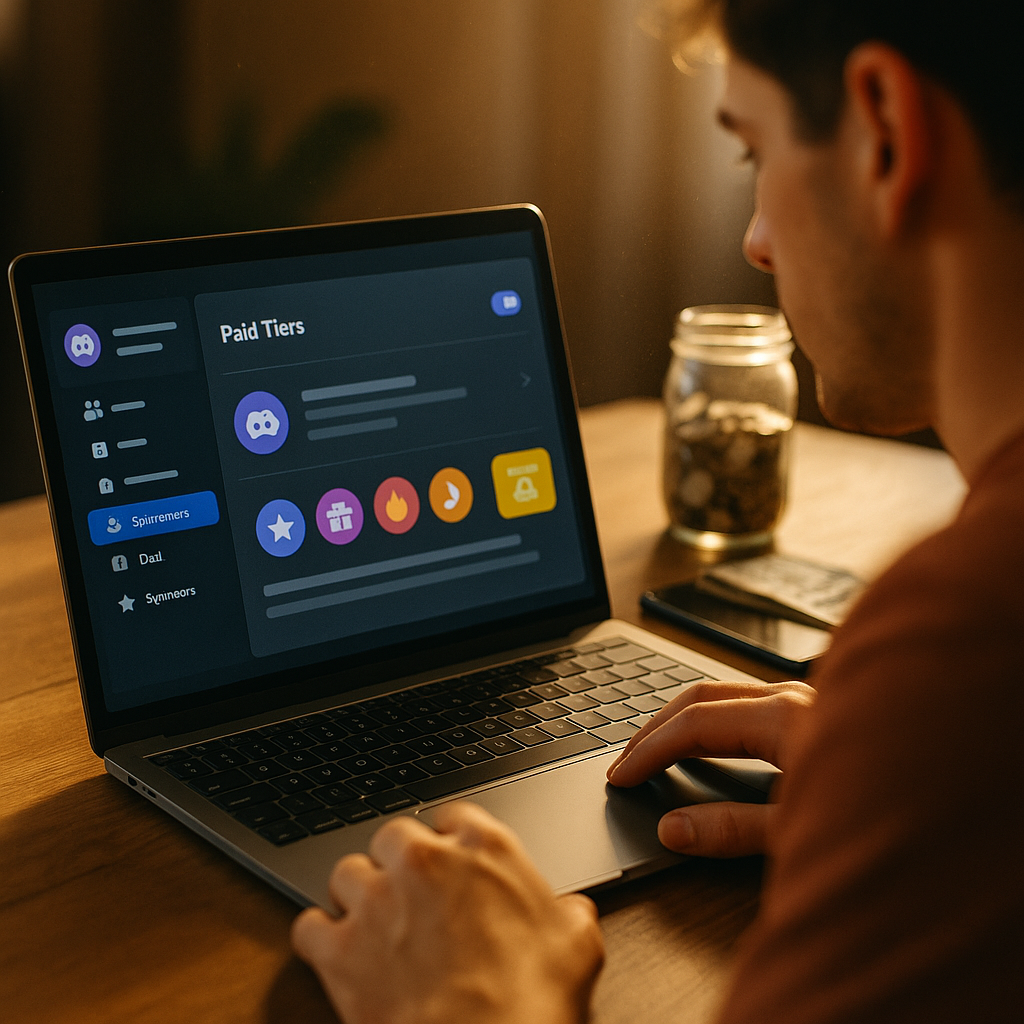
Discord now hosts more than 200 million monthly active users, yet most brands still treat it as an afterthought — a link in a bio, not a business line. Meanwhile, community operators are quietly running five- and six-figure annual revenue through paid tiers and sponsorship slots. Discord server monetization isn’t a side hustle anymore. It’s a channel with its own P&L, and marketers who ignore it are leaving margin on the table.
Why This Matters to Brands Right Now
Platforms with algorithmic feeds keep changing the rules. Discord doesn’t have that problem, because there’s no algorithm deciding who sees what. Every member who joins a server opted in, stayed subscribed, and shows up because the content or access is worth it. That’s a fundamentally different trust environment than Instagram or TikTok, where reach is rented, not owned.
For brands, that means sponsorship dollars inside a well-run Discord server buy something scarcer than impressions: attention from people who already chose to be there. Compare that to the diminishing organic reach discussed in organic reach is dead — Discord communities are one of the few places where organic engagement still compounds daily.
A Discord server with 5,000 highly engaged members can outperform a 50,000-follower Instagram account on conversion, simply because the audience has already self-selected for relevance.
The Three Monetization Layers
Every profitable Discord community stacks its revenue in layers instead of relying on one stream. Think of it as a pyramid: free tier at the base, paid subscriptions in the middle, brand sponsorships at the top generating the highest margin.
- Free tier: Open access, general chat, limited perks. This is your top-of-funnel and the audience brands actually want to reach at scale.
- Paid tiers: Subscriber-only channels, early access, exclusive drops, direct creator interaction. Typically priced $5–$50/month depending on niche and perceived value.
- Sponsorships: Brand-funded channels, sponsored AMAs, product seeding threads, co-branded events. This is where six-figure server operators make their real money.
Discord’s own creator monetization tools — Server Subscriptions and Premium App Subscriptions — let admins build recurring revenue natively, without routing members to Patreon or Ko-fi. That matters for brands evaluating a server as a sponsorship target: native monetization signals the community has infrastructure, not just vibes.
Structuring Paid Tiers Without Killing the Free Community
Here’s the tension every server owner faces: paywall too much, and you gut the free community that made the server valuable in the first place. Paywall too little, and subscribers feel ripped off. The fix isn’t complicated, but it requires discipline.
Successful tier structures follow a simple rule: gate access and speed, not core value. A gaming community might keep general chat, LFG channels, and event announcements free, while charging for coaching VODs, private lobbies, or direct developer Q&As. A finance or crypto server might keep market commentary free but charge for real-time alert channels and portfolio reviews.
- Tier 1 (Free): Community chat, public events, general access.
- Tier 2 ($5–$15/mo): Ad-free experience, custom roles, early content drops.
- Tier 3 ($20–$50/mo): Direct creator access, private channels, exclusive merch or product allocations.
Keep tier count to three max. More than that, and members spend more time comparing plans than engaging with content — a UX failure that tanks retention.
Where Brand Sponsorships Actually Fit
This is the part most marketing teams get wrong. They treat Discord sponsorship like a display ad buy — drop a banner, post a link, move on. That approach flops, because Discord culture punishes anything that feels like an ad unit bolted onto a chat app.
What works instead is sponsorship as infrastructure. Brands fund something the community already wants, and get attribution for making it possible.
- Sponsored channels: A brand funds a dedicated channel (deals, giveaways, product feedback) in exchange for visible branding and a pinned intro post.
- Sponsored events: AMAs, tournaments, or listening parties funded by a brand, hosted inside the server with the brand’s name attached to the event, not the whole server.
- Product seeding threads: Brands provide early units or access to top community members in exchange for unfiltered feedback threads — valuable for product teams, not just marketing.
- Affiliate/referral integration: Brands set up trackable links or promo codes distributed only inside the server, similar to the tiered commission models covered in affiliate commission structures.
Pricing benchmarks are still loose since Discord sponsorship is younger than Twitch or YouTube ad markets, but agencies report sponsored channel placements running $1,500–$15,000/month depending on server size and engagement rate, with premium AMA slots command a one-time fee of $2,000–$10,000 for servers over 20,000 members.
Disclosure Isn’t Optional
Every sponsored placement inside a Discord server is still subject to the same disclosure rules that govern influencer content anywhere else. The FTC’s endorsement guidelines apply regardless of platform, and “it’s just a Discord” is not a legal defense. Brands should require clear “sponsored by” labeling on any funded channel or event, and community managers should treat disclosure the same way they’d treat it on a sponsored Instagram post.
This isn’t just about avoiding fines. Discord members are unusually sensitive to perceived manipulation — these are communities built on trust between admins and members. One undisclosed sponsorship that gets called out publicly can tank server credibility overnight, and that reputational damage travels fast across screenshots on X and Reddit.
What Brands Should Actually Evaluate Before Sponsoring
Follower count means almost nothing on Discord. A server with 80,000 members and 400 active users in the last week is a bad buy no matter how the pitch deck looks. Before committing budget, brand teams should request:
- Weekly active member percentage, not total member count.
- Message volume in target channels over the last 30 days.
- Retention rate on paid tiers, if the server runs subscriptions — churn tells you more about community health than any other metric.
- Moderation standards and history of bans, spam bots, or raid incidents.
- Existing sponsor history and whether past brand placements got engagement or got ignored.
For a deeper breakdown of vetting server partners and avoiding the reputational landmines that come with badly-matched Discord deals, see Discord server partnerships without the backlash. It’s the natural companion piece to this monetization framework: that article covers partnership risk, this one covers revenue structure.
Weekly active percentage is the single most predictive metric for sponsorship ROI on Discord — a server converting 60% of members into weekly participants will consistently outperform a larger, sleepier community.
Comparing Discord to Other Owned-Audience Channels
Discord isn’t the only closed-community channel brands are testing. WhatsApp Channels and Instagram Broadcast Channels offer similar direct-access models, but with meaningfully different dynamics. WhatsApp skews toward one-way broadcast and superfan retention, as detailed in the WhatsApp Channels playbook, while Instagram’s version leans more transactional, built for repeat purchase nudges per the Instagram Broadcast Channels guide.
Discord’s advantage is bidirectional engagement — members talk back, react, debate, and build sub-communities within the server. That’s harder to moderate but far more valuable for product feedback loops and long-term brand affinity. According to eMarketer research on community platforms, engagement-based channels consistently outperform broadcast-only formats on trust metrics, even when reach is smaller.
Operational Reality: Who Runs This?
A common mistake: brands assume sponsorship is “set it and forget it.” It isn’t. Someone on the brand or agency side needs to monitor sponsored channels weekly, respond to community questions, and flag moderation issues before they escalate. Budget for a part-time community liaison, not just a media buy line item.
Tools like Statbot, Sesh, and Discord’s native analytics dashboard (rolling out more granular data through integrations tracked by HubSpot and similar marketing stacks) help quantify sponsored channel performance, but there’s no substitute for a human actually reading the chat.
Building the Business Case Internally
Getting budget approved for Discord sponsorship is still harder than it should be, mostly because finance teams don’t have a mental model for it yet. The pitch that works: frame it as owned-community media, not paid social. Compare CPM-equivalent cost against weekly active reach, not total membership, and benchmark against comparable niche-community spend like niche YouTube creator campaigns, which have already proven that smaller, high-intent audiences beat broad reach on conversion.
Track three numbers post-campaign: engagement rate on sponsored content, promo code redemption if applicable, and any lift in branded search or direct traffic during the sponsorship window. That’s enough to build a renewal case without overcomplicating attribution in a platform that, frankly, doesn’t offer robust native ad reporting yet.
Start small: pick one server with strong weekly active numbers, fund a single sponsored channel for 90 days, and measure engagement before scaling spend across multiple communities. Discord monetization rewards patience and community fit far more than it rewards big budgets.
FAQs
How much does it cost to sponsor a Discord server?
Sponsored channel placements typically range from $1,500 to $15,000 per month depending on server size and weekly active engagement, while one-time sponsored events like AMAs can run $2,000 to $10,000 for larger, highly active communities.
What’s the difference between Discord paid tiers and brand sponsorships?
Paid tiers are subscriber-funded revenue where members pay the server directly for exclusive access or perks, while brand sponsorships involve a company paying the server owner to fund a channel, event, or promotion in exchange for visibility and attribution.
Do FTC disclosure rules apply to Discord sponsorships?
Yes. Any sponsored content, channel, or event inside a Discord server must be clearly disclosed under FTC endorsement guidelines, the same as sponsored posts on any other platform.
What metrics should brands request before sponsoring a Discord server?
Request weekly active member percentage, 30-day message volume in relevant channels, paid-tier retention rate if applicable, moderation history, and performance data from previous brand sponsorships.
Can a small Discord server still be worth sponsoring?
Yes. A smaller server with high weekly active engagement and strong niche alignment often outperforms a larger, less active community on conversion and brand trust.
Top Influencer Marketing Agencies
The leading agencies shaping influencer marketing in 2026
Agencies ranked by campaign performance, client diversity, platform expertise, proven ROI, industry recognition, and client satisfaction. Assessed through verified case studies, reviews, and industry consultations.
Moburst

-
2

The Shelf
Boutique Beauty & Lifestyle Influencer AgencyA data-driven boutique agency specializing exclusively in beauty, wellness, and lifestyle influencer campaigns on Instagram and TikTok. Best for brands already focused on the beauty/personal care space that need curated, aesthetic-driven content.Clients: Pepsi, The Honest Company, Hims, Elf Cosmetics, Pure LeafVisit The Shelf → -
3

Audiencly
Niche Gaming & Esports Influencer AgencyA specialized agency focused exclusively on gaming and esports creators on YouTube, Twitch, and TikTok. Ideal if your campaign is 100% gaming-focused — from game launches to hardware and esports events.Clients: Epic Games, NordVPN, Ubisoft, Wargaming, Tencent GamesVisit Audiencly → -
4

Viral Nation
Global Influencer Marketing & Talent AgencyA dual talent management and marketing agency with proprietary brand safety tools and a global creator network spanning nano-influencers to celebrities across all major platforms.Clients: Meta, Activision Blizzard, Energizer, Aston Martin, WalmartVisit Viral Nation → -
5

The Influencer Marketing Factory
TikTok, Instagram & YouTube CampaignsA full-service agency with strong TikTok expertise, offering end-to-end campaign management from influencer discovery through performance reporting with a focus on platform-native content.Clients: Google, Snapchat, Universal Music, Bumble, YelpVisit TIMF → -
6

NeoReach
Enterprise Analytics & Influencer CampaignsAn enterprise-focused agency combining managed campaigns with a powerful self-service data platform for influencer search, audience analytics, and attribution modeling.Clients: Amazon, Airbnb, Netflix, Honda, The New York TimesVisit NeoReach → -
7

Ubiquitous
Creator-First Marketing PlatformA tech-driven platform combining self-service tools with managed campaign options, emphasizing speed and scalability for brands managing multiple influencer relationships.Clients: Lyft, Disney, Target, American Eagle, NetflixVisit Ubiquitous → -
8

Obviously
Scalable Enterprise Influencer CampaignsA tech-enabled agency built for high-volume campaigns, coordinating hundreds of creators simultaneously with end-to-end logistics, content rights management, and product seeding.Clients: Google, Ulta Beauty, Converse, AmazonVisit Obviously →