


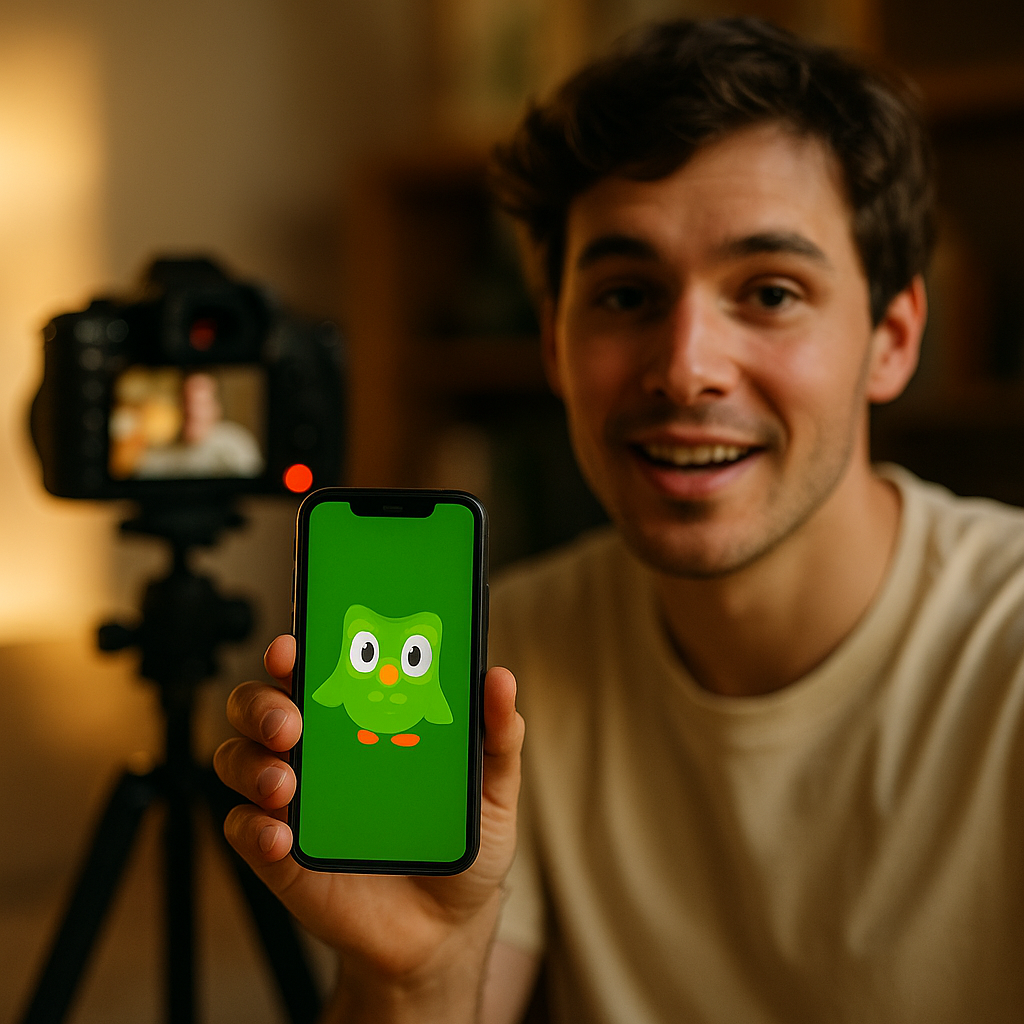
Duolingo doesn’t buy reach. It buys relevance — and its YouTube creator partnership boost strategy is the clearest proof yet that niche beats scale when the goal is measurable ROAS. While most brands still chase subscriber counts, Duolingo’s team spent the past cycle pairing its owl mascot with mid-tier language-learning creators, and the return-on-ad-spend data is hard to ignore.
This isn’t another “brand went viral” story. It’s an attribution story. And attribution is exactly what most influencer programs still can’t prove.
The Problem Every CMO Recognizes
Ask ten marketing leaders how influencer spend translates to revenue, and you’ll get ten different half-answers. Vanity metrics — views, likes, follower growth — still dominate reporting decks. Meanwhile finance keeps asking the same question: what did we actually get for that money?
Duolingo’s growth team faced this exact pressure. The brand had already built enormous organic equity through its zero-paid-media TikTok owl strategy, which proved that unhinged, low-cost content could drive app installs without traditional ad spend. But TikTok virality and YouTube performance marketing are different disciplines. Virality builds awareness. YouTube, with its longer watch times and searchable intent, builds conversion pathways — if you pick the right creators.
The team’s hypothesis: instead of paying broad-reach language or edtech YouTubers for a single integration, identify creators whose entire channel identity is language acquisition — polyglots, immersion vloggers, exam-prep tutors — and give the owl a recurring, native role in their content ecosystem.
What “Matching the Persona” Actually Means
Persona matching sounds like marketing jargon until you see it executed with discipline. Duolingo’s team built a scoring framework that weighted three factors above subscriber count: topical consistency (does this creator talk about language learning in 80%+ of uploads?), audience intent signals (comment sentiment around study methods, exam goals, travel plans), and existing brand affinity (had they organically mentioned Duolingo before being paid to?).
That last filter mattered most. Creators who already used the app and referenced it unprompted converted their audiences at meaningfully higher rates than creators discovering the product for the first time on a brief. This mirrors what Unilever’s team found when they shifted toward interest-based creator discovery over follower count — genuine category interest predicts performance better than reach ever did.
Creators who organically mentioned Duolingo before any paid deal converted their audiences at significantly higher rates than creators encountering the product for the first time on a brief — proof that pre-existing affinity outperforms reach in performance media.
The owl itself became a flexible character asset rather than a rigid brand mascot. Some creators had it “compete” in language challenges. Others used it as a running joke about accountability and guilt-tripping users into daily streaks — leaning into the meme equity Duolingo had already earned. The persona flexed to fit each creator’s tone instead of forcing a single script across dozens of channels.
The Media Mix: Long-Form Plus Shorts, Not Either/Or
Here’s where the operational strategy gets interesting for anyone running a mid-market program. Duolingo didn’t choose between YouTube long-form and YouTube Shorts — it sequenced them. Long-form integrations (8-15 minute videos) built narrative context: why this creator uses Duolingo, what results they’ve seen, how it fits their study routine. Shorts then clipped the emotional or comedic peak of that integration and pushed it into feed discovery, functioning as a retargeting layer for viewers who’d seen the long-form ad but hadn’t converted.
This two-tier structure isn’t new in theory. Streaming and DTC brands have used similar cut-down strategies for years. What’s notable is applying it specifically to creator content rather than branded ads — treating creator-generated long-form as the “hero” asset and creator-generated Shorts as the performance layer, closer to how Vrbo scaled localized creative across markets using AI-driven messaging rather than one-size-fits-all ad copy.
How Did They Measure ROAS Lift?
Attribution on YouTube creator content is notoriously messy. View-through windows are long, brand search lift is hard to isolate, and app install attribution across iOS’s privacy restrictions adds another layer of noise. Duolingo’s team addressed this with a layered measurement approach rather than relying on a single source of truth:
- Incrementality testing: geo-holdout experiments comparing markets with heavy creator YouTube spend against matched control markets with none.
- Branded search lift: tracking spikes in “Duolingo” and “learn [language] app” search volume in the 48-72 hours after creator uploads went live.
- App store attribution partners: using mobile measurement partnership data to tie install spikes to specific creator video timestamps.
- Post-install engagement cohorts: comparing 30-day retention and paid subscription conversion rates for users acquired via matched niche creators versus users acquired via broad-reach creators or paid social.
The headline finding: users acquired through niche language-learning creators showed higher day-30 retention and a materially better cost-per-paying-subscriber than users acquired through broader entertainment or lifestyle creators running the same owl bit. Reach without relevance was, once again, expensive reach.
Why Niche Beat Broad, Numerically
The intuitive argument for niche creators has always been “better fit, better trust.” Duolingo’s data adds the missing piece: better fit produces better retention, and retention is what actually drives ROAS in a subscription business. A broad-reach creator might generate more installs per dollar in week one. But if those installs churn by week three, the blended CAC on paying subscribers looks terrible three months later.
This is a lesson plenty of subscription and app-based brands learn the hard way. It’s the same dynamic Rare Beauty leaned into when it built a creator cohort strategy that outperformed celebrity marketing — depth of audience alignment beat sheer follower count on nearly every conversion metric that mattered past the first purchase.
According to eMarketer, brands increasingly cite retention-adjusted ROAS, not first-touch conversion, as their primary influencer performance metric — a shift that rewards exactly the kind of niche-matching Duolingo executed. Sprout Social’s research on creator marketing similarly shows audience trust correlating more strongly with purchase intent than reach metrics alone.
The Compliance Layer Nobody Talks About
Running dozens of niche creator partnerships across international markets creates a disclosure and compliance workload that’s easy to underestimate. Duolingo operates in markets with different advertising regulations — the FTC’s endorsement guidelines in the US differ from ASA rules in the UK, which differ again across EU markets where Duolingo has strong language-learning demand.
Brands scaling niche creator programs need standardized disclosure templates baked into contracts, not left to individual creator discretion. The FTC’s endorsement guidance is unambiguous about material connection disclosures, and regulators have shown increasing willingness to enforce against both creators and the brands paying them. For programs running dozens of simultaneous partnerships, this isn’t a legal afterthought — it’s an operational line item requiring the same rigor as media buying.
This operational discipline echoes what P&G built with its modular agency model for mid-market creator programs — treating compliance and contracting as scalable infrastructure rather than a one-off task per campaign.
What Mid-Market Brands Can Actually Steal From This
Most brands reading this don’t have Duolingo’s brand recognition or its owl’s meme status. Fair. But the underlying operational playbook doesn’t require celebrity-level brand equity to work:
- Score creators on topical consistency, not just niche fit. A creator who occasionally covers your category isn’t the same as one whose channel identity is built around it.
- Prioritize organic affinity signals. Search creator comment history and past uploads for unprompted brand mentions before locking in a deal.
- Build a two-tier content structure. Long-form for narrative and context, Shorts or Reels cut-downs for performance retargeting.
- Measure retention, not just acquisition. First-touch conversion metrics flatter broad-reach creators. Cohort retention tells the real story.
- Standardize disclosure contracting. Especially if you’re running programs across multiple regulatory jurisdictions.
None of this requires a nine-figure marketing budget. It requires discipline in creator vetting and a willingness to measure past the vanity metric layer — the same discipline that showed up in J.Crew’s Creator Summer Camp results versus standard sponsored posts, where structured creator programs consistently outperformed one-off sponsorships on sales lift.
The Takeaway
Duolingo’s YouTube play confirms something the influencer industry has been slow to internalize: persona-market fit between a brand character and a creator’s existing audience intent drives better unit economics than reach ever will. If your team is still greenlighting creators based on subscriber tiers instead of topical consistency and retention data, you’re leaving ROAS on the table — start auditing your current roster against those three filters this quarter.
FAQs
What made Duolingo’s YouTube creator strategy different from its TikTok approach?
TikTok relied on zero-paid, high-frequency meme content to build awareness. The YouTube strategy was a paid, performance-oriented layer focused on niche language-learning creators, long-form context, and measurable retention-based ROAS rather than pure virality.
How did Duolingo measure ROAS on creator partnerships if attribution is usually unreliable on YouTube?
The team combined geo-holdout incrementality testing, branded search lift tracking, mobile measurement partner install attribution, and post-install retention cohort analysis to triangulate performance rather than relying on a single attribution source.
Why did niche creators outperform broad-reach creators on ROAS?
Niche language-learning creators drove higher day-30 retention and better cost-per-paying-subscriber, even when broad-reach creators generated more raw installs. In a subscription business, retention-adjusted ROAS matters more than first-touch conversion volume.
Can smaller brands replicate this strategy without a large budget?
Yes. The core mechanics — scoring creators on topical consistency, prioritizing organic brand affinity, pairing long-form with short-form retargeting, and measuring retention over vanity metrics — scale down to mid-market budgets without requiring celebrity-level creators.
What compliance risks should brands consider when scaling niche creator programs across markets?
Disclosure requirements vary by jurisdiction, including FTC rules in the US and ASA guidance in the UK. Brands running multiple simultaneous partnerships should standardize disclosure language in contracts rather than leaving compliance to individual creator discretion.
Top Influencer Marketing Agencies
The leading agencies shaping influencer marketing in 2026
Agencies ranked by campaign performance, client diversity, platform expertise, proven ROI, industry recognition, and client satisfaction. Assessed through verified case studies, reviews, and industry consultations.
Moburst

-
2

The Shelf
Boutique Beauty & Lifestyle Influencer AgencyA data-driven boutique agency specializing exclusively in beauty, wellness, and lifestyle influencer campaigns on Instagram and TikTok. Best for brands already focused on the beauty/personal care space that need curated, aesthetic-driven content.Clients: Pepsi, The Honest Company, Hims, Elf Cosmetics, Pure LeafVisit The Shelf → -
3

Audiencly
Niche Gaming & Esports Influencer AgencyA specialized agency focused exclusively on gaming and esports creators on YouTube, Twitch, and TikTok. Ideal if your campaign is 100% gaming-focused — from game launches to hardware and esports events.Clients: Epic Games, NordVPN, Ubisoft, Wargaming, Tencent GamesVisit Audiencly → -
4

Viral Nation
Global Influencer Marketing & Talent AgencyA dual talent management and marketing agency with proprietary brand safety tools and a global creator network spanning nano-influencers to celebrities across all major platforms.Clients: Meta, Activision Blizzard, Energizer, Aston Martin, WalmartVisit Viral Nation → -
5

The Influencer Marketing Factory
TikTok, Instagram & YouTube CampaignsA full-service agency with strong TikTok expertise, offering end-to-end campaign management from influencer discovery through performance reporting with a focus on platform-native content.Clients: Google, Snapchat, Universal Music, Bumble, YelpVisit TIMF → -
6

NeoReach
Enterprise Analytics & Influencer CampaignsAn enterprise-focused agency combining managed campaigns with a powerful self-service data platform for influencer search, audience analytics, and attribution modeling.Clients: Amazon, Airbnb, Netflix, Honda, The New York TimesVisit NeoReach → -
7

Ubiquitous
Creator-First Marketing PlatformA tech-driven platform combining self-service tools with managed campaign options, emphasizing speed and scalability for brands managing multiple influencer relationships.Clients: Lyft, Disney, Target, American Eagle, NetflixVisit Ubiquitous → -
8

Obviously
Scalable Enterprise Influencer CampaignsA tech-enabled agency built for high-volume campaigns, coordinating hundreds of creators simultaneously with end-to-end logistics, content rights management, and product seeding.Clients: Google, Ulta Beauty, Converse, AmazonVisit Obviously →