


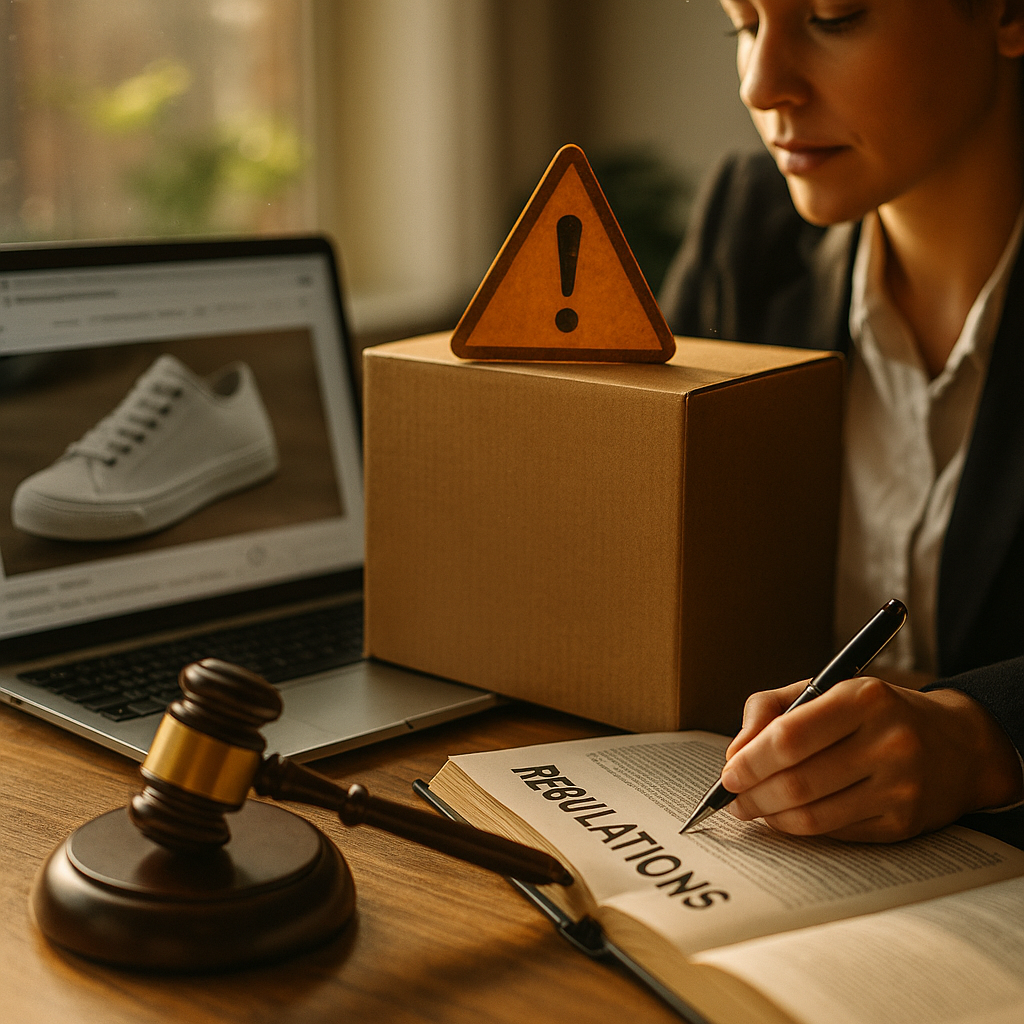
Understanding product liability and safety regulations is essential for e-commerce brands looking to build trustworthy businesses and avoid costly lawsuits. As online retail markets in 2025 grow increasingly competitive, compliance isn’t optional—it’s a strategic necessity. Stay ahead in a regulated landscape, protect your brand’s reputation, and gain customer confidence with this actionable guide to product liability and safety regulations for e-commerce brands.
Understanding Product Liability in E-commerce
Product liability for online sellers refers to the legal responsibility e-commerce brands bear if products they sell cause harm due to defects. These liabilities generally span three categories: manufacturing defects, design defects, and failure to provide adequate instructions or warnings. Since e-commerce broadens international reach, sellers must consider domestic and cross-border legal frameworks—each with specific product safety and liability provisions.
Research from the US Consumer Product Safety Commission (CPSC) highlights that online purchase complaints, especially regarding safety issues, have increased by 37% since 2022. Platforms like Amazon, Shopify, and Etsy have instituted their own compliance requirements, further underscoring the importance for sellers to proactively manage liability risks. The consequences for non-compliance can include financial penalties, product recalls, or even criminal investigation in some jurisdictions.
Key Product Safety Regulations for Online Sellers
Product safety regulations for e-commerce businesses are governed by both international and domestic laws. In the US, the CPSC regulates children’s products, electronics, and household goods. The EU oversees safety via the General Product Safety Regulation (GPSR) and product-specific directives. Many Asian countries have enacted similar frameworks to harmonize global safety standards.
- Labeling Requirements: Products often require detailed labels and warnings, especially for food, children’s items, or electronics.
- Testing and Certification: Third-party testing and certifications (like CE, UL, CPSIA) are mandatory for certain categories.
- Recall Obligations: Sellers must quickly notify authorities and affected customers about dangerous products.
Brands must stay updated as new product safety requirements often emerge. Regular compliance checks are an investment in business continuity, not just a regulatory checkbox.
Managing Cross-Border Regulations in E-commerce
Global e-commerce compliance is complex, but critical. When selling internationally, brands must comply not just with their domestic laws but also with each target market’s regulations. For example, selling toys in the EU means complying with EN 71 standards, while in Canada, additional bilingual labeling is required.
Recent global initiatives, such as the OECD’s 2023 cross-border product safety guidelines, encourage e-commerce platforms to take a more active role in compliance. Sellers are expected to:
- Verify importer/representative obligations if selling into the EU/UK market
- Update product descriptions and packaging for local languages
- Monitor your supply chain for evolving country-specific risks
Using a compliance checklist and consulting international legal experts can help mitigate costly errors and ensure smooth market entry.
Best Practices for E-commerce Product Safety and Risk Management
E-commerce product safety best practices go beyond mere legal checkboxes. Proactive brands adopt systems to identify, track, and address safety concerns long before reaching consumers. Here’s how you can develop a robust safety protocol:
- Select reliable suppliers: Source products from manufacturers with proven compliance records. Request test reports and audit supply chains regularly.
- Document everything: Keep records of testing, certifications, purchase orders, and customer safety communications. These documents are vital in case of disputes.
- Implement quality checks: Conduct random sampling and in-house testing, especially when introducing new stocks or suppliers.
- Monitor customer feedback: Product reviews and post-purchase surveys often reveal emerging hazards. Respond swiftly and transparently.
- Train your team: Ensure all employees—especially those overseeing product listings—are updated on current regulations and recall procedures.
Leverage digital solutions such as compliance management software for real-time alerts on regulatory updates or recall notices relevant to your products.
Legal Protection and Insurance for Online Sellers
Product liability insurance for e-commerce brands is an essential risk-mitigation tool. While insurance won’t prevent lawsuits, it offers vital protection from legal costs, settlements, and reputational damage. As of 2025, most online marketplaces—including Amazon and Walmart—require sellers to carry such insurance at a minimum coverage level.
When choosing a policy, consider:
- The territory your policy covers (e.g., global, US only)
- Types of products and potential risks (e.g., electronics vs. apparel)
- Additional coverage options, such as product recall
Legal safeguards, such as well-drafted terms and conditions and robust product warranties, also help reduce liability exposures. Regularly review your policies with a lawyer specializing in e-commerce law.
Resolving Product Safety Issues and Managing Recalls
Product recall management for e-commerce requires swift, transparent action. If a defect or hazard is identified, brands must immediately stop further sales and alert customers, supply chain partners, and regulatory agencies as mandated. Delays or evasiveness can exacerbate harm and penalties.
Effective recall management includes:
- Rapid customer notification via email, platform notifications, and website banners
- Clear instructions for returning, repairing, or disposing of the product
- Coordinating with logistics partners for seamless returns and refunds
- Preparing a post-recall review to strengthen future prevention systems
With increasing regulatory scrutiny and empowered social media users, transparent recall responses can actually boost brand trust if managed well.
FAQs: Product Liability and Safety Regulations for E-commerce Brands
-
Do e-commerce brands need to follow product safety laws for every country they sell to?
Yes, sellers must comply with all applicable product safety regulations in each country where products are offered. This includes labeling, certifications, and language requirements specific to the destination market.
-
What products typically have the highest liability risks?
Children’s products, electronics, food, cosmetics, and supplements have higher risks due to strict safety standards and the potential for serious harm. Prioritize extra compliance and testing for these categories.
-
Can online marketplaces shield sellers from liability?
No. While platforms provide some support and may have their own compliance requirements, ultimate liability rests with the seller or brand. Platforms may also suspend non-compliant sellers, impacting your business.
-
How can e-commerce brands stay updated on changing regulations?
Subscribe to industry regulatory bulletins, join e-commerce associations, monitor government websites, and use compliance management tools. Consulting an expert in product compliance for your target market is highly advised.
-
What are the first steps if a safety issue is discovered with a product?
Immediately stop sales, inform customers, review regulatory notification requirements, and work with legal counsel. Cooperate fully with authorities and communicate transparently at all stages to protect your brand.
Mastering product liability and safety regulations for e-commerce brands strengthens trust, secures your business, and fosters long-term growth. Proactive compliance, clear customer communication, and robust insurance are key—prioritize these strategies to navigate 2025’s e-commerce landscape with confidence and success.
Top Influencer Marketing Agencies
The leading agencies shaping influencer marketing in 2026
Agencies ranked by campaign performance, client diversity, platform expertise, proven ROI, industry recognition, and client satisfaction. Assessed through verified case studies, reviews, and industry consultations.
Moburst

-
2

The Shelf
Boutique Beauty & Lifestyle Influencer AgencyA data-driven boutique agency specializing exclusively in beauty, wellness, and lifestyle influencer campaigns on Instagram and TikTok. Best for brands already focused on the beauty/personal care space that need curated, aesthetic-driven content.Clients: Pepsi, The Honest Company, Hims, Elf Cosmetics, Pure LeafVisit The Shelf → -
3

Audiencly
Niche Gaming & Esports Influencer AgencyA specialized agency focused exclusively on gaming and esports creators on YouTube, Twitch, and TikTok. Ideal if your campaign is 100% gaming-focused — from game launches to hardware and esports events.Clients: Epic Games, NordVPN, Ubisoft, Wargaming, Tencent GamesVisit Audiencly → -
4

Viral Nation
Global Influencer Marketing & Talent AgencyA dual talent management and marketing agency with proprietary brand safety tools and a global creator network spanning nano-influencers to celebrities across all major platforms.Clients: Meta, Activision Blizzard, Energizer, Aston Martin, WalmartVisit Viral Nation → -
5

The Influencer Marketing Factory
TikTok, Instagram & YouTube CampaignsA full-service agency with strong TikTok expertise, offering end-to-end campaign management from influencer discovery through performance reporting with a focus on platform-native content.Clients: Google, Snapchat, Universal Music, Bumble, YelpVisit TIMF → -
6

NeoReach
Enterprise Analytics & Influencer CampaignsAn enterprise-focused agency combining managed campaigns with a powerful self-service data platform for influencer search, audience analytics, and attribution modeling.Clients: Amazon, Airbnb, Netflix, Honda, The New York TimesVisit NeoReach → -
7

Ubiquitous
Creator-First Marketing PlatformA tech-driven platform combining self-service tools with managed campaign options, emphasizing speed and scalability for brands managing multiple influencer relationships.Clients: Lyft, Disney, Target, American Eagle, NetflixVisit Ubiquitous → -
8

Obviously
Scalable Enterprise Influencer CampaignsA tech-enabled agency built for high-volume campaigns, coordinating hundreds of creators simultaneously with end-to-end logistics, content rights management, and product seeding.Clients: Google, Ulta Beauty, Converse, AmazonVisit Obviously →