


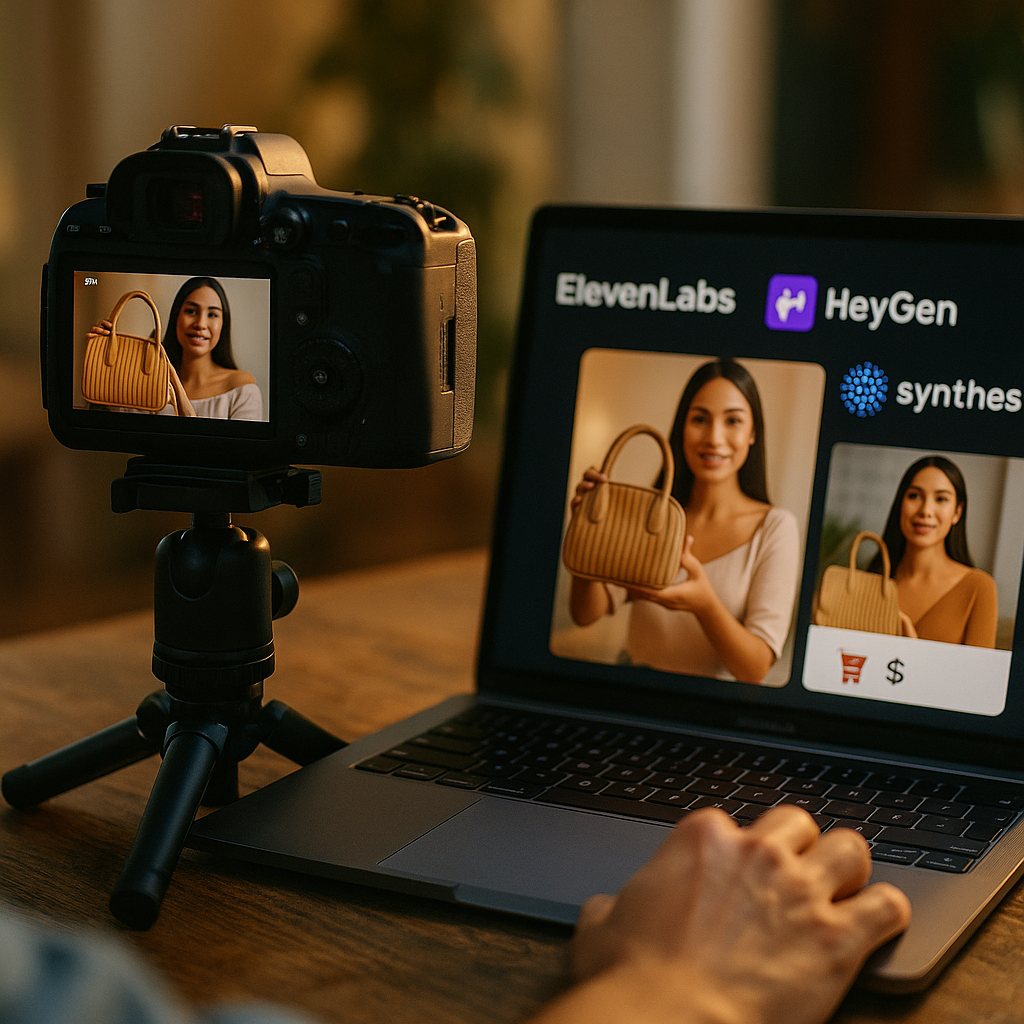
Shoppable video that only speaks English is leaving money on the table in roughly 80% of the global market. That’s the blunt math behind the rush toward AI voice-over and real-time dubbing tools, and why ElevenLabs, HeyGen, and Synthesia now sit at the center of nearly every localization RFP crossing a CMO’s desk. The question isn’t whether to dub. It’s which stack survives a full production cycle without blowing your budget or your brand voice.
Why Localization Suddenly Became a Shoppable Video Problem
Shoppable video lives or dies on seconds. A viewer decides to tap “buy” within the first three to five seconds of a clip, and if the voice-over sounds robotic, mistimed, or culturally off, that window closes fast. Add multi-market rollout to the mix, and the production math gets brutal: a single hero video for five languages used to mean five studio bookings, five sets of talent contracts, and five rounds of QA. Now it means one source file and a dubbing pipeline.
That shift matters more for shoppable formats than for standard brand content. Shoppable video is transactional. It’s tied to product drops, flash sales, live commerce windows. There’s no room for a two-week localization turnaround when a TikTok Shop campaign launches in 48 hours. This is precisely why brand and agency teams are pressure-testing ElevenLabs, HeyGen, and Synthesia against real production timelines, not demo reels.
The Three Tools, Framed for Brand Decision-Makers
Each platform solves a slightly different problem, and conflating them is where most procurement teams go wrong.
- ElevenLabs is fundamentally a voice engine. It excels at voice cloning, emotional inflection, and low-latency text-to-speech, making it the strongest option when you need a consistent brand voice across dozens of SKUs or scripts.
- HeyGen builds around avatar-driven video generation with lip-sync dubbing baked in, which matters when the shoppable format includes a presenter or spokesperson on camera.
- Synthesia leans enterprise, with a template-heavy studio built for scale, governance, and multi-team collaboration, at the cost of some creative flexibility.
None of them is a universal winner. The right choice depends on whether your shoppable video leans product-demo (voice-first) or presenter-led (avatar-first), and how much control your legal team needs over voice likeness rights.
ElevenLabs: Best Voice Fidelity, But You’re Building the Video Layer Yourself
ElevenLabs’ dubbing studio supports automated translation and voice cloning across 29+ languages, and the voice quality is, frankly, the best in the category right now. For shoppable video where the audio carries the emotional weight (think a founder narrating a product story), that fidelity is the difference between a dub that feels native and one that feels like a Duolingo exercise.
The catch: ElevenLabs isn’t a full video production suite. You’re pairing it with your existing editing stack, syncing dubbed audio to lip movement manually or via a secondary tool, and managing quality control yourself. For high-volume shoppable catalogs (say, a DTC brand localizing 200 product videos a quarter), that extra integration step adds real operational overhead. It’s a best-in-class instrument, not a turnkey studio.
Teams already running agentic workflow engines for personalization tend to slot ElevenLabs in as the voice layer within a larger orchestration stack rather than a standalone solution.
The tools that win in multi-language shoppable video aren’t the ones with the flashiest demo, they’re the ones that survive a 200-SKU localization run without a human re-touching every third clip.
HeyGen: Fastest Path From Script to Localized Presenter Video
HeyGen’s pitch is speed. Upload a script, pick an avatar (or clone your own presenter), and generate lip-synced video in over 40 languages within minutes. For shoppable formats featuring a spokesperson, that lip-sync accuracy is a genuine differentiator, viewers notice when mouth movements don’t match dubbed audio, and it quietly erodes trust in the product being sold.
HeyGen has leaned hard into commerce use cases too, with templates built around product demos and UGC-style ad formats. That makes it a natural fit for teams running rapid A/B tests across markets, where you need six language variants of the same 30-second spot by Friday.
Where it gets shakier: avatar realism still varies by language and accent combination. Tonal languages and certain Romance-language dialects can produce lip-sync artifacts that a discerning viewer catches immediately. Budget time for a native-speaker QA pass before anything goes live, especially on paid media where a stilted dub tanks click-through rate.
Synthesia: Built for Governance, Not Just Output
Synthesia’s real value proposition isn’t the avatar quality (though it’s solid). It’s the enterprise scaffolding: role-based permissions, brand template locking, approval workflows, and audit trails. For global brands running shoppable video through multiple regional teams and agencies, that governance layer prevents the classic localization nightmare, where a regional office quietly swaps in an off-brand voice or an unapproved script variant.
This matters more than marketers usually admit. Voice cloning and AI avatars carry real legal exposure. Using a synthetic voice that resembles a real person without consent, or deploying a dubbed script that misrepresents product claims in a new market, creates liability fast. Synthesia’s structured approval chain gives compliance and legal teams a checkpoint before content ships, which pairs well with broader efforts around catching hallucination risk in AI-generated briefs before they reach production.
The tradeoff is creative rigidity. Synthesia templates are polished but formulaic, and brands chasing a scrappier, native-feeling shoppable aesthetic (the kind that performs well on TikTok Shop or Instagram Reels) sometimes find the output too corporate. It’s the right tool when you’re localizing training content, product explainers, or evergreen catalog video at scale. It’s the wrong tool when the brief calls for edgy, platform-native creative.
The Real Cost Comparison Nobody Puts in the Pitch Deck
Vendor pricing pages rarely tell the full story. Per-minute or per-credit costs look comparable on paper, but the real cost driver is QA labor. A 2024 industry survey from HubSpot found that localization rework, not translation itself, consumes the majority of post-production budget on global campaigns. That pattern holds for AI dubbing too.
- ElevenLabs: lower per-minute cost, higher integration and manual sync labor.
- HeyGen: mid-range cost, faster turnaround, but requires native-speaker QA per language.
- Synthesia: higher enterprise licensing cost, but lower rework because of built-in approval gates.
If you’re running shoppable video across ten or more markets, model the QA labor cost per language before committing to a vendor. A tool that saves $2 per minute on generation but costs an extra hour of human review per clip isn’t actually cheaper. This is the same attribution logic marketing teams are already applying to token-based AI pricing spikes elsewhere in the stack, the sticker price and the operating cost are two different numbers.
Where Real-Time Dubbing Actually Breaks Down
“Real-time” is doing a lot of marketing work in these product names. None of the three tools currently deliver true live dubbing at broadcast quality for live commerce streams, latency and lip-sync drift are still noticeable on longer live sessions. If your shoppable strategy includes live shopping events (a growing format per eMarketer data on livestream commerce adoption), plan for pre-recorded, dubbed intro and outro segments rather than expecting flawless live translation mid-stream.
“Real-time” dubbing today means “fast turnaround,” not “live and flawless.” Brands that plan around that distinction avoid the awkward on-stream translation lag that erodes viewer trust.
Compliance Can’t Be an Afterthought
Voice cloning regulation is tightening globally. The FTC has flagged AI voice impersonation as an enforcement priority, and the UK’s ICO has issued guidance on synthetic media consent requirements. Before cloning a presenter’s voice for multi-language rollout, confirm the underlying talent agreement explicitly covers AI replication rights, not just the original recording. This is exactly the kind of provenance question brands are now solving with AI model registries for asset tracking, and it applies just as much to a cloned voice as it does to a generated image.
Retailers and agencies operating across the EU and UK should also loop in whichever team already handles explainable AI requirements, since regulators are increasingly asking brands to document how synthetic voice and video content was generated, not just whether it performs well.
Choosing Based on Video Format, Not Vendor Hype
Here’s the practical filter I’d apply before any pilot:
- Voice-only product narration at high volume → start with ElevenLabs.
- Presenter-led shoppable ads needing rapid multi-language variants → start with HeyGen.
- Enterprise catalog localization requiring legal sign-off across teams → start with Synthesia.
Plenty of mature teams end up running two of these in tandem, ElevenLabs for voice fidelity, layered into a HeyGen or Synthesia video pipeline for the visual and governance layer. That hybrid approach costs more to manage but consistently produces the cleanest final output for high-stakes shoppable campaigns.
Run a 90-day pilot with a single high-volume product category before committing to an annual license, and score each vendor on rework hours per language, not just per-minute pricing. That’s the number that actually predicts whether your multi-language shoppable video program scales or stalls.
FAQs
Which AI dubbing tool is best for multi-language shoppable video?
There’s no single winner. ElevenLabs leads on voice quality for narration-heavy content, HeyGen is fastest for presenter-led ads needing lip-sync accuracy, and Synthesia offers the strongest governance for enterprise teams managing multiple regional approvals.
Can these tools handle true real-time dubbing for live shopping events?
Not reliably yet. All three platforms handle pre-recorded dubbing well, but live-stream translation still shows latency and lip-sync drift. Plan pre-recorded segments for live commerce rather than relying on live AI translation.
How many languages do ElevenLabs, HeyGen, and Synthesia actually support?
ElevenLabs supports dubbing across 29+ languages, HeyGen covers 40+, and Synthesia offers a comparable range through its enterprise studio. Actual usable quality varies significantly by language pair, so test your specific target markets before full rollout.
What’s the biggest hidden cost in AI voice-over localization?
QA and rework labor. Per-minute generation pricing looks similar across vendors, but native-speaker review time to catch lip-sync errors or tonal mismatches is the real budget driver at scale.
Do we need consent to clone a presenter’s voice for dubbed video?
Yes. Confirm your talent agreement explicitly covers AI voice replication rights, not just the original recording. Regulators including the FTC have flagged unauthorized voice cloning as an enforcement concern.
Top Influencer Marketing Agencies
The leading agencies shaping influencer marketing in 2026
Agencies ranked by campaign performance, client diversity, platform expertise, proven ROI, industry recognition, and client satisfaction. Assessed through verified case studies, reviews, and industry consultations.
Moburst

-
2

The Shelf
Boutique Beauty & Lifestyle Influencer AgencyA data-driven boutique agency specializing exclusively in beauty, wellness, and lifestyle influencer campaigns on Instagram and TikTok. Best for brands already focused on the beauty/personal care space that need curated, aesthetic-driven content.Clients: Pepsi, The Honest Company, Hims, Elf Cosmetics, Pure LeafVisit The Shelf → -
3

Audiencly
Niche Gaming & Esports Influencer AgencyA specialized agency focused exclusively on gaming and esports creators on YouTube, Twitch, and TikTok. Ideal if your campaign is 100% gaming-focused — from game launches to hardware and esports events.Clients: Epic Games, NordVPN, Ubisoft, Wargaming, Tencent GamesVisit Audiencly → -
4

Viral Nation
Global Influencer Marketing & Talent AgencyA dual talent management and marketing agency with proprietary brand safety tools and a global creator network spanning nano-influencers to celebrities across all major platforms.Clients: Meta, Activision Blizzard, Energizer, Aston Martin, WalmartVisit Viral Nation → -
5

The Influencer Marketing Factory
TikTok, Instagram & YouTube CampaignsA full-service agency with strong TikTok expertise, offering end-to-end campaign management from influencer discovery through performance reporting with a focus on platform-native content.Clients: Google, Snapchat, Universal Music, Bumble, YelpVisit TIMF → -
6

NeoReach
Enterprise Analytics & Influencer CampaignsAn enterprise-focused agency combining managed campaigns with a powerful self-service data platform for influencer search, audience analytics, and attribution modeling.Clients: Amazon, Airbnb, Netflix, Honda, The New York TimesVisit NeoReach → -
7

Ubiquitous
Creator-First Marketing PlatformA tech-driven platform combining self-service tools with managed campaign options, emphasizing speed and scalability for brands managing multiple influencer relationships.Clients: Lyft, Disney, Target, American Eagle, NetflixVisit Ubiquitous → -
8

Obviously
Scalable Enterprise Influencer CampaignsA tech-enabled agency built for high-volume campaigns, coordinating hundreds of creators simultaneously with end-to-end logistics, content rights management, and product seeding.Clients: Google, Ulta Beauty, Converse, AmazonVisit Obviously →