


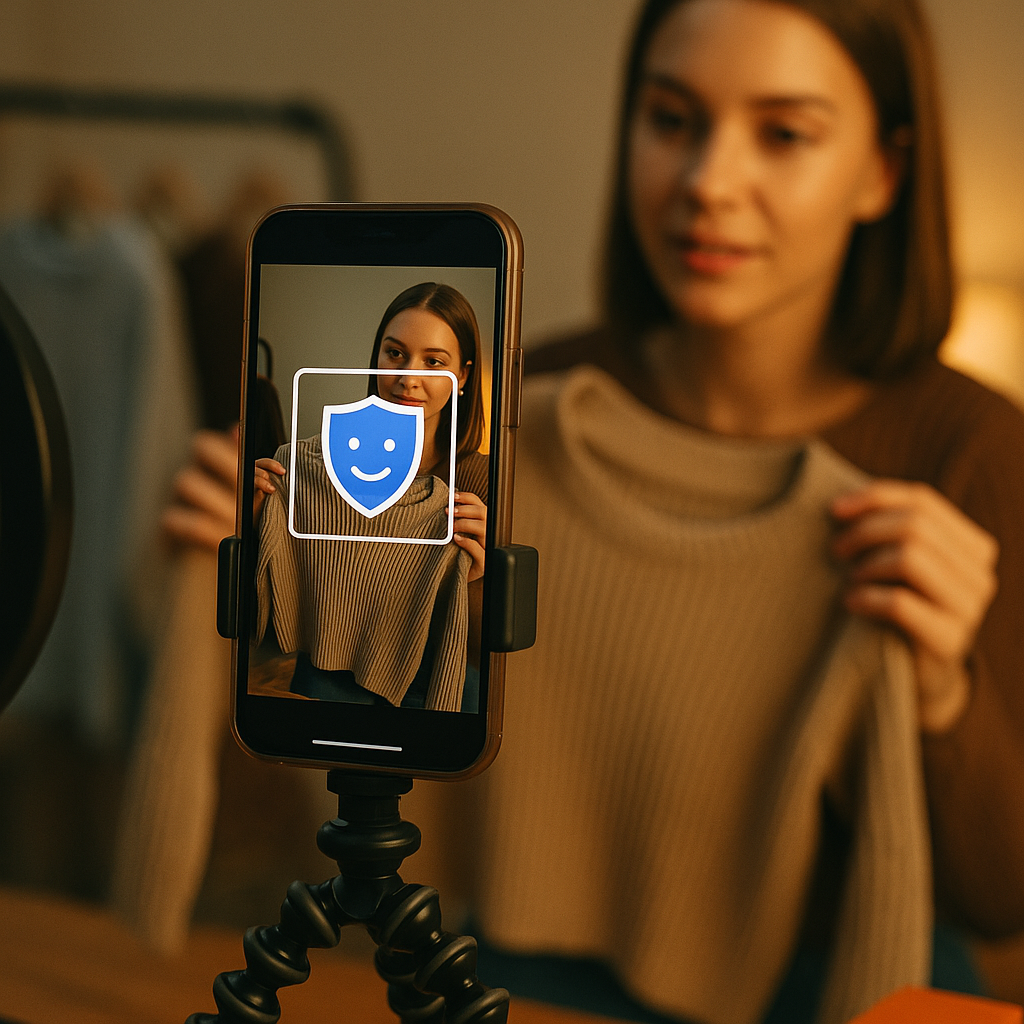
Ninety-two seconds. That’s roughly how long it takes a flagged product demo to rack up six-figure views before a human moderator even sees it. If your brand-safety stack still relies on post-publish review, you’re auditing a fire after the building’s gone. AI brand-safety filters built for shoppable short-form video are no longer a nice-to-have — they’re the only realistic way to catch problems before checkout links go live to millions of viewers.
TikTok Shop and Instagram Reels have turned every creator video into a potential point-of-sale. That’s great for conversion. It’s terrible for risk teams who used to have days to review sponsored content before it aired on TV or ran in a magazine. Now the review window is minutes, sometimes seconds, and the stakes include product liability, not just reputational embarrassment.
Why Shoppable Video Broke the Old Brand-Safety Playbook
Traditional brand safety was built for static placements: keyword blocklists next to display ads, contextual scoring on articles, maybe a human review queue for pre-roll video. None of that maps cleanly onto a 30-second Reel where a creator is holding your product, making a claim about it, and linking directly to a cart — all while the algorithm decides whether to push it to 50,000 people or 5 million.
Three things changed the risk profile completely.
- Speed of distribution. A Reel can go from zero to viral in under an hour. Legacy review cycles measured in business days are structurally incapable of catching problems in time.
- Commerce embedded in content. When the video itself is the storefront, a misleading claim isn’t just a brand-safety issue — it’s a potential FTC disclosure violation or product-liability exposure tied directly to a transaction.
- Creator volume. Enterprise affiliate and UGC programs now run hundreds or thousands of creators simultaneously. No compliance team can manually watch that much footage.
The shift isn’t just about catching bad content faster. It’s about recognizing that in shoppable video, brand safety and transaction risk are the same problem wearing different hats.
What Real-Time Scanning Actually Scans
“AI brand-safety filter” gets thrown around loosely by vendors, so it’s worth being precise about what these tools actually evaluate frame by frame and claim by claim.
- Visual context — logo placement, competitor products in frame, unsafe environments (weapons, alcohol misuse, hazardous stunts).
- Audio and spoken claims — transcribed speech checked against a claims library (“clinically proven,” “cures,” “guaranteed results”) that could trigger regulatory scrutiny.
- On-screen text and captions — overlay graphics that dodge spoken-word filters but still make prohibited claims.
- Disclosure presence — whether #ad or #sponsored appears, and whether it meets platform-specific placement rules, not just existence.
- Product-link integrity — does the shoppable tag route to an approved SKU, correct price, and in-stock item, or has a creator linked something outdated?
That last one surprises a lot of brand teams. Link integrity feels like an e-commerce problem, not a brand-safety one. But when a creator’s shoppable tag points to a discontinued product or the wrong price, you’ve got a consumer-trust and potentially a legal problem, not just a broken link.
The Latency Problem Nobody Talks About
Here’s the uncomfortable truth: most “real-time” scanning tools aren’t actually real-time. They’re near-real-time, with processing windows ranging from 15 seconds to several minutes depending on video length and how many models run in the pipeline (visual, audio, OCR, claims-matching). For a 15-second Reel that’s about to be boosted with paid spend, even a 90-second delay matters.
Ask vendors for their actual median scan-to-flag latency, not their marketing number. Ask what happens to content during that window — does it publish and then get pulled if flagged, or does it hold in a queue? The answer changes your operational risk calculus entirely. This is similar to the override-threshold debates playing out in agentic ai media-buying error rates and override thresholds, where the gap between “automated” and “instant” creates real exposure.
Evaluating Vendors: The Questions That Actually Matter
Every platform in this space claims 95%+ accuracy. That number is close to meaningless without context. Accuracy against what test set? Measured across which content categories? A tool that’s excellent at catching nudity but weak at parsing supplement claims isn’t going to protect a wellness brand.
When you’re running vendor evaluations, push past the demo and ask for these specifics:
- False positive rate by category. A tool that flags 40% of legitimate content as risky will get ignored by creators and internal teams alike. Alert fatigue is a real failure mode, not a hypothetical one.
- Multilingual and dialect coverage. If your influencer program spans regions, claims-detection models trained primarily on U.S. English will miss context in other markets. This is especially relevant for beauty and finance brands running global creator rosters.
- Platform API access depth. Some tools only scan content after it’s public via scraping; others have direct API partnerships with TikTok and Meta that allow pre-publish or near-instant post-publish scanning. The latter is meaningfully faster and more reliable.
- Human-in-the-loop escalation. What happens when the model is uncertain? Good tools route ambiguous cases to human reviewers with a defined SLA, rather than defaulting to auto-approve.
- Audit trail and explainability. If a piece of content is flagged (or wrongly cleared) and it becomes a legal issue, can the tool produce a record showing what triggered the decision? This is a growing expectation as explainable ai requirements in marketing tighten across jurisdictions.
Vendors worth benchmarking against each other in this category include tools built specifically for creator commerce moderation, alongside broader platform-native options from TikTok’s Creative Center tools and Meta Business Suite’s content moderation layer. Neither platform-native tool was built primarily for brand-safety scanning at the granularity most enterprise legal teams want, which is why a specialized layer often sits on top.
Build Versus Buy: A Question Bigger Than It Looks
Some enterprise brands with heavy creator spend have started building internal scanning layers, usually by fine-tuning existing vision-language models against their own claims libraries and compliance rules. It’s tempting if you’ve already got the ML talent in-house. But maintaining a claims-detection model that stays current with FTC guidance, evolving platform policies, and new slang or coded language (the stuff creators use specifically to dodge filters) is a full-time job, not a side project.
Most mid-size and enterprise brands land on a hybrid: a third-party scanning tool for baseline coverage, plus an internal escalation team for edge cases specific to their category. Pharma, finance, and alcohol brands almost always need this hybrid model because generic claims libraries don’t cover their regulatory nuance well enough on their own.
If your scanning tool can’t tell you why it flagged something, you don’t have a compliance tool — you have a black box with good marketing copy.
Where This Intersects With Attribution and Data Governance
Brand-safety scanning doesn’t live in isolation. The same infrastructure that flags risky content usually needs to talk to your attribution stack, since a pulled or restricted video affects performance reporting downstream. Teams that have already invested in unified identity resolution tend to have an easier time reconciling “this video was flagged and demonetized” with the revenue numbers finance is asking about. Without that connective tissue, brand-safety incidents become invisible in performance dashboards until someone notices a conversion cliff and starts asking questions three weeks later.
The same discipline applies to creator briefs themselves. A lot of flagged content isn’t creators being reckless — it’s briefs that were vague or, increasingly, briefs partially generated by AI tools that hallucinated a claim nobody fact-checked. That’s a growing and under-discussed source of brand-safety incidents, and it’s worth reading alongside this topic if your team is scaling AI-assisted brief generation, as covered in stopping ai hallucination risk in creator briefs.
ROI: Can You Actually Justify the Spend?
CFOs want a number, not a vibe. Here’s how the math typically works for brands running meaningful volume through TikTok Shop or Reels affiliate programs:
- Cost of a single compliance incident — legal review, potential FTC inquiry response, PR management, and creator relationship repair can run well into six figures for a mid-size brand, even without a formal penalty.
- Cost of manual review at scale — a team reviewing 500+ pieces of creator content weekly needs several full-time moderators, and they still can’t match real-time coverage.
- Cost of the tooling — enterprise scanning platforms typically price on content volume, ranging from a few thousand dollars monthly for smaller programs to significant six-figure annual contracts for brands running thousands of creators.
For most brands running influencer programs above a few hundred thousand dollars annually, the math favors automated scanning pretty clearly once you factor in even one avoided incident. The harder ROI question is which tier of tool you need — a full enterprise suite with dedicated account management, or a lighter API-based tool that plugs into your existing workflow. According to eMarketer, retail media and creator commerce spend continues to climb faster than overall digital ad budgets, which means the exposure window for unscanned content is only getting bigger, not smaller.
Regulatory Pressure Is Rising, Not Flattening
The FTC has been explicit that disclosure and endorsement rules apply fully to short-form and shoppable content, regardless of whether it’s a 15-second TikTok or a full ad. The UK’s ICO and advertising standards bodies have similarly signaled increased scrutiny of influencer commerce content, especially where data collection and targeted product recommendations are involved. Platforms themselves are tightening policy too: TikTok’s TikTok for Business guidelines and Meta’s Meta Business tools have both expanded their commerce-content policies over the past cycle, adding more granular categories around health claims and financial advice.
None of this is going to loosen. If anything, expect scanning requirements to become a contractual expectation from platforms themselves, not just an internal risk-mitigation choice brands make voluntarily.
Getting Started Without Boiling the Ocean
You don’t need to scan every piece of content with maximum scrutiny on day one. Start with your highest-risk categories: health claims, financial products, anything involving children, and any content tied to paid amplification. Layer in broader coverage once the workflow, escalation paths, and creator communication norms are proven. Trying to roll out enterprise-wide real-time scanning across every creator and every category in one launch is how these programs stall in procurement and never actually ship.
Next step: pull your last quarter of flagged or escalated creator content, tag each incident by root cause (claim, disclosure, visual context, link error), and use that breakdown to score vendors against your actual risk profile instead of their generic demo reel.
FAQs
What makes brand-safety scanning for shoppable video different from standard ad moderation?
Shoppable video combines content risk with transaction risk. A flagged claim isn’t just reputational exposure — it’s tied directly to a live checkout link, which raises the stakes around disclosure compliance, product accuracy, and potential liability in a way standard display or pre-roll moderation doesn’t.
How fast do these tools actually catch problematic content?
“Real-time” is often marketing language. Most tools operate on a near-real-time basis, with scan-to-flag windows ranging from 15 seconds to a few minutes depending on video length and how many detection models (visual, audio, OCR, claims) run in sequence. Always ask vendors for median latency, not best-case numbers.
Should brands build in-house scanning tools instead of buying a vendor solution?
Only if you have sustained ML resourcing to keep claims libraries and detection models current with platform policy changes and evolving creator language. Most brands land on a hybrid: a third-party tool for baseline coverage plus an internal team handling category-specific edge cases.
What’s the biggest hidden risk in current scanning tools?
Alert fatigue from high false-positive rates. If a tool flags too much legitimate content, teams start ignoring alerts entirely, which defeats the purpose of real-time monitoring in the first place.
Does disclosure compliance fall under brand-safety scanning too?
Yes. Most enterprise scanning tools now check for disclosure presence and placement (not just whether #ad exists, but whether it meets platform-specific visibility rules), since regulators including the FTC treat disclosure violations as an enforcement priority in shoppable content.
FAQs
What makes brand-safety scanning for shoppable video different from standard ad moderation?
Shoppable video combines content risk with transaction risk. A flagged claim isn’t just reputational exposure — it’s tied directly to a live checkout link, which raises the stakes around disclosure compliance, product accuracy, and potential liability in a way standard display or pre-roll moderation doesn’t.
How fast do these tools actually catch problematic content?
“Real-time” is often marketing language. Most tools operate on a near-real-time basis, with scan-to-flag windows ranging from 15 seconds to a few minutes depending on video length and how many detection models (visual, audio, OCR, claims) run in sequence. Always ask vendors for median latency, not best-case numbers.
Should brands build in-house scanning tools instead of buying a vendor solution?
Only if you have sustained ML resourcing to keep claims libraries and detection models current with platform policy changes and evolving creator language. Most brands land on a hybrid: a third-party tool for baseline coverage plus an internal team handling category-specific edge cases.
What’s the biggest hidden risk in current scanning tools?
Alert fatigue from high false-positive rates. If a tool flags too much legitimate content, teams start ignoring alerts entirely, which defeats the purpose of real-time monitoring in the first place.
Does disclosure compliance fall under brand-safety scanning too?
Yes. Most enterprise scanning tools now check for disclosure presence and placement (not just whether #ad exists, but whether it meets platform-specific visibility rules), since regulators including the FTC treat disclosure violations as an enforcement priority in shoppable content.
Top Influencer Marketing Agencies
The leading agencies shaping influencer marketing in 2026
Agencies ranked by campaign performance, client diversity, platform expertise, proven ROI, industry recognition, and client satisfaction. Assessed through verified case studies, reviews, and industry consultations.
Moburst

-
2

The Shelf
Boutique Beauty & Lifestyle Influencer AgencyA data-driven boutique agency specializing exclusively in beauty, wellness, and lifestyle influencer campaigns on Instagram and TikTok. Best for brands already focused on the beauty/personal care space that need curated, aesthetic-driven content.Clients: Pepsi, The Honest Company, Hims, Elf Cosmetics, Pure LeafVisit The Shelf → -
3

Audiencly
Niche Gaming & Esports Influencer AgencyA specialized agency focused exclusively on gaming and esports creators on YouTube, Twitch, and TikTok. Ideal if your campaign is 100% gaming-focused — from game launches to hardware and esports events.Clients: Epic Games, NordVPN, Ubisoft, Wargaming, Tencent GamesVisit Audiencly → -
4

Viral Nation
Global Influencer Marketing & Talent AgencyA dual talent management and marketing agency with proprietary brand safety tools and a global creator network spanning nano-influencers to celebrities across all major platforms.Clients: Meta, Activision Blizzard, Energizer, Aston Martin, WalmartVisit Viral Nation → -
5

The Influencer Marketing Factory
TikTok, Instagram & YouTube CampaignsA full-service agency with strong TikTok expertise, offering end-to-end campaign management from influencer discovery through performance reporting with a focus on platform-native content.Clients: Google, Snapchat, Universal Music, Bumble, YelpVisit TIMF → -
6

NeoReach
Enterprise Analytics & Influencer CampaignsAn enterprise-focused agency combining managed campaigns with a powerful self-service data platform for influencer search, audience analytics, and attribution modeling.Clients: Amazon, Airbnb, Netflix, Honda, The New York TimesVisit NeoReach → -
7

Ubiquitous
Creator-First Marketing PlatformA tech-driven platform combining self-service tools with managed campaign options, emphasizing speed and scalability for brands managing multiple influencer relationships.Clients: Lyft, Disney, Target, American Eagle, NetflixVisit Ubiquitous → -
8

Obviously
Scalable Enterprise Influencer CampaignsA tech-enabled agency built for high-volume campaigns, coordinating hundreds of creators simultaneously with end-to-end logistics, content rights management, and product seeding.Clients: Google, Ulta Beauty, Converse, AmazonVisit Obviously →