


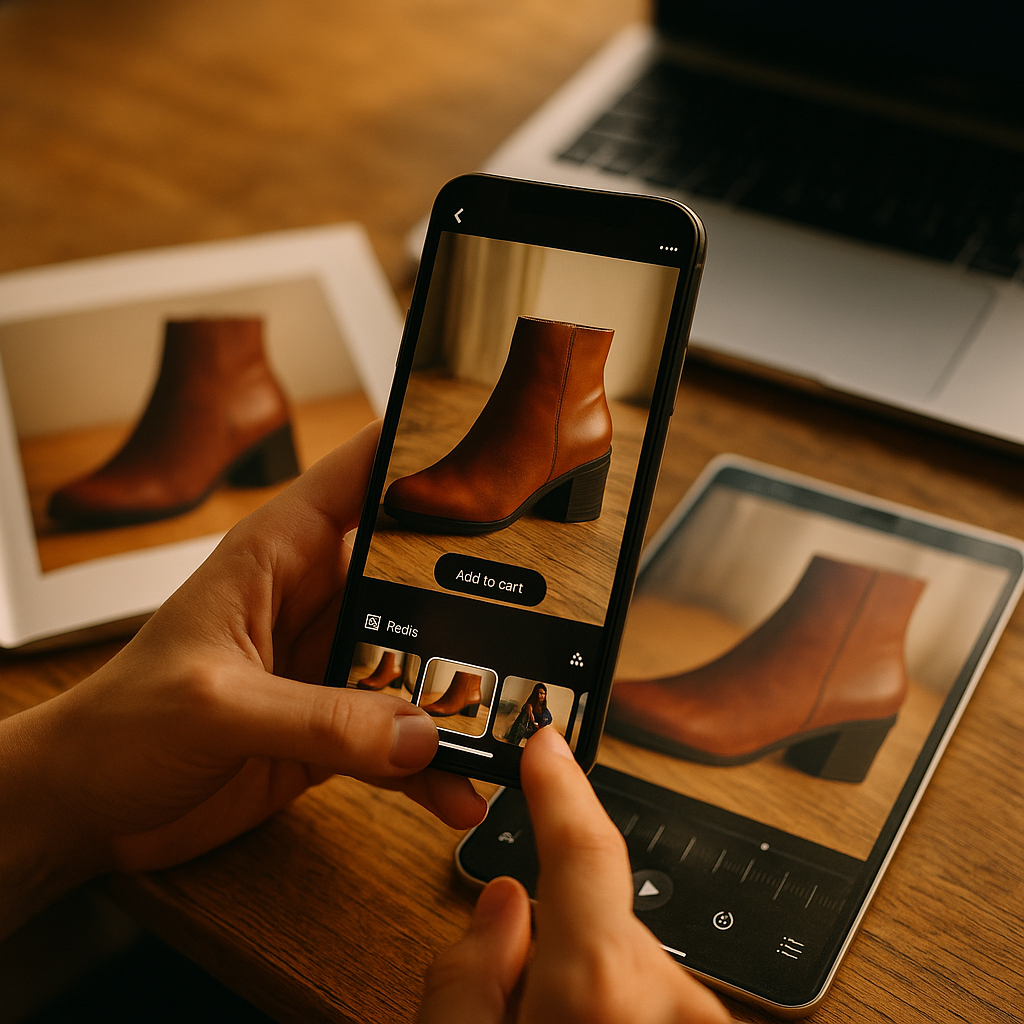
Ninety-three percent of shoppers say video influences their purchase decisions, yet most mid-size retailers still shoot fewer than a dozen product videos a month. Why? Studio time is expensive and slow. Enter the AI product-video generator, a category of tools that turns flat catalog images into scroll-stopping, shoppable reels without a camera, a model, or a single studio booking.
That’s not a marginal efficiency gain. It’s a structural shift in how brands produce video at catalog scale.
The Math That Made Studio Shoots Unsustainable
Think about a mid-market apparel brand with 4,000 SKUs. A traditional shoot for even 200 of those items — models, lighting, a studio day rate, post-production — runs tens of thousands of dollars and weeks of lead time. Multiply that by seasonal refreshes, color variants, and platform-specific aspect ratios, and the math simply breaks.
Meanwhile, TikTok Shop and Instagram Reels reward fresh, native-feeling video daily. Static product photos don’t cut it anymore in a feed built for motion.
That gap between demand for video and the cost of producing it is exactly what AI product-video tools were built to close.
Brands running AI-generated product reels report production cycles dropping from an average of three weeks to under 48 hours, according to vendor case studies circulating across the creator-tech space — a speed advantage that’s becoming a competitive baseline, not a novelty.
How These Tools Actually Work
Strip away the marketing language and the pipeline is fairly consistent across vendors. You upload a product image — the same one already sitting in your catalog feed. The tool segments the product from its background, applies a generative model trained on motion and lighting patterns, and outputs a short video: a slow rotation, a fabric ripple, a liquid pour, a zoom into stitching detail.
Some platforms go further, adding AI-generated voiceover, on-screen text overlays, and even synthetic “models” wearing or holding the product. Others stick to pure product motion, which tends to look more authentic and draws fewer content-authenticity questions.
The best tools also auto-format for platform specs — 9:16 for Reels and TikTok, square for feed placements, with captions baked in for sound-off viewing (still the majority of mobile video consumption).
This isn’t the same as a synthetic avatar reading a script. If you’re evaluating that adjacent category — AI presenters and voice clones for product storytelling — the comparison in ElevenLabs vs HeyGen vs Synthesia for Shoppable Video is a useful companion read, since many brands end up combining both approaches: AI motion for the product, AI voice for the pitch.
Who’s Actually Using This in Production
E-commerce brands with large, fast-turnover catalogs are the early adopters — fashion, beauty, home goods, anything with color variants and seasonal drops. Beauty brands in particular lean on texture-simulation features: showing a serum’s viscosity or a lipstick’s finish without a lab-grade macro lens.
Retail media networks are testing these tools too, generating video ad units for third-party sellers who’d never otherwise afford production. That’s a meaningful shift for marketplace sellers on Amazon or Walmart Connect, where video ad slots historically favored brands with in-house creative teams.
Agencies are folding this into retainer models as a volume play: instead of billing for a handful of hero videos, they’re billing for hundreds of catalog-wide variants, tested and iterated at a fraction of the old cost per asset.
The ROI Case, Without the Hype
Let’s be direct about where the savings actually show up:
- Production cost per asset drops from hundreds of dollars (studio, talent, editing) to single-digit dollars in most AI tool pricing tiers.
- Time-to-publish compresses from weeks to same-day, which matters enormously for flash sales, restocks, and trend-jacking on TikTok.
- Catalog coverage expands from “our top 5% of SKUs get video” to “every SKU gets at least one shoppable reel.”
- Testing velocity increases — you can generate five variants of a product video (different angles, different overlays) and let performance data pick the winner, something no studio budget ever allowed.
That last point deserves emphasis. Video testing used to be a luxury reserved for hero SKUs. Now it’s a default operational capability, and marketing teams that treat it as one will out-iterate competitors still gatekeeping video production through a creative approval bottleneck.
Where the Risk Actually Lives
None of this is free of tradeoffs, and the brand-safety and compliance angle matters more than the productivity pitch suggests.
First, there’s the authenticity question. Consumers are getting sharper at spotting synthetic motion — the uncanny fabric physics, the too-perfect lighting shift. If your AI-generated reel misrepresents how a product actually looks or moves, you’re not just risking a bad review. You’re risking a return-rate spike and a potential complaint to regulators. The FTC has been explicit that deceptive advertising rules apply regardless of whether a human or an algorithm created the misleading content.
Second, disclosure. If a product video includes an AI-generated model or a synthetic voice endorsing features, platforms increasingly expect clear labeling. Meta and TikTok have both tightened policies on AI-generated content transparency — check current guidance via Meta for Business and TikTok for Business before scaling any campaign that uses synthetic presenters.
Third, provenance. When you’re generating hundreds of video variants a week, you need a system tracking which model produced which asset, under what prompt, with what training data. That’s not paranoia — it’s basic governance, and it’s covered well in AI Model Registry: Track Marketing Asset Provenance Fast.
The brands winning with AI product video aren’t the ones generating the most volume. They’re the ones pairing volume with a review layer that catches misrepresentation before it reaches a shoppable placement.
Building the Compliance Layer Nobody Wants to Build
Here’s the uncomfortable truth: most marketing teams adopt AI video tools for speed, then bolt on governance as an afterthought once legal or compliance flags a problem. Flip that order.
Before scaling AI product-video generation across a catalog, you need:
- A brand-safety filter that screens generated video for misleading motion, inappropriate context, or off-brand tone — the framework in AI Brand-Safety Filters for Shoppable Short-Form Video is a solid starting template.
- A prompt audit process, since the instructions fed into these tools shape output just as much as the source image. Teams skipping this step are the ones covered in Why Marketing Teams Are Hiring AI Prompt Auditors Now.
- A hallucination check for any AI-generated product claims embedded in overlay text or voiceover. Product dimensions, materials, and care instructions need to match the actual SKU data, not a plausible-sounding generative guess — the exact failure mode explored in Stopping AI Hallucination Risk in Creator Briefs.
Skip these and you’re one viral complaint away from a very public correction.
What This Means for Attribution and Budget Lines
There’s a downstream operational question too: how do you measure ROI on hundreds of AI-generated video variants across platforms? Traditional attribution models built for a handful of hero assets choke on this volume.
You need identity resolution that can tie a shoppable reel view to an actual purchase, across TikTok Shop, Instagram, and retail media placements simultaneously. That’s a heavier lift than it sounds, and it’s why Unified Identity Resolution Makes Cross-Channel Attribution is worth reading before you commit budget to scaling video output tenfold.
It’s also worth separating your generative-AI production budget from your generative-engine-optimization budget. They serve different goals and get measured differently, a distinction laid out clearly in GEO vs GEM: Why Your AI Budget Needs Separate Lines.
Picking a Tool: What Actually Matters
Skip the feature-checklist comparison for a second. Ask these questions instead:
- Does the output integrate directly with your product feed, or does someone need to manually upload each SKU?
- Can it batch-process an entire catalog category overnight, or is it one-image-at-a-time?
- Does it auto-format for each platform’s native spec, or do you need a separate editing step?
- What’s the licensing arrangement for the underlying generative model — are you exposed if the vendor’s training data faces a legal challenge?
- Is there an audit trail for every generated asset?
Vendors that can’t answer question four clearly should give you pause. Per eMarketer, brand spend on AI-generated creative is climbing fast, and with that comes tightening scrutiny from both platforms and regulators on where training data actually came from.
Frequently Asked Questions
FAQs
What is an AI product-video generator?
It’s a tool that converts static catalog images into short, motion-based product videos using generative AI, without a physical studio shoot, model, or camera crew.
Are AI-generated product videos as effective as studio-shot video?
For many use cases — apparel movement, texture demonstration, quick rotations — performance is comparable, especially at the volume and speed AI enables. Hero campaigns and complex demonstrations still often benefit from human-directed production.
Do platforms require disclosure for AI-generated product video?
Increasingly, yes. Both Meta and TikTok have tightened labeling requirements for AI-generated or synthetic content, and the FTC treats deceptive AI-generated claims the same as any other misleading advertising.
How much does AI product-video generation typically cost compared to a studio shoot?
Studio shoots can run hundreds to thousands of dollars per asset once you factor in talent, lighting, and post-production. Most AI video tools price per generation in the single-digit to low double-digit dollar range, making catalog-wide coverage financially viable.
What’s the biggest risk in scaling AI product video across a catalog?
Misrepresentation — video that implies a product moves, fits, or performs differently than it actually does, creating both a return-rate problem and a regulatory exposure.
Can small brands use these tools, or is this an enterprise-only category?
Most tools are priced and built for small-to-mid catalogs, which is actually where the ROI case is strongest, since these brands rarely had studio budgets to begin with.
Start with a pilot: pick one product category, generate video for the full SKU range, and run it against your existing static-image conversion rate for thirty days. Let the data, not the demo reel, decide whether this belongs in your permanent production stack.
Top Influencer Marketing Agencies
The leading agencies shaping influencer marketing in 2026
Agencies ranked by campaign performance, client diversity, platform expertise, proven ROI, industry recognition, and client satisfaction. Assessed through verified case studies, reviews, and industry consultations.
Moburst

-
2

The Shelf
Boutique Beauty & Lifestyle Influencer AgencyA data-driven boutique agency specializing exclusively in beauty, wellness, and lifestyle influencer campaigns on Instagram and TikTok. Best for brands already focused on the beauty/personal care space that need curated, aesthetic-driven content.Clients: Pepsi, The Honest Company, Hims, Elf Cosmetics, Pure LeafVisit The Shelf → -
3

Audiencly
Niche Gaming & Esports Influencer AgencyA specialized agency focused exclusively on gaming and esports creators on YouTube, Twitch, and TikTok. Ideal if your campaign is 100% gaming-focused — from game launches to hardware and esports events.Clients: Epic Games, NordVPN, Ubisoft, Wargaming, Tencent GamesVisit Audiencly → -
4

Viral Nation
Global Influencer Marketing & Talent AgencyA dual talent management and marketing agency with proprietary brand safety tools and a global creator network spanning nano-influencers to celebrities across all major platforms.Clients: Meta, Activision Blizzard, Energizer, Aston Martin, WalmartVisit Viral Nation → -
5

The Influencer Marketing Factory
TikTok, Instagram & YouTube CampaignsA full-service agency with strong TikTok expertise, offering end-to-end campaign management from influencer discovery through performance reporting with a focus on platform-native content.Clients: Google, Snapchat, Universal Music, Bumble, YelpVisit TIMF → -
6

NeoReach
Enterprise Analytics & Influencer CampaignsAn enterprise-focused agency combining managed campaigns with a powerful self-service data platform for influencer search, audience analytics, and attribution modeling.Clients: Amazon, Airbnb, Netflix, Honda, The New York TimesVisit NeoReach → -
7

Ubiquitous
Creator-First Marketing PlatformA tech-driven platform combining self-service tools with managed campaign options, emphasizing speed and scalability for brands managing multiple influencer relationships.Clients: Lyft, Disney, Target, American Eagle, NetflixVisit Ubiquitous → -
8

Obviously
Scalable Enterprise Influencer CampaignsA tech-enabled agency built for high-volume campaigns, coordinating hundreds of creators simultaneously with end-to-end logistics, content rights management, and product seeding.Clients: Google, Ulta Beauty, Converse, AmazonVisit Obviously →