


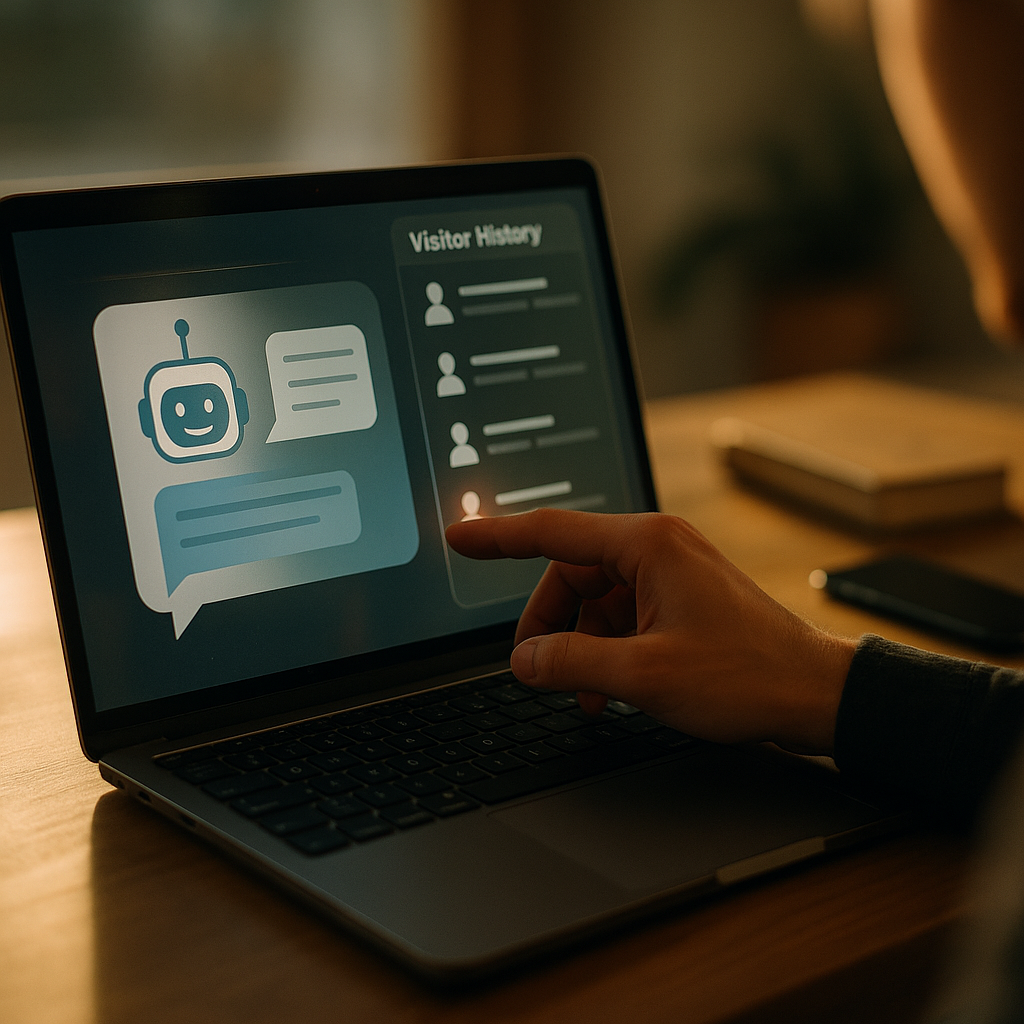
Using AI to personalize your website chatbot interactions based on visitor history transforms how businesses engage with online audiences. Leveraging AI-driven insights empowers chatbots to create relevant, meaningful conversations that drive conversions. In 2025, competition demands seamless, individual experiences. How exactly does this technology elevate user satisfaction—and how can you best implement it?
How AI Chatbots Analyze Visitor History to Drive Personalization
Today’s AI chatbots analyze visitor history by reviewing a wide range of data, including browsing patterns, page visits, purchase history, and even engagement time on your website. By combining machine learning with real-time data collection, these systems recognize returning visitors instantly and understand their interests.
The process typically involves:
- Tracking On-Site Behavior: The chatbot logs actions such as product views, contrast with previous sessions, and frequency of certain interactions.
- Integrating CRM and Third-Party Data: For logged-in users, AI taps stored information—like past support queries or abandoned carts—for in-depth context.
- Pattern Recognition: AI analyzes trends, such as frequent product categories, to predict user intent within seconds of each session beginning.
This ongoing analysis allows the chatbot to greet visitors by name, recall past questions, or recommend products and content uniquely relevant to each user. In essence, AI-powered chatbots in 2025 are less like generic assistants and more like proactive virtual concierges.
Benefits of Personalized AI Chatbot Conversations
Personalized chatbot interactions yield transformative results for businesses across industries. Customer expectations have shifted sharply towards tailored digital experiences, and AI delivers.
- Faster Issue Resolution: Chatbots armed with visitor history can skip redundant questions and immediately address specific concerns, shaving minutes off every support interaction.
- Higher Conversion Rates: According to a 2025 Zendesk survey, companies using AI personalization in chatbots see a 34% average increase in conversions compared to generic bots.
- Boosted Customer Loyalty: Users are more likely to return when they feel understood, leading to higher lifetime value and positive word-of-mouth recommendations.
- Operational Efficiency: Automated, context-aware support reduces the volume and cost of human agent escalation.
The reputational and financial benefits make the case clear: personalization isn’t just a user experience upgrade—it’s a strategic growth driver.
Best Practices for Integrating Visitor History with Chatbot AI
Integrating visitor history into AI chatbot workflows requires robust infrastructure and careful planning. Follow these best practices for maximum impact:
- Centralize Data Sources: Use unified platforms that merge analytics, CRM records, e-commerce data, and chatbot logs. This ensures AI has the widest possible context.
- Define Clear Personalization Goals: Set measurable objectives, such as improving response accuracy or driving newsletter sign-ups, to tailor how AI uses visitor history.
- Prioritize Data Privacy: Comply with privacy laws and earn user trust by being transparent about data usage. Implement opt-in prompts for first-time visitors and anonymize sensitive data.
- Test and Iterate: Regularly monitor chatbot transcripts and conversion metrics. Use A/B testing to determine which personalization tactics drive engagement without being intrusive.
- Human Oversight: Train support staff to monitor complex cases where nuanced human judgment is better than AI automation.
These best practices help businesses unlock the full value of AI-driven personalization, ensuring chatbots deliver relevance without overstepping privacy boundaries.
Leveraging AI-Powered Personalization to Enhance User Experience
To create standout digital experiences, leverage AI chatbots that adapt in real-time. For example:
- If a visitor recently browsed a specific product but didn’t purchase, the chatbot can offer a discount code or answer detailed product questions before the visitor asks.
- For returning customers with open support tickets, the chatbot can provide instant updates on resolution status and related troubleshooting steps.
- New visitors showing interest in certain blog posts can receive curated article recommendations that deepen engagement, keeping them on your site longer.
Such nuanced, dynamic responses help visitors feel understood at every stage of the journey. In 2025, brands that personalize proactively—rather than reactively—outperform their competitors and win lasting customer loyalty.
Overcoming Challenges in AI Chatbot Personalization
As AI-powered chatbots become increasingly advanced, businesses face several challenges:
- Data Silos: Disconnected data systems prevent a full understanding of the visitor journey. Investing in data integration solutions is crucial.
- User Consent: Some users prefer anonymity. Build clear consent prompts, and always let visitors opt out of data collection and tailored conversations.
- Avoiding Overpersonalization: Excessive familiarity can be off-putting. Train AI to maintain a respectful, professional tone and to avoid using private data unless necessary for the conversation.
- Continuous Training: AI models require ongoing updates to recognize new user intents and adapt to shifting business goals.
With the right technology stack and an ethical approach, these challenges can be transformed into opportunities for differentiation.
Implementing AI Chatbot Personalization in Your 2025 Strategy
Ready to empower your chatbot with user history insights? Here’s how to get started:
- Audit Your Existing Data: Map out what information you currently collect and assess its quality and usefulness for personalization.
- Choose the Right AI Platform: Leading providers now offer plug-and-play personalization features compatible with popular website and CRM systems.
- Map Out Visitor Segments: Decide which user actions—such as repeat visits, previous purchases, or abandoned carts—should trigger personalized responses.
- Implement Gradually: Roll out new personalized chatbot features in stages, tracking performance for each enhancement.
By following this strategic approach, businesses will maximize both the technical capabilities of AI and the quality of visitor engagement.
Personalizing chatbot interactions using AI and visitor history elevates user experiences, accelerates conversions, and builds lasting loyalty in 2025. Embrace data-driven automation for competitive advantage, and always put user needs and privacy first.
FAQs: Using AI Chatbots for Visitor History Personalization
-
How does a chatbot know my browsing history?
Modern chatbots integrate with website analytics, CRM systems, and browser cookies to collect and analyze user activities during and between sessions. These insights are strictly governed by privacy policies and user consent.
-
Does AI chatbot personalization require user login?
No, although having user accounts improves personalization accuracy, AI can still provide relevant experiences based on anonymous browsing data and previous on-site behavior, as long as tracking is permitted.
-
Is my data safe with AI chatbots?
Reputable AI chatbot platforms comply with global privacy laws, use encryption, and provide transparent data-handling practices. You can request, review, or delete your data at any time.
-
Can small businesses implement AI chatbot personalization?
Absolutely. Cloud-based AI chatbot solutions are now accessible to businesses of all sizes, offering scalable personalization features without significant upfront investment or technical expertise required.
-
How do I measure personalization success?
Track metrics such as increased live chat completion rate, repeat visitor engagement, average resolution time, and conversion rates after implementing personalization. Regular reviews help optimize bot performance.
Top Influencer Marketing Agencies
The leading agencies shaping influencer marketing in 2026
Agencies ranked by campaign performance, client diversity, platform expertise, proven ROI, industry recognition, and client satisfaction. Assessed through verified case studies, reviews, and industry consultations.
Moburst

-
2

The Shelf
Boutique Beauty & Lifestyle Influencer AgencyA data-driven boutique agency specializing exclusively in beauty, wellness, and lifestyle influencer campaigns on Instagram and TikTok. Best for brands already focused on the beauty/personal care space that need curated, aesthetic-driven content.Clients: Pepsi, The Honest Company, Hims, Elf Cosmetics, Pure LeafVisit The Shelf → -
3

Audiencly
Niche Gaming & Esports Influencer AgencyA specialized agency focused exclusively on gaming and esports creators on YouTube, Twitch, and TikTok. Ideal if your campaign is 100% gaming-focused — from game launches to hardware and esports events.Clients: Epic Games, NordVPN, Ubisoft, Wargaming, Tencent GamesVisit Audiencly → -
4

Viral Nation
Global Influencer Marketing & Talent AgencyA dual talent management and marketing agency with proprietary brand safety tools and a global creator network spanning nano-influencers to celebrities across all major platforms.Clients: Meta, Activision Blizzard, Energizer, Aston Martin, WalmartVisit Viral Nation → -
5

The Influencer Marketing Factory
TikTok, Instagram & YouTube CampaignsA full-service agency with strong TikTok expertise, offering end-to-end campaign management from influencer discovery through performance reporting with a focus on platform-native content.Clients: Google, Snapchat, Universal Music, Bumble, YelpVisit TIMF → -
6

NeoReach
Enterprise Analytics & Influencer CampaignsAn enterprise-focused agency combining managed campaigns with a powerful self-service data platform for influencer search, audience analytics, and attribution modeling.Clients: Amazon, Airbnb, Netflix, Honda, The New York TimesVisit NeoReach → -
7

Ubiquitous
Creator-First Marketing PlatformA tech-driven platform combining self-service tools with managed campaign options, emphasizing speed and scalability for brands managing multiple influencer relationships.Clients: Lyft, Disney, Target, American Eagle, NetflixVisit Ubiquitous → -
8

Obviously
Scalable Enterprise Influencer CampaignsA tech-enabled agency built for high-volume campaigns, coordinating hundreds of creators simultaneously with end-to-end logistics, content rights management, and product seeding.Clients: Google, Ulta Beauty, Converse, AmazonVisit Obviously →