


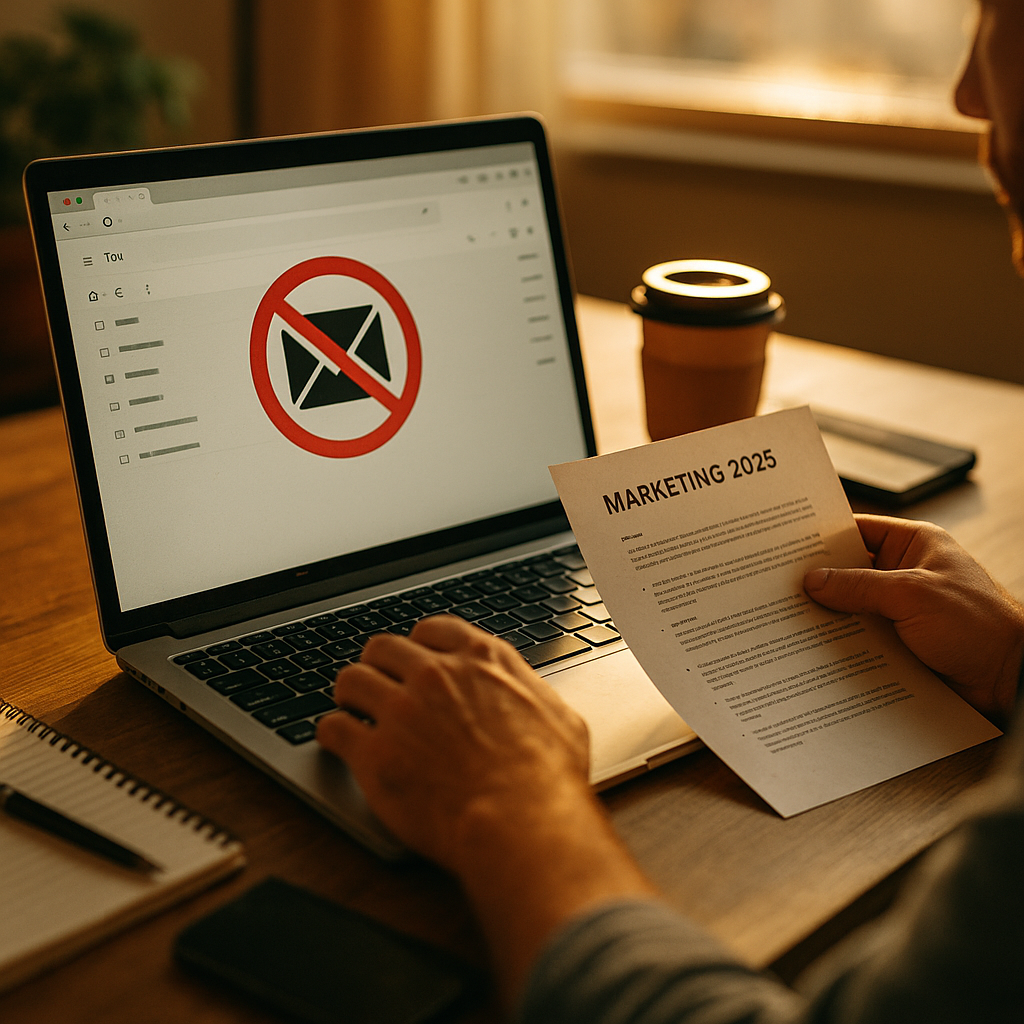
Complying with anti-spam laws for B2B and B2C marketing is critical for keeping your business safe, your reputation intact, and your campaigns effective. With stricter regulations in 2025, understanding compliance is essential for marketers. So, how do you ensure your messages reach the right inboxes without crossing legal lines? Here’s what every professional needs to know.
Understanding Anti-Spam Laws: CAN-SPAM and GDPR Essentials
Marketers in both B2B and B2C spaces must prioritize understanding prevailing anti-spam laws. The U.S. CAN-SPAM Act and the European Union’s GDPR set the benchmark for consent, transparency, and respect for recipients’ rights. The CAN-SPAM Act requires accurate sender information, clear subject lines, an unsubscribe mechanism, and prompt removal from lists upon request. Under GDPR, strict consent requirements apply to all marketing emails, including for business recipients, unless legitimate interest is demonstrable. Fines for breaches can reach millions of dollars, making proper understanding non-negotiable.
Secondary Keyword: Best Practices for Opt-In and Consent
For both B2B and B2C marketing, obtaining explicit consent is foundational. B2B marketers commonly think business contacts are exempt; however, the latest international guidance moves towards requiring similar consent as in B2C. Here’s how to align with best practices:
- Use double opt-in: Confirm emails by requiring recipients to validate their subscription.
- Provide clear information: Explain how addresses will be used and what content subscribers can expect.
- Record all consent: Store time, method, and source of consent for compliance audits.
- Allow granular choices: Let users select topics or frequency to increase transparency.
Obtaining and documenting valid consent demonstrates good faith and puts you firmly in compliance with both B2B and B2C expectations.
Secondary Keyword: Managing Unsubscribes and Suppression Lists
A quick and simple unsubscribe mechanism is required by both CAN-SPAM and GDPR. Ignoring or delaying opt-out requests poses significant legal risks and damages brand trust. B2B marketers must comply with these rules just as strictly as B2C operations. Here’s how to implement compliant unsubscribe processes:
- Prominent links: Include a visible unsubscribe link in every message.
- One-click simplicity: Make the opt-out process fast and hassle-free.
- Immediate action: Remove contacts from mailing lists within a reasonable (usually 10-day) window.
- Maintain suppression lists: Keep records of those who have opted out for at least as long as the law requires, never re-adding without clear new consent.
Efficiently managed suppression lists are not just good practice—they are central to lawful B2B and B2C marketing.
Secondary Keyword: Content and Sender Identification Requirements
Your marketing messages must truthfully identify the sender and avoid misleading tactics. Even for B2B relationships, compliance means:
- Accurate ‘From’ details: Clearly display your company or sender name and use recognizable addresses.
- Honest subject lines: Accurately describe your offer and avoid clickbait.
- Physical address: Include a valid mailing address in all outreach to show legitimacy and meet CAN-SPAM and GDPR requirements.
- Legal disclaimers where required: Regulatory bodies increasingly expect transparent disclosures, especially around personal data usage.
Misleading identification or opaque content can trigger complaints and civil or criminal penalties—even in business-to-business communication.
Secondary Keyword: Monitoring and Auditing Your Email Marketing Practices
To ensure ongoing compliance in 2025’s regulatory environment, set up regular audits of your email marketing ecosystem. This applies for both B2B and B2C campaigns. Important steps include:
- Documenting your processes: Keep a well-organized record of how contacts are sourced, what consent is gathered, and when opt-outs occur.
- Regularly reviewing templates: Ensure that all message templates include the necessary legal information and unsubscribe options.
- Training teams: Educate everyone involved in marketing about compliance requirements and changes to international regulations.
- Testing compliance: Subscribe to your campaigns with test addresses to verify the process from a user perspective.
Continuous monitoring will help you adapt to evolving laws and maintain your brand’s credibility with recipients and regulators alike.
Secondary Keyword: Regional Differences for B2B and B2C Marketing Compliance
Anti-spam regulations vary significantly across jurisdictions. While the CAN-SPAM Act offers some leniency for transactional B2B messaging, privacy-centric laws such as GDPR (and similar regulations emerging globally) no longer distinguish heavily between business and consumer recipients. In Canada, the Canadian Anti-Spam Law (CASL) applies equally to all marketing emails. If marketing internationally, always err on the side of stricter compliance, adapting your practices to the boldest standard in each recipient’s location.
FAQs: Anti-Spam Laws for B2B and B2C Marketing
-
Do anti-spam laws apply to B2B marketing?
Yes. Most major anti-spam laws, including GDPR and CASL, apply to both B2B and B2C communications. Don’t assume business contacts are exempt from consent or unsubscribe requirements.
-
What are the minimum requirements for an email campaign to be compliant?
Emails must have accurate sender information, a truthful subject line, clear opt-out instructions, and a physical postal address. Consent requirements depend on your recipient’s jurisdiction.
-
How quickly do I need to honor unsubscribe requests?
Most laws require honoring unsubscribe requests within 10 business days, but immediate removal is best practice for maintaining trust and compliance.
-
Is implied consent enough for B2B marketing?
Implied consent can be risky, especially under GDPR-like regimes. Explicit, recorded consent is the safest route for both B2B and B2C marketing.
-
What penalties can businesses face for non-compliance?
Penalties include substantial fines—up to tens of millions of dollars—litigation, and damage to your sender reputation, which affects deliverability and business trust.
In summary, complying with anti-spam laws for B2B and B2C marketing is non-negotiable in 2025. By prioritizing clear consent, accurate sender identification, prompt unsubscribe management, and regular auditing, you’ll protect your business and build trust in every campaign you run.
Top Influencer Marketing Agencies
The leading agencies shaping influencer marketing in 2026
Agencies ranked by campaign performance, client diversity, platform expertise, proven ROI, industry recognition, and client satisfaction. Assessed through verified case studies, reviews, and industry consultations.
Moburst

-
2

The Shelf
Boutique Beauty & Lifestyle Influencer AgencyA data-driven boutique agency specializing exclusively in beauty, wellness, and lifestyle influencer campaigns on Instagram and TikTok. Best for brands already focused on the beauty/personal care space that need curated, aesthetic-driven content.Clients: Pepsi, The Honest Company, Hims, Elf Cosmetics, Pure LeafVisit The Shelf → -
3

Audiencly
Niche Gaming & Esports Influencer AgencyA specialized agency focused exclusively on gaming and esports creators on YouTube, Twitch, and TikTok. Ideal if your campaign is 100% gaming-focused — from game launches to hardware and esports events.Clients: Epic Games, NordVPN, Ubisoft, Wargaming, Tencent GamesVisit Audiencly → -
4

Viral Nation
Global Influencer Marketing & Talent AgencyA dual talent management and marketing agency with proprietary brand safety tools and a global creator network spanning nano-influencers to celebrities across all major platforms.Clients: Meta, Activision Blizzard, Energizer, Aston Martin, WalmartVisit Viral Nation → -
5

The Influencer Marketing Factory
TikTok, Instagram & YouTube CampaignsA full-service agency with strong TikTok expertise, offering end-to-end campaign management from influencer discovery through performance reporting with a focus on platform-native content.Clients: Google, Snapchat, Universal Music, Bumble, YelpVisit TIMF → -
6

NeoReach
Enterprise Analytics & Influencer CampaignsAn enterprise-focused agency combining managed campaigns with a powerful self-service data platform for influencer search, audience analytics, and attribution modeling.Clients: Amazon, Airbnb, Netflix, Honda, The New York TimesVisit NeoReach → -
7

Ubiquitous
Creator-First Marketing PlatformA tech-driven platform combining self-service tools with managed campaign options, emphasizing speed and scalability for brands managing multiple influencer relationships.Clients: Lyft, Disney, Target, American Eagle, NetflixVisit Ubiquitous → -
8

Obviously
Scalable Enterprise Influencer CampaignsA tech-enabled agency built for high-volume campaigns, coordinating hundreds of creators simultaneously with end-to-end logistics, content rights management, and product seeding.Clients: Google, Ulta Beauty, Converse, AmazonVisit Obviously →