


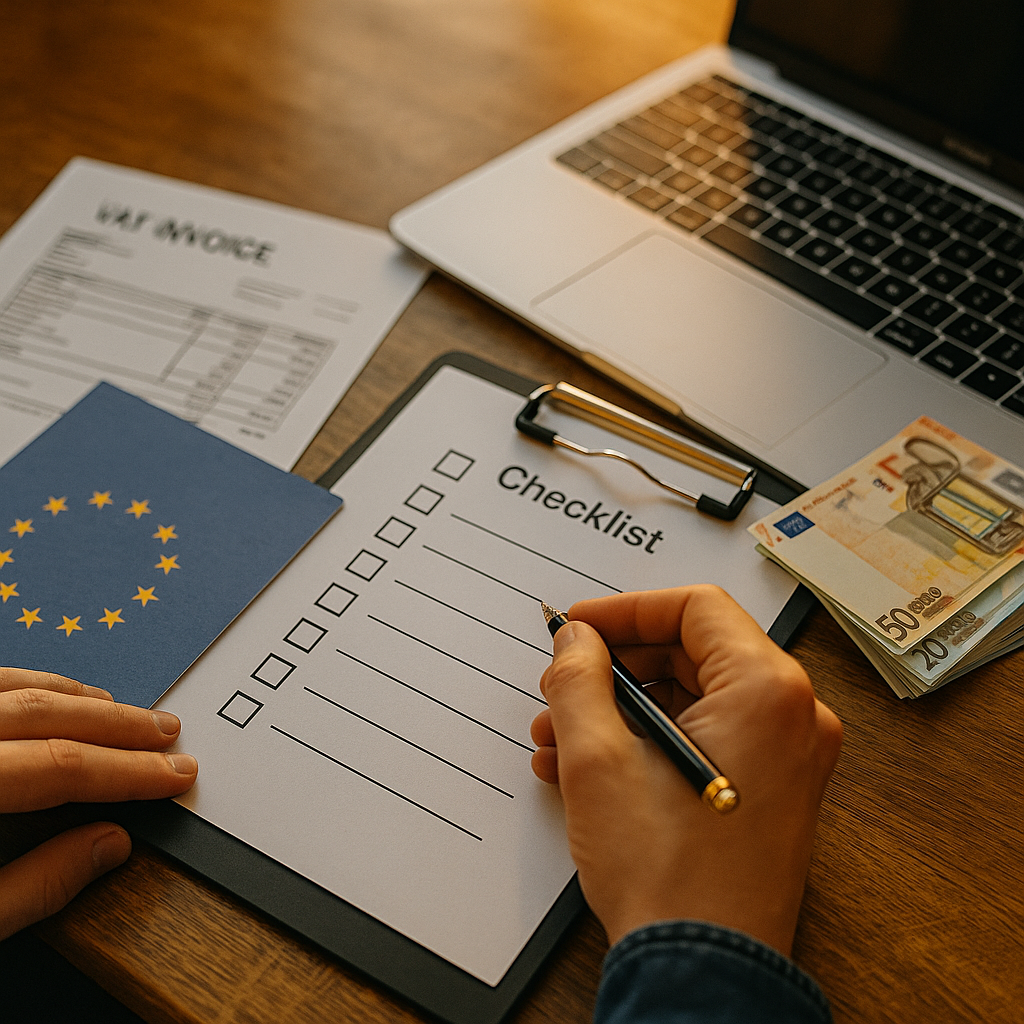
One missed VAT registration threshold can turn a €50,000 creator campaign into a six-figure liability. That’s not hyperbole — it’s the new reality for brands paying EU-based creators after the digital services tax expansion took full effect this year. If your finance team still treats cross-border VAT compliance as an afterthought bolted onto creator contracts, you’re already behind.
The rules governing how brands source, invoice, and remit tax on creator payments across EU member states have shifted meaningfully. Platforms are tightening reporting requirements. Tax authorities are cross-referencing creator income against brand disclosures at a scale that wasn’t feasible even two years ago. And “we didn’t know” is not a defense that holds up under an audit.
What Actually Changed With the Digital Services Tax Expansion
The expansion broadened the definition of taxable digital services to explicitly capture influencer marketing transactions, sponsored content licensing, and affiliate commission structures paid to creators domiciled in EU member states. Previously, a lot of brands operated in a gray zone — treating creator payments like standard marketing services and hoping the VAT question sorted itself out through the creator’s own tax filings.
That gray zone is gone. Member states now require brands (or their payment intermediaries) to verify creator VAT registration status before processing payment, and several jurisdictions have added digital reporting obligations that flag mismatches between invoiced amounts and platform-reported earnings.
Brands that still rely on creators to “handle their own tax stuff” are exposed to joint liability in more EU jurisdictions than at any point in the last decade.
This isn’t unique to any single country. It’s a coordinated tightening across the bloc, largely driven by the same digital economy taxation pressure that produced OECD Pillar One and Pillar Two frameworks. Creator payments simply got swept into that broader enforcement wave.
Why This Matters More For Brands Than Agencies
Agencies can restructure contracts and pass liability downstream. Brands, especially the ones paying creators directly or through in-house influencer programs, often can’t. If you’re the entity issuing payment, in many EU jurisdictions you’re also the entity holding VAT withholding and reporting obligations — regardless of whether the creator is a sole proprietor, a limited company, or working through a management agency.
That distinction matters enormously for budget forecasting. A campaign priced at a flat creator fee suddenly carries an unbudgeted 19-27% VAT liability depending on the member state, if the compliance groundwork wasn’t done upfront.
We covered the foundational version of this problem in our earlier EU creator payments VAT compliance checklist. Consider this piece the update for the expanded enforcement environment — the rules didn’t just get stricter, they got more automated.
The Checklist: Seven Things to Verify Before You Pay a Creator
This is the operational core. Treat it as a pre-payment gate, not a post-campaign cleanup exercise.
- Confirm the creator’s VAT registration status and number. Cross-check it against the EU’s VIES (VAT Information Exchange System) validation tool before onboarding. A creator claiming exemption under a small-business threshold in one country may still owe VAT if your brand is registered in a different member state.
- Determine the place-of-supply rule that applies. B2B digital services are generally taxed where the customer (your brand) is established, not where the creator is based. This reverses who’s responsible for remitting VAT in many scenarios — get this wrong and you’ll misfile in both directions.
- Apply the reverse charge mechanism correctly. If your brand is VAT-registered in the EU and the creator is also VAT-registered, reverse charge typically applies, shifting the reporting obligation to you. Document this explicitly in the invoice and contract, not just verbally with your finance team.
- Verify creator business structure documentation. Sole trader, limited company, or agency-represented — each carries different VAT treatment. Ask for this in writing before the first payment, not after a dispute arises.
- Audit your payment platform’s tax reporting integration. Tools like Stripe, PayPal for Business, and creator-payment platforms increasingly auto-generate VAT documentation, but the accuracy depends entirely on what data was captured at onboarding.
- Reconcile invoiced amounts against platform-reported earnings quarterly. Tax authorities are doing this cross-referencing themselves now. Get ahead of discrepancies before an auditor finds them for you.
- Retain documentation for the statutory period — typically 6-10 years depending on jurisdiction, longer than most brands’ standard vendor-record retention policy.
Miss any one of these and you’re not just risking a fine. You’re risking a retroactive tax assessment that can span every campaign run with that creator, not just the flagged transaction.
Where Brands Actually Get This Wrong
In practice, three failure points show up repeatedly.
First: treating all EU creators as a single compliance bucket. VAT thresholds, reverse charge applicability, and reporting cadence differ by member state. A creator based in Germany and one based in Poland may trigger entirely different obligations for the exact same campaign structure.
Second: assuming platform payment rails handle tax compliance automatically. They don’t, not fully. Platforms process payment; they don’t verify your specific VAT registration status against the creator’s, and they don’t file on your behalf unless you’ve configured that explicitly.
Third: no internal ownership. Marketing negotiates the deal, finance processes payment, legal reviews the contract — and nobody owns the VAT verification step end-to-end. That gap is where compliance failures live.
This mirrors a broader pattern we’ve seen across creator compliance generally: risk accumulates in the handoffs between departments, not within any single team’s process. It’s the same dynamic documented in our piece on gift-tax reporting risks for nano-creator seeding programs — different tax mechanism, identical organizational blind spot.
Building the Operational Workflow, Not Just the Checklist
A checklist without an owner is just a document nobody reads until it’s too late. Here’s how the operationally mature brands are structuring this:
Pre-contract stage: VAT status verification becomes a mandatory field in creator onboarding, gated before any contract moves to signature. No VAT number on file, no green light.
Contract stage: Include explicit VAT treatment clauses specifying which party bears reporting responsibility and under what mechanism (reverse charge, standard invoicing, or exemption). This should sit alongside your existing indemnification and liability language, similar in spirit to how we recommend structuring indemnification clauses for AI-driven media buying — specificity upfront prevents disputes later.
Payment stage: Automated reconciliation between invoiced amounts, platform-reported creator earnings, and your VAT ledger, run at minimum quarterly.
Audit stage: A standing right to request documentation from creators and their agencies, mirroring the audit-reach expansion we’ve argued for in right-of-audit clauses for clipping networks. If your audit rights don’t extend to verifying tax documentation, they’re incomplete.
The brands avoiding VAT exposure aren’t the ones with the best lawyers. They’re the ones who made tax verification a gate, not a formality.
What This Means for Budget Planning
Finance teams need to stop pricing EU creator campaigns as flat fees and start pricing them as fee-plus-VAT-contingency line items. According to Statista data on EU digital advertising spend, cross-border influencer budgets have grown steadily as brands expand creator programs beyond domestic markets — meaning the VAT exposure surface is growing right alongside it. eMarketer forecasts continued growth in EU creator economy spend, which only raises the stakes for getting the compliance architecture right now, before volume scales further.
Build a 15-20% contingency buffer into cross-border creator budgets specifically for VAT exposure until your verification workflow is mature enough to eliminate most surprises. That’s not overly conservative — it’s realistic given how many brands are still catching up to the expanded rules.
Legal and compliance teams should also loop in broader AI-driven campaign governance work happening elsewhere in the org. If your brand is already building override protocols and governance charters for autonomous ad spend, as discussed in our AI governance charter piece, VAT compliance thresholds belong in that same governance conversation. Tax risk and spend risk are increasingly the same conversation at the leadership level.
For further regulatory grounding, HMRC and EU tax authorities publish updated guidance regularly — worth bookmarking for your compliance team’s quarterly review, alongside resources like the ICO for adjacent data handling obligations that often intersect with creator payment documentation.
Next step: audit your last five EU creator payments against the seven-point checklist above. If you can’t produce a VAT number and place-of-supply determination for each one in under ten minutes, your workflow needs rebuilding before your next campaign, not after your next audit notice.
FAQs
Do brands need to register for VAT in every EU country where they pay creators?
Not necessarily. Registration requirements depend on where your brand is already established, whether the reverse charge mechanism applies, and the creator’s own VAT status. Many brands only need registration in their home jurisdiction, with reverse charge handling cross-border transactions. But this varies by member state, so verify per-country rather than assuming a blanket rule.
What happens if a creator falsely claims VAT exemption?
Liability typically still falls on the paying brand if due diligence wasn’t documented. This is why verifying VAT registration status through VIES before payment, and retaining that documentation, matters more than trusting a creator’s self-reported status alone.
How does the reverse charge mechanism affect creator payments specifically?
Under reverse charge, the brand (as the VAT-registered recipient of the service) reports and remits the VAT rather than the creator charging it upfront. This shifts administrative burden to the brand but also shifts risk — misapplying reverse charge when it doesn’t qualify is one of the most common compliance errors.
Can payment platforms like PayPal or Stripe handle VAT compliance automatically?
They can support documentation and reporting, but they don’t independently verify your specific VAT registration situation against each creator’s status. Treat platform tools as infrastructure, not a substitute for your own verification workflow.
How long should brands retain VAT documentation for creator payments?
Retention periods range from six to ten years depending on the member state, generally longer than standard vendor documentation policies. Build creator VAT records into a separate, longer retention schedule to avoid gaps during audits.
FAQs
Top Influencer Marketing Agencies
The leading agencies shaping influencer marketing in 2026
Agencies ranked by campaign performance, client diversity, platform expertise, proven ROI, industry recognition, and client satisfaction. Assessed through verified case studies, reviews, and industry consultations.
Moburst

-
2

The Shelf
Boutique Beauty & Lifestyle Influencer AgencyA data-driven boutique agency specializing exclusively in beauty, wellness, and lifestyle influencer campaigns on Instagram and TikTok. Best for brands already focused on the beauty/personal care space that need curated, aesthetic-driven content.Clients: Pepsi, The Honest Company, Hims, Elf Cosmetics, Pure LeafVisit The Shelf → -
3

Audiencly
Niche Gaming & Esports Influencer AgencyA specialized agency focused exclusively on gaming and esports creators on YouTube, Twitch, and TikTok. Ideal if your campaign is 100% gaming-focused — from game launches to hardware and esports events.Clients: Epic Games, NordVPN, Ubisoft, Wargaming, Tencent GamesVisit Audiencly → -
4

Viral Nation
Global Influencer Marketing & Talent AgencyA dual talent management and marketing agency with proprietary brand safety tools and a global creator network spanning nano-influencers to celebrities across all major platforms.Clients: Meta, Activision Blizzard, Energizer, Aston Martin, WalmartVisit Viral Nation → -
5

The Influencer Marketing Factory
TikTok, Instagram & YouTube CampaignsA full-service agency with strong TikTok expertise, offering end-to-end campaign management from influencer discovery through performance reporting with a focus on platform-native content.Clients: Google, Snapchat, Universal Music, Bumble, YelpVisit TIMF → -
6

NeoReach
Enterprise Analytics & Influencer CampaignsAn enterprise-focused agency combining managed campaigns with a powerful self-service data platform for influencer search, audience analytics, and attribution modeling.Clients: Amazon, Airbnb, Netflix, Honda, The New York TimesVisit NeoReach → -
7

Ubiquitous
Creator-First Marketing PlatformA tech-driven platform combining self-service tools with managed campaign options, emphasizing speed and scalability for brands managing multiple influencer relationships.Clients: Lyft, Disney, Target, American Eagle, NetflixVisit Ubiquitous → -
8

Obviously
Scalable Enterprise Influencer CampaignsA tech-enabled agency built for high-volume campaigns, coordinating hundreds of creators simultaneously with end-to-end logistics, content rights management, and product seeding.Clients: Google, Ulta Beauty, Converse, AmazonVisit Obviously →