


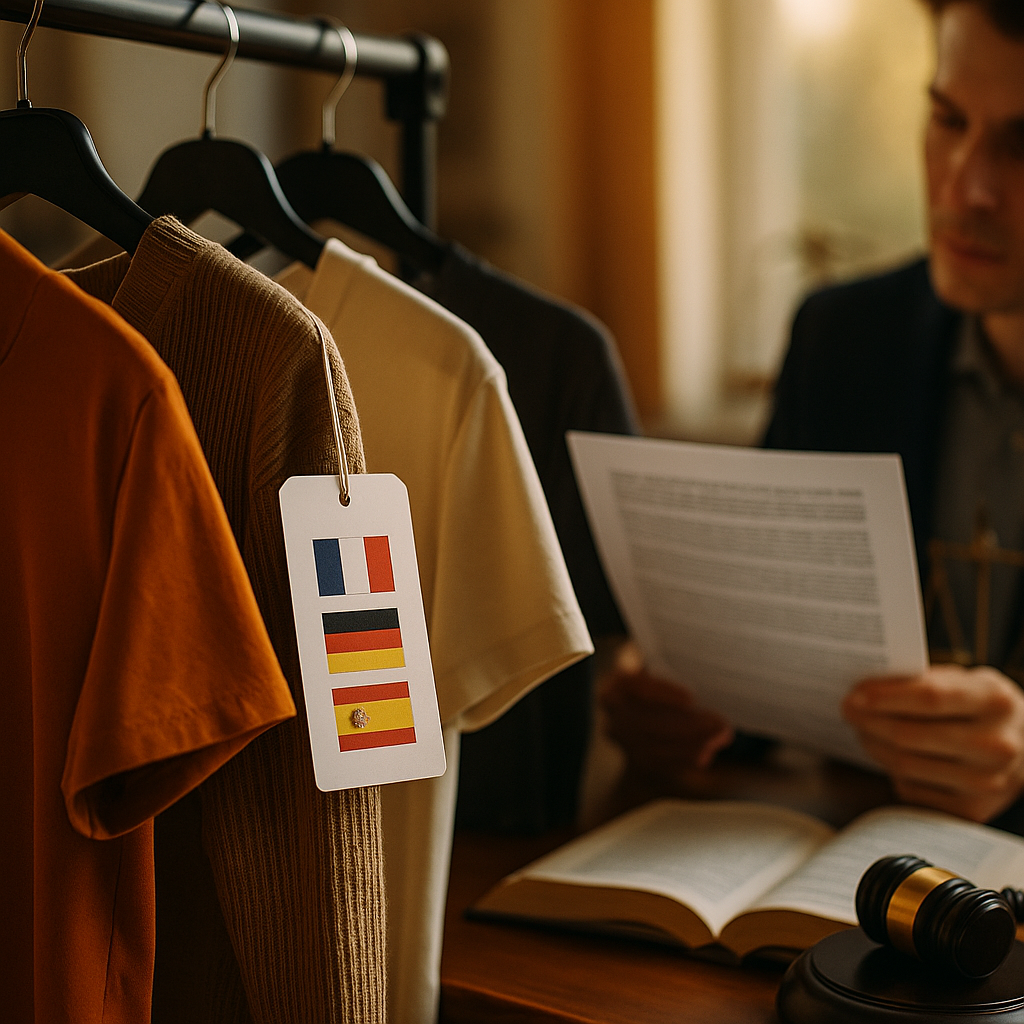
France now fines brands up to €10,000 per ad for promoting ultra-fast-fashion products, and the penalty doubles for repeat violations. That’s not a rounding error in a media budget. It’s a signal that fast-fashion ad law compliance has become a board-level risk, not a legal footnote, and Germany and Spain are watching closely before writing their own versions.
Why This Law Exists, and Why It’s Spreading
France’s loi visant à réduire l’impact environnemental de l’industrie textile, passed to curb the environmental damage of disposable clothing, took direct aim at brands like Shein and Temu. The law restricts advertising for companies that release excessive volumes of new styles, tightens influencer marketing rules for these brands, and mandates environmental impact disclosures. It’s the first law of its kind to explicitly target the business model, not just the product.
Here’s the part that should worry every brand marketer outside France: this isn’t a one-off. Germany’s Environment Ministry has floated a Textilkennzeichnungsgesetz update targeting fast-fashion marketing, and Spain’s consumer protection agency has signaled similar intent following its 2023 waste law amendments. The EU’s broader Green Claims Directive is also grinding through Brussels, meaning greenwashing penalties are coming even for brands that never touch France.
If your influencer program touches France, Germany, or Spain, treat this as one compliance problem with three regional dialects, not three separate fires to fight.
What Actually Triggers the Fine
The France law defines “ultra-fast-fashion” companies by output volume and low unit economics, not by brand name. A company adding thousands of new SKUs weekly at rock-bottom prices qualifies, regardless of country of origin. This matters because plenty of mid-market retailers unintentionally resemble the targeted profile once you count private-label drops and influencer-driven flash collections.
Three triggers show up most often in early enforcement actions:
- Paid influencer content promoting qualifying brands or products, including affiliate links and gifted hauls.
- Environmental or sustainability claims made without substantiation, such as “eco-friendly” or “low-impact” labeling on product pages linked from creator content.
- Search and social ads that drive traffic to qualifying retailers, even when the brand running the ad isn’t the manufacturer.
Agencies and brands buying media on behalf of fast-fashion clients share liability. That’s the detail that gets missed in most compliance memos. If your agency runs a TikTok Shop campaign for a client that trips the volume threshold, you’re exposed too.
Building the Playbook: Five Controls Every Brand Needs
Compliance teams don’t need a new department. They need five specific controls layered onto existing influencer and paid media workflows.
1. Vendor and Client Screening
Before onboarding any apparel client or brand partnership, run a volume and pricing screen. How many new SKUs does the brand release monthly? What’s the average unit price relative to category norms? Document the answer. This single step catches most exposure before a contract is signed, and it mirrors the due diligence brands already apply to creator tax and payment compliance checks.
2. Claims Substantiation Files
Every sustainability claim in creator content, whether it’s “sustainable fabric” or “carbon-neutral shipping,” needs a backing document on file before publish. This is the same discipline brands already use for AI content audit protocols: nothing goes live without a documented source.
3. Geo-Fencing Ad Delivery
If a fast-fashion client’s ads are only restricted in France, don’t let programmatic buys or influencer boosted-post targeting accidentally serve French audiences through lookalike expansion. Media buyers should build exclusion lists at the campaign level, not rely on platform defaults.
4. Contract Language for Creators
Influencer agreements need explicit clauses restricting sustainability language creators can use organically, plus indemnification language covering regulatory fines tied to creator-generated claims. This is a direct extension of the disclosure clause work already standard in TikTok Shop livestream disclosure agreements.
5. A Living Regulatory Tracker
Germany and Spain are drafting, not finalizing. Rules will shift. A quarterly review of pending legislation, assigned to someone specific (not “legal will handle it”), keeps the playbook current instead of reactive.
France vs. Germany vs. Spain: Where the Rules Diverge
The three markets aren’t harmonized, and brands running pan-European programs need to plan for divergence, not convergence. France’s law is already in force with defined fines. Germany’s proposal leans on labeling and disclosure requirements rather than outright ad bans. Spain’s draft ties penalties to its existing extended producer responsibility framework for textiles, which changes how liability flows between manufacturer, retailer, and marketer.
A deeper regional breakdown, including specific thresholds and enforcement timelines, is covered in our comparison of EU fast-fashion ad rules across France, Germany, and Spain. Worth bookmarking if you manage budget across all three markets, because the compliance calendar will only get more crowded.
Waiting for Germany and Spain to finalize their laws before adjusting your influencer contracts is a bet against your own timeline. Enforcement rarely gives brands a grace period.
The ROI Case for Getting Ahead of This
Compliance spend is always framed as pure cost. It isn’t, not here. Brands that build sustainability disclosure discipline now avoid three expensive outcomes: direct fines, campaign takedown costs (re-shooting creator content, renegotiating usage rights), and reputational damage from being named in enforcement actions, which regulators in France have shown a willingness to publicize.
According to eMarketer, fashion and apparel remain among the top three categories for influencer ad spend in Europe, meaning the exposure surface is large and growing. Brands that treat this proactively also gain a marketing advantage: verified sustainability claims, backed by real documentation, perform better with EU consumers who are increasingly skeptical of vague green messaging. That’s not speculation, it’s consistent with broader Statista consumer trust research on sustainability marketing.
There’s also a quieter benefit: agencies that can demonstrate a documented compliance process win more RFPs in this category. Procurement teams at large retailers are starting to ask for it explicitly.
Where This Intersects With Existing EU Rules
Don’t build a fast-fashion-specific compliance silo. Overlay it onto work you’ve likely already started for the EU AI Act and general disclosure standards. If your team has already mapped EU AI Act disclosure requirements against FTC rules, the same governance structure, assigned owners, documentation repositories, review cadence, extends naturally to sustainability claims. Duplicating effort here wastes budget and confuses creators who are already juggling multiple disclosure standards across platforms and jurisdictions.
It’s also worth noting the parallel with youth-adjacent compliance work. The push toward a single global standard for youth-adjacent creator content reflects the same underlying pressure: regulators in different countries writing similar rules faster than global brands can adapt region by region. The smart move is building one flexible framework, not three rigid ones.
Next step: Audit your current apparel and fashion creator contracts this quarter for volume-threshold exposure and unsubstantiated sustainability claims, then assign one owner to track France, Germany, and Spain as a single evolving compliance file, not three separate legal threads.
FAQs
What products or brands does France’s ultra-fast-fashion ad law actually cover?
The law applies to companies exceeding defined thresholds for new product releases and low average unit pricing, a profile that captures Shein, Temu, and similar high-volume retailers, along with any brand or private-label collection that mimics that release cadence.
Can my agency be fined even if we don’t own the fast-fashion brand?
Yes. Agencies and media buyers that place ads or manage influencer campaigns for qualifying brands share liability under the French law, so vendor screening before contract signing is essential.
Is Germany’s fast-fashion law already in effect?
No, Germany’s proposal is still in draft form and leans toward labeling and disclosure requirements rather than direct ad restrictions, but brands should prepare contract language now rather than waiting for finalization.
How does Spain’s approach differ from France’s?
Spain ties its draft rules to an existing extended producer responsibility framework for textiles, which shifts some liability toward manufacturers and importers rather than focusing primarily on advertising channels.
What’s the fastest way to reduce exposure right now?
Add a claims substantiation requirement to your creator content approval process and screen apparel clients for volume and pricing thresholds before signing new influencer contracts.
Top Influencer Marketing Agencies
The leading agencies shaping influencer marketing in 2026
Agencies ranked by campaign performance, client diversity, platform expertise, proven ROI, industry recognition, and client satisfaction. Assessed through verified case studies, reviews, and industry consultations.
Moburst

-
2

The Shelf
Boutique Beauty & Lifestyle Influencer AgencyA data-driven boutique agency specializing exclusively in beauty, wellness, and lifestyle influencer campaigns on Instagram and TikTok. Best for brands already focused on the beauty/personal care space that need curated, aesthetic-driven content.Clients: Pepsi, The Honest Company, Hims, Elf Cosmetics, Pure LeafVisit The Shelf → -
3

Audiencly
Niche Gaming & Esports Influencer AgencyA specialized agency focused exclusively on gaming and esports creators on YouTube, Twitch, and TikTok. Ideal if your campaign is 100% gaming-focused — from game launches to hardware and esports events.Clients: Epic Games, NordVPN, Ubisoft, Wargaming, Tencent GamesVisit Audiencly → -
4

Viral Nation
Global Influencer Marketing & Talent AgencyA dual talent management and marketing agency with proprietary brand safety tools and a global creator network spanning nano-influencers to celebrities across all major platforms.Clients: Meta, Activision Blizzard, Energizer, Aston Martin, WalmartVisit Viral Nation → -
5

The Influencer Marketing Factory
TikTok, Instagram & YouTube CampaignsA full-service agency with strong TikTok expertise, offering end-to-end campaign management from influencer discovery through performance reporting with a focus on platform-native content.Clients: Google, Snapchat, Universal Music, Bumble, YelpVisit TIMF → -
6

NeoReach
Enterprise Analytics & Influencer CampaignsAn enterprise-focused agency combining managed campaigns with a powerful self-service data platform for influencer search, audience analytics, and attribution modeling.Clients: Amazon, Airbnb, Netflix, Honda, The New York TimesVisit NeoReach → -
7

Ubiquitous
Creator-First Marketing PlatformA tech-driven platform combining self-service tools with managed campaign options, emphasizing speed and scalability for brands managing multiple influencer relationships.Clients: Lyft, Disney, Target, American Eagle, NetflixVisit Ubiquitous → -
8

Obviously
Scalable Enterprise Influencer CampaignsA tech-enabled agency built for high-volume campaigns, coordinating hundreds of creators simultaneously with end-to-end logistics, content rights management, and product seeding.Clients: Google, Ulta Beauty, Converse, AmazonVisit Obviously →