


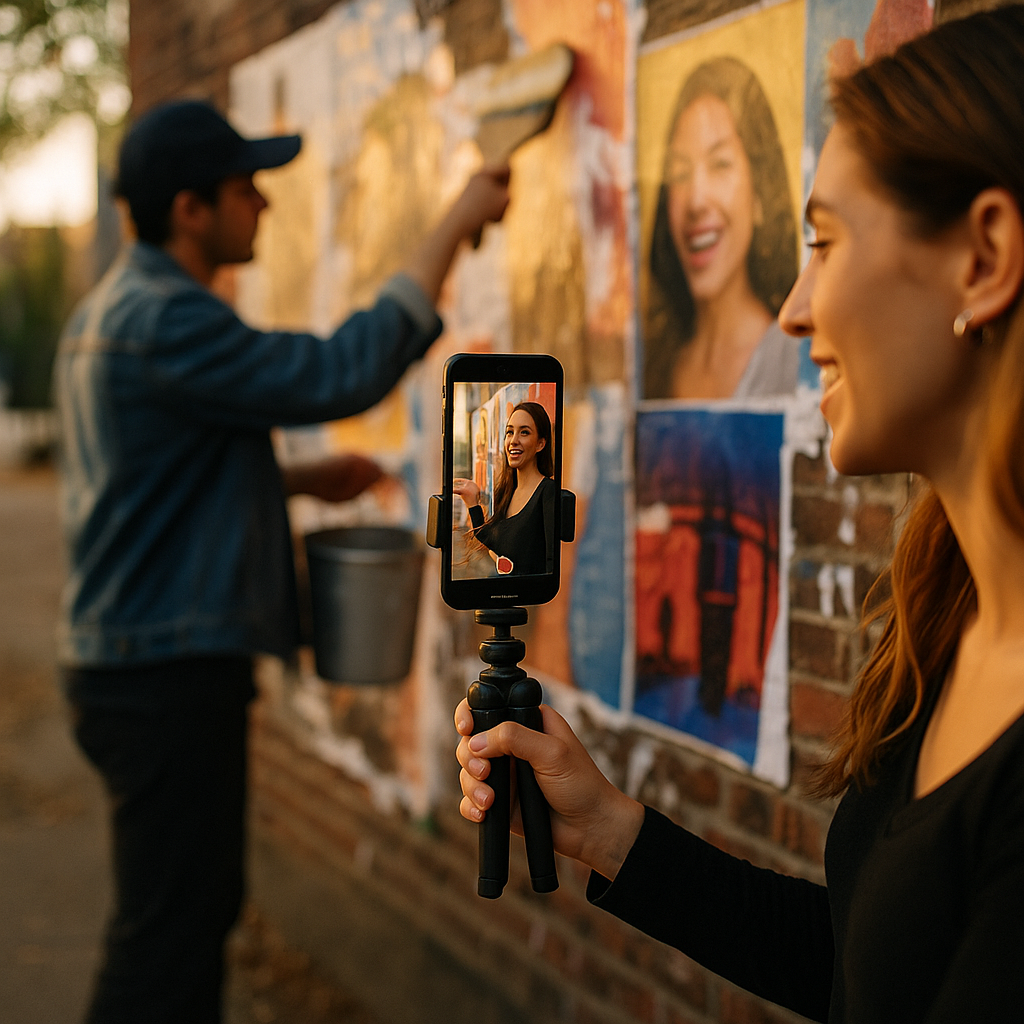
Sixty-three percent of Gen Z consumers say they’ve researched a product through creator content before ever encountering a brand’s paid media. So what happens when they walk past your billboard already sold? That’s the new opportunity in flyposting and OOH as creator campaign amplifiers, and most brands are still leaving it on the table.
The Purchase Journey Has Already Started
Here’s the shift that changes everything: the consideration phase no longer begins at a brand touchpoint. It begins in a TikTok scroll at 11pm, in a YouTube deep-dive on a Tuesday commute, or inside a creator’s Substack recommendation. By the time a Gen Z or Millennial consumer sees your out-of-home placement, they’ve often already formed a view about your product — positive, negative, or curious enough to convert.
This changes the job of OOH fundamentally. Traditional OOH logic: create awareness, plant a seed, hope the consumer remembers you later. Creator-era OOH logic: confirm what they already believe, give them a reason to act now, and close the loop between digital discovery and physical reinforcement.
Brands that understand this are running flyposting activations in high-footfall Gen Z corridors, specifically timed to creator content drops. Not as background noise. As a second punch.
Why Flyposting Specifically
Flyposting — illegal or permitted wheat-paste poster placements in urban environments — carries cultural credibility that polished DOOH screens simply don’t. For categories where authenticity is load-bearing (streetwear, music, wellness, independent food brands), flyposting signals that a brand moves in the same cultural space as the creator. It doesn’t look like an ad. It looks like a moment.
Brands like Palace, Madhappy, and Kim Kardashian’s SKIMS have used flyposting not as a media buy in the traditional sense but as a content trigger. The physical placement exists partly to be photographed, shared, and re-entered into the digital ecosystem by creators and their audiences. The OOH asset becomes UGC bait.
When flyposting is executed in the right urban corridors alongside a creator content drop, the physical placement can generate three to five times its surface-area reach through organic creator reposts and audience photo sharing — turning a low-cost print run into earned media at scale.
This is not a coincidence. It’s a brief. Brands running this well are explicitly asking creators to reference the physical placement in their content, shoot content near it, or tease audiences to find it. The OOH becomes interactive without a single line of code.
How the Integration Brief Actually Works
Operationally, this requires tighter campaign architecture than most brand teams are used to. The creator content and the physical placement need to be sequenced, not just co-scheduled. Here’s a functional structure that’s gaining traction:
- Phase 1 (Creator seeding): Lead creators publish content 5-10 days before OOH goes live, establishing the product narrative and building baseline search intent.
- Phase 2 (OOH drop): Flyposting or street-level OOH goes live in geographically targeted zones with documented creator and audience density. Secondary creators are briefed to “discover” and react.
- Phase 3 (Amplification loop): Brand paid media (Meta, TikTok) targets users who have engaged with creator content and surfaces geo-contextual creative tied to the physical placement.
For brands thinking about OOH and creator campaign integration, the critical variable isn’t the media placement itself — it’s the brief that connects the physical and digital creative so they reinforce rather than repeat each other.
A creator piece might tell the product story in full. The OOH’s job is to trigger recall, not re-explain. Think: a single visual, a phrase the creator used, or a QR code that deepens the experience. Brevity is a feature, not a compromise.
Platform Mechanics That Make This Work at Scale
TikTok’s geolocation features and TikTok Ads Manager now allow brands to serve paid amplification of creator content specifically to users in the radius around physical placements. This means a consumer who walks past a flyposted wall in Shoreditch or Silver Lake, pulls out their phone, and opens TikTok can be served the creator content that contextualizes what they just saw. That is a genuinely new capability, and it collapses the gap between ambient awareness and active engagement.
Meta’s location-based targeting works similarly through Meta Business Suite, and when layered with custom audiences built from creator content engagement, it creates a retargeting loop that is tightly tailored to warm prospects rather than cold ones.
For brands running UGC paid amplification alongside physical activations, the attribution model gets more sophisticated: you’re not measuring OOH and creator content in isolation, you’re measuring their combined effect on conversion velocity in geographic segments. That requires a measurement framework most in-house teams don’t have yet. Building it is worth the investment.
Snap’s AR tools also deserve attention here. Snapchat’s lens features can overlay digital experiences onto physical placements when users scan them, bridging flyposting with augmented creator content in a format Gen Z finds genuinely engaging. Snap’s creator network is underutilized for this kind of spatial activation.
The Gen Z Credibility Equation
Gen Z reads brand presence in physical space differently than older cohorts. A DOOH screen in Times Square reads as corporate spend. A wheat-paste poster in a neighborhood they actually inhabit reads as cultural participation. The distinction matters because Sprout Social research consistently shows authenticity as a top-ranked purchase driver for under-35 consumers.
But credibility isn’t automatic. Flyposting executed with the wrong visual language, in the wrong neighborhood, or without creator alignment looks like a brand desperately trying to be cool. It’s worse than doing nothing. The creative has to earn its placement. Which means creator input during the OOH brief phase — not just the digital brief — is non-negotiable.
Brands doing this well often give lead creators partial creative control over the physical asset’s visual design, the same way they might give them latitude on sponsored content. The result is OOH that feels continuous with the creator’s aesthetic rather than grafted on. That continuity is what makes the consumer’s brain connect the dots between the physical moment and the digital content they’ve already consumed.
Millennial and Gen Z consumers are not encountering OOH in isolation. They are cross-referencing it in real time against creator content they’ve already absorbed. Brands that design for that cross-reference — rather than hoping it won’t happen — convert at meaningfully higher rates.
What This Costs and What It Returns
Flyposting is cheap relative to traditional OOH. Permitted wheat-paste campaigns in key urban markets can run from $8,000 to $40,000 for meaningful coverage, versus six-figure spends for premium billboard or DOOH inventory. The production costs are low. The opportunity cost of not doing it well is high.
ROI measurement remains the challenge. Statista data on OOH attribution shows that digital-OOH integration campaigns demonstrate stronger brand lift and purchase intent than either channel in isolation, but the measurement infrastructure to isolate the flyposting-specific contribution is still maturing. Most brands are using geo-segmented conversion rate comparisons and foot traffic analytics from platforms like Placer.ai as proxies.
For brands building cross-platform participatory campaigns, the right framing is incremental: what is the conversion rate among consumers who were exposed to creator content AND the physical placement versus creator content alone? That delta is where the channel’s value lives, and it’s typically 15-30% higher in well-structured campaigns.
If the budget forces a choice, invest in the creator brief first. The physical placement amplifies; it doesn’t generate demand on its own. And pop-up activations paired with creator seeding are a related format worth stress-testing against flyposting if your category skews toward experiential.
What eMarketer and the Industry Are Watching
OOH is growing again, driven precisely by this creator economy integration dynamic. eMarketer forecasts show OOH ad spend recovering and expanding as brands recognize the channel’s unique ability to intercept digitally primed audiences in physical space. The growth is not evenly distributed: street-level and transit placements, where creator-aware consumers actually live and move, are outperforming traditional large-format.
The brands winning this bet aren’t the biggest spenders. They’re the most architecturally precise: tight creator briefs, sequenced deployment, geo-targeted paid amplification, and physical creative that rewards the consumer who’s already done their research. That’s the operational edge.
Start by auditing your next creator campaign for physical amplification potential. If the creator content is building real search intent in specific urban markets, there is almost certainly a flyposting opportunity that can close the loop at street level — and it probably costs less than one additional creator fee.
FAQs
What is flyposting in the context of creator marketing campaigns?
Flyposting refers to wheat-paste or adhered poster placements in urban environments, either through permitted or guerrilla channels. In creator marketing, flyposting is used as a physical amplification layer that reinforces creator-generated digital content, targeting consumers in high-footfall areas who are already familiar with a brand through creator content they’ve consumed online.
How do brands measure ROI when combining OOH with creator content?
The most reliable approach is geo-segmented conversion analysis: comparing purchase intent and conversion rates among consumers exposed to both creator content and the physical placement versus those exposed to creator content alone. Brands also use foot traffic analytics platforms like Placer.ai, brand lift studies, and geo-fenced paid media performance as proxies for OOH contribution to overall campaign ROI.
Which audience segments respond best to flyposting and creator campaign integration?
Gen Z and Millennial urban consumers, particularly those in cities with strong streetwear, music, wellness, or independent food and beverage culture, respond most strongly. These audiences have higher baseline awareness of creator content and are more likely to recognize and engage with brand-adjacent physical placements in their neighborhoods.
How should a brand brief creators when OOH is part of the campaign?
Creators should be briefed on both the digital and physical elements simultaneously, with clear sequencing guidance. Lead creators should publish content before the OOH goes live to build narrative context. Some brands give lead creators partial input into the physical creative’s visual design to ensure aesthetic continuity. Secondary creators may be briefed to organically react to or “discover” the physical placement after it goes live, generating an amplification loop.
Is flyposting legal, and what compliance considerations apply?
Legality varies significantly by city and country. Unpermitted flyposting is illegal in most jurisdictions and can result in fines for both the posting company and the brand. Brands should work with licensed outdoor advertising vendors who secure proper permits for wheat-paste placements. Legal compliance, including proper disclosure if creators are paid to reference the physical placements, should be reviewed against FTC guidelines at ftc.gov and local regulatory requirements.
Top Influencer Marketing Agencies
The leading agencies shaping influencer marketing in 2026
Agencies ranked by campaign performance, client diversity, platform expertise, proven ROI, industry recognition, and client satisfaction. Assessed through verified case studies, reviews, and industry consultations.
Moburst

-
2

The Shelf
Boutique Beauty & Lifestyle Influencer AgencyA data-driven boutique agency specializing exclusively in beauty, wellness, and lifestyle influencer campaigns on Instagram and TikTok. Best for brands already focused on the beauty/personal care space that need curated, aesthetic-driven content.Clients: Pepsi, The Honest Company, Hims, Elf Cosmetics, Pure LeafVisit The Shelf → -
3

Audiencly
Niche Gaming & Esports Influencer AgencyA specialized agency focused exclusively on gaming and esports creators on YouTube, Twitch, and TikTok. Ideal if your campaign is 100% gaming-focused — from game launches to hardware and esports events.Clients: Epic Games, NordVPN, Ubisoft, Wargaming, Tencent GamesVisit Audiencly → -
4

Viral Nation
Global Influencer Marketing & Talent AgencyA dual talent management and marketing agency with proprietary brand safety tools and a global creator network spanning nano-influencers to celebrities across all major platforms.Clients: Meta, Activision Blizzard, Energizer, Aston Martin, WalmartVisit Viral Nation → -
5

The Influencer Marketing Factory
TikTok, Instagram & YouTube CampaignsA full-service agency with strong TikTok expertise, offering end-to-end campaign management from influencer discovery through performance reporting with a focus on platform-native content.Clients: Google, Snapchat, Universal Music, Bumble, YelpVisit TIMF → -
6

NeoReach
Enterprise Analytics & Influencer CampaignsAn enterprise-focused agency combining managed campaigns with a powerful self-service data platform for influencer search, audience analytics, and attribution modeling.Clients: Amazon, Airbnb, Netflix, Honda, The New York TimesVisit NeoReach → -
7

Ubiquitous
Creator-First Marketing PlatformA tech-driven platform combining self-service tools with managed campaign options, emphasizing speed and scalability for brands managing multiple influencer relationships.Clients: Lyft, Disney, Target, American Eagle, NetflixVisit Ubiquitous → -
8

Obviously
Scalable Enterprise Influencer CampaignsA tech-enabled agency built for high-volume campaigns, coordinating hundreds of creators simultaneously with end-to-end logistics, content rights management, and product seeding.Clients: Google, Ulta Beauty, Converse, AmazonVisit Obviously →