


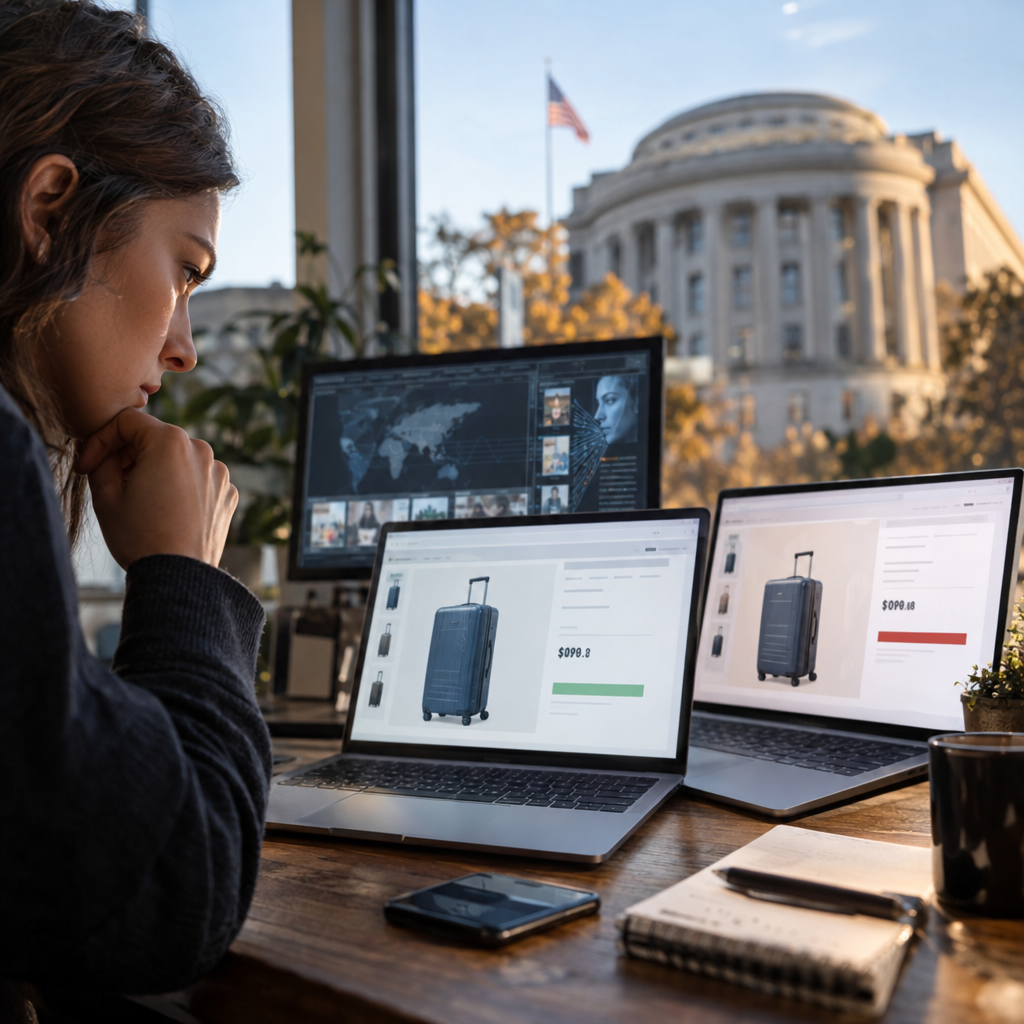
Did you know the algorithm setting your checkout price might already know you just got paid? The FTC’s personalized pricing study pulled back the curtain on how Walmart, Target, and DoorDash use consumer data to vary prices in real time, and the findings should rattle every marketer who thinks “surveillance pricing” is someone else’s problem.
What the FTC Actually Found
The Federal Trade Commission’s 6(b) inquiry into personalized pricing wasn’t a press release stunt. It compelled eight major retailers and delivery platforms, including Walmart, Target, DoorDash, Kroger, and Rite Aid, to turn over internal documents on how they use consumer surveillance data to set prices. The agency’s interim staff findings confirmed what privacy advocates have argued for years: companies can and do adjust prices based on location, browsing history, device type, and even how fast your battery is draining.
This isn’t dynamic pricing in the airline-ticket sense, where prices shift with supply and demand. This is individualized pricing, where two shoppers looking at the identical product at the identical moment might see different numbers based on their personal data profile. DoorDash, for instance, reportedly used estimated delivery distance and customer history to adjust delivery fees. Target and Walmart’s loyalty programs collect granular purchase and browsing data that can feed pricing algorithms, even if the companies frame it as “personalization” rather than “pricing discrimination.”
The core finding: personalized pricing isn’t hypothetical anymore. It’s operational infrastructure at some of the largest consumer brands in America, and regulators are now treating it as a disclosure and consumer protection issue, not just a business strategy question.
Why This Matters Beyond Retail
If you’re running influencer campaigns, performance marketing, or loyalty programs for a brand that isn’t Walmart or DoorDash, you might be tempted to shrug this off. Don’t. The FTC’s personalized pricing study signals a broader regulatory appetite for scrutinizing any data-driven personalization that touches price, access, or offers. That includes influencer-driven promo codes, tiered discount funnels, and even the “exclusive deal” links creators share with their audiences.
Think about how many brand partnerships now rely on personalized offer codes tied to a creator’s audience demographics. If your martech stack segments audiences by inferred income, location, or purchase history and then serves different prices or discount depths, you’re operating in the same regulatory zone the FTC just illuminated. The study doesn’t ban personalized pricing outright, but it establishes a paper trail precedent: regulators want to know what data you collect, how you use it to set prices, and whether consumers have any visibility into that process.
According to FTC guidance on unfair and deceptive practices, the agency’s authority extends to any practice that harms consumers through lack of transparency, not just explicit price-fixing. That’s a wide net, and marketing teams running algorithmic personalization at scale should assume they’re inside it.
The Creator Economy Angle
Here’s where this gets specific to influencer marketing. Brands increasingly use affiliate platforms and creator-specific landing pages that dynamically adjust pricing based on referral source, audience segment, or even the viewer’s browsing history captured via tracking pixels embedded in creator content. If a TikTok Shop affiliate link shows one price to a cold audience and a lower price to a retargeted shopper, that’s personalized pricing running through a creator channel.
This connects directly to disclosure obligations that already exist. Our coverage of TikTok Shop affiliate audits outlines how brands face strict liability for what happens inside creator-driven commerce funnels, even when a third-party platform handles the transaction. Add personalized pricing to that mix, and the compliance surface gets bigger. If regulators expect disclosure around sponsored content, it’s not a stretch to expect disclosure around algorithmic price variation tied to that same content.
Loyalty Programs and the Data You’re Already Collecting
Most brands with loyalty programs are sitting on exactly the kind of data the FTC flagged: purchase frequency, app engagement, location pings, and device signals. If your marketing team feeds that data into any pricing or discount-eligibility logic, even indirectly through a CDP or a retail media network, you’re participating in the same ecosystem the agency just studied.
This is also a quiet reminder that your creator CRM and audience data practices are not separate from your pricing strategy anymore. They’re converging. For marketers managing influencer relationships alongside first-party data pipelines, it’s worth revisiting how that data moves once it leaves the CRM. Our piece on creator CRM data audits walks through the kind of internal review that now applies just as much to pricing logic as it does to targeting logic.
Operational Risk: Where Marketers Get Exposed
Let’s get tactical. There are three places where personalized pricing risk tends to hide inside a marketing org, and none of them are the pricing team’s direct responsibility, which is exactly why they get missed.
- Affiliate and influencer discount codes: If different creators’ audiences receive different discount depths based on inferred demographic value rather than simple flat-rate deals, that’s a personalized pricing pattern, not a performance marketing tactic.
- Retargeting-triggered offers: Dynamic ad creative that shows a lower price to users who abandoned a cart (based on behavioral and device data) sits squarely in the territory the FTC examined.
- Geo-based pricing tied to creator content: If a sponsored post links to a page that prices differently by ZIP code or estimated income bracket, and that’s disclosed nowhere, you’ve built a transparency gap that regulators are now primed to notice.
None of this means personalization itself is illegal. Segmentation and targeted offers are core to modern marketing, and nobody’s suggesting you go back to one-price-fits-all. But the FTC’s personalized pricing study draws a clearer line between personalization that improves relevance and personalization that quietly extracts more revenue from consumers who can least detect or resist it.
What Brands and Agencies Should Do Now
Treat this as a compliance audit trigger, not a wait-and-see headline. A few concrete moves:
- Map every pricing and discount decision point in your funnel, including influencer-specific landing pages, and identify which ones use personal data to vary the outcome.
- Audit your retail media and affiliate partnerships for pricing logic you may not directly control but are commercially responsible for.
- Build disclosure language into offer pages where pricing varies by segment, even if it’s just a plain-language note that discounts may differ by audience or location.
- Loop legal and compliance teams into marketing technology decisions earlier. Pricing algorithms are increasingly a marketing function, not just a finance one.
This mirrors a pattern we’ve tracked across other algorithmic disclosure issues. Our analysis of algorithmic pricing disclosure law covers how state-level rules are starting to require explicit notice when algorithms influence what a consumer pays, and the federal study adds momentum to that trend rather than replacing it.
The brands that get ahead of this will treat pricing transparency the same way they treat influencer disclosure: as a baseline trust signal, not a legal checkbox to minimize.
Does This Reach State Regulators Too?
Yes, and that’s arguably the bigger long-term risk. California, Colorado, and a handful of other states already have surveillance pricing or algorithmic pricing disclosure rules moving through legislatures or active enforcement. The FTC study gives state attorneys general a federal data set to point to when building their own cases. Marketers operating nationally can’t assume a single compliance standard will cover them; state-by-state variation is already the reality for data privacy, and pricing transparency is heading the same direction.
For teams already managing the patchwork of state privacy and disclosure rules affecting influencer content, this is one more layer to fold into existing review processes rather than a brand-new workstream. Our breakdown of state privacy and FTC disclosure requirements is a useful companion read for mapping where these obligations overlap.
Industry data backs up why this matters commercially, not just legally. Consumer trust research from eMarketer consistently shows that perceived unfairness in pricing erodes brand loyalty faster than almost any other trust violation, and social platforms amplify that erosion within hours. A viral screenshot comparing two shoppers’ prices for the same item does more reputational damage than a regulatory fine ever could.
FAQs
Common questions marketers are asking about the FTC personalized pricing study and what it means for brand operations.
Frequently Asked Questions
What is the FTC personalized pricing study?
It’s a 6(b) study in which the Federal Trade Commission compelled major retailers and delivery platforms, including Walmart, Target, and DoorDash, to disclose how they use consumer data to set individualized prices, revealing widespread use of surveillance-based pricing practices.
Is personalized pricing illegal?
Not inherently. Personalized pricing becomes a legal risk when it’s deceptive, undisclosed, or discriminatory based on protected characteristics. The FTC’s focus is on transparency and fairness, not banning segmentation outright.
How does this affect influencer marketing specifically?
Affiliate links, creator-specific discount codes, and retargeted landing pages that vary price by audience segment fall into the same scrutiny zone. Brands running creator commerce programs should audit whether their pricing logic varies by referral source or audience data.
What should marketing teams do to reduce risk?
Map all pricing and discount decision points tied to personal data, add plain-language disclosure where prices vary by segment, and involve legal and compliance earlier in martech and influencer platform decisions.
Will state laws go further than the FTC study?
Likely yes. Several states are already advancing algorithmic pricing disclosure rules, and the FTC’s findings are expected to accelerate state-level enforcement and legislation.
Next step: Audit every influencer and affiliate funnel where price or discount depth changes based on audience data, and add a plain-language disclosure line before a regulator or a viral screenshot forces the issue.
Top Influencer Marketing Agencies
The leading agencies shaping influencer marketing in 2026
Agencies ranked by campaign performance, client diversity, platform expertise, proven ROI, industry recognition, and client satisfaction. Assessed through verified case studies, reviews, and industry consultations.
Moburst

-
2

The Shelf
Boutique Beauty & Lifestyle Influencer AgencyA data-driven boutique agency specializing exclusively in beauty, wellness, and lifestyle influencer campaigns on Instagram and TikTok. Best for brands already focused on the beauty/personal care space that need curated, aesthetic-driven content.Clients: Pepsi, The Honest Company, Hims, Elf Cosmetics, Pure LeafVisit The Shelf → -
3

Audiencly
Niche Gaming & Esports Influencer AgencyA specialized agency focused exclusively on gaming and esports creators on YouTube, Twitch, and TikTok. Ideal if your campaign is 100% gaming-focused — from game launches to hardware and esports events.Clients: Epic Games, NordVPN, Ubisoft, Wargaming, Tencent GamesVisit Audiencly → -
4

Viral Nation
Global Influencer Marketing & Talent AgencyA dual talent management and marketing agency with proprietary brand safety tools and a global creator network spanning nano-influencers to celebrities across all major platforms.Clients: Meta, Activision Blizzard, Energizer, Aston Martin, WalmartVisit Viral Nation → -
5

The Influencer Marketing Factory
TikTok, Instagram & YouTube CampaignsA full-service agency with strong TikTok expertise, offering end-to-end campaign management from influencer discovery through performance reporting with a focus on platform-native content.Clients: Google, Snapchat, Universal Music, Bumble, YelpVisit TIMF → -
6

NeoReach
Enterprise Analytics & Influencer CampaignsAn enterprise-focused agency combining managed campaigns with a powerful self-service data platform for influencer search, audience analytics, and attribution modeling.Clients: Amazon, Airbnb, Netflix, Honda, The New York TimesVisit NeoReach → -
7

Ubiquitous
Creator-First Marketing PlatformA tech-driven platform combining self-service tools with managed campaign options, emphasizing speed and scalability for brands managing multiple influencer relationships.Clients: Lyft, Disney, Target, American Eagle, NetflixVisit Ubiquitous → -
8

Obviously
Scalable Enterprise Influencer CampaignsA tech-enabled agency built for high-volume campaigns, coordinating hundreds of creators simultaneously with end-to-end logistics, content rights management, and product seeding.Clients: Google, Ulta Beauty, Converse, AmazonVisit Obviously →