


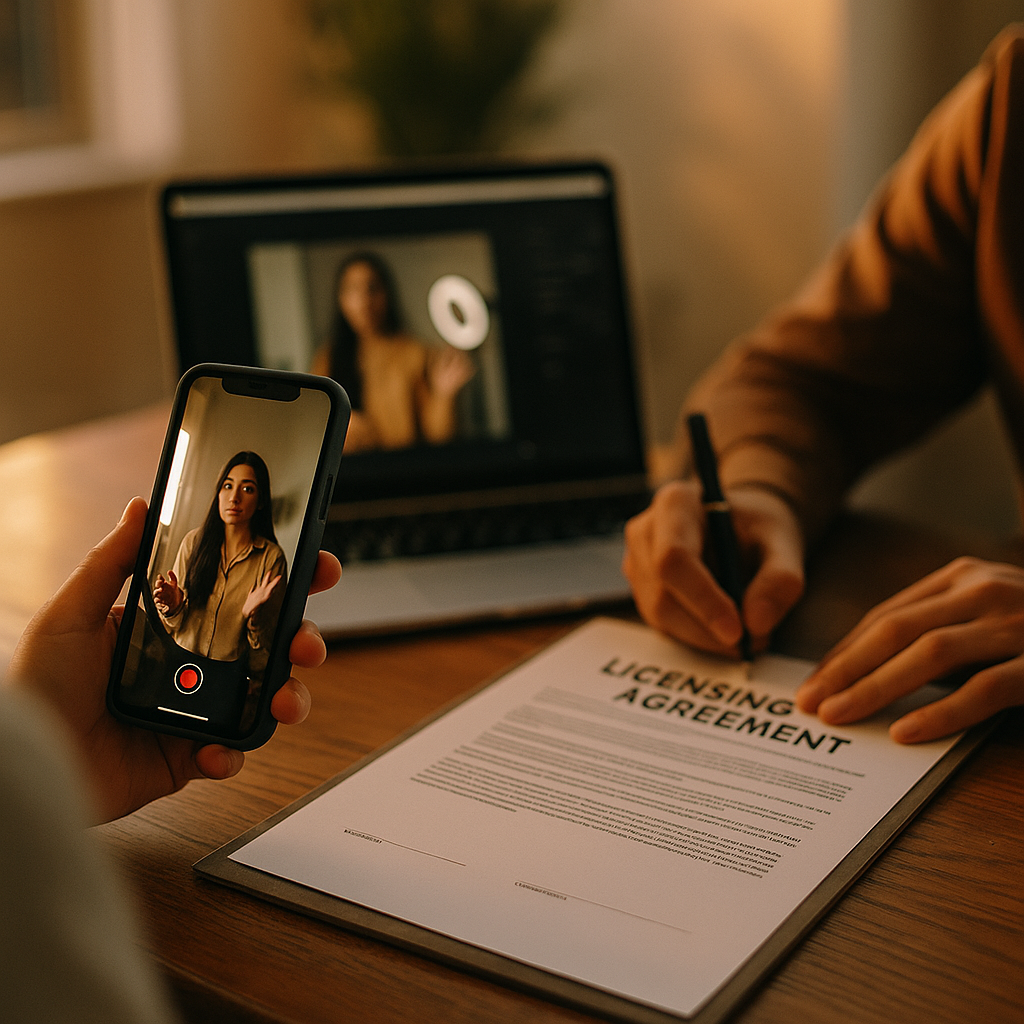
The future of creator licensing is reshaping how brands collaborate with content creators while securing intellectual property (IP) for long-term success. As digital content powers brand awareness and sales, brands must understand evolving IP rights, licensing structures, and creative ownership to avoid legal pitfalls. How can brands navigate this complex landscape to maximize long-term value and innovation?
Navigating Intellectual Property in Creator Licensing
Intellectual property, or IP, is at the heart of every brand-creator partnership. With platforms like TikTok and YouTube fueling new creative talent, brands increasingly seek to license content for campaigns, product launches, and ongoing use. Yet, in 2025, the lines between creator and brand ownership remain nuanced.
Brands must identify whether they’re seeking exclusive or non-exclusive rights, clarify usage periods, and define where and how content will appear. IP terms must specify how content can be remixed, repurposed, or retired. Strong contracts protect brands from claims or copyright disputes while giving creators clarity about their retained rights and future use.
New licensing models are emerging where creators can grant brands flexible access—sometimes through perpetuity agreements or modular licensing. This allows brands to update campaigns, enter new markets, or adapt content formats without renegotiation, provided the original contract clear defines these scenarios.
Understanding Long-Term Use Rights in Brand Partnerships
Long-term use rights are increasingly vital as brands invest in evergreen campaigns, AI-driven personalization, and global marketing. In 2025, brands often want rights extending years beyond an initial posting, enabling them to reuse content across touchpoints.
To negotiate long-term use, brands and creators should:
- Detail the duration: Fixed term, rolling annual, or perpetual (indefinite) use.
- Specify territories: Local, regional, or global utilization.
- Clarify media: Digital, broadcast, print, and future formats (such as VR/AR).
Transparent discussions avoid future legal friction. Recent cases highlight the risk of brands exceeding original terms—potentially requiring costly retroactive payments. By prioritizing open negotiation, brands foster trust and signal their respect for creator contributions, supporting stronger, more collaborative relationships.
Leveraging Creator Licensing for Brand Consistency
Modern brands aim for multi-channel consistency. When licensing creator content, the right IP framework enables brands to reuse successful assets—on social media, in ads, or new product launches—while maintaining messaging coherence.
To achieve this, brands should:
- Standardize creative briefs across partnerships for consistent aesthetics and tone.
- Document and archive licensed assets for easy retrieval.
- Monitor for off-brand modifications or misuse by either party.
Working closely with creators on style guidelines helps protect both parties. For instance, in 2025, top brands often co-develop content calendars and creative “guardrails” with their creator partners, ensuring each iteration aligns with brand IP and campaign strategy.
Legal Best Practices for Creator Licensing Agreements
A clear, detailed contract remains a brand’s best defense against future IP challenges. Recent surveys indicate that nearly 60% of influencer-brand disagreements stem from unclear licensing terms or ambiguous IP clauses. As such, contracts should always explicitly address:
- Exclusivity: Can creators work with competitors or license similar content to other brands?
- Derivative Works: May the brand create spin-offs or edits of the original content?
- Termination: What happens if either party exits the relationship?
- Attribution: Must the creator be credited, and in what form?
- Indemnification: How will disputes be resolved, and who bears responsibility for copyright claims?
Using plain language avoids confusion and enhances enforceability. Brands should also consider consulting IP law specialists for audits, especially when planning cross-border campaigns or licensing content for emerging technologies and platforms.
Adapting to Changes in Digital IP Enforcement
The global IP rights landscape is evolving rapidly. Increased regulation, advanced digital forensics, and blockchain-based licensing tools offer brands new ways to enforce rights and combat infringements in 2025.
Some of the technological developments shaping creator licensing include:
- Smart contracts: Automatically enforce payment, attribution, and usage limits across digital platforms.
- AI content tracking: Detects unlicensed use of creator content worldwide, prompting timely takedown requests or compensation claims.
- Blockchain registries: Securely record licensing terms and proof of ownership, simplifying legal audits.
Brands now have unprecedented ability to monitor and manage their licensed assets. However, they should remain mindful of evolving privacy regulations and ensure compliance when using data-driven tools to track or report on creator content.
Building Sustainable Creator Partnerships for the Future
Forward-thinking brands treat creator licensing not just as a transactional IP issue but as a foundation for long-term creative partnership. By empowering creators with clear communication, fair compensation, and well-defined rights, brands foster loyalty and open the door to ongoing innovation.
Consider these strategies for sustainable partnerships:
- Provide flexible licensing options that allow future renegotiation as needs evolve.
- Offer royalty arrangements or profit-sharing for top-performing evergreen content.
- Solicit creator feedback on contract terms, demonstrating good faith and shared interest.
In 2025, brands delivering transparent, respectful experiences to creators win first choice of new talent and build reputations for creative integrity—an invaluable asset as content and commerce further converge.
FAQs: Creator Licensing and Brand IP Rights in 2025
-
What is creator licensing?
Creator licensing refers to a legal agreement between brands and individual content creators that grants the brand certain rights to use, modify, or distribute the creator’s original content for marketing or other purposes.
-
Why are long-term use rights important in brand partnerships?
Long-term use rights allow brands to maximize their investment by reusing content in future campaigns, across multiple markets, or as branding evolves, all while minimizing legal risk and negotiation overhead.
-
How can brands avoid IP disputes in creator licensing agreements?
Brands should use clear, detailed contracts covering exclusivity, use rights, modification permissions, and attribution requirements, and consult legal experts for guidance in complicated or international deals.
-
Are digital tools reliable for enforcing creator licensing terms?
Yes, in 2025, smart contracts, AI-powered monitoring, and blockchain registries have proven highly effective for enforcing compliance, tracking content use, and deterring IP violations across digital channels.
-
What’s the best way to build lasting relationships with creators?
Transparent communication, fair compensation, and adaptable licensing frameworks are essential. Prioritizing collaboration and respecting creator IP fosters trust and paves the way for long-term brand-creator success.
Navigating the future of creator licensing demands that brands prioritize clear contracts, tech-enabled enforcement, and mutually beneficial partnerships. By respecting IP rights and planning for long-term use, brands can unlock creativity, mitigate legal risks, and build enduring value with creators in the fast-evolving digital landscape.
Top Influencer Marketing Agencies
The leading agencies shaping influencer marketing in 2026
Agencies ranked by campaign performance, client diversity, platform expertise, proven ROI, industry recognition, and client satisfaction. Assessed through verified case studies, reviews, and industry consultations.
Moburst

-
2

The Shelf
Boutique Beauty & Lifestyle Influencer AgencyA data-driven boutique agency specializing exclusively in beauty, wellness, and lifestyle influencer campaigns on Instagram and TikTok. Best for brands already focused on the beauty/personal care space that need curated, aesthetic-driven content.Clients: Pepsi, The Honest Company, Hims, Elf Cosmetics, Pure LeafVisit The Shelf → -
3

Audiencly
Niche Gaming & Esports Influencer AgencyA specialized agency focused exclusively on gaming and esports creators on YouTube, Twitch, and TikTok. Ideal if your campaign is 100% gaming-focused — from game launches to hardware and esports events.Clients: Epic Games, NordVPN, Ubisoft, Wargaming, Tencent GamesVisit Audiencly → -
4

Viral Nation
Global Influencer Marketing & Talent AgencyA dual talent management and marketing agency with proprietary brand safety tools and a global creator network spanning nano-influencers to celebrities across all major platforms.Clients: Meta, Activision Blizzard, Energizer, Aston Martin, WalmartVisit Viral Nation → -
5

The Influencer Marketing Factory
TikTok, Instagram & YouTube CampaignsA full-service agency with strong TikTok expertise, offering end-to-end campaign management from influencer discovery through performance reporting with a focus on platform-native content.Clients: Google, Snapchat, Universal Music, Bumble, YelpVisit TIMF → -
6

NeoReach
Enterprise Analytics & Influencer CampaignsAn enterprise-focused agency combining managed campaigns with a powerful self-service data platform for influencer search, audience analytics, and attribution modeling.Clients: Amazon, Airbnb, Netflix, Honda, The New York TimesVisit NeoReach → -
7

Ubiquitous
Creator-First Marketing PlatformA tech-driven platform combining self-service tools with managed campaign options, emphasizing speed and scalability for brands managing multiple influencer relationships.Clients: Lyft, Disney, Target, American Eagle, NetflixVisit Ubiquitous → -
8

Obviously
Scalable Enterprise Influencer CampaignsA tech-enabled agency built for high-volume campaigns, coordinating hundreds of creators simultaneously with end-to-end logistics, content rights management, and product seeding.Clients: Google, Ulta Beauty, Converse, AmazonVisit Obviously →