


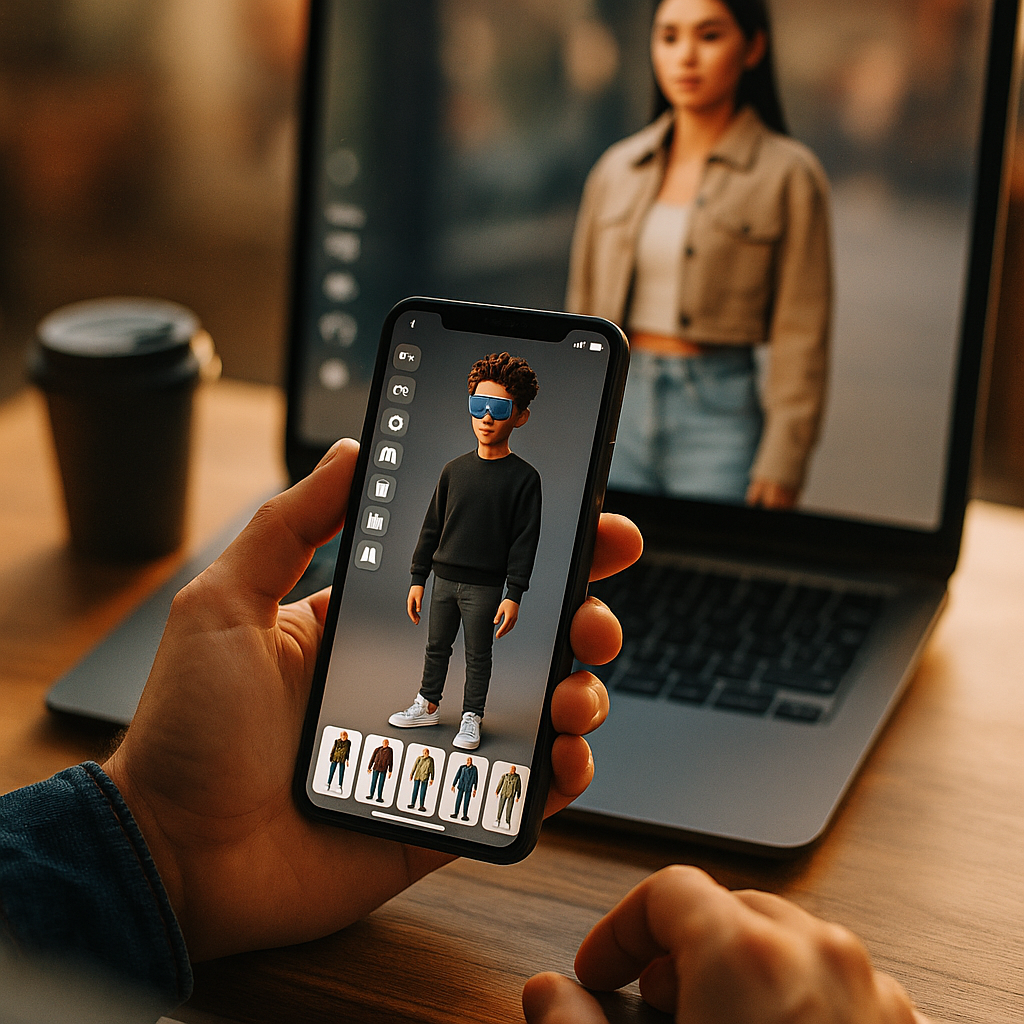
The Future Of Direct-To-Avatar Marketing In Immersive Environments is shifting how brands earn attention when people show up as digital selves, not just as clicks. In 2025, the winning strategy blends identity, utility, and trust across 3D worlds, games, and spatial computing. Marketers who design for avatars rather than browsers will unlock new growth loops. The next wave is closer than it looks.
What is direct-to-avatar marketing (secondary keyword)
Direct-to-avatar marketing (D2A) is the practice of marketing products, services, and experiences to a user’s avatar inside immersive environments—then enabling immediate action such as trying on an item, unlocking a perk, or purchasing a digital or physical good. Unlike traditional digital marketing, D2A focuses on identity-based presence and in-world behavior, not just page views or app sessions.
In practical terms, D2A includes:
- Avatar-native product placement (e.g., wearable skins, accessories, and branded animations).
- Interactive storefronts that let users handle, test, or preview items in 3D.
- Experience-linked commerce, where completing a quest or attending an event unlocks limited items or discounts.
- In-world services such as training, consultations, or demos delivered through spatial interfaces.
Readers often ask: “Is this just metaverse advertising?” Not exactly. D2A is broader and more measurable when built around the avatar as the unit of engagement. The core idea is to market to the persona-in-context—what the user is doing, who they are with, and how they express themselves—while maintaining consent and privacy.
Another common question: “Is D2A only for digital goods?” No. The strongest programs connect digital identity to physical outcomes, such as reserving a real-world product after a virtual try-on, or earning loyalty benefits across channels.
Immersive environments and avatar commerce (secondary keyword)
Immersive environments in 2025 include game platforms, VR social spaces, AR layers in retail, and spatial workspaces. What they share is a sense of co-presence: users feel “there,” with others, using embodied controls. That changes marketing fundamentals.
Avatar commerce thrives because the avatar is both a medium and a message. People invest time curating identity, which makes wearable items and self-expression tools more than decorative—they are signals. As a result, conversion triggers are different:
- Social proof is immediate: friends see what you wear, use, or unlock in real time.
- Utility is experiential: a product can improve movement, access, or gameplay, not just look good.
- Friction drops: buying can happen inside the moment of desire, not after leaving to a separate checkout flow.
Brands should plan for three commerce paths:
- Digital-first: sell avatar wearables, emotes, tools, passes, and collectibles.
- Physical-first: sell real products via in-world discovery and 3D try-on, then deliver through standard logistics.
- Hybrid: bundle a physical purchase with a digital twin (or vice versa), then use ownership to unlock ongoing perks.
Follow-up question: “How do you price digital items without damaging brand perception?” Anchor value to clear benefits: exclusivity windows, functional capabilities, creator collaborations, and interoperable ownership where feasible. Avoid pricing that relies only on hype; in immersive spaces, users quickly test whether something feels worth it.
AI personalization for avatars (secondary keyword)
AI changes D2A by letting brands personalize content, fit, and offers at the speed of play—without turning the experience into surveillance. The most effective approach is consented personalization: users opt into benefits such as better sizing, style matching, or curated experiences.
High-impact uses of AI personalization for avatars include:
- Fit and styling engines that adapt garments to body types, rigs, and movement systems, reducing “bad fit” frustration.
- Context-aware recommendations based on in-world activity (combat, social events, workrooms) rather than broad demographic guesses.
- Dynamic creative that changes language, visuals, and interaction style to match the environment and the user’s intent.
- Conversational agents that act as in-world stylists, guides, or product specialists, trained on verified brand knowledge.
To align with EEAT principles, AI-driven D2A should be designed with guardrails:
- Explainability: tell users why an item is recommended (“matches your saved palette,” “compatible with your avatar rig,” “unlocks access to this event”).
- Data minimization: collect only what is needed for the promised benefit, and retain it for the shortest practical window.
- Verification: label brand-operated agents clearly and separate them from community or creator bots.
Follow-up question: “Will AI make every experience feel the same?” Not if you constrain it properly. The goal is not maximum targeting; it’s maximum relevance without breaking immersion. Create a limited set of brand-safe templates, then let AI personalize within those boundaries.
Measurement and attribution in virtual worlds (secondary keyword)
D2A measurement must capture what matters in embodied spaces: attention, interaction quality, social spread, and downstream sales. Traditional metrics like impressions and clicks still exist, but they miss the point when users are walking around, talking, and trying things on.
Practical measurement and attribution in virtual worlds should include:
- Dwell time with intent signals (e.g., time spent in a fitting area plus item interaction, not just time in a zone).
- Try-on to purchase rate for wearables and for physical goods after 3D preview.
- Social propagation (how often items appear in group scenes, streams, screenshots, or co-op sessions).
- Quest/event completion funnels tied to rewards or gated access.
- Incrementality testing using holdouts by server, region, or event cohort to validate lift.
Attribution works best when you treat environments as channels and avatars as identities—with user permission. Use privacy-preserving methods such as aggregated reporting, on-device processing where possible, and short-lived identifiers for campaign measurement.
Follow-up question: “How do you compare performance across platforms with different standards?” Establish a cross-platform measurement model that maps each platform’s events into a consistent taxonomy: view, interact, try, share, purchase, return. Then normalize by active user minutes rather than raw user counts to avoid misleading comparisons.
EEAT also depends on operational rigor. Document definitions, keep an audit trail of measurement changes, and ensure analytics teams can reproduce results. If a brand cannot explain how it measured lift, it should not claim performance superiority.
Privacy, identity, and trust in immersive marketing (secondary keyword)
Immersive environments make privacy more sensitive because signals can include voice, movement, proximity, and gaze-like interactions. Trust becomes a growth lever: users avoid spaces that feel manipulative, and platforms tighten rules when abuse appears.
In 2025, the safest long-term strategy is to design D2A around user agency:
- Clear consent: users should know what is collected, why, and what they get in return.
- Identity controls: let users separate public avatar identity from purchase identity; support guest modes where possible.
- Age-aware experiences: apply stricter defaults where minors may be present, including limits on targeting and spending prompts.
- Brand disclosure: label sponsored spaces, items, and NPCs so users can interpret intent.
Follow-up question: “Does personalization require invasive tracking?” No. High-performing D2A can rely on in-session context (what the user is doing right now) plus explicit preferences (styles saved, sizes chosen) rather than broad behavioral histories.
To strengthen EEAT, brands should publish concise trust statements inside the experience: what is sponsored, who operates the space, and where to manage preferences. Provide a straightforward way to contact support and resolve disputes, especially for digital goods ownership and refunds.
Direct-to-avatar marketing strategy and best practices (secondary keyword)
D2A works when it feels like part of the world, not an interruption. That requires planning across creative, product, engineering, legal, and community teams. The best programs are built like products: tested, iterated, and supported.
Use this practical framework:
- Start with an avatar use case: self-expression, performance enhancement, access, status, or learning. Build offers around that need.
- Design interaction-first creative: let users touch, try, compare, and co-experience. Passive billboards rarely justify the medium.
- Ship a tight catalog: fewer items with excellent rigging, animation compatibility, and clear benefits beat large catalogs with inconsistent quality.
- Plan for creators: partner with trusted creators for cultural fit. Provide brand guidelines and compensation models that respect their audience.
- Build support and governance: define moderation rules, brand safety boundaries, and escalation paths for abuse or fraud.
- Run experiments: test pricing bundles, reward structures, and store layouts. Optimize for repeat engagement, not one-time spikes.
Brands often ask: “What’s the first campaign to run?” A strong entry is a limited-time experience with a wearable reward that has real utility (access to a lounge, a functional tool, or a status badge) and a path to a physical purchase for those who want it. This creates a full funnel without forcing a hard sell.
Another question: “How do you avoid feeling out of place?” Embed brand meaning into the environment’s logic. If the world is playful, design playful interactions. If it is productivity-focused, offer tools that improve collaboration. In D2A, relevance is the creative brief.
FAQs (secondary keyword)
-
What industries benefit most from direct-to-avatar marketing?
Apparel, beauty, entertainment, gaming, sports, consumer electronics, and education benefit quickly because they map well to try-on, identity signaling, and interactive demos. B2B also benefits in spatial workspaces through product walkthroughs and training simulations. -
How do brands sell physical products through avatars?
Use 3D preview and try-on inside the environment, then connect to checkout via a secure handoff. Offer incentives that keep the loop inside the world, such as a digital twin, loyalty access, or in-world services tied to the purchase. -
What should be prioritized: digital wearables or immersive experiences?
Prioritize the asset that creates repeat value. For many brands, a wearable that unlocks experiences drives longer engagement than a one-off event. Pair them: an experience earns or showcases the wearable, and the wearable keeps the experience alive afterward. -
How can small brands compete in avatar commerce?
Focus on craft and community. Launch a small set of high-quality items, collaborate with creators who already have trust, and host intimate events with clear utility. Measure retention and referrals, not just initial sales volume. -
What are the biggest risks in immersive marketing?
Privacy missteps, unclear sponsorship disclosure, low-quality assets that harm brand perception, and poor moderation that allows harassment or fraud. Manage risk with consent-first personalization, transparent labeling, rigorous QA, and active governance. -
How do you measure ROI if a platform limits user-level tracking?
Use aggregated analytics, cohort reporting, and incrementality testing with holdouts. Track in-world actions (try-ons, interactions, event completions) and connect to downstream sales using privacy-preserving matching only where users consent.
Conclusion: In 2025, direct-to-avatar marketing rewards brands that treat immersive environments as living contexts where identity, utility, and trust matter more than reach. Build interactive experiences, sell items that earn their place in the world, and measure outcomes with disciplined, privacy-respecting methods. The clear takeaway: design for the avatar’s intent, and commerce will follow naturally.
Top Influencer Marketing Agencies
The leading agencies shaping influencer marketing in 2026
Agencies ranked by campaign performance, client diversity, platform expertise, proven ROI, industry recognition, and client satisfaction. Assessed through verified case studies, reviews, and industry consultations.
Moburst

-
2

The Shelf
Boutique Beauty & Lifestyle Influencer AgencyA data-driven boutique agency specializing exclusively in beauty, wellness, and lifestyle influencer campaigns on Instagram and TikTok. Best for brands already focused on the beauty/personal care space that need curated, aesthetic-driven content.Clients: Pepsi, The Honest Company, Hims, Elf Cosmetics, Pure LeafVisit The Shelf → -
3

Audiencly
Niche Gaming & Esports Influencer AgencyA specialized agency focused exclusively on gaming and esports creators on YouTube, Twitch, and TikTok. Ideal if your campaign is 100% gaming-focused — from game launches to hardware and esports events.Clients: Epic Games, NordVPN, Ubisoft, Wargaming, Tencent GamesVisit Audiencly → -
4

Viral Nation
Global Influencer Marketing & Talent AgencyA dual talent management and marketing agency with proprietary brand safety tools and a global creator network spanning nano-influencers to celebrities across all major platforms.Clients: Meta, Activision Blizzard, Energizer, Aston Martin, WalmartVisit Viral Nation → -
5

The Influencer Marketing Factory
TikTok, Instagram & YouTube CampaignsA full-service agency with strong TikTok expertise, offering end-to-end campaign management from influencer discovery through performance reporting with a focus on platform-native content.Clients: Google, Snapchat, Universal Music, Bumble, YelpVisit TIMF → -
6

NeoReach
Enterprise Analytics & Influencer CampaignsAn enterprise-focused agency combining managed campaigns with a powerful self-service data platform for influencer search, audience analytics, and attribution modeling.Clients: Amazon, Airbnb, Netflix, Honda, The New York TimesVisit NeoReach → -
7

Ubiquitous
Creator-First Marketing PlatformA tech-driven platform combining self-service tools with managed campaign options, emphasizing speed and scalability for brands managing multiple influencer relationships.Clients: Lyft, Disney, Target, American Eagle, NetflixVisit Ubiquitous → -
8

Obviously
Scalable Enterprise Influencer CampaignsA tech-enabled agency built for high-volume campaigns, coordinating hundreds of creators simultaneously with end-to-end logistics, content rights management, and product seeding.Clients: Google, Ulta Beauty, Converse, AmazonVisit Obviously →