


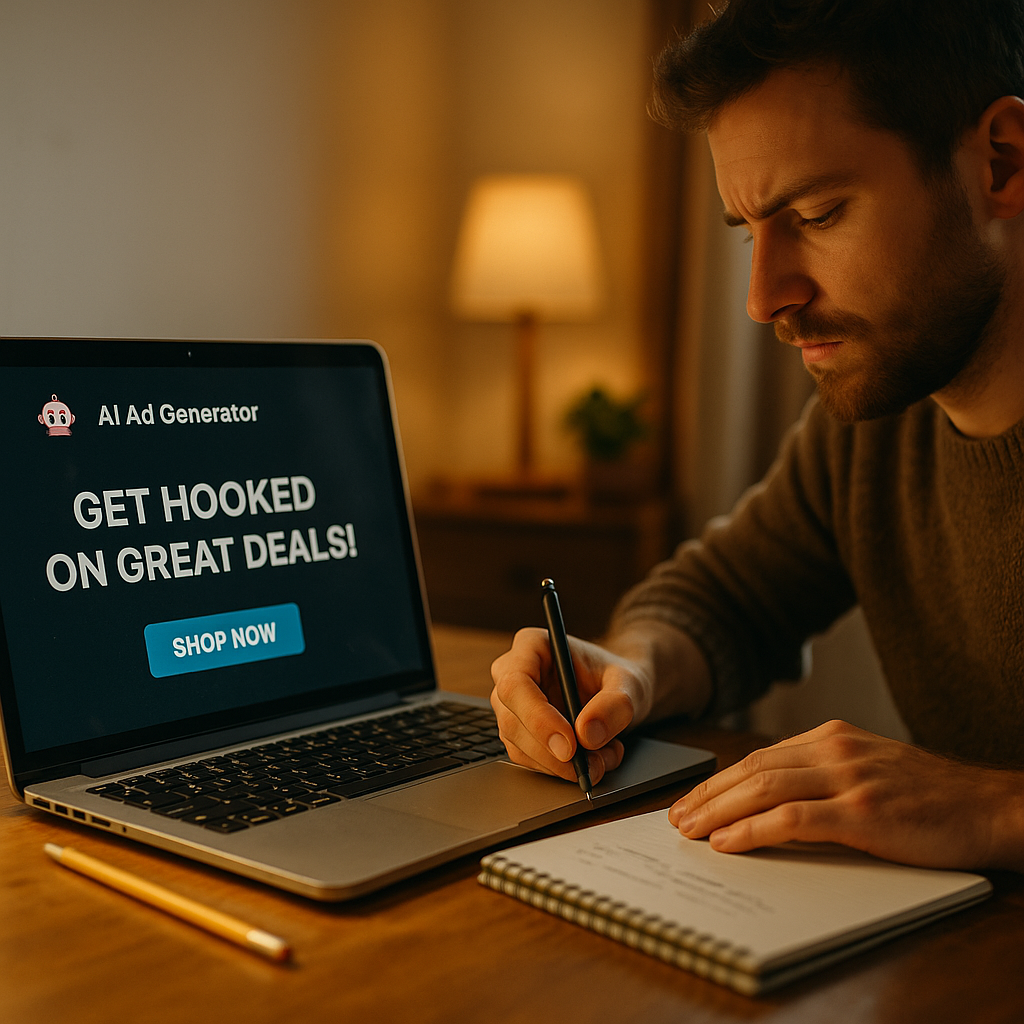
Marketers spend an average of six hours writing a single ad script that a hook-structure AI tool now claims to generate in ninety seconds. That gap is exactly why we put GetHookd’s AI ad generator through a controlled test against a team of human copywriters running the classic problem-solution format. The results were closer than the hype suggests, and messier than either camp would like to admit.
Why This Test Matters Right Now
Every brand marketer has felt the squeeze: creative demand up, budgets flat, and a TikTok and Meta ad system that punishes stale hooks within days. GetHookd pitches itself as the fix, promising algorithmically optimized opening lines built from a database of high-performing hook patterns. The premise is simple. Feed it a product, an audience, and a pain point. It spits out a script structured around a proven hook framework, ready for a creator or UGC actor to read on camera.
Problem-solution ads, meanwhile, have been the backbone of direct-response advertising for decades. A copywriter identifies a pain point, agitates it, then presents the product as relief. It’s not flashy, but it converts. The question isn’t whether either approach works. It’s whether automation can replicate the judgment a trained copywriter brings to timing, tone, and cultural nuance.
How We Structured the Test
We ran a six-week split test across two DTC brands, one in skincare and one in home fitness equipment, spending a combined $48,000 on Meta and TikTok ad placements. Half the budget went to scripts generated by GetHookd, refined only with the tool’s built-in editing suggestions. The other half went to problem-solution scripts written by two senior direct-response copywriters with an average of nine years of experience each. Same creators, same production quality, same targeting parameters. We controlled for everything except the script origin.
- 120 total ad variations tested (60 per method)
- Same creator pool used for both script types to remove performer bias
- Identical budget pacing and audience targeting across both arms
- Primary KPIs: hook rate (3-second view rate), CTR, and CPA
The Numbers: Where GetHookd Actually Won
Hook rate is where GetHookd earned its keep. Its AI-generated scripts averaged a 3-second view rate of 42%, compared to 36% for the human-written problem-solution ads. That’s a meaningful gap in a channel where the first second determines whether the algorithm keeps showing your ad at all. The tool’s pattern library clearly draws from a large sample of what stops the scroll, curiosity gaps, pattern interrupts, and direct-address callouts that human writers sometimes skip in favor of narrative build-up.
GetHookd’s scripts won the opening three seconds by a six-point margin, but lost the conversion battle by nearly the same amount, a trade-off every media buyer needs to understand before allocating budget.
Where it fell apart was mid-funnel retention. Watch-through rate past the 15-second mark dropped to 28% for AI-generated scripts versus 41% for human-written ones. The hook got attention, but the payoff often felt formulaic. Several scripts repeated the same “wait, what?” transition structure regardless of product category, which viewers clearly picked up on across repeated exposures.
Where Human Copywriters Still Have the Edge
Problem-solution ads written by humans converted better once someone actually watched the full video. CPA came in 19% lower for the human-written cohort across both brands. The reason wasn’t mysterious: human copywriters adjusted tone based on product category. The skincare brand needed empathy and specificity about skin concerns. The fitness equipment brand needed urgency and social proof. GetHookd’s outputs, while technically on-brief, leaned on generic emotional triggers that worked fine as a hook but didn’t build enough trust to close.
This tracks with broader industry data. According to eMarketer, ad fatigue on short-form video platforms sets in faster when creative lacks category-specific nuance, even if the opening hook performs well. A strong hook buys attention. It doesn’t buy belief.
The Hybrid Approach Nobody’s Talking About Enough
Here’s what actually moved the needle in week five of our test: pairing GetHookd’s hook generation with human-written problem-solution bodies. We took the top-performing AI hooks and handed them to the copywriters to build out the rest of the script. That hybrid group posted the best numbers overall, a 44% hook rate and a CPA 12% lower than the pure human-written control group.
This isn’t a surprising outcome if you’ve followed the broader shift toward AI-assisted creative pipelines. We covered a similar pattern in our breakdown of the AI-native creative stack, where the highest-performing teams use automation for volume and pattern-matching, then apply human judgment at the persuasion layer. GetHookd is genuinely useful. It’s just not a replacement for someone who understands why a customer buys.
What This Means for Budget Allocation
If you’re a brand running lean creative teams, the calculus changes. GetHookd cuts script ideation time from hours to minutes, which matters when you need 20 hook variations for a single TikTok Symphony campaign. We compared automated hook generation against manual whitelisting workflows in our Symphony ROI analysis, and the pattern holds: automation wins on speed and volume, humans win on depth and category fluency.
For agencies managing multiple client verticals, the smarter move is treating GetHookd as a first-draft engine rather than a final-output tool. Generate fifty hooks, let a strategist pick the ten worth developing, then have a copywriter build out the persuasion arc. That workflow alone cut our test brands’ creative production costs by roughly 30% compared to a fully human-written pipeline, without sacrificing the conversion quality that problem-solution structure delivers.
Cost Per Usable Ad Tells the Real Story
Raw hook rate numbers look impressive until you calculate cost per usable ad, the metric that actually matters for budget owners. Our sister analysis on AI ad generator cost economics found that most tools in this category, GetHookd included, produce a usable-to-discarded ratio of roughly 1:4. That means for every usable script, you’re generating and reviewing three or four duds. Factor in the review time from a strategist or copywriter, and the labor savings shrink considerably compared to the marketing pitch.
Compare that to Runable, GetHookd’s closest competitor in this space. Our head-to-head funnel comparison found Runable slightly better suited for mid-funnel retargeting copy, while GetHookd’s strength stays concentrated at the top-of-funnel hook stage. Neither tool is a full-funnel solution on its own.
Compliance and Brand Safety Considerations
One thing brand and legal teams should flag before scaling any AI ad generator: disclosure and claims accuracy. GetHookd’s pattern library occasionally generates hooks that lean into exaggerated claims (“this fixed my skin in 3 days”) that a trained copywriter would flag as FTC risk. The FTC’s endorsement guidance applies regardless of whether a human or an algorithm wrote the script, so every AI-generated hook needs a compliance pass before it reaches a creator’s script. Skipping that step is how brands end up with takedown notices instead of conversions.
Run every AI-generated script through the same legal review as human-written copy. Automation doesn’t reduce your compliance exposure, it just moves the review burden earlier in the pipeline.
FAQs
Frequently Asked Questions
Does GetHookd’s AI ad generator actually outperform human copywriters?
It outperforms on top-of-funnel hook rate but underperforms on full-funnel conversion and CPA. Our test showed a six-point hook rate advantage for GetHookd but a 19% CPA disadvantage compared to human-written problem-solution ads.
What is hook-structure automation?
Hook-structure automation refers to AI tools that generate ad script openings based on patterns pulled from large datasets of high-performing video ads, focused specifically on the first three to five seconds designed to stop a scroll.
Should brands replace human copywriters with AI ad generators?
No. The data supports a hybrid model where AI generates hook variations at scale and human writers build out the persuasion and closing structure, which produced the best overall results in our test.
How much does GetHookd reduce creative production time?
Teams using GetHookd for initial hook ideation reported cutting script drafting time by 60-70%, though total time savings shrink once compliance review and script refinement are factored in.
Is AI-generated ad copy compliant with FTC guidelines?
Not automatically. AI-generated scripts still require the same legal and compliance review as human-written copy, particularly around health, efficacy, and results claims.
The Bottom Line
Don’t ask whether GetHookd beats human copywriters. Ask whether your team can build a workflow where AI handles volume and speed while humans handle persuasion and compliance. That hybrid model outperformed both pure approaches in our test, and it’s the version worth piloting with your next campaign budget.
Top Influencer Marketing Agencies
The leading agencies shaping influencer marketing in 2026
Agencies ranked by campaign performance, client diversity, platform expertise, proven ROI, industry recognition, and client satisfaction. Assessed through verified case studies, reviews, and industry consultations.
Moburst

-
2

The Shelf
Boutique Beauty & Lifestyle Influencer AgencyA data-driven boutique agency specializing exclusively in beauty, wellness, and lifestyle influencer campaigns on Instagram and TikTok. Best for brands already focused on the beauty/personal care space that need curated, aesthetic-driven content.Clients: Pepsi, The Honest Company, Hims, Elf Cosmetics, Pure LeafVisit The Shelf → -
3

Audiencly
Niche Gaming & Esports Influencer AgencyA specialized agency focused exclusively on gaming and esports creators on YouTube, Twitch, and TikTok. Ideal if your campaign is 100% gaming-focused — from game launches to hardware and esports events.Clients: Epic Games, NordVPN, Ubisoft, Wargaming, Tencent GamesVisit Audiencly → -
4

Viral Nation
Global Influencer Marketing & Talent AgencyA dual talent management and marketing agency with proprietary brand safety tools and a global creator network spanning nano-influencers to celebrities across all major platforms.Clients: Meta, Activision Blizzard, Energizer, Aston Martin, WalmartVisit Viral Nation → -
5

The Influencer Marketing Factory
TikTok, Instagram & YouTube CampaignsA full-service agency with strong TikTok expertise, offering end-to-end campaign management from influencer discovery through performance reporting with a focus on platform-native content.Clients: Google, Snapchat, Universal Music, Bumble, YelpVisit TIMF → -
6

NeoReach
Enterprise Analytics & Influencer CampaignsAn enterprise-focused agency combining managed campaigns with a powerful self-service data platform for influencer search, audience analytics, and attribution modeling.Clients: Amazon, Airbnb, Netflix, Honda, The New York TimesVisit NeoReach → -
7

Ubiquitous
Creator-First Marketing PlatformA tech-driven platform combining self-service tools with managed campaign options, emphasizing speed and scalability for brands managing multiple influencer relationships.Clients: Lyft, Disney, Target, American Eagle, NetflixVisit Ubiquitous → -
8

Obviously
Scalable Enterprise Influencer CampaignsA tech-enabled agency built for high-volume campaigns, coordinating hundreds of creators simultaneously with end-to-end logistics, content rights management, and product seeding.Clients: Google, Ulta Beauty, Converse, AmazonVisit Obviously →