


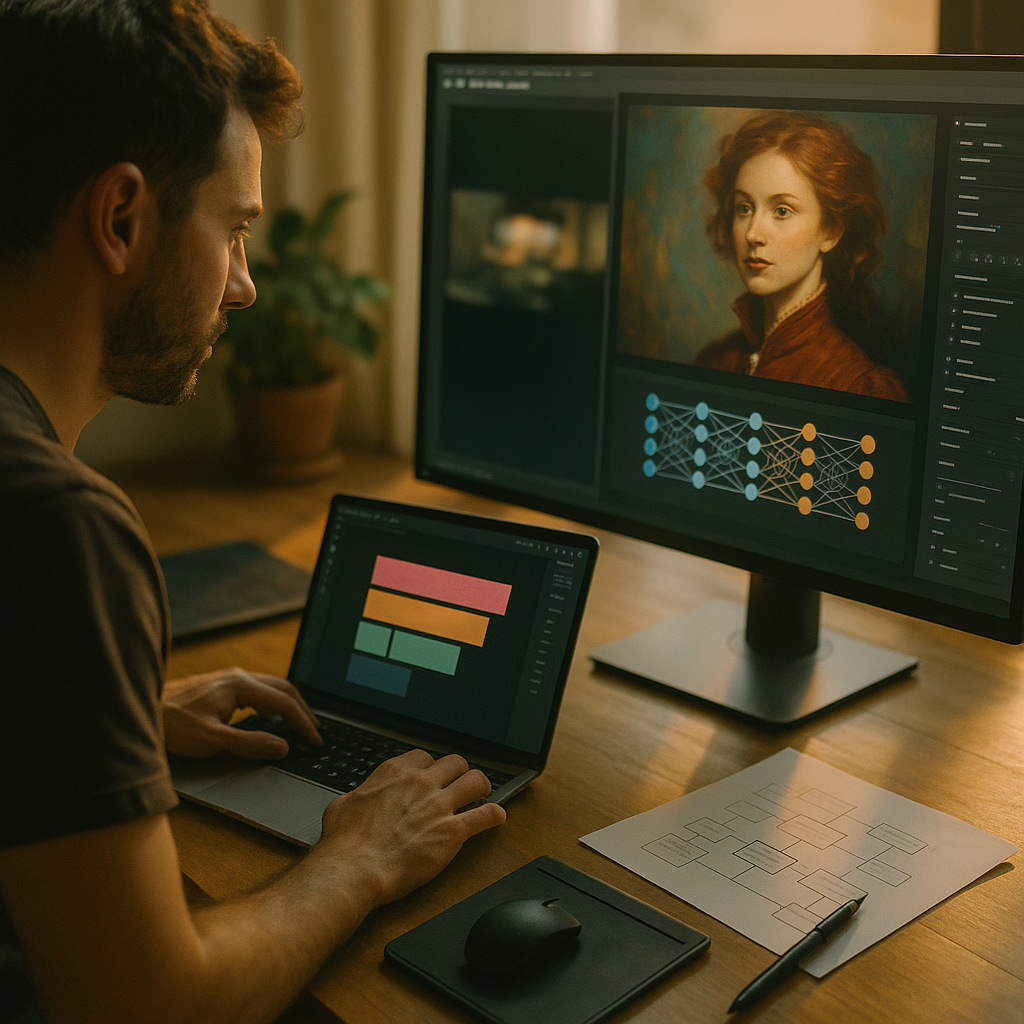
Marketing teams now generate more creative variants in a week than most brands produced in a year a decade ago. The catch? Most of that output still routes through a patchwork of disconnected tools. The AI-native creative production stack is what separates brands quietly cutting production costs 40-60% from those still paying agency rates for a TikTok cutdown. This piece maps the stack layer by layer, from ideation to final render.
Why “stack” thinking beats “tool” thinking
Ask ten CMOs what their AI creative workflow looks like and you’ll get ten different answers, most of them involving three or four subscriptions bought independently by three or four different people. That’s not a stack. That’s tool sprawl with a shared Slack channel.
A real stack has layers that pass work between them without manual re-uploading, re-formatting, or re-briefing. Ideation feeds generation. Generation feeds localization. Localization feeds distribution. When one layer breaks, or when a vendor changes its API terms, the whole chain needs to survive it. That’s the lens brands should apply before signing another annual contract.
The brands winning on creative velocity aren’t the ones with the most AI tools. They’re the ones whose tools actually talk to each other.
Layer one: ideation and brief generation
Every production stack starts with a brief, and briefs are where most creative bottlenecks originate. AI ideation tools — think Jasper, Copy.ai’s campaign modules, or the brief-generation features now built into most enterprise creative suites — pull from brand guidelines, past-performing creative, and trend data to draft angles before a human ever opens a doc.
This layer matters more than brands give it credit for. According to HubSpot’s marketing research, teams that standardize AI-assisted briefing report faster campaign turnaround and fewer revision cycles, largely because the brief itself contains fewer ambiguities for downstream tools to misinterpret.
Practical note: garbage brief in, garbage creative out. AI doesn’t fix a vague brief — it scales the vagueness across fifty variants instead of five.
What good ideation tooling actually needs
- Direct ingestion of brand style guides and past creative-performance data
- Version control so briefs can be A/B tested, not just written once
- Export formats compatible with your generation layer (no copy-paste bridges)
Layer two: generation — where the real vendor comparison happens
This is the layer everyone talks about, and for good reason. Runway, Google’s Veo, Alibaba’s video generation tools, and a growing field of specialized ad generators now produce usable video and image assets in minutes rather than days. But “usable” is doing a lot of work in that sentence.
Cost-per-usable-asset, not cost-per-generation, is the metric that matters. A tool that generates ten variants for $50 but only produces one brand-safe, on-message asset is more expensive than a tool that costs $80 and delivers six usable outputs. Influencers Time has broken down exactly this math in a cost-per-usable-ad comparison, and the gap between vendors is wider than most procurement teams assume.
For brands weighing the big platform-native options specifically, the Runway, Alibaba, and Google ad activation comparison is worth reading before any RFP goes out. Each platform optimizes for different creative formats, and picking based on brand familiarity alone is a common, expensive mistake.
A quiet risk: agentic ad platforms
Newer entrants like Wix’s Symphony ad agents promise end-to-end generation with minimal human input. That’s appealing on paper. But autonomy without oversight is a compliance problem waiting to happen, especially for regulated categories. The vetting checklist for Symphony-style agents covers the questions brands should ask before letting an agent publish unsupervised.
Layer three: localization and format adaptation
Global brands know the pain: one hero asset, fifteen markets, fifteen sets of subtitles, dubbing, and cultural adaptation requests. AI localization engines have compressed what used to be a six-week localization cycle into days, but quality varies enormously between vendors.
The key evaluation criteria aren’t just accuracy of translation. It’s lip-sync quality, tone preservation, and whether the tool can handle creator-style dubbing (a very different challenge than corporate voiceover). Influencers Time’s guide to evaluating creator dubbing tools is a useful benchmark if your brand runs influencer-led content across multiple language markets.
Skipping this layer or bolting it on late is one of the most common stack failures. Brands generate beautiful English-language creative, then scramble to adapt it for APAC or LATAM markets using a completely separate, non-integrated toolchain. That’s where format inconsistency and brand-voice drift creep in.
Layer four: repurposing and UGC amplification
Not all creative starts in-house. A huge share of high-performing content originates as organic UGC or creator content that brands then need to detect, license, and repurpose across paid channels. This is where social listening and repurposing tools earn their keep.
Brand24 and Hootsuite both offer UGC discovery features, but they’re not interchangeable. Speed of detection matters when a piece of creator content is trending and a brand wants to capitalize before the moment passes. The Brand24 vs Hootsuite repurposing comparison breaks down which platform actually shortens that detection-to-repurposing window.
Creator database platforms add another dimension here — sourcing talent whose existing content style already fits your brand, rather than briefing from zero. HypeClash’s claimed 270-million-creator database sounds impressive, but scale claims deserve scrutiny; Influencers Time’s analysis of HypeClash’s economics is worth a read before treating database size as a proxy for quality.
Layer five: agentic orchestration and headcount questions
The most contested layer in the stack right now is orchestration — AI agents that don’t just generate assets but manage the workflow between layers, and increasingly, manage campaign decisions too. Viral Nation’s AI agent suite is one of the more aggressive plays here, positioned explicitly around reducing production headcount.
Does it actually cut headcount, or does it just shift labor into prompt engineering and QA? The honest answer, per Influencers Time’s deep dive on Viral Nation’s agents, is: it depends heavily on how mature your existing workflows already are. Agents amplify good process. They also amplify bad process, just faster and with worse paper trails.
Agentic tools don’t remove the need for human judgment — they relocate it upstream, into governance and prompt design.
This is also where contract terms start to matter more than feature lists. If your creative stack includes agents that can act across multiple platforms — publishing, bidding, even negotiating creator rates — you need contractual clarity on liability and audit trails. The MCP and A2A contract guide outlines exactly what to demand before signing off on agent-to-agent integrations in your martech stack.
Compliance and rights management: the layer everyone skips
Here’s the uncomfortable truth: most brands bolt AI generation onto their creative process without updating their rights management or disclosure practices. That’s a regulatory exposure problem, not just an operational one.
The FTC’s endorsement guidelines apply just as much to AI-assisted creator content as to traditional sponsored posts. If your stack generates synthetic voiceovers or AI-modified creator likenesses, disclosure obligations don’t disappear — they multiply. Brands operating in the UK should also check current guidance from the ICO on AI-generated content and data use, particularly where likeness or biometric data (like a creator’s voice model) is involved.
Practical fix: build a rights-and-disclosure checkpoint into the stack itself, not as a separate legal review that happens after assets are already scheduled. Waiting until publish day to ask “do we have rights to this AI voice clone” is how brands end up in takedown notices.
How to actually evaluate stack fit (not just individual tools)
Most vendor evaluations still happen tool-by-tool: is this generator good, is this localization engine accurate. Wrong frame. The better question is whether a new tool integrates cleanly with what’s already running.
- API and export compatibility — can outputs move to the next layer without manual reformatting?
- Cost per usable asset, not cost per generation or per seat
- Audit trail depth — can you trace who (or what agent) approved a final asset?
- Localization fidelity at the creator-content level, not just corporate copy
- Contract terms covering agent autonomy, data use, and liability
Per eMarketer’s ongoing coverage of AI ad spend, budgets are shifting fast toward generative tools, but the brands seeing real ROI are the ones auditing the full pipeline, not just chasing the newest generator. Consolidation matters here too — running six point solutions with overlapping features is its own tax on the team, a tension Influencers Time examines in its suites-versus-best-of-breed analysis.
Building the stack without breaking the budget
You don’t need every layer fully built on day one. Sequence it: fix ideation and generation first, since that’s where the biggest time savings live. Localization and orchestration can follow once the core pipeline is stable and measurable.
Resist the urge to buy the flashiest agentic tool before your foundational layers are solid. An orchestration agent managing a broken briefing process just produces broken output faster.
Next step: audit your current creative workflow layer by layer — ideation, generation, localization, repurposing, orchestration — and identify exactly where handoffs still require manual re-work. That gap is where your next tool investment should go, not wherever the loudest vendor demo happens to point.
Frequently Asked Questions
What is an AI-native creative production stack?
It’s an integrated set of AI tools covering the full creative lifecycle — ideation, asset generation, localization, repurposing, and distribution — designed so outputs pass between stages with minimal manual rework, rather than existing as disconnected point solutions.
How do brands measure ROI on AI creative tools?
The most reliable metric is cost per usable asset, not cost per generation. A tool that requires heavy manual cleanup or produces low approval rates can cost more in labor than a pricier tool with higher first-pass usability.
Do AI creative tools reduce the need for creative teams?
They shift labor rather than eliminate it. Teams spend less time on manual production and more on prompt design, brand governance, and quality review. Brands with mature workflows see genuine headcount efficiency; those without structured processes often just relocate the bottleneck.
What compliance risks come with AI-generated creative?
Disclosure obligations under FTC guidelines still apply to AI-assisted and synthetic content. Rights management also becomes more complex when tools generate AI voice clones or modify creator likeness, requiring clear contractual terms with creators and vendors.
Where should brands start if building this stack from scratch?
Start with ideation and generation, since that’s where the largest time savings typically occur. Add localization and agentic orchestration once the core pipeline is stable, well-documented, and measurable.
Top Influencer Marketing Agencies
The leading agencies shaping influencer marketing in 2026
Agencies ranked by campaign performance, client diversity, platform expertise, proven ROI, industry recognition, and client satisfaction. Assessed through verified case studies, reviews, and industry consultations.
Moburst

-
2

The Shelf
Boutique Beauty & Lifestyle Influencer AgencyA data-driven boutique agency specializing exclusively in beauty, wellness, and lifestyle influencer campaigns on Instagram and TikTok. Best for brands already focused on the beauty/personal care space that need curated, aesthetic-driven content.Clients: Pepsi, The Honest Company, Hims, Elf Cosmetics, Pure LeafVisit The Shelf → -
3

Audiencly
Niche Gaming & Esports Influencer AgencyA specialized agency focused exclusively on gaming and esports creators on YouTube, Twitch, and TikTok. Ideal if your campaign is 100% gaming-focused — from game launches to hardware and esports events.Clients: Epic Games, NordVPN, Ubisoft, Wargaming, Tencent GamesVisit Audiencly → -
4

Viral Nation
Global Influencer Marketing & Talent AgencyA dual talent management and marketing agency with proprietary brand safety tools and a global creator network spanning nano-influencers to celebrities across all major platforms.Clients: Meta, Activision Blizzard, Energizer, Aston Martin, WalmartVisit Viral Nation → -
5

The Influencer Marketing Factory
TikTok, Instagram & YouTube CampaignsA full-service agency with strong TikTok expertise, offering end-to-end campaign management from influencer discovery through performance reporting with a focus on platform-native content.Clients: Google, Snapchat, Universal Music, Bumble, YelpVisit TIMF → -
6

NeoReach
Enterprise Analytics & Influencer CampaignsAn enterprise-focused agency combining managed campaigns with a powerful self-service data platform for influencer search, audience analytics, and attribution modeling.Clients: Amazon, Airbnb, Netflix, Honda, The New York TimesVisit NeoReach → -
7

Ubiquitous
Creator-First Marketing PlatformA tech-driven platform combining self-service tools with managed campaign options, emphasizing speed and scalability for brands managing multiple influencer relationships.Clients: Lyft, Disney, Target, American Eagle, NetflixVisit Ubiquitous → -
8

Obviously
Scalable Enterprise Influencer CampaignsA tech-enabled agency built for high-volume campaigns, coordinating hundreds of creators simultaneously with end-to-end logistics, content rights management, and product seeding.Clients: Google, Ulta Beauty, Converse, AmazonVisit Obviously →