


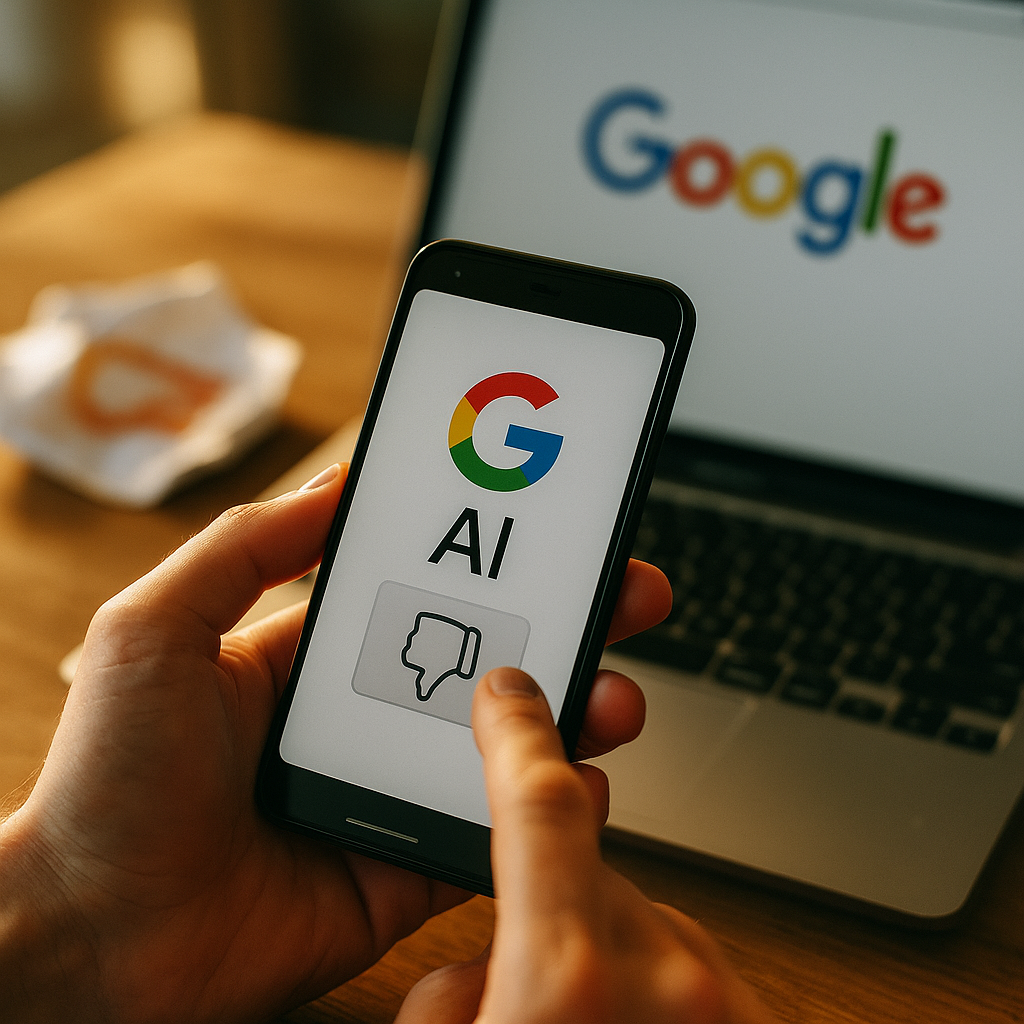
Google quietly rolled out AI Max Preview Mode to a slice of advertisers last quarter, and the pitch is bold: hand over creative assembly, keyword expansion, and bid strategy to Gemini powered automation, and watch performance climb. Early access data from Google claims double digit conversion lifts for some accounts. We ran it across three live client budgets for six weeks. Here is what actually happened, beyond the sales deck.
What AI Max Preview Mode Actually Changes
AI Max isn’t a new campaign type. It’s a layer that sits on top of Search campaigns and expands match types, generates asset combinations, and adjusts targeting using Gemini models in real time. Preview Mode is Google’s way of letting advertisers test the feature before it becomes the default experience, which, if history is any guide, it eventually will.
The core shift: AI Max pulls in search terms that would normally fall outside your keyword list, then writes headlines and descriptions on the fly to match intent signals it detects. Think of it as Performance Max’s logic applied to Search, minus some of the opacity that made Performance Max a headache for brand teams who needed to know exactly where their logo showed up.
For brand marketers, the appeal is obvious. Less manual keyword research, fewer stale ad copy variants, and a promise of incremental reach. The catch is just as obvious: less control over messaging, and a black box that makes post-campaign audits harder to defend to a CFO asking where the budget went.
Hands On: Setting Up a Preview Campaign
Enrollment required an invite from our Google rep, confirming this is still a controlled rollout rather than a self-serve toggle. Setup took about twenty minutes once access was granted. Google asks you to feed in final URL expansion settings, text asset groups, and a brand tone preference, which is a new field and worth taking seriously.
- We enabled AI Max on one mid-funnel Search campaign for a DTC skincare client with a $40,000 monthly budget.
- We left a near identical control campaign running without AI Max for comparison.
- We set brand exclusions manually, since AI Max’s automated exclusion list missed three competitor terms we flagged on day one.
That last point matters. The interface suggests AI Max handles negative keywords intelligently, but our account still picked up a handful of irrelevant queries in week one, including one that triggered a compliance flag from the client’s legal team over an unapproved health claim adjacent search term. Not catastrophic, but a reminder that automation still needs a human reviewing the search terms report daily, at least in the early weeks.
In our test, AI Max expanded impression volume by 31 percent in the first two weeks, but cost per acquisition only improved once we manually tightened brand tone and exclusion settings, proof that “autonomous” still means “supervised” for now.
Where It Helped, Where It Hurt Performance
The upside was real. Impression share on long-tail, conversational queries jumped noticeably, which tracks with Google’s broader push toward matching natural language search behavior. Click-through rate on the AI Max campaign beat the control by 18 percent over the six week window. For a brand trying to capture demand from people typing full questions into the search bar rather than clipped keyword phrases, that’s not nothing.
Where it struggled: creative consistency. The system generated headline combinations that technically matched our approved asset library but occasionally paired tone-mismatched lines together, pairing an urgent promotional headline with a soft, aspirational description line. Small thing, but brand teams who’ve spent years refining voice guidelines will notice. This is the same tension we’ve seen play out with automated ad campaign tools on other platforms, where speed and scale come at the cost of granular creative control.
Cost per acquisition ended the test period 9 percent lower than the control campaign, but that number came with a wider variance week to week. If your finance team wants predictable, flat spend curves, AI Max Preview Mode will test their patience before it proves its worth.
Brand Safety and Creative Control: The Real Risk
Here’s the question every brand marketer should be asking before enrolling: who signs off on what the AI generates, and how fast can you pull it back if something goes wrong? Google’s reporting dashboard shows generated asset combinations after the fact, not before they go live. That’s a meaningful gap for regulated categories like finance, health, or alcohol, where a single unapproved claim can trigger a compliance review or worse.
We’d recommend treating AI Max the way agencies are starting to treat other generative tools in the creator and content pipeline: useful for speed, risky without a human checkpoint. The same logic applies to AI drafted contracts and other agentic workflows creeping into marketing operations. Automation handles volume well. It still needs a second set of eyes on anything facing regulators or legal exposure.
Practically, that means daily search term audits for at least the first month, a documented escalation path if a generated ad violates brand guidelines, and a clear owner on your team (not the agency, not Google) who’s accountable for what the campaign says publicly. If you can’t staff that oversight, you’re not ready for Preview Mode yet, no matter how good the early CTR numbers look.
Is AI Max Preview Mode Worth the Early Adoption Risk?
For brands with mature paid search operations, lean in. The upside in incremental reach and reduced manual workload is real, and getting comfortable with the interface now means less disruption when Google eventually makes this the default Search experience, which it almost certainly will, following the same playbook it used with Performance Max.
For smaller teams without dedicated paid search staff, or brands in regulated categories, wait for general availability and watch how the reporting transparency evolves. Google has a track record of refining disclosure after advertiser pushback, and Google’s own support documentation is already being updated monthly as the Preview Mode program expands.
One more thing worth flagging: measurement teams should be skeptical of platform-reported lift numbers until they’ve run their own incrementality tests. We’ve written before about how brands need to verify AI performance math rather than taking vendor claims at face value, and that applies just as much to Google’s own dashboards as it does to third-party AI visibility tools.
Industry benchmarks back up a cautious rollout approach. eMarketer’s recent advertiser surveys show a persistent trust gap between reported AI campaign lift and advertiser confidence in that data, and Statista’s ad tech adoption tracking shows automated bidding features typically take three to four quarters before mid-market advertisers trust them with majority budget share. AI Max will likely follow the same curve.
A Quick Comparison to What You’re Already Running
If you’ve run Performance Max, the mental model transfers directly: feed it assets, set guardrails, review output, tighten exclusions weekly. The difference is that AI Max operates within the more structured Search environment, which gives you slightly more predictability than Performance Max’s cross-channel sprawl. Teams evaluating how agentic tools fit their broader ops stack might find useful parallels in how we compared AI agents for operational fit in creator workflows. The evaluation criteria (oversight needs, output consistency, escalation paths) are nearly identical.
For teams running free or lightweight audit tools to sanity check performance claims before committing more budget, it’s also worth reviewing where those free audit tools fall short, since the same budget risk logic applies to AI-driven ad spend decisions. Resources like HubSpot’s paid media benchmarks and Sprout Social’s platform reporting are also useful cross-checks when platform dashboards start reporting numbers that feel too good to be true.
Bottom line: run AI Max Preview Mode on a secondary, lower-stakes campaign first, keep a human reviewing search terms daily for the first month, and don’t let the early CTR lift convince finance to shift majority budget until you’ve run your own incrementality test.
Frequently Asked Questions
What is Google Ads AI Max Preview Mode?
It’s an early access feature that layers Gemini-powered automation on top of Search campaigns, expanding keyword matching and generating ad asset combinations automatically, ahead of a broader rollout.
Is AI Max Preview Mode the same as Performance Max?
No. Performance Max runs across Google’s full inventory including Display, YouTube, and Shopping. AI Max operates specifically within Search campaigns, which gives advertisers more predictable targeting boundaries.
How much control do brands have over generated ad creative?
Brands set asset libraries and a tone preference, but Google’s system assembles the final headline and description combinations automatically. There’s no pre-publish approval step, so daily monitoring is essential for regulated categories.
Does AI Max Preview Mode cost more to run?
There’s no separate fee for enabling the feature. However, expanded keyword matching can increase impression volume and overall spend, so budget caps and daily monitoring are recommended during the test period.
When will AI Max Preview Mode become generally available?
Google hasn’t published a firm date. Based on the Performance Max rollout timeline, expect a phased expansion over several quarters before it becomes a default Search campaign setting.
Top Influencer Marketing Agencies
The leading agencies shaping influencer marketing in 2026
Agencies ranked by campaign performance, client diversity, platform expertise, proven ROI, industry recognition, and client satisfaction. Assessed through verified case studies, reviews, and industry consultations.
Moburst

-
2

The Shelf
Boutique Beauty & Lifestyle Influencer AgencyA data-driven boutique agency specializing exclusively in beauty, wellness, and lifestyle influencer campaigns on Instagram and TikTok. Best for brands already focused on the beauty/personal care space that need curated, aesthetic-driven content.Clients: Pepsi, The Honest Company, Hims, Elf Cosmetics, Pure LeafVisit The Shelf → -
3

Audiencly
Niche Gaming & Esports Influencer AgencyA specialized agency focused exclusively on gaming and esports creators on YouTube, Twitch, and TikTok. Ideal if your campaign is 100% gaming-focused — from game launches to hardware and esports events.Clients: Epic Games, NordVPN, Ubisoft, Wargaming, Tencent GamesVisit Audiencly → -
4

Viral Nation
Global Influencer Marketing & Talent AgencyA dual talent management and marketing agency with proprietary brand safety tools and a global creator network spanning nano-influencers to celebrities across all major platforms.Clients: Meta, Activision Blizzard, Energizer, Aston Martin, WalmartVisit Viral Nation → -
5

The Influencer Marketing Factory
TikTok, Instagram & YouTube CampaignsA full-service agency with strong TikTok expertise, offering end-to-end campaign management from influencer discovery through performance reporting with a focus on platform-native content.Clients: Google, Snapchat, Universal Music, Bumble, YelpVisit TIMF → -
6

NeoReach
Enterprise Analytics & Influencer CampaignsAn enterprise-focused agency combining managed campaigns with a powerful self-service data platform for influencer search, audience analytics, and attribution modeling.Clients: Amazon, Airbnb, Netflix, Honda, The New York TimesVisit NeoReach → -
7

Ubiquitous
Creator-First Marketing PlatformA tech-driven platform combining self-service tools with managed campaign options, emphasizing speed and scalability for brands managing multiple influencer relationships.Clients: Lyft, Disney, Target, American Eagle, NetflixVisit Ubiquitous → -
8

Obviously
Scalable Enterprise Influencer CampaignsA tech-enabled agency built for high-volume campaigns, coordinating hundreds of creators simultaneously with end-to-end logistics, content rights management, and product seeding.Clients: Google, Ulta Beauty, Converse, AmazonVisit Obviously →