


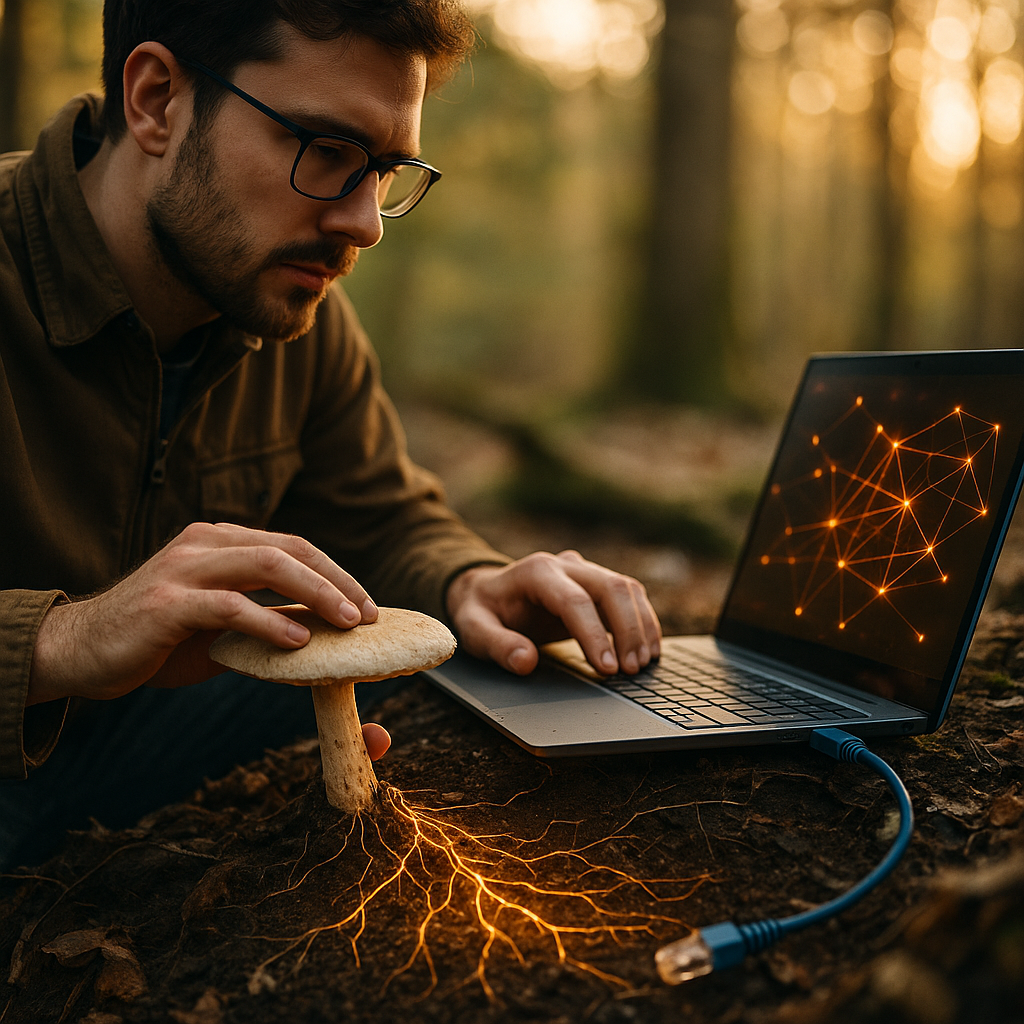
The rise of “myco-networks” — using fungi as a medium for data transmission and influence — is transforming how we view communication, both biological and digital. As scientists unlock the secrets of fungal networks, this emerging technology offers groundbreaking insights. Will fungi soon power the data-driven systems of tomorrow? Read on to discover how myco-networks may change everything.
Understanding Myco-networks: The Unique Role of Fungal Networks
Fungi have long been recognized for their ecological importance, particularly with their remarkable underground mycelial structures. These fungal threads, known as mycelium, create complex networks that facilitate nutrient sharing and communication in forests. Researchers are now decoding how myco-networks might serve as biological models—and physical substrates—for data transmission.
Unlike traditional cables or fiber optics, myco-networks leverage the natural electrical impulses traveling between fungal cells. Recent studies indicate that certain fungi can propagate electrical signals, encoding information much like a biological internet. This living “wood wide web” can influence not only ecosystems, but may one day enable human-designed communication systems grounded in nature.
How Fungi Enable Bio-Data Transmission
The concept of using fungi for bio-data transmission centers on their ability to conduct electrical signals over significant distances. In recent laboratory experiments, researchers have sent simple messages encoded in electrical impulses through mycelial networks. They monitor voltage fluctuations, known as “spikes,” which act as the binary language of myco-networks.
This fungal communication operates at relatively low speeds compared to silicon-based systems, but its organic, self-repairing qualities offer unparalleled resilience. The applications extend beyond simple data transfer: some systems can influence the behavior of connected organisms or respond dynamically to environmental changes, elevating the potential influence of fungi over living and artificial systems alike.
Technology Innovations Harnessing Myco-networks
If you’re wondering how this translates into practical technology, look no further than recent interdisciplinary projects in Europe and Asia. Engineers and biologists have developed prototype fungal transceivers and bio-sensors, integrating them into experimental Internet of Things (IoT) networks. These “mycological routers” process and transmit environmental data from remote locations, often thriving where conventional electronics would fail.
Some startups have engineered hybrid circuits that include living mycelium in their signal pathways. These biosensors detect soil moisture, pollutants, and even plant stress, relaying this information through the fungal network. Innovations in 2025 are focusing on expanding bandwidth by genetically optimizing fungi for faster signal propagation, while keeping power requirements and material costs low.
- Bio-computing: Myco-networks function as rudimentary organic computers, executing simple logic.
- Eco-monitoring: Networks sense and transmit environmental data, ensuring sustainable land management.
- Resilient connectivity: Embedded in soil, myco-networks operate where wireless signals struggle.
Implications of Fungal Data Influence on Digital and Natural Worlds
The rise of myco-networks carries significant implications across multiple domains. In ecology, harnessing fungal communication can help manage forests, restore degraded lands, and track biodiversity with minimal invasive technology. In the digital realm, these systems hint at a new type of “organic infrastructure” where information flow is intimately tied to living systems.
This convergence could revolutionize sensor networks in remote or hazardous areas—think underground mines, disaster zones, and even extraterrestrial habitats. Myco-networks can influence resource distribution among plants, and, via interfacing technologies, potentially modify plant behavior for optimized growth or defense. Data privacy advocates are already exploring how naturally encrypted fungal signaling might offer stealthy, tamper-proof communication channels.
Challenges and Ethical Considerations of Myco-based Transmission
Integrating fungi into data architectures isn’t without hurdles. Maintaining stable signal integrity through living systems requires precise calibration and adaptation. The speed and bandwidth of myco-networks are still far from matching their electronic counterparts. Scientific teams continue to experiment with various fungi to find optimal candidates for specific use-cases, balancing network robustness against environmental needs.
Ethical considerations are also paramount. Should we manipulate and genetically engineer fungi solely for digital purposes? How do we prevent unintended impacts on ecosystems? Clear regulatory frameworks and interdisciplinary dialogue are needed as the myco-network field matures. Ensuring environmental stewardship remains at the forefront of innovation will prevent negative consequences and foster public trust as this technology scales.
The Future of Myco-networks: Integration and Possibilities
Looking ahead, the future of myco-networks extends far beyond experimental setups. Visionaries are already discussing large-scale “fungal communication grids” that supplement conventional networks in smart cities and agriculture. There’s growing potential for hybrid systems where biological and electronic pathways co-exist, boosting system resilience and sustainability.
Some researchers in 2025 predict that myco-networks could play a role in brain-computer interfaces or decentralized AI, leveraging the inherently parallel nature of mycelial growth and signaling. Global investment and policy support are accelerating, pointing toward commercialization—as well as new ethical debates. Ultimately, fungi stand on the cusp of reshaping how humanity transmits, influences, and safeguards information in the interconnected world.
FAQs: Myco-networks, Fungi, and Data Transmission
-
What is a myco-network?
A myco-network is a system where fungal mycelium is used as a medium for transmitting data or facilitating communication, either between organisms or as part of a digital infrastructure.
-
How do fungi transmit data?
Fungi conduct electrical impulses along their mycelium, similar to nerve signals, which can be encoded as digital information and read by sensitive electrodes.
-
Are myco-networks faster than traditional networks?
Currently, myco-networks are slower than electronic data transmission but offer advantages in self-healing, low energy use, and resilience in harsh environments.
-
What are practical uses for myco-networks?
They are used in eco-monitoring, soil health management, pollutant detection, and experimental communications in areas where traditional networks fail.
-
Are there ethical concerns with using fungi this way?
Yes; issues include environmental impact, genetic modification, and ecosystem disruption. Thoughtful regulation and research are crucial as the field develops.
As myco-networks move from theory to reality, integrating fungi for data transmission and influence redefines today’s digital possibilities. By blending biology with technology, this bold innovation offers sustainable, resilient pathways for communication—while urging us to pursue ethical stewardship and responsible advancement at every step.
Top Influencer Marketing Agencies
The leading agencies shaping influencer marketing in 2026
Agencies ranked by campaign performance, client diversity, platform expertise, proven ROI, industry recognition, and client satisfaction. Assessed through verified case studies, reviews, and industry consultations.
Moburst

-
2

The Shelf
Boutique Beauty & Lifestyle Influencer AgencyA data-driven boutique agency specializing exclusively in beauty, wellness, and lifestyle influencer campaigns on Instagram and TikTok. Best for brands already focused on the beauty/personal care space that need curated, aesthetic-driven content.Clients: Pepsi, The Honest Company, Hims, Elf Cosmetics, Pure LeafVisit The Shelf → -
3

Audiencly
Niche Gaming & Esports Influencer AgencyA specialized agency focused exclusively on gaming and esports creators on YouTube, Twitch, and TikTok. Ideal if your campaign is 100% gaming-focused — from game launches to hardware and esports events.Clients: Epic Games, NordVPN, Ubisoft, Wargaming, Tencent GamesVisit Audiencly → -
4

Viral Nation
Global Influencer Marketing & Talent AgencyA dual talent management and marketing agency with proprietary brand safety tools and a global creator network spanning nano-influencers to celebrities across all major platforms.Clients: Meta, Activision Blizzard, Energizer, Aston Martin, WalmartVisit Viral Nation → -
5

The Influencer Marketing Factory
TikTok, Instagram & YouTube CampaignsA full-service agency with strong TikTok expertise, offering end-to-end campaign management from influencer discovery through performance reporting with a focus on platform-native content.Clients: Google, Snapchat, Universal Music, Bumble, YelpVisit TIMF → -
6

NeoReach
Enterprise Analytics & Influencer CampaignsAn enterprise-focused agency combining managed campaigns with a powerful self-service data platform for influencer search, audience analytics, and attribution modeling.Clients: Amazon, Airbnb, Netflix, Honda, The New York TimesVisit NeoReach → -
7

Ubiquitous
Creator-First Marketing PlatformA tech-driven platform combining self-service tools with managed campaign options, emphasizing speed and scalability for brands managing multiple influencer relationships.Clients: Lyft, Disney, Target, American Eagle, NetflixVisit Ubiquitous → -
8

Obviously
Scalable Enterprise Influencer CampaignsA tech-enabled agency built for high-volume campaigns, coordinating hundreds of creators simultaneously with end-to-end logistics, content rights management, and product seeding.Clients: Google, Ulta Beauty, Converse, AmazonVisit Obviously →