


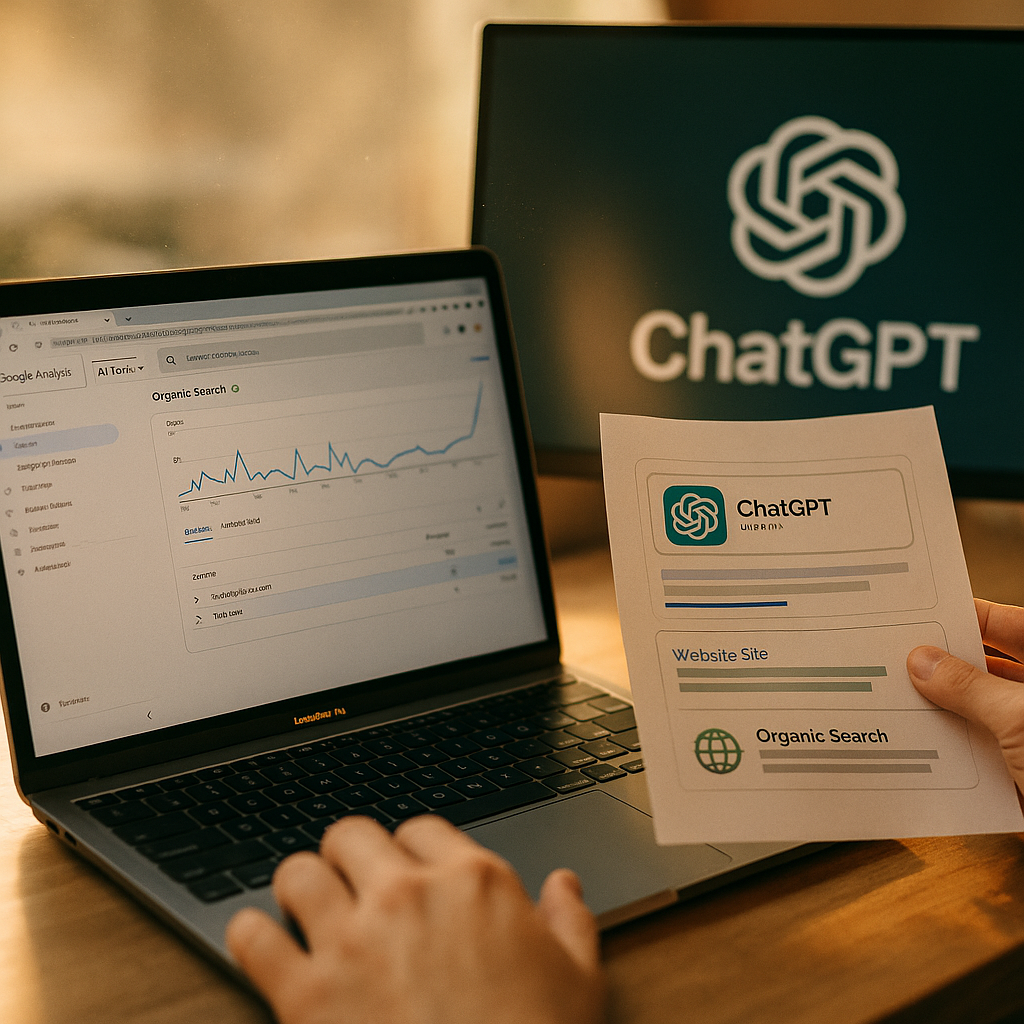
Google’s own data shows organic search referrals from AI chat interfaces are growing faster than any other channel category tracked in GA4 — yet most instances still lump ChatGPT visits in with plain old Google organic. If you can’t separate AI answer engine referral reporting from standard search, you’re making budget decisions on garbage data. This guide fixes that.
Here’s the uncomfortable truth: GA4’s default channel grouping logic wasn’t built for a world where large language models send traffic to your site. It was built for a world of search engines, social platforms, and email campaigns with clean, predictable referrer strings. ChatGPT, Gemini, and Perplexity don’t fit neatly into any of those buckets, and Google hasn’t fully caught up. So the workaround falls on you.
Why This Matters More Than It Seems
Let’s start with the stakes. If your attribution model can’t tell the difference between someone who typed a query into Google and someone who got a synthesized answer from ChatGPT with your brand cited as a source, you lose the ability to answer basic questions: Is our AI Overview presence driving actual visits? Is Perplexity sending qualified traffic or just curious browsers? Should we shift content budget toward answer-engine optimization?
This isn’t a hypothetical problem. Similarweb and other traffic analytics providers have documented steady month-over-month growth in referral traffic from AI chat interfaces across retail, SaaS, and publishing verticals. Meanwhile, eMarketer has flagged AI-driven search behavior as one of the fastest-shifting variables in the consumer research journey. If your reporting stack can’t isolate that behavior, you’re flying blind on a channel that’s only going to get bigger.
Treating ChatGPT and Perplexity traffic as “organic search” in your dashboards is like lumping TV ad views in with word-of-mouth referrals — technically related, practically useless for decision-making.
This connects directly to a broader attribution crisis we’ve covered before: zero-click search is breaking your GA4 attribution model in ways most marketing teams haven’t fully reckoned with yet.
What GA4 Actually Sees When ChatGPT Sends a Visitor
When someone clicks a citation link inside a ChatGPT response, GA4 receives a referrer. The problem is that referrer data is inconsistent across AI platforms, and GA4’s default channel grouping rules weren’t updated with LLM-specific logic in mind for most standard implementations.
Here’s what typically happens with each platform, based on current referrer behavior:
- ChatGPT: Link clicks from chat.openai.com or chatgpt.com typically pass a referrer that GA4 may bucket under “Referral” or, in some cases, misclassify as “Organic Search” depending on your channel grouping rules and whether OpenAI’s domain is on Google’s recognized search engine list.
- Gemini: Because Gemini is a Google product, traffic can arrive with referrer strings tied to google.com, which GA4’s default rules are far more likely to auto-classify as standard organic search — even though the user experience (a synthesized AI answer) is completely different from a traditional SERP click.
- Perplexity: Referrals from perplexity.ai generally land in “Referral” traffic by default, since it isn’t on GA4’s built-in list of recognized search engines.
That Gemini scenario is the sneaky one. Marketers assume they’ve got clean organic data because it says “Google / organic” right there in the report. In reality, some meaningful percentage of that “organic” traffic never touched a traditional search results page at all.
The Configuration Fix: Custom Channel Groups
GA4 lets you build custom channel groupings using conditional logic based on source, medium, and referrer. This is your primary lever for isolating AI answer engine referral reporting from standard search.
Here’s the general approach, step by step:
- Navigate to Admin > Data Display > Channel Groups in your GA4 property.
- Create a new custom channel group rather than editing the default one — you want to preserve the standard view for comparison.
- Build a rule for each AI platform using source-matching conditions. For example, create a condition where session source contains “chatgpt.com” or “chat.openai.com” and assign it to a channel named “AI Answer Engines – OpenAI.”
- Repeat for Perplexity using source contains “perplexity.ai,” and label it distinctly.
- Handle Gemini separately since its traffic often inherits Google-branded referrer strings. You may need to rely on landing page parameters, UTM tagging where you control the link, or supplementary tools like server-side logging to catch what GA4’s default rules will otherwise swallow into organic search.
- Order your rules correctly. Channel group conditions are evaluated top-down, so your AI-specific rules need to sit above the generic “Organic Search” rule, or they’ll never get triggered.
Once built, apply this custom channel group as a comparison dimension in your exploration reports. Don’t replace your default channel grouping — run them side by side so you can see the delta between “official Google organic” and what you now know is genuinely AI-referred traffic hiding inside it.
UTM Tagging: The Part Everyone Skips
Referrer-based detection only gets you so far, especially with citation links you don’t control. But anywhere you do control the link — brand mentions you’ve pitched for AI training corpora, structured data submissions, or press placements likely to get cited by these engines — tag it.
Use a consistent UTM convention: something like utm_source=chatgpt, utm_medium=ai_referral, utm_campaign=[content-piece-name]. This gives you clean, first-party confirmation that supplements the referrer-guessing game. It also protects you against future referrer stripping, which is a real risk as privacy-focused browsers and AI platforms increasingly scrub or anonymize outbound referrer strings.
One more thing worth doing: cross-reference your GA4 findings against server log data if you have access to it. Referrer headers can be blocked by browser privacy settings or platform-side redirects, meaning your GA4 numbers might understate actual AI referral volume. Server logs won’t lie to you the way a stripped referrer will.
Segmenting Behavior, Not Just Source
Isolating the traffic is step one. Step two is understanding whether it behaves differently — because if AI-referred visitors convert at half the rate of traditional organic, that changes how much weight you should put on GEO and AEO investment.
Build a comparison report across these dimensions for your new AI channel groups:
- Engagement rate compared to standard organic search sessions.
- Average session duration — AI-referred users often arrive with a very specific intent already answered, so shorter sessions aren’t necessarily bad.
- Conversion rate on your primary goal events, segmented by AI source.
- Landing page distribution — are AI engines consistently citing the same handful of pages? That tells you where your structured content is winning.
Teams that have done this analysis often find AI-referred sessions convert at a different rate than typical organic sessions — sometimes better, because the user’s research phase already happened inside the chat interface before they clicked through. This mirrors patterns we’ve seen in content built specifically for answer engines, where the visitor arrives pre-qualified rather than mid-funnel.
Where This Fits Into Your Broader AI Search Strategy
Reporting configuration isn’t the end goal. It’s the measurement layer that lets you make defensible decisions about where to invest content and structured data effort. If you’re debating how to split budget between generative engine optimization and traditional answer engine optimization, you need clean data to justify the split — otherwise you’re guessing. We’ve covered that budget allocation question directly in how to split your AI search budget, and the isolated reporting you build here is the input that makes that framework actionable rather than theoretical.
There’s also a citation-strategy angle. Winning placement inside a ChatGPT or Gemini response is a different discipline than ranking in a traditional SERP, and the two often require different technical and content approaches. Our comparison of citation strategy across Google and ChatGPT is a useful companion read once you’ve got the reporting foundation sorted, because it’ll tell you what to do with the insight once you have it.
And if you’re wondering whether this is worth the engineering time given how nascent AI referral volume still is for many verticals — consider that AI Overview citation rates are already near-saturated in some categories. The volume conversation is shifting fast. Waiting until AI referral traffic is a large enough line item to notice means you’ll have months of unusable historical data to explain to finance.
Common Mistakes That Undermine the Setup
A few pitfalls show up repeatedly when teams attempt this configuration:
- Editing the default channel group instead of creating a new one. This breaks historical trend continuity and makes year-over-year (or even month-over-month) comparisons unreliable.
- Placing AI-specific rules below the generic organic search rule in the condition order, which means they silently never fire.
- Forgetting mobile app referrers — if users click citation links inside the ChatGPT mobile app rather than a browser, referrer behavior can differ from desktop web sessions.
- Assuming referrer data is static. Platforms update their domains, redirect structures, and referrer policies without warning. Audit your channel group rules quarterly, not annually.
- Ignoring server-side validation. If your GA4 numbers look suspiciously low compared to what you’d expect based on citation monitoring tools, referrer stripping is probably the culprit.
None of this is exotic engineering. It’s disciplined configuration work, applied consistently, and reviewed on a schedule. The teams getting ahead here aren’t the ones with the most sophisticated martech stack — they’re the ones who bothered to build the rule set and keep it current.
FAQs
Frequently Asked Questions
Does GA4 automatically separate ChatGPT traffic from organic search?
No. By default, GA4’s channel grouping logic can misclassify AI referral traffic, particularly from Gemini, into standard organic search, and ChatGPT or Perplexity referrals often land in generic “Referral” buckets rather than a distinct AI category. Custom channel groups are required to isolate this traffic accurately.
Why does Gemini traffic show up as Google organic search in GA4?
Gemini is a Google product, and traffic clicking through from Gemini responses can carry referrer strings associated with google.com. GA4’s default rules are more likely to classify anything tied to Google domains as standard organic search, even when the actual user experience was an AI-generated answer rather than a traditional search results page.
What’s the difference between GEO, AEO, and standard SEO in this context?
Standard SEO targets ranking in traditional search engine results pages. Answer engine optimization (AEO) and generative engine optimization (GEO) target getting cited or referenced inside AI-generated responses from tools like ChatGPT, Gemini, and Perplexity. The reporting configuration in this guide is what lets you measure the actual traffic impact of AEO and GEO efforts separately from traditional SEO performance.
Can UTM tagging fully solve the AI referral tracking problem?
Not on its own. UTM tagging works well for links you control, such as press placements or structured data submissions. But citation links generated organically by AI models when they reference your content aren’t something you can UTM-tag in advance, so referrer-based custom channel groups remain necessary as the primary detection method.
How often should I audit my AI referral channel group rules?
Quarterly at minimum. AI platforms frequently change domain structures, redirect behavior, and referrer policies without public announcement, which means channel group rules that worked six months ago may silently stop capturing traffic correctly.
Is AI referral traffic worth tracking if the volume is still small?
Yes, because volume is growing quickly across most verticals, and historical data gaps are hard to backfill. Configuring accurate tracking now means you’ll have a clean baseline to measure growth against, rather than trying to reconstruct trends later from incomplete data.
Build the custom channel group this week, backdate nothing, and let the data accumulate cleanly from today forward — the teams still debating whether this matters will be the ones explaining unexplainable traffic spikes to leadership next quarter.
Top Influencer Marketing Agencies
The leading agencies shaping influencer marketing in 2026
Agencies ranked by campaign performance, client diversity, platform expertise, proven ROI, industry recognition, and client satisfaction. Assessed through verified case studies, reviews, and industry consultations.
Moburst

-
2

The Shelf
Boutique Beauty & Lifestyle Influencer AgencyA data-driven boutique agency specializing exclusively in beauty, wellness, and lifestyle influencer campaigns on Instagram and TikTok. Best for brands already focused on the beauty/personal care space that need curated, aesthetic-driven content.Clients: Pepsi, The Honest Company, Hims, Elf Cosmetics, Pure LeafVisit The Shelf → -
3

Audiencly
Niche Gaming & Esports Influencer AgencyA specialized agency focused exclusively on gaming and esports creators on YouTube, Twitch, and TikTok. Ideal if your campaign is 100% gaming-focused — from game launches to hardware and esports events.Clients: Epic Games, NordVPN, Ubisoft, Wargaming, Tencent GamesVisit Audiencly → -
4

Viral Nation
Global Influencer Marketing & Talent AgencyA dual talent management and marketing agency with proprietary brand safety tools and a global creator network spanning nano-influencers to celebrities across all major platforms.Clients: Meta, Activision Blizzard, Energizer, Aston Martin, WalmartVisit Viral Nation → -
5

The Influencer Marketing Factory
TikTok, Instagram & YouTube CampaignsA full-service agency with strong TikTok expertise, offering end-to-end campaign management from influencer discovery through performance reporting with a focus on platform-native content.Clients: Google, Snapchat, Universal Music, Bumble, YelpVisit TIMF → -
6

NeoReach
Enterprise Analytics & Influencer CampaignsAn enterprise-focused agency combining managed campaigns with a powerful self-service data platform for influencer search, audience analytics, and attribution modeling.Clients: Amazon, Airbnb, Netflix, Honda, The New York TimesVisit NeoReach → -
7

Ubiquitous
Creator-First Marketing PlatformA tech-driven platform combining self-service tools with managed campaign options, emphasizing speed and scalability for brands managing multiple influencer relationships.Clients: Lyft, Disney, Target, American Eagle, NetflixVisit Ubiquitous → -
8

Obviously
Scalable Enterprise Influencer CampaignsA tech-enabled agency built for high-volume campaigns, coordinating hundreds of creators simultaneously with end-to-end logistics, content rights management, and product seeding.Clients: Google, Ulta Beauty, Converse, AmazonVisit Obviously →