


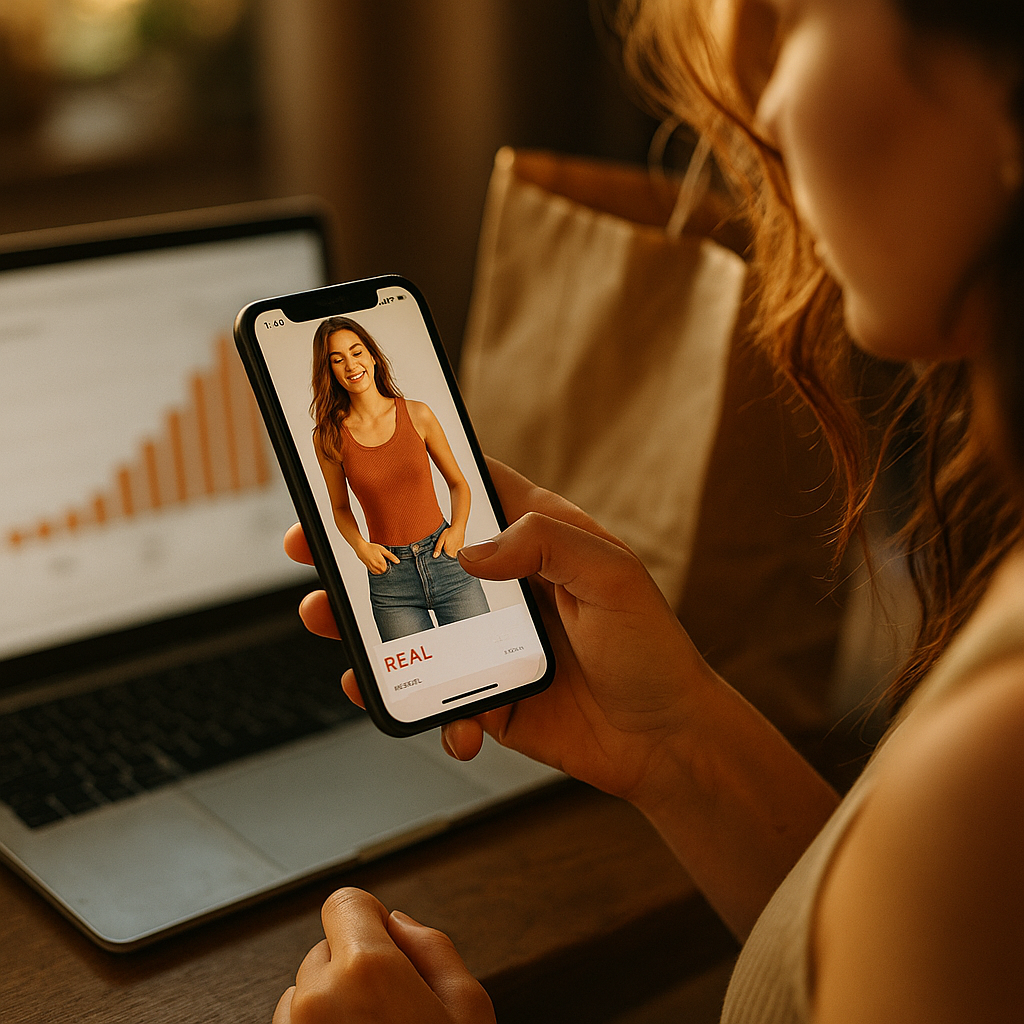
Zero retouching. Thousands of unpolished bodies on a national retailer’s feed. If you’d pitched this to a CFO a decade ago, you’d have been laughed out of the room. Yet Aerie’s body-positive micro-influencer program has quietly outperformed heavily-retouched competitors for years, proving that authenticity isn’t just a brand values talking point — it’s a growth lever with measurable ROI.
This case study breaks down how American Eagle’s intimates brand built a durable growth engine on unretouched imagery and a deep bench of micro-influencers, and what brand marketers can actually replicate from it.
The Bet: Kill the Airbrush, Keep the Sales
Aerie’s “Aerie Real” campaign launched over a decade ago with a simple, risky promise: no Photoshop on models in swim and intimates campaigns. At the time, this was heresy in a category built on retouched perfection. Victoria’s Secret owned the aspirational-body playbook. Aerie chose the opposite lane.
The gamble wasn’t just creative — it was structural. Unretouched imagery only works if the influencer layer reinforces it consistently, at scale, across thousands of pieces of content a year. That’s where the micro-influencer strategy comes in. Aerie didn’t lean on a handful of celebrity ambassadors polished within an inch of believability. It built a rotating roster of hundreds of micro and mid-tier creators — many with under 100,000 followers — who post real, minimally edited content in Aerie product.
Aerie has posted double-digit revenue growth in multiple fiscal years since launching its no-retouching policy, while several retouch-heavy intimates competitors lost market share over the same stretch — evidence that the authenticity bet wasn’t just brand-safe, it was commercially sound.
Why Micro-Influencers Were the Only Way to Make This Credible
Here’s the uncomfortable truth most brands avoid: you cannot outsource authenticity to a celebrity with a ring light and a retoucher on retainer. Follower count and credibility are often inversely related once you cross a certain threshold. A creator with 40,000 engaged followers who genuinely wears the product reads as trustworthy. A celebrity ambassador shot in studio lighting, even in an “unretouched” campaign, reads as a campaign.
Aerie’s program leans heavily on nano and micro creators — a strategy that echoes what we’ve seen work in other micro-creator seeding programs that prioritize volume and authenticity over reach. The math is straightforward: 500 creators posting real try-on content generates more trust signals than five celebrities posting curated ones, and it costs a fraction of the media spend.
There’s also a compliance angle brands underestimate. Unretouched-imagery claims invite scrutiny. If a brand says “no Photoshop” and then a creator posts visibly edited content, that’s a credibility gap regulators and consumers both notice. The FTC’s endorsement guidelines already require clear disclosure of material connections between brands and creators; layering an authenticity claim on top raises the compliance bar further. Aerie’s answer was operational, not just aspirational: contracts and creative briefs that explicitly prohibit retouching, skin-smoothing filters, and body-altering apps.
What the Vetting Process Actually Looks Like
Body-positive marketing fails fast when the influencer roster doesn’t match the message. A program built on inclusivity that only features one body type is worse than no program at all — it’s a credibility grenade waiting to go off on social media.
Aerie’s creator vetting reportedly prioritizes:
- Body diversity across size ranges, not just one or two “acceptable” larger sizes
- Racial and ethnic diversity that reflects the actual customer base, not just aspirational demographics
- Disability representation, including creators who are amputees or wheelchair users
- Genuine product usage history, verified through past organic posts before any paid relationship begins
This is where a lot of brand teams get lazy. Vetting for “authenticity” often collapses into vetting for follower count and engagement rate, full stop. Aerie’s approach — and frankly, any brand serious about this positioning — requires a qualitative layer that most influencer platforms don’t automate well. It’s slower. It’s more expensive per creator onboarded. It’s also the only way the claim holds up under public scrutiny.
Compare this to the vetting rigor described in Curology’s vetting and payout engine, where structured screening criteria fed a 9x sales lift. Different category, same principle: vetting discipline is what separates a sustainable program from a PR stunt.
The Sales Data Behind the Values Statement
Brand values don’t pay rent. So let’s talk numbers.
American Eagle Outfitters has repeatedly cited Aerie as a standout growth segment within its broader portfolio, with the brand’s net revenue climbing into the billion-dollar range annually and consistently outpacing the parent company’s flagship American Eagle denim business in growth rate during multiple recent fiscal periods, according to the company’s own investor disclosures. That’s not a rounding error. That’s a sub-brand built on a values-first premise materially outperforming a legacy business built on conventional retail marketing.
Retail analysts and trade press have repeatedly pointed to Aerie’s community-driven, unretouched marketing as a differentiator in a crowded intimates and athleisure category that includes Victoria’s Secret, Skims, and Lululemon. eMarketer research on Gen Z and millennial purchasing behavior consistently shows younger shoppers rank authenticity and representation as top purchase drivers, above traditional aspirational branding — a trend that directly favors Aerie’s model over airbrushed competitors.
The lesson for brand strategists: authenticity-driven marketing isn’t a soft metric play. When it’s operationalized correctly, it shows up in revenue growth rates, not just sentiment scores.
Where Most Brands Get the “Authenticity” Play Wrong
Every brand wants to claim authenticity now. Few actually restructure their operations to earn it. Here’s the gap.
A retouching ban is not a caption. It’s a production standard enforced in contracts, creative approval workflows, and legal review. Brands that bolt an “unretouched” claim onto an otherwise conventional influencer program — without changing vetting, contracts, or creative guidelines — get caught fast. Social media users are forensic about spotting a smoothing filter or a suspiciously flattering angle. One viral callout post can undo years of brand equity.
There’s also a volume problem. Authenticity claims require scale to be credible. Five perfectly-selected micro-influencers look curated, no matter how real the images are. Hundreds of creators, posting consistently over years, start to look like a pattern — and patterns are what build trust. This is a resourcing and budget allocation decision as much as a creative one; brands need to commit to ongoing creator relationships rather than one-off campaign bursts, similar to the sustained seeding cadence detailed in Crocs’ nano-creator economy.
Finally, there’s the retouching-adjacent risk zone: AI-generated and AI-enhanced imagery. As generative tools make it trivially easy to “enhance” a photo without traditional retouching software, brands making authenticity claims need updated disclosure language and creator agreements that explicitly cover AI editing tools, not just Photoshop. The FTC’s existing endorsement framework already applies here, but few brand legal teams have updated their creator contracts to reflect it.
Operational Takeaways for Brand and Agency Teams
If you’re considering a similar positioning shift, here’s what actually needs to change internally, not just in the creative brief:
- Contract language: Explicitly prohibit retouching, filters, and AI-based body or skin editing in creator agreements, with defined consequences for violations.
- Vetting criteria: Build a scorecard that weighs diversity and product-usage authenticity alongside engagement metrics, not instead of them.
- Volume commitment: Budget for hundreds of micro-creators sustained over multiple quarters, not a seasonal campaign burst.
- Legal review cadence: Revisit disclosure and endorsement guidelines annually as the FTC and platforms update policy, and as AI editing tools proliferate.
- Measurement discipline: Track sales lift by creator cohort and content type, not just aggregate engagement, so the authenticity thesis can be defended with data internally.
None of this is glamorous. It’s the unglamorous operational scaffolding that makes a values-driven campaign defensible when a competitor’s PR team or a skeptical journalist starts digging. Brands that skip the scaffolding and go straight for the messaging are the ones that get exposed.
For teams building out payout and tracking infrastructure to support a similar scale of creators, the affiliate-hybrid tooling described in Levanta’s affiliate-creator model is worth studying, as is the CAC-tiered hiring logic in Amazon Live’s tiered creator approach — both offer frameworks for managing large creator rosters without the program collapsing under its own administrative weight.
Platforms like Sprout Social and Meta Business Suite also offer sentiment and engagement tracking that can help brand teams monitor whether an authenticity claim is landing — or backfiring — in near real time, which matters more for this positioning than for a conventional campaign since the reputational downside of getting caught faking authenticity is steeper.
Frequently Asked Questions
FAQs
Why did Aerie’s unretouched imagery strategy work commercially rather than just as a PR move?
Because it was paired with operational follow-through: strict no-retouching contracts, deep creator vetting for genuine diversity, and sustained volume across hundreds of micro-influencers. The claim was backed by structure, not just a campaign tagline, which is what let it hold up under public scrutiny and translate into repeat purchases.
Do micro-influencers actually drive more sales than celebrity ambassadors in this kind of program?
For authenticity-driven positioning, yes, largely because credibility and follower count are often inversely correlated past a certain scale. Micro-influencers with genuine product usage histories generate stronger trust signals per dollar spent than celebrity campaigns, especially among Gen Z and millennial shoppers who prioritize representation over aspiration.
What compliance risks come with an “unretouched” marketing claim?
Brands making this claim face heightened scrutiny under FTC endorsement guidelines, since any visible editing by a creator undermines the entire campaign premise. Contracts need explicit language prohibiting retouching, filters, and increasingly, AI-based photo enhancement tools, with clear enforcement mechanisms.
How many influencers does a program like this typically require to feel credible?
There’s no fixed number, but credibility tends to require scale — Aerie’s program has run into the hundreds of active creators at a time, sustained over multiple years rather than single campaign cycles. A handful of hand-picked creators, no matter how genuine, tends to read as curated rather than representative.
Can smaller brands replicate this without Aerie’s marketing budget?
Yes, though the scale will differ. The core principles — rigorous vetting, contractual retouching bans, sustained creator relationships, and honest measurement — are budget-agnostic. Smaller brands can start with dozens of nano-influencers rather than hundreds and still build a credible authenticity position within their category.
Bottom line: Aerie’s growth wasn’t built on a bold creative statement alone — it was built on the operational discipline to back that statement up, campaign after campaign, creator after creator. Brands chasing the same authenticity dividend need to budget for the scaffolding, not just the slogan.
FAQs
Why did Aerie’s unretouched imagery strategy work commercially rather than just as a PR move?
Because it was paired with operational follow-through: strict no-retouching contracts, deep creator vetting for genuine diversity, and sustained volume across hundreds of micro-influencers. The claim was backed by structure, not just a campaign tagline, which is what let it hold up under public scrutiny and translate into repeat purchases.
Do micro-influencers actually drive more sales than celebrity ambassadors in this kind of program?
For authenticity-driven positioning, yes, largely because credibility and follower count are often inversely correlated past a certain scale. Micro-influencers with genuine product usage histories generate stronger trust signals per dollar spent than celebrity campaigns, especially among Gen Z and millennial shoppers who prioritize representation over aspiration.
What compliance risks come with an “unretouched” marketing claim?
Brands making this claim face heightened scrutiny under FTC endorsement guidelines, since any visible editing by a creator undermines the entire campaign premise. Contracts need explicit language prohibiting retouching, filters, and increasingly, AI-based photo enhancement tools, with clear enforcement mechanisms.
How many influencers does a program like this typically require to feel credible?
There’s no fixed number, but credibility tends to require scale — Aerie’s program has run into the hundreds of active creators at a time, sustained over multiple years rather than single campaign cycles. A handful of hand-picked creators, no matter how genuine, tends to read as curated rather than representative.
Can smaller brands replicate this without Aerie’s marketing budget?
Yes, though the scale will differ. The core principles — rigorous vetting, contractual retouching bans, sustained creator relationships, and honest measurement — are budget-agnostic. Smaller brands can start with dozens of nano-influencers rather than hundreds and still build a credible authenticity position within their category.
Top Influencer Marketing Agencies
The leading agencies shaping influencer marketing in 2026
Agencies ranked by campaign performance, client diversity, platform expertise, proven ROI, industry recognition, and client satisfaction. Assessed through verified case studies, reviews, and industry consultations.
Moburst

-
2

The Shelf
Boutique Beauty & Lifestyle Influencer AgencyA data-driven boutique agency specializing exclusively in beauty, wellness, and lifestyle influencer campaigns on Instagram and TikTok. Best for brands already focused on the beauty/personal care space that need curated, aesthetic-driven content.Clients: Pepsi, The Honest Company, Hims, Elf Cosmetics, Pure LeafVisit The Shelf → -
3

Audiencly
Niche Gaming & Esports Influencer AgencyA specialized agency focused exclusively on gaming and esports creators on YouTube, Twitch, and TikTok. Ideal if your campaign is 100% gaming-focused — from game launches to hardware and esports events.Clients: Epic Games, NordVPN, Ubisoft, Wargaming, Tencent GamesVisit Audiencly → -
4

Viral Nation
Global Influencer Marketing & Talent AgencyA dual talent management and marketing agency with proprietary brand safety tools and a global creator network spanning nano-influencers to celebrities across all major platforms.Clients: Meta, Activision Blizzard, Energizer, Aston Martin, WalmartVisit Viral Nation → -
5

The Influencer Marketing Factory
TikTok, Instagram & YouTube CampaignsA full-service agency with strong TikTok expertise, offering end-to-end campaign management from influencer discovery through performance reporting with a focus on platform-native content.Clients: Google, Snapchat, Universal Music, Bumble, YelpVisit TIMF → -
6

NeoReach
Enterprise Analytics & Influencer CampaignsAn enterprise-focused agency combining managed campaigns with a powerful self-service data platform for influencer search, audience analytics, and attribution modeling.Clients: Amazon, Airbnb, Netflix, Honda, The New York TimesVisit NeoReach → -
7

Ubiquitous
Creator-First Marketing PlatformA tech-driven platform combining self-service tools with managed campaign options, emphasizing speed and scalability for brands managing multiple influencer relationships.Clients: Lyft, Disney, Target, American Eagle, NetflixVisit Ubiquitous → -
8

Obviously
Scalable Enterprise Influencer CampaignsA tech-enabled agency built for high-volume campaigns, coordinating hundreds of creators simultaneously with end-to-end logistics, content rights management, and product seeding.Clients: Google, Ulta Beauty, Converse, AmazonVisit Obviously →