


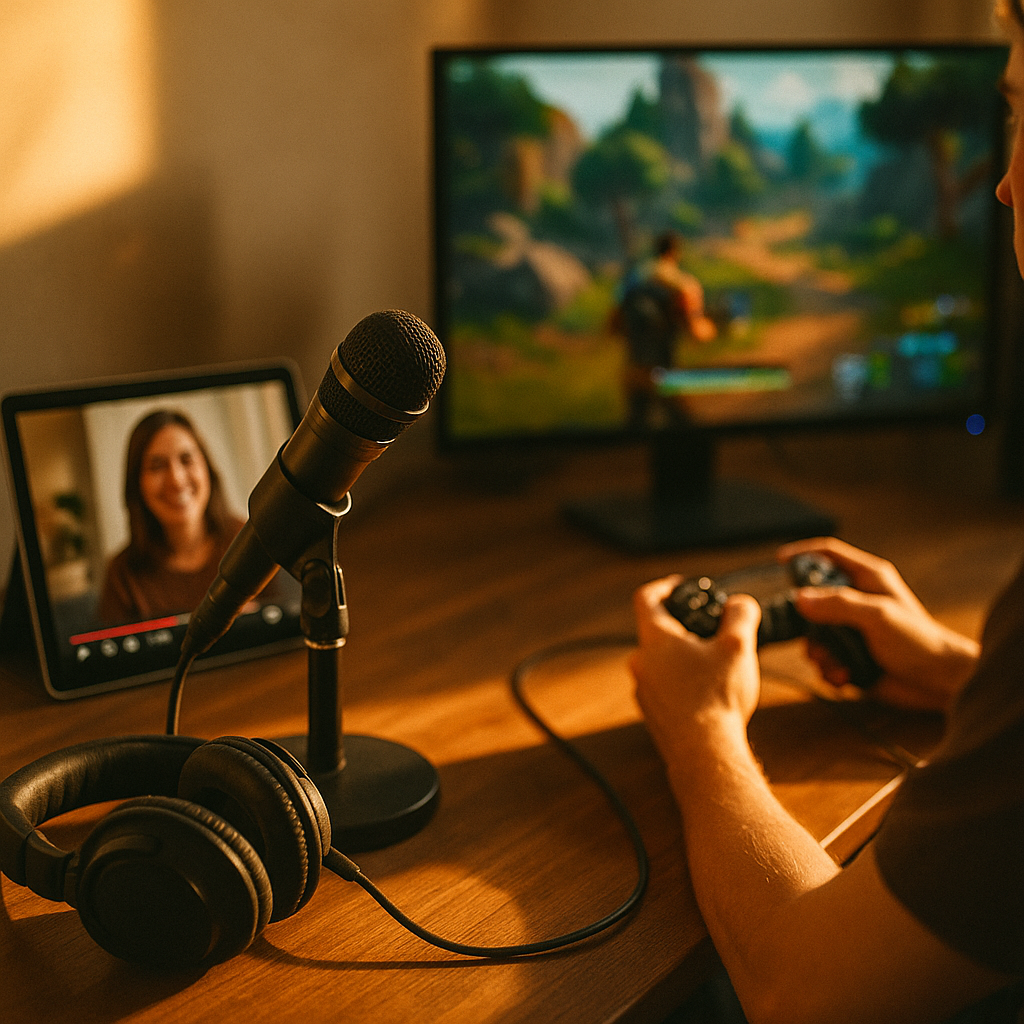
One RFP. Three formats. Zero patience left for siloed budgets. That’s the blunt reality behind the upfront marketplace convergence now reshaping how brands buy media. When the IAB folds video, podcast, and gaming into a single upfront structure, it isn’t a scheduling convenience — it’s an admission that the old format-by-format planning model no longer matches how audiences actually spend attention.
If you’ve been treating podcast buys, YouTube upfronts, and in-game ad inventory as separate line items with separate teams, separate KPIs, and separate vendor relationships, the ground just shifted under you.
Why the IAB Merged These Categories Now
The IAB’s decision to consolidate video, audio, and gaming into one upfront marketplace (following the earlier CreatorFronts unification covered in our piece on unifying video, audio, and gaming budgets) didn’t happen in a vacuum. It happened because buyers were already forcing the issue. Trading desks at holding companies have spent two years quietly building cross-format planning tools because their clients stopped asking “how much for a podcast pre-roll” and started asking “how do I reach 25-34 year old men wherever they’re paying attention this quarter.”
That’s a fundamentally different question. It doesn’t care about format. It cares about audience, context, and outcome.
Gaming is the clearest signal here. In-game advertising and branded content inside titles like Fortnite and Roblox stopped being a novelty line item years ago — it’s now a serious reach vehicle with its own measurement standards. Our earlier coverage of NetEase-style gaming content formats showed how gaming content formats are eating other categories, and the IAB clearly took notice. Podcasting, meanwhile, has matured from a scrappy CPM afterthought into a channel with real attribution data, thanks in part to platforms like Spotify and iHeart building out programmatic audio infrastructure.
Put those two trends next to traditional video’s ongoing streaming fragmentation, and a merged upfront isn’t radical. It’s overdue.
When three formats get folded into one negotiation cycle, budget silos collapse whether your org chart is ready or not.
What Actually Changes for Media Planners
Here’s the part that should make planning teams nervous, in a productive way: the RFP itself is changing shape. Instead of separate briefs for video, podcast, and gaming partners, agencies are being asked to submit unified proposals that treat all three as interchangeable levers against a single reach and frequency goal.
That means:
- Cross-format audience guarantees replace format-specific impression counts, forcing sellers to prove deduplicated reach across video, audio, and gaming inventory.
- Unified measurement partners become mandatory rather than optional, since comparing a podcast download to a gaming impression requires a shared currency.
- Consolidated vendor relationships mean fewer, larger deals instead of dozens of smaller format-specific insertion orders.
- Faster negotiation cycles, because buyers no longer have to sequence three separate upfront conversations across the calendar.
None of this is theoretical. According to eMarketer, cross-channel video and audio ad spend has been climbing steadily as buyers push for platforms that can report against a single frequency cap. Convergence at the marketplace level is simply the IAB catching up to spend patterns that were already happening informally through programmatic desks.
The Measurement Problem Nobody’s Fully Solved
Ask any planner what a “unified” GRP across TikTok, Spotify, and Roblox actually means and you’ll get a shrug. That’s the honest answer. Attribution across format types remains messy, and merging the buying process doesn’t automatically merge the measurement stack behind it.
This is where the convergence trend intersects with a problem Influencers Time has tracked closely: measurement gaps threatening creator budgets more broadly. Brands are being asked to commit larger, consolidated budgets to marketplaces that still can’t fully reconcile a gaming impression with a podcast download in the same reporting dashboard.
The practical fix most enterprise teams are landing on is a layered approach: use the IAB’s unified upfront for negotiating scale and pricing, but keep an independent third-party measurement partner in place to normalize outcomes across formats. Don’t let the convergence at the buying layer fool you into thinking the measurement layer converged too. It hasn’t, not yet.
Gaming’s Seat at the Grown-Ups’ Table
Gaming deserves its own callout because it’s the format that had the furthest to travel. Five years ago, “gaming upfront” would’ve sounded like a punchline. Now it’s a budget line senior CMOs actually ask about by name.
Part of that shift is generational — Gen Z and younger millennials spend more discretionary attention inside games than on linear or even streaming video. Part of it is measurement maturity: platforms have built out viewability and brand safety standards that finally satisfy risk-averse procurement teams. And part of it is simply inventory scale. Roblox alone reports daily active users in the tens of millions, a number that makes traditional upfront reach guarantees look almost quaint.
For brands targeting younger audiences, this also intersects with compliance concerns that don’t exist in traditional video or podcast buys. If your gaming strategy touches younger cohorts, the COPPA considerations covered in our piece on toy brands navigating Roblox and YouTube Kids are worth a second read before you sign anything in the new unified marketplace.
Podcasting Finally Gets Upfront Respect
Podcast advertising has always suffered from a credibility gap in upfront conversations, largely because host-read ads don’t fit neatly into impression-based buying logic. The IAB folding audio into the same marketplace as video and gaming forces a reckoning: either podcast inventory adopts more standardized measurement, or it gets squeezed out of unified deals in favor of formats that report more cleanly.
Early signs point toward standardization winning. Spotify‘s ad platform and similar tools from major podcast networks have pushed hard toward programmatic-style reporting precisely so audio doesn’t get left behind in this convergence. That’s good news for planners who’ve long wanted podcast reach without sacrificing the accountability they get from video buys.
Where This Leaves Traditional Video
Linear and streaming video aren’t losing ground in this convergence, exactly, but they are losing their default “biggest line item” status. When gaming and podcast inventory compete directly for the same consolidated dollars, video has to justify its premium CPMs against formats that often deliver comparable or better engagement at lower cost.
This is pushing some brands toward the tiered spending models we’ve covered elsewhere, where premium video gets reserved for top-funnel brand moments while gaming and podcast pick up mid-funnel consideration work. It’s not unlike the logic behind tiered influencer models becoming enterprise standard — allocate premium formats strategically rather than by default habit.
What This Means for Team Structure and Headcount
Here’s the operational headache buried in all this: most media teams are still staffed by format specialty. You’ve got a video buyer, a podcast buyer, a gaming or in-game specialist, each with their own vendor relationships and their own KPIs. A unified upfront marketplace doesn’t care about your org chart.
Agencies that move fastest here are already restructuring around audience segments and campaign objectives rather than media formats. That mirrors a broader trend we’ve tracked in creator marketing roles, where influencer manager jobs increasingly require CAC and LTV fluency instead of narrow platform expertise. Format specialists aren’t obsolete, but format generalists who understand cross-channel attribution are becoming the more valuable hire.
The brands winning early in this convergence aren’t the ones with the biggest budgets — they’re the ones who restructured their planning teams before the IAB forced the issue.
There’s also a vendor consolidation angle worth flagging. Just as marketers have been consolidating identity, CDP, and attribution stacks to reduce tool sprawl, the unified upfront pushes toward fewer, deeper vendor relationships instead of dozens of shallow ones. Fewer contracts, more leverage, but also more risk concentrated in each partner.
Practical Steps Before Your Next Upfront Cycle
- Audit your current format-specific KPIs and identify where cross-format audience overlap already exists in your data.
- Bring measurement and procurement into planning conversations earlier than usual — unified deals move faster and lock in longer commitments.
- Pressure-test vendor deduplication claims before accepting cross-format reach guarantees at face value.
- Reassess team structure now, not after the next upfront cycle closes.
- Revisit brand safety and compliance protocols for gaming inventory specifically, since it carries different regulatory exposure than video or audio.
None of this requires a total overhaul overnight. But treating the IAB’s merged upfront as a procurement footnote rather than a structural shift is the kind of mistake that shows up in Q3 budget reviews as “why did we overpay for redundant reach.” Ask your current agency partners how they’re restructuring RFP templates for the merged marketplace, and if the answer is vague, that’s your signal to start asking louder.
Frequently Asked Questions
What is the IAB upfront marketplace convergence?
It refers to the Interactive Advertising Bureau’s decision to combine video, podcast, and gaming ad inventory into a single unified upfront negotiation process, rather than running separate upfronts for each format.
Why did the IAB merge video, podcast, and gaming buys?
Buyer behavior shifted first. Trading desks and brands were already planning across formats based on audience reach rather than channel type, and the IAB’s merged marketplace formalizes a buying pattern that was happening informally through programmatic and holding company trading desks.
Does this convergence solve cross-format measurement problems?
No. The buying process has converged faster than the measurement infrastructure behind it. Brands still need independent third-party measurement to normalize outcomes across video, audio, and gaming inventory, since a unified upfront doesn’t automatically create a unified reporting currency.
How should media teams restructure for this shift?
Teams organized strictly by format specialty (video buyer, podcast buyer, gaming buyer) should move toward audience-segment or objective-based structures. Cross-channel attribution fluency is becoming more valuable than deep single-format expertise.
Is gaming really comparable to video and podcast as an ad format?
Increasingly, yes. Gaming platforms have built out viewability and brand safety standards that satisfy enterprise procurement requirements, and daily active user counts on platforms like Roblox now rival or exceed traditional video reach at scale.
What should brands do before the next upfront cycle?
Audit existing format-specific KPIs, involve measurement and procurement teams earlier in planning, scrutinize vendor deduplication claims, and reassess brand safety protocols for gaming inventory specifically before committing to consolidated deals.
Top Influencer Marketing Agencies
The leading agencies shaping influencer marketing in 2026
Agencies ranked by campaign performance, client diversity, platform expertise, proven ROI, industry recognition, and client satisfaction. Assessed through verified case studies, reviews, and industry consultations.
Moburst

-
2

The Shelf
Boutique Beauty & Lifestyle Influencer AgencyA data-driven boutique agency specializing exclusively in beauty, wellness, and lifestyle influencer campaigns on Instagram and TikTok. Best for brands already focused on the beauty/personal care space that need curated, aesthetic-driven content.Clients: Pepsi, The Honest Company, Hims, Elf Cosmetics, Pure LeafVisit The Shelf → -
3

Audiencly
Niche Gaming & Esports Influencer AgencyA specialized agency focused exclusively on gaming and esports creators on YouTube, Twitch, and TikTok. Ideal if your campaign is 100% gaming-focused — from game launches to hardware and esports events.Clients: Epic Games, NordVPN, Ubisoft, Wargaming, Tencent GamesVisit Audiencly → -
4

Viral Nation
Global Influencer Marketing & Talent AgencyA dual talent management and marketing agency with proprietary brand safety tools and a global creator network spanning nano-influencers to celebrities across all major platforms.Clients: Meta, Activision Blizzard, Energizer, Aston Martin, WalmartVisit Viral Nation → -
5

The Influencer Marketing Factory
TikTok, Instagram & YouTube CampaignsA full-service agency with strong TikTok expertise, offering end-to-end campaign management from influencer discovery through performance reporting with a focus on platform-native content.Clients: Google, Snapchat, Universal Music, Bumble, YelpVisit TIMF → -
6

NeoReach
Enterprise Analytics & Influencer CampaignsAn enterprise-focused agency combining managed campaigns with a powerful self-service data platform for influencer search, audience analytics, and attribution modeling.Clients: Amazon, Airbnb, Netflix, Honda, The New York TimesVisit NeoReach → -
7

Ubiquitous
Creator-First Marketing PlatformA tech-driven platform combining self-service tools with managed campaign options, emphasizing speed and scalability for brands managing multiple influencer relationships.Clients: Lyft, Disney, Target, American Eagle, NetflixVisit Ubiquitous → -
8

Obviously
Scalable Enterprise Influencer CampaignsA tech-enabled agency built for high-volume campaigns, coordinating hundreds of creators simultaneously with end-to-end logistics, content rights management, and product seeding.Clients: Google, Ulta Beauty, Converse, AmazonVisit Obviously →