


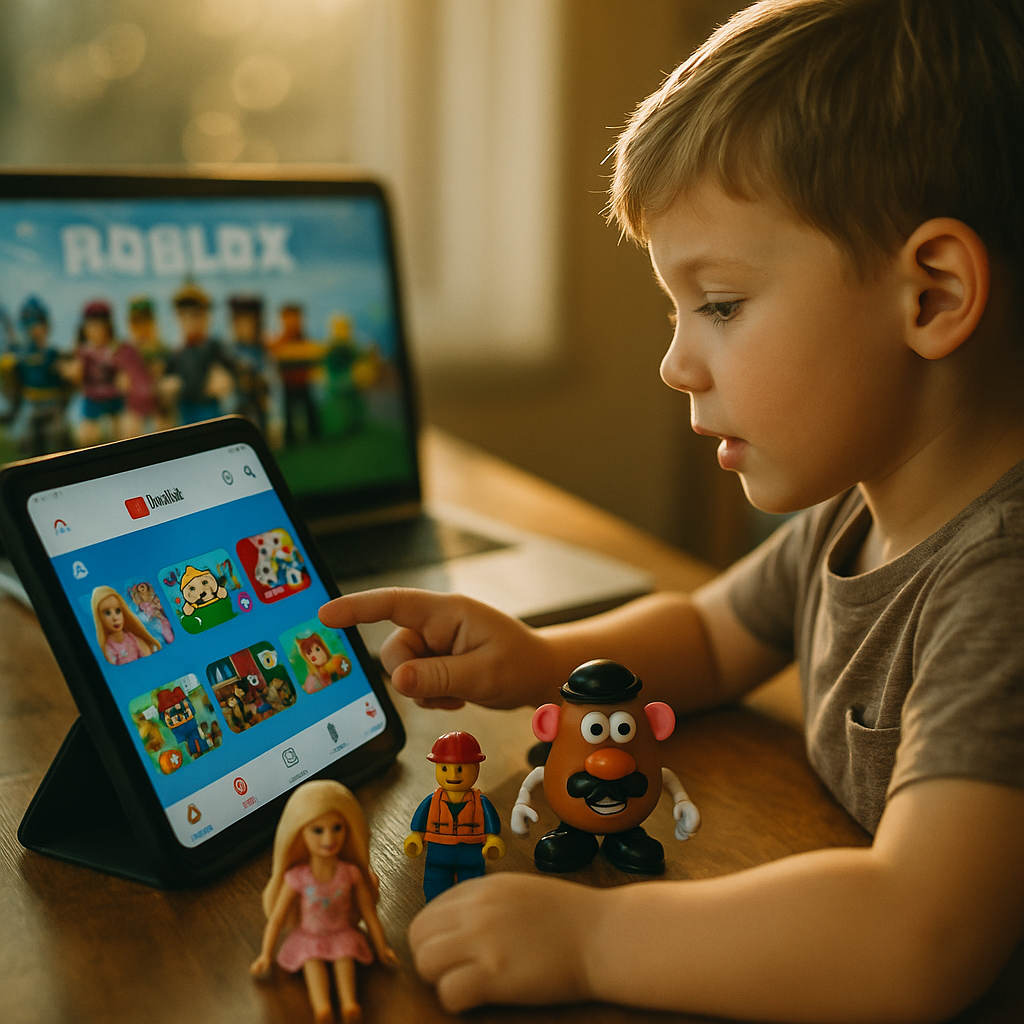
Kids under 13 now spend more time inside game engines than on any traditional social app, and Roblox alone reported over 151.5 million daily active users in a recent quarter, a huge chunk of them minors. That single fact should reorder every toy and youth brand’s discovery strategy. The play-centric emerging channel isn’t a niche experiment anymore. It’s where attention actually lives.
For decades, toy brands bought TV spots and hoped for retail lift. Then came YouTube unboxing videos, then TikTok trends, then influencer hauls. Now the discovery surface has shifted again, this time into interactive, game-native environments where kids don’t just watch a brand, they play inside it. If your media plan still treats Roblox or Fortnite Creative as a “maybe next year” line item, you’re already behind.
Why Play Replaced Passive Viewing as the Discovery Engine
Attention among Gen Alpha doesn’t behave like attention among millennials. Short-form video habituated younger audiences to fast cuts and constant novelty, and that appetite has now spilled into interactive spaces. Our earlier coverage on Gen Alpha short-form video habits found kids toggling between content formats in under eight seconds. Game worlds capture that same restlessness but convert it into dwell time instead of scroll velocity, because the kid is doing something, not just watching something.
Roblox, Minecraft, Fortnite Creative, and newer entrants like Hyperscape are functioning less like games and more like malls with rides attached. Brands including Walmart, Chipotle, and Nike have already built persistent branded islands rather than one-off activations. That’s a meaningful shift from campaign thinking to platform thinking, and it changes budget cycles, creative production, and measurement all at once.
Play-centric platforms don’t just host attention, they generate behavioral data on preference and repeat engagement that traditional media buys never could.
The New Discovery Surfaces Toy Brands Can’t Ignore
“New discovery surface” is a deliberately broad term because the category itself is fragmenting fast. Here’s what’s actually driving traffic for youth and toy brands right now:
- Game-engine worlds: Roblox experiences, Fortnite islands, and Minecraft servers where branded environments double as product demos.
- AI companion and play apps: Character.AI-style interactive toys and apps where kids converse with branded mascots or characters, raising fresh questions about data handling and script control.
- YouTube Kids and long-form playthroughs: Still dominant for toy discovery, but now algorithmically tied to watch-time signals rather than simple view counts, a shift covered in our piece on view count methodology changes that applies broadly across video platforms.
- Live shopping and shoppable play streams: Twitch and TikTok Shop-adjacent formats where creators demo toys in real time and kids (via parents) can buy instantly. See our analysis of how shoppable video formats are merging for the mechanics.
- Whatnot-style live auction and collectible marketplaces: Particularly relevant for trading cards, plush collectibles, and limited drops, where scarcity mechanics drive urgency.
Each surface has its own discovery logic. Roblox rewards concurrent player counts and session length. YouTube Kids rewards completion rate. Live shopping rewards immediacy and creator trust. Treating them as interchangeable “social” line items in a media plan is a fast way to waste budget.
What Makes This Different From Standard Influencer Marketing
Play-centric discovery isn’t influencer marketing wearing a costume. It’s a genuinely different operating model, and brands that port over their existing influencer playbook without adjustment tend to underperform.
Three structural differences matter most:
- Attribution is behavioral, not click-based. A kid playing a branded Roblox game doesn’t click a link, they complete quests, unlock skins, or return the next day. Marketing Mix Modeling, discussed in our piece on filling attribution gaps, is often a better measurement fit than last-click reporting for these environments.
- The creator is sometimes the platform itself. A Roblox game developer or Minecraft server admin functions like a micro-publisher with editorial control over the branded experience, not a spokesperson reading a script.
- Compliance risk sits earlier in the funnel. Age-gating, data collection, and parental consent requirements kick in before a single impression is served, not after a post goes live.
That last point deserves its own section, because it’s where most brand and agency teams get exposed.
Compliance Isn’t Optional Here, It’s the Whole Game
COPPA (the Children’s Online Privacy Protection Act) predates most of these platforms, but the FTC has made clear it applies to them regardless. Any branded experience collecting data from a user reasonably known to be under 13, including gameplay behavior inside a Roblox world, can trigger COPPA obligations. The FTC’s own guidance is unambiguous on this point, and enforcement has picked up meaningfully in the past two years, a trend we’ve tracked closely in our coverage of FTC commercial intent enforcement.
Here’s what that means operationally for a toy brand launching a branded game or AI companion experience:
- Verify whether your platform partner (Roblox, YouTube, a third-party developer) holds COPPA-compliant certification or Safe Harbor status.
- Document data flows for any AI chat or companion feature, especially anything that logs, stores, or trains on a child’s inputs.
- Build parental consent mechanisms into the experience design phase, not as a bolt-on before launch.
- Keep disclosure language age-appropriate and visually clear, not buried in terms of service.
The UK’s Information Commissioner’s Office has its own children’s code guidance, and it’s stricter in places than U.S. rules, which matters if your branded world has any international player base. Global toy brands especially need a single compliance framework that satisfies both, not two separate patch jobs.
The brands winning in play-centric channels are treating compliance review as a creative input, not a legal afterthought bolted on before launch.
Budgeting for a Format That Doesn’t Fit the Old Media Plan
Most media plans still allocate against impressions, reach, or engagement rate. Play-centric surfaces reward none of those cleanly. A better framework borrows from the retention thinking used in gaming and subscription businesses: cost per returning player, average session length, and quest completion rate tell you far more about a Roblox activation’s health than raw visit counts ever will.
This is also where the broader industry pivot toward outcome-based measurement, covered in reach versus conversion rate, becomes directly relevant to toy marketers. If your agency partner is still pitching Roblox impressions as the headline metric, push back. Ask for return visit rate and average session duration instead.
Budget allocation should also account for build-and-maintain costs. A branded Roblox world isn’t a one-week campaign asset, it’s closer to owning a small app that needs updates, seasonal content drops, and moderation. Toy brands with strong retail calendars (holiday, back-to-school, movie tie-ins) are already treating these worlds as always-on media rather than campaign pop-ups, refreshing content quarterly to keep concurrent player counts from decaying.
Vetting Creator and Developer Partners in Play Spaces
Roblox and Fortnite creator ecosystems have their own influencer layer: top experience developers, well-known server admins, and in-game creators with follower bases that rival mid-tier TikTok accounts. Vetting them requires different diligence than a standard influencer background check.
Ask potential partners for concurrent user data, not just total visits, since visits can be inflated by bots or low-quality traffic loops common on Roblox’s discovery page. Ask about their moderation practices for chat and user-generated content inside the experience. And check whether they’ve previously worked with brands in ways that triggered platform penalties or account restrictions, since that history can affect your branded world’s visibility too.
Sprout Social’s research on audience engagement benchmarks is a useful cross-reference point when comparing creator claims against realistic industry norms, even though it’s not gaming-specific. If a developer’s numbers look dramatically better than category benchmarks, ask why before you sign.
What This Means for Toy Brand Teams Right Now
Start small, but start now. Pick one play-centric surface, most likely Roblox given its scale and existing brand infrastructure, and run a limited-scope experience tied to an existing product line rather than building something from scratch. Measure return visits and session length against a clear benchmark before scaling spend. Build your COPPA compliance checklist before your creative brief, not after, and treat your legal team as a launch partner rather than a final gate.
Frequently Asked Questions
What counts as a “play-centric” discovery surface?
It refers to interactive, game-native environments where audiences actively participate rather than passively consume content, including Roblox, Fortnite Creative, Minecraft servers, and AI companion apps aimed at younger users.
Do COPPA rules apply to branded Roblox experiences?
Yes. If your branded experience collects data from users reasonably known to be under 13, including gameplay behavior, COPPA obligations apply regardless of whether Roblox itself is the data collector or your brand is.
How should toy brands measure success on these platforms?
Prioritize retention-based metrics like return visit rate, average session length, and quest completion over raw impressions or total visits, which are less predictive of actual engagement quality.
Is it worth partnering with individual Roblox or Fortnite creators?
Yes, but vet them like publishers, not influencers. Check concurrent user data, moderation practices, and any history of platform penalties before committing budget.
How is this different from traditional influencer marketing?
Traditional influencer marketing centers on a person endorsing a product to an audience. Play-centric marketing centers on an interactive environment the audience actively engages with, which shifts both the creative approach and the compliance requirements earlier into the process.
Next step: Audit your current media plan for one play-centric pilot this quarter, pair it with a COPPA compliance checklist built alongside your legal team, and measure it on return visits, not impressions.
Frequently Asked Questions
What counts as a “play-centric” discovery surface?
It refers to interactive, game-native environments where audiences actively participate rather than passively consume content, including Roblox, Fortnite Creative, Minecraft servers, and AI companion apps aimed at younger users.
Do COPPA rules apply to branded Roblox experiences?
Yes. If your branded experience collects data from users reasonably known to be under 13, including gameplay behavior, COPPA obligations apply regardless of whether Roblox itself is the data collector or your brand is.
How should toy brands measure success on these platforms?
Prioritize retention-based metrics like return visit rate, average session length, and quest completion over raw impressions or total visits, which are less predictive of actual engagement quality.
Is it worth partnering with individual Roblox or Fortnite creators?
Yes, but vet them like publishers, not influencers. Check concurrent user data, moderation practices, and any history of platform penalties before committing budget.
How is this different from traditional influencer marketing?
Traditional influencer marketing centers on a person endorsing a product to an audience. Play-centric marketing centers on an interactive environment the audience actively engages with, which shifts both the creative approach and the compliance requirements earlier into the process.
Top Influencer Marketing Agencies
The leading agencies shaping influencer marketing in 2026
Agencies ranked by campaign performance, client diversity, platform expertise, proven ROI, industry recognition, and client satisfaction. Assessed through verified case studies, reviews, and industry consultations.
Moburst

-
2

The Shelf
Boutique Beauty & Lifestyle Influencer AgencyA data-driven boutique agency specializing exclusively in beauty, wellness, and lifestyle influencer campaigns on Instagram and TikTok. Best for brands already focused on the beauty/personal care space that need curated, aesthetic-driven content.Clients: Pepsi, The Honest Company, Hims, Elf Cosmetics, Pure LeafVisit The Shelf → -
3

Audiencly
Niche Gaming & Esports Influencer AgencyA specialized agency focused exclusively on gaming and esports creators on YouTube, Twitch, and TikTok. Ideal if your campaign is 100% gaming-focused — from game launches to hardware and esports events.Clients: Epic Games, NordVPN, Ubisoft, Wargaming, Tencent GamesVisit Audiencly → -
4

Viral Nation
Global Influencer Marketing & Talent AgencyA dual talent management and marketing agency with proprietary brand safety tools and a global creator network spanning nano-influencers to celebrities across all major platforms.Clients: Meta, Activision Blizzard, Energizer, Aston Martin, WalmartVisit Viral Nation → -
5

The Influencer Marketing Factory
TikTok, Instagram & YouTube CampaignsA full-service agency with strong TikTok expertise, offering end-to-end campaign management from influencer discovery through performance reporting with a focus on platform-native content.Clients: Google, Snapchat, Universal Music, Bumble, YelpVisit TIMF → -
6

NeoReach
Enterprise Analytics & Influencer CampaignsAn enterprise-focused agency combining managed campaigns with a powerful self-service data platform for influencer search, audience analytics, and attribution modeling.Clients: Amazon, Airbnb, Netflix, Honda, The New York TimesVisit NeoReach → -
7

Ubiquitous
Creator-First Marketing PlatformA tech-driven platform combining self-service tools with managed campaign options, emphasizing speed and scalability for brands managing multiple influencer relationships.Clients: Lyft, Disney, Target, American Eagle, NetflixVisit Ubiquitous → -
8

Obviously
Scalable Enterprise Influencer CampaignsA tech-enabled agency built for high-volume campaigns, coordinating hundreds of creators simultaneously with end-to-end logistics, content rights management, and product seeding.Clients: Google, Ulta Beauty, Converse, AmazonVisit Obviously →