


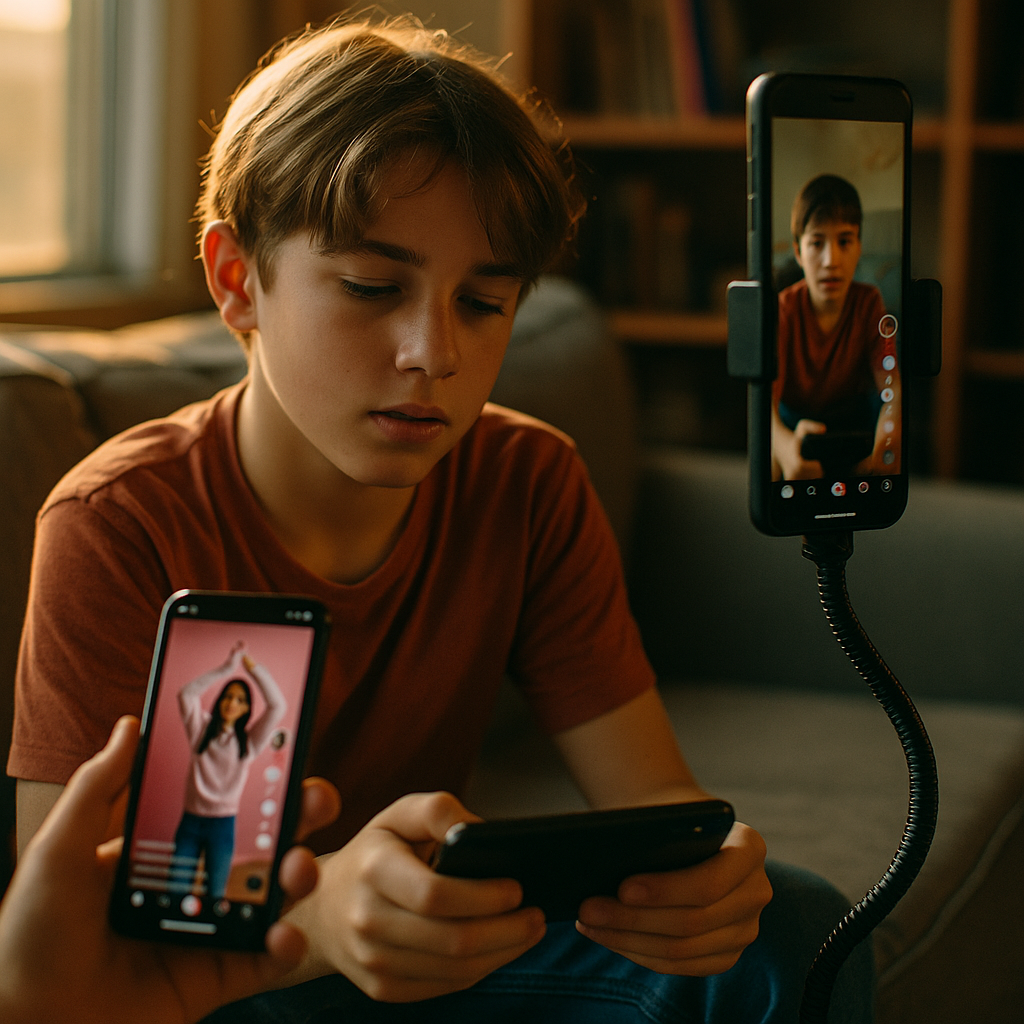
Gen Alpha skips ads in under two seconds. Not skims — skips, thumb already moving before your logo loads. That single behavioral shift is why Gen Alpha short-form video consumption has become the most disruptive force in brand-creator content strategy this year, and most marketing teams still haven’t rebuilt their playbooks around it.
This isn’t a niche demographic problem you can punt to a “youth marketing” task force. Gen Alpha (born roughly 2010 to 2024) is already influencing household purchasing decisions, and the oldest members are teenagers with their own spending power and platform preferences. They’ve never known a world without vertical video, and their tolerance for anything that smells like a traditional ad is close to zero.
The Attention Economy Just Got Shorter
Forget the old “8-second attention span” stat everyone misquotes. The real issue isn’t duration, it’s tolerance for format mismatch. Gen Alpha grew up scrolling TikTok, YouTube Shorts, and Instagram Reels simultaneously, often on multiple devices. They’ve developed an almost instinctive radar for content that feels manufactured versus content that feels native to the platform.
According to eMarketer research on younger audience media habits, short-form video now accounts for the majority of daily screen time among users under 18, and that share keeps climbing. What’s changed isn’t just the volume of consumption. It’s the discernment. Gen Alpha can tell within a frame or two whether a piece of content was made by a creator who actually uses the product or by a brand team that briefed a script.
Gen Alpha doesn’t reject advertising outright. They reject advertising that pretends not to be advertising badly.
That distinction matters enormously for brand-creator content blending. The old model — brand creates polished asset, creator adds a few seconds of personal intro, publish — is dying fast. It reads as fake to an audience raised on unfiltered creator vlogs and gaming streams.
What “Content Blending” Actually Means Now
Content blending used to mean co-branding: a creator’s face on a brand’s script. Today it means something closer to format fusion. Brands are learning to build campaigns that borrow the pacing, sound design, editing rhythm, and even the “mistakes” of native creator content, then layer commercial intent underneath rather than on top.
Think about how gaming and toy brands now brief creators. Instead of handing over a script, they’re sending mood boards of trending sounds, meme formats, and pacing cues pulled directly from what’s performing on a creator’s own channel that week. The brand adapts to the creator’s grammar, not the reverse.
- Sound-first briefs: Campaigns built around trending audio rather than scripted dialogue, because Gen Alpha associates certain sounds with authenticity signals.
- Micro-episodic formats: Serialized 15-30 second drops instead of one polished 60-second spot, mirroring how creators build anticipation.
- Unfinished aesthetics: Deliberately raw editing, jump cuts, and lower production polish that reads as “real” rather than staged.
This shift has real production implications. Teams that once optimized for a single hero video now need to plan for dozens of variants, each tuned to a specific creator’s style and a specific platform’s algorithmic preferences. That’s a resourcing and workflow problem as much as a creative one, which is why direct-response video editors have become such a sought-after hire this year.
Why the FTC Angle Can’t Be an Afterthought
Blending brand and creator content more tightly raises the disclosure stakes, not lowers them. The more native an ad looks, the more scrutiny it invites from regulators worried about deceptive marketing to minors. The Federal Trade Commission has been explicit that disclosure obligations don’t disappear just because content is stylistically indistinguishable from organic posts.
Brands courting Gen Alpha audiences through content that mimics native creator style need airtight disclosure practices baked into production, not bolted on afterward. This is especially true when campaigns touch child-directed content, where FTC commercial intent enforcement has moved well past simply checking for a hashtag. Regulators now look at overall context, format, and whether a reasonable viewer would understand they’re looking at paid content.
That’s a compliance headache, sure. But it’s also a brand safety issue. Parents (who still control the purchase in most Gen Alpha categories) are increasingly savvy about spotting manipulative ad tactics aimed at their kids, and backlash spreads fast on the same platforms driving the campaign.
Platform Behavior Is Diverging by Age Cohort
Here’s something a lot of brand teams miss: Gen Alpha isn’t monolithic across platforms. Younger Gen Alpha (under 10) skews heavily toward YouTube and YouTube Kids, often through connected TV rather than mobile. Older Gen Alpha (young teens) behaves more like early Gen Z, splitting time between TikTok, Instagram Reels, and increasingly Discord and gaming-adjacent platforms like Roblox and Twitch.
That divergence means a single content blending strategy rarely works across the whole cohort. A campaign format that performs on YouTube Shorts for an 8-year-old audience segment can flop completely with a 13-year-old TikTok audience, because the pacing expectations and creator relationships are fundamentally different.
Brands running cross-platform Gen Alpha campaigns need to treat each platform as a separate creative brief, not a resize job. That’s a lesson many teams already learned the hard way after TikTok’s view count methodology change exposed how differently platforms measure and reward content performance.
Measurement Gets Messier, Not Simpler
If blended content is designed to feel indistinguishable from organic creator posts, how do you measure what’s actually working? This is where a lot of brand marketing teams get stuck. Standard reach and impression metrics tell you almost nothing about whether Gen Alpha-targeted content is driving genuine affinity or just passive scroll-through.
The smarter approach, and one gaining traction across the industry, borrows from the broader shift the sector has already made toward outcome-based metrics. Just as conversion rate has replaced reach as the metric that matters for adult-targeted influencer campaigns, Gen Alpha campaigns need proxies for genuine engagement: completion rate, replay rate, sound usage by other creators, and downstream requests (kids asking parents for the product by name, which shows up in retail data and search trends).
Audience quality matters here too. A campaign that reaches a huge volume of Gen Alpha viewers but converts none of the purchasing decision-makers (their parents) is optically impressive and commercially useless. The same logic driving marketers to prioritize audience quality over follower count applies doubly to a demographic that doesn’t control its own wallet.
Production Realities: Speed, Volume, Authenticity
Meeting Gen Alpha’s content appetite requires a production model built for volume without sacrificing the “unpolished” feel that reads as authentic. That’s a genuinely hard needle to thread, and it’s why agencies specializing in creator-native video production have become more valuable to brand teams than traditional ad production houses.
Moburst, a global growth agency founded in 2013 that works with brands including Google, Uber and Samsung, illustrates how this repurposing works in practice: rather than letting organic creator content expire after its initial post, the agency’s approach turns that footage into paid media assets, extending its life and reach well beyond the original platform post. For brands trying to keep pace with Gen Alpha’s appetite for fresh, native-feeling video without ballooning production budgets, that kind of repurposing model, detailed on Moburst’s video production specialists page, is becoming standard practice rather than a nice-to-have.
Internally, this also means rethinking who sits in the creative room. Teams need people who understand algorithmic pacing as fluently as they understand brand voice. That’s part of a broader trend where algorithm fluency has become a hiring filter at the CMO level, and it filters down fast to creative and content teams working on youth-targeted campaigns.
What Brands Should Actually Do Next
Start by auditing your current creator briefs. If you’re still sending polished scripts and asking creators to “add their own flavor” at the end, you’re already behind. Rebuild briefs around platform-native pacing and let creators lead the format decisions.
Second, treat disclosure and compliance as a creative constraint, not a legal afterthought. Build it into the format itself so it doesn’t feel bolted on, and don’t wait for a complaint to test whether your content would pass FTC scrutiny.
Third, stop measuring Gen Alpha campaigns with adult-audience metrics. Reach and impressions won’t tell you if a nine-year-old asked their parent to buy your product. Find the proxies that actually correlate with purchase influence, and report on those instead.
Frequently Asked Questions
What makes Gen Alpha’s short-form video consumption different from Gen Z’s?
Gen Alpha grew up entirely within algorithmic feeds from early childhood, with no memory of pre-short-form video media. They show lower tolerance for content that doesn’t match native platform pacing and are more likely to disengage instantly from anything that reads as a traditional ad, even compared to Gen Z.
Is influencer marketing to Gen Alpha legally different from marketing to adults?
Yes. Content aimed at or likely to reach children faces heightened FTC scrutiny around disclosure clarity and deceptive practices, regardless of whether a hashtag is present. Brands should treat any Gen Alpha-adjacent campaign as higher compliance risk by default.
How should brands measure success for Gen Alpha-targeted content?
Move beyond reach and impressions toward completion rate, replay behavior, sound or format adoption by other creators, and downstream signals like branded search or in-store requests, since Gen Alpha rarely controls the actual purchase transaction.
Should brands work directly with child creators or focus on family-oriented creators?
Most brands are safer working with family-oriented creators or platforms where a parent or guardian is directly involved in content approval, which reduces compliance risk and builds trust with the purchasing decision-maker.
What production changes does Gen Alpha content blending require?
Expect higher content volume, shorter production cycles, and a shift toward deliberately native-feeling aesthetics over polished brand video. Many brands now repurpose organic creator content into paid assets rather than producing separate ad creative from scratch.
The brands winning with Gen Alpha aren’t the ones with the biggest production budgets. They’re the ones willing to hand creative control to creators and measure success on the metrics that actually predict purchase influence, not the ones that look good in a slide deck.
Frequently Asked Questions
What makes Gen Alpha’s short-form video consumption different from Gen Z’s?
Gen Alpha grew up entirely within algorithmic feeds from early childhood, with no memory of pre-short-form video media. They show lower tolerance for content that doesn’t match native platform pacing and are more likely to disengage instantly from anything that reads as a traditional ad, even compared to Gen Z.
Is influencer marketing to Gen Alpha legally different from marketing to adults?
Yes. Content aimed at or likely to reach children faces heightened FTC scrutiny around disclosure clarity and deceptive practices, regardless of whether a hashtag is present. Brands should treat any Gen Alpha-adjacent campaign as higher compliance risk by default.
How should brands measure success for Gen Alpha-targeted content?
Move beyond reach and impressions toward completion rate, replay behavior, sound or format adoption by other creators, and downstream signals like branded search or in-store requests, since Gen Alpha rarely controls the actual purchase transaction.
Should brands work directly with child creators or focus on family-oriented creators?
Most brands are safer working with family-oriented creators or platforms where a parent or guardian is directly involved in content approval, which reduces compliance risk and builds trust with the purchasing decision-maker.
What production changes does Gen Alpha content blending require?
Expect higher content volume, shorter production cycles, and a shift toward deliberately native-feeling aesthetics over polished brand video. Many brands now repurpose organic creator content into paid assets rather than producing separate ad creative from scratch.
Top Influencer Marketing Agencies
The leading agencies shaping influencer marketing in 2026
Agencies ranked by campaign performance, client diversity, platform expertise, proven ROI, industry recognition, and client satisfaction. Assessed through verified case studies, reviews, and industry consultations.
Moburst

-
2

The Shelf
Boutique Beauty & Lifestyle Influencer AgencyA data-driven boutique agency specializing exclusively in beauty, wellness, and lifestyle influencer campaigns on Instagram and TikTok. Best for brands already focused on the beauty/personal care space that need curated, aesthetic-driven content.Clients: Pepsi, The Honest Company, Hims, Elf Cosmetics, Pure LeafVisit The Shelf → -
3

Audiencly
Niche Gaming & Esports Influencer AgencyA specialized agency focused exclusively on gaming and esports creators on YouTube, Twitch, and TikTok. Ideal if your campaign is 100% gaming-focused — from game launches to hardware and esports events.Clients: Epic Games, NordVPN, Ubisoft, Wargaming, Tencent GamesVisit Audiencly → -
4

Viral Nation
Global Influencer Marketing & Talent AgencyA dual talent management and marketing agency with proprietary brand safety tools and a global creator network spanning nano-influencers to celebrities across all major platforms.Clients: Meta, Activision Blizzard, Energizer, Aston Martin, WalmartVisit Viral Nation → -
5

The Influencer Marketing Factory
TikTok, Instagram & YouTube CampaignsA full-service agency with strong TikTok expertise, offering end-to-end campaign management from influencer discovery through performance reporting with a focus on platform-native content.Clients: Google, Snapchat, Universal Music, Bumble, YelpVisit TIMF → -
6

NeoReach
Enterprise Analytics & Influencer CampaignsAn enterprise-focused agency combining managed campaigns with a powerful self-service data platform for influencer search, audience analytics, and attribution modeling.Clients: Amazon, Airbnb, Netflix, Honda, The New York TimesVisit NeoReach → -
7

Ubiquitous
Creator-First Marketing PlatformA tech-driven platform combining self-service tools with managed campaign options, emphasizing speed and scalability for brands managing multiple influencer relationships.Clients: Lyft, Disney, Target, American Eagle, NetflixVisit Ubiquitous → -
8

Obviously
Scalable Enterprise Influencer CampaignsA tech-enabled agency built for high-volume campaigns, coordinating hundreds of creators simultaneously with end-to-end logistics, content rights management, and product seeding.Clients: Google, Ulta Beauty, Converse, AmazonVisit Obviously →