


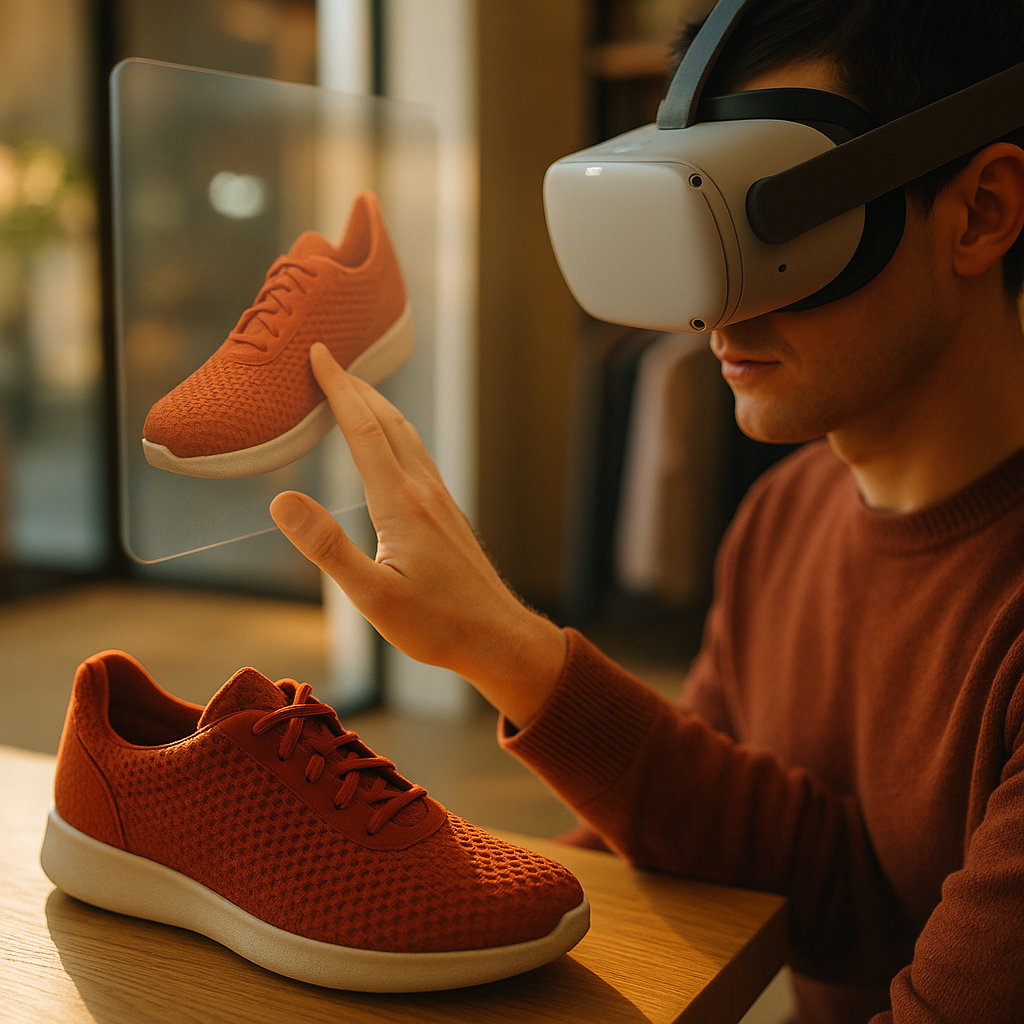
Haptic marketing is moving from novelty to strategy as brands compete for attention in crowded digital spaces. Touch-based cues, vibrations, textures, and sensory feedback can make content feel more immediate, memorable, and persuasive. In 2026, marketers who understand when and how to use touch will create stronger emotional connections, better product understanding, and more immersive customer journeys. What happens next?
Sensory marketing trends are reshaping digital engagement
Touch has always influenced buying behavior. In physical retail, customers often decide faster when they can hold, test, or feel a product. Digital environments historically lacked that advantage. That gap is closing as devices, wearables, gaming systems, connected packaging, and immersive interfaces deliver more precise tactile feedback.
Within broader sensory marketing trends, haptics stands out because it bridges emotion and action. A sound can alert. An image can attract. But touch can confirm, reassure, and direct behavior in a more embodied way. A short vibration can signal success. A pressure-based response can simulate realism. A textured mailer can prime perception before a click ever happens.
For marketers, this matters because attention is expensive and trust is fragile. Haptic experiences can reduce friction in moments that matter:
- Product discovery: simulated touch improves perceived understanding of shape, weight, or responsiveness.
- Checkout flows: tactile confirmation helps users feel that an action has completed securely.
- Gaming and entertainment: responsive feedback increases immersion and session length.
- Health and wellness apps: vibrations can guide breathing, posture, or habit formation.
- Retail sampling: physical textures and smart packaging connect digital stories to real-world sensation.
The key shift in 2026 is that haptics is no longer limited to hardware makers. Content strategists, UX designers, CRM teams, and brand marketers now have reasons to think about touch as part of messaging architecture. Instead of asking whether touch belongs in content, the better question is where it adds clarity, confidence, or emotional depth without distracting the user.
Interactive content experiences now include touch as a design layer
Most marketers already understand that static content underperforms when audiences expect participation. The next step in interactive content experiences is designing content that responds through touch as well as sight and sound.
This does not mean every campaign needs advanced wearables or expensive immersive hardware. In many cases, haptic integration starts with familiar devices. Smartphones, tablets, game controllers, and smartwatches already support varied forms of vibration and tactile response. The opportunity lies in matching that response to intent.
Consider a few practical examples:
- Shoppable video: a subtle pulse can highlight a tappable product moment without interrupting viewing.
- Mobile storytelling: tactile cues can reinforce plot points, urgency, or transitions in branded narratives.
- AR product demos: touch feedback can simulate clicks, snaps, resistance, or movement to improve comprehension.
- Email-to-app journeys: once users land in an app, haptic signals can guide onboarding and deepen recall from the original message.
- Loyalty programs: rewarding actions with distinct tactile patterns can create stronger habit loops than visual badges alone.
To make this work, marketers should define the role of touch early in campaign planning. Is the haptic element meant to reassure, direct, celebrate, warn, or immerse? Each purpose calls for a different intensity and timing. Random feedback weakens trust. Purposeful feedback strengthens it.
Teams should also coordinate content and product design. If brand copy promises calm and control, the haptic design should not feel sharp or intrusive. If a product experience is meant to feel premium, touch cues should feel refined rather than generic. Alignment across channels is what turns a feature into a brand asset.
Mobile user experience benefits most from well-timed haptic feedback
No environment is more important for haptics than mobile user experience. Phones are personal, always present, and physically held in the hand. That makes them ideal for touch-based communication, but also easy to misuse.
Effective haptic marketing on mobile follows a few principles:
- Use touch to clarify actions. Confirmation vibrations after payments, form submissions, or saved preferences reduce uncertainty.
- Support accessibility. Haptics can help users who rely less on visual cues navigate interfaces and complete tasks.
- Keep intensity proportional. Strong or repetitive feedback can feel invasive, especially in messaging or commerce apps.
- Respect user control. People should be able to adjust or disable nonessential tactile effects.
- Test context. A vibration that feels useful during onboarding may feel annoying in daily use.
Marketers often ask whether haptics actually improve performance metrics. The answer depends on implementation. Touch rarely saves weak content or confusing UX. What it can do is reduce hesitation in crucial micro-moments. In app environments, that can support better onboarding completion, stronger engagement with key features, and higher confidence during transactions.
Another common question is whether haptics belongs only in apps. Not at all. Mobile web experiences can still be shaped by tactile expectations, especially when campaigns drive users into device-native interactions such as wallet passes, app clips, QR-triggered experiences, or connected packaging. The most effective programs think beyond a single screen and design for the whole handheld journey.
Immersive brand experiences depend on trust, relevance, and restraint
The promise of immersive brand experiences is not more stimulation for its own sake. It is more believable, useful, and emotionally resonant communication. Haptics can contribute to that promise, but only when tied to customer needs.
For example, a beauty brand might use smart sampling with textured packaging and QR-led mobile content to help customers understand product finish and application order. An automotive brand might use haptic-enabled configurators or test-drive simulations to communicate performance cues. A fitness platform might pair guided coaching with tactile pacing signals that help users stay in rhythm without looking at a screen.
These examples work because touch reinforces meaning. It does not compete with it.
Trust is critical here. If tactile interactions feel manipulative, overengineered, or irrelevant, users disengage quickly. That is why EEAT principles matter in haptic marketing content:
- Experience: show that recommendations come from observed user behavior, testing, and real campaign learning.
- Expertise: explain how touch interacts with UX, accessibility, device limitations, and content strategy.
- Authoritativeness: ground claims in credible product design standards, platform capabilities, and validated use cases.
- Trustworthiness: be transparent about data use, permissions, and any sensory techniques that could influence behavior.
Readers and customers alike want to know: is this useful, or is it gimmicky? The answer depends on execution. Strong haptic marketing solves a problem or improves an experience. Weak haptic marketing merely adds sensation. The difference is strategic discipline.
Personalized marketing technology will make touch more adaptive
The future of haptic marketing is closely linked to personalized marketing technology. As brands get better at understanding user context, touch can become more adaptive and more relevant. That does not mean more aggressive. It means more precise.
Imagine a content flow that adjusts tactile feedback based on behavior:
- A first-time user receives stronger confirmation cues during setup.
- A returning user gets lighter, faster tactile prompts because they already know the interface.
- A wellness app changes pulse patterns depending on breathing pace or time of day.
- An e-commerce app reduces feedback frequency for users who browse often but only uses it at checkout and delivery milestones.
This type of adaptation becomes possible when CRM, product analytics, and content systems work together. Yet personalization creates responsibility. Brands should never assume that because touch is subtle, it does not affect choice. Tactile design can influence urgency, reward perception, and user confidence. That makes consent, transparency, and testing essential.
Marketers should build governance around questions such as:
- What user data informs the tactile experience?
- Does personalization improve usability or merely push conversion?
- Are users informed about device-based sensory features?
- Can users opt out easily?
- Has the experience been tested across age groups, accessibility needs, and device types?
As regulation and platform policies continue to evolve, brands that treat haptics responsibly will have an advantage. Helpful experiences survive. Manipulative ones face backlash.
Content strategy innovation will determine which brands lead
The brands most likely to win with haptics are not necessarily those with the biggest budgets. They are the ones using content strategy innovation to connect touch with business goals, creative ideas, and measurable outcomes.
A practical roadmap looks like this:
- Start with the journey. Identify where uncertainty, emotion, or decision friction exists.
- Choose the role of touch. Define whether haptics will guide, confirm, immerse, or reward.
- Design for the device. Build around real capabilities instead of idealized concepts.
- Create consistency. Align tactile cues with brand voice, visual language, and sound design.
- Measure outcomes. Track task completion, retention, sentiment, usability, and not just clicks.
- Refine continuously. Gather feedback and iterate based on real behavior, not assumptions.
Marketers should also think beyond campaign moments. Haptics can support brand memory over time when used consistently. A recognizable tactile pattern tied to a premium action, milestone, or exclusive feature can become part of how users identify a brand. That is a long-term asset, not a one-off trick.
Still, not every brand should rush into complex tactile systems. If your audience mainly engages on devices with limited haptic range, or if your content already suffers from clarity issues, solve the fundamentals first. Haptic marketing works best when the underlying experience is strong. It amplifies quality. It does not replace it.
FAQs about haptic marketing and touch-based content
What is haptic marketing?
Haptic marketing is the use of touch-based sensations, such as vibrations, tactile feedback, textured materials, or responsive physical interactions, to improve brand communication and customer experience across digital and physical channels.
Why is haptic marketing becoming more important in 2026?
Consumers expect richer, more intuitive experiences on mobile, wearable, and immersive devices. Haptics helps brands create stronger engagement, reduce uncertainty in key actions, and make content feel more immediate and memorable.
Does haptic feedback improve conversions?
It can, when used strategically. Haptic feedback is most effective when it clarifies actions, confirms completion, or reduces friction during important moments such as onboarding, checkout, or guided interactions. It is not a substitute for clear UX or strong messaging.
Which industries can benefit most from haptic marketing?
Retail, gaming, fitness, wellness, automotive, entertainment, education, and mobile commerce are strong fits. Any industry that benefits from guided interaction, immersive storytelling, or product understanding can explore haptic applications.
Is haptic marketing only for mobile apps?
No. Mobile apps are a major channel, but haptics can also support connected packaging, wearables, gaming systems, smart devices, AR activations, experiential installations, and other touch-enabled environments.
How do brands avoid making haptic experiences annoying?
Use touch sparingly, tie it to clear user value, match intensity to context, and give users control. Testing is essential because a useful tactile cue in one scenario may feel disruptive in another.
Are there accessibility benefits to haptic content?
Yes. Haptic feedback can support users who benefit from nonvisual cues, especially during navigation, confirmations, reminders, or guided actions. It should complement, not replace, other accessible design elements.
What should marketers measure in haptic campaigns?
Track completion rates, retention, engagement depth, error reduction, satisfaction, and qualitative feedback. The goal is to understand whether touch improves experience and business outcomes, not simply whether users noticed it.
The future of haptic marketing belongs to brands that treat touch as a meaningful content layer, not a novelty. When used with discipline, haptics can improve clarity, deepen emotion, and make digital experiences feel more human. The takeaway is simple: start with user value, build around real contexts, and let touch support the message instead of overpowering it.
Top Influencer Marketing Agencies
The leading agencies shaping influencer marketing in 2026
Agencies ranked by campaign performance, client diversity, platform expertise, proven ROI, industry recognition, and client satisfaction. Assessed through verified case studies, reviews, and industry consultations.
Moburst

-
2

The Shelf
Boutique Beauty & Lifestyle Influencer AgencyA data-driven boutique agency specializing exclusively in beauty, wellness, and lifestyle influencer campaigns on Instagram and TikTok. Best for brands already focused on the beauty/personal care space that need curated, aesthetic-driven content.Clients: Pepsi, The Honest Company, Hims, Elf Cosmetics, Pure LeafVisit The Shelf → -
3

Audiencly
Niche Gaming & Esports Influencer AgencyA specialized agency focused exclusively on gaming and esports creators on YouTube, Twitch, and TikTok. Ideal if your campaign is 100% gaming-focused — from game launches to hardware and esports events.Clients: Epic Games, NordVPN, Ubisoft, Wargaming, Tencent GamesVisit Audiencly → -
4

Viral Nation
Global Influencer Marketing & Talent AgencyA dual talent management and marketing agency with proprietary brand safety tools and a global creator network spanning nano-influencers to celebrities across all major platforms.Clients: Meta, Activision Blizzard, Energizer, Aston Martin, WalmartVisit Viral Nation → -
5

The Influencer Marketing Factory
TikTok, Instagram & YouTube CampaignsA full-service agency with strong TikTok expertise, offering end-to-end campaign management from influencer discovery through performance reporting with a focus on platform-native content.Clients: Google, Snapchat, Universal Music, Bumble, YelpVisit TIMF → -
6

NeoReach
Enterprise Analytics & Influencer CampaignsAn enterprise-focused agency combining managed campaigns with a powerful self-service data platform for influencer search, audience analytics, and attribution modeling.Clients: Amazon, Airbnb, Netflix, Honda, The New York TimesVisit NeoReach → -
7

Ubiquitous
Creator-First Marketing PlatformA tech-driven platform combining self-service tools with managed campaign options, emphasizing speed and scalability for brands managing multiple influencer relationships.Clients: Lyft, Disney, Target, American Eagle, NetflixVisit Ubiquitous → -
8

Obviously
Scalable Enterprise Influencer CampaignsA tech-enabled agency built for high-volume campaigns, coordinating hundreds of creators simultaneously with end-to-end logistics, content rights management, and product seeding.Clients: Google, Ulta Beauty, Converse, AmazonVisit Obviously →