


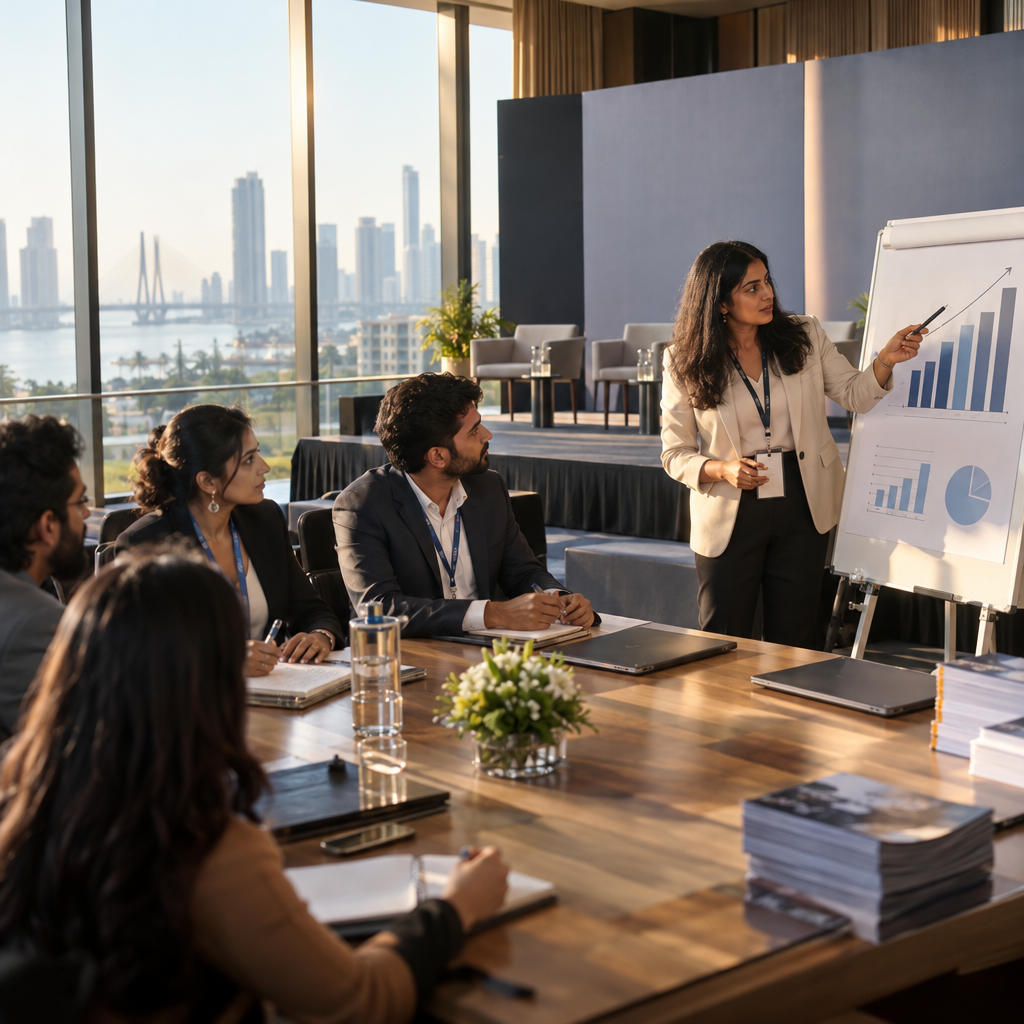
Ninety-four percent of Indian marketers plan to spend more on sponsorships and event media. Fewer than half of those marketers measure ROI across traditional and digital channels, according to Social Samosa’s report coverage, which cites a 42% share. That gap is the real story behind Nielsen’s forecast, and it should shape how you plan your next quarter.
What Nielsen actually found
The numbers come from Nielsen’s Annual Marketing Report, titled Top 10 Signals Shaping Marketing Budgets. Social Samosa’s coverage of the report notes that 94% of marketers in India expect to increase spending on sponsorships and event media over the next 12 to 24 months, the highest among the markets surveyed. The same Social Samosa write-up puts the US at 75% and Italy at 67%. Nielsen’s sample, as Social Samosa describes it, is 1,200 marketers across six markets.
India also leads on creator confidence. In the Social Samosa summary, about 81% of Indian marketers rate influencer and creator content as very or extremely effective, against 54% in the US. That 27-point gap is the widest across any channel in the report.
Nielsen’s own report page adds a global data point. Nielsen’s annual marketing report shows 58% of marketers have dedicated and growing budgets for creator partnerships, and 43% view sports as a testing ground for new audiences or markets. The survey is not India-only, so treat those two figures as directional context.
Indian brands are the most bullish in the survey on events and creators, and the least equipped to prove either one works. Budget growth is outrunning measurement.
Why events and creators are rising together
Do these look like two separate bets? They are not. A live event, a cricket sponsorship or a festival activation produces a burst of content. Creators turn that burst into reach, reaction and a second life on Instagram and YouTube.
Brands get a cheaper way to extend a sponsorship that would otherwise live and die on a hoarding. Creators get access, and access is what separates a generic integration from content people actually watch.
The sports angle is strong in India. According to Social Samosa’s coverage, 61% of Indian marketers call sports sponsorships a testing ground for new audiences and markets, compared with 54% in the US and 32% in Germany. For a brand pushing into tier-2 cities or a new language market, a sponsorship plus regional creators is a sensible entry kit.
Platform mix matters here too. Our look at Instagram’s hold on India is a useful reference when you decide where event content should land.
The measurement problem nobody budgets for
Here is the uncomfortable part. Indian Television’s report on the Nielsen findings flags that just 42% measure ROI across traditional and digital media. Per Social Samosa, the comparison is 48% in the US and 53% in Italy, which leaves India lowest of the three markets discussed.
Confidence without proof is a budget risk. When finance asks why event spend rose, “creators rated it effective” is not an answer. We have covered this pattern before in India’s creator ROI gap, and the same logic applies to sponsorships.
Events make it worse. Attribution gets messy when a sponsorship, three creators, a TV spot and a retail promotion all run in the same fortnight. Nobody owns the result, so everyone claims it.
How to protect spend before it scales
You do not need a six-month measurement overhaul. You need a few disciplined habits in place before the money moves.
- Define one business outcome per activation. Sales lift, app installs, lead volume or branded search. Pick one primary metric and write it into the brief.
- Hold out a control. Keep a comparable city or audience segment unexposed. Our piece on holdout tests for creators explains the mechanics.
- Use trackable assets. Unique codes, UTM-tagged links and creator-specific landing pages let you connect content to outcomes without guesswork.
- Standardise reporting across channels. If events report impressions and creators report engagement, you cannot compare them. Agree on shared definitions first.
One caution on engagement. High engagement rates can flatter small accounts, which is why vetting actual reach belongs in your creator checklist before event season.
Contracts and creator selection for event campaigns
Event work raises contract questions that ordinary seeding briefs skip. Who owns footage shot at a sponsored venue? Can the creator post from a rival’s activation next week? Can you reuse the content in paid ads, and for how long?
Write usage rights, exclusivity windows and disclosure obligations into the agreement before anyone travels. Repeat partnerships tend to produce better event content because the creator already understands your product, a point we explore in repeat creator deals.
Selection deserves the same rigour. A creator with a big following and no connection to the sport, city or community will look like a paid placement. Match creator to context, then check audience quality, not just follower count.
Where the AI signal fits
The Nielsen report is not only about events. In the US data summarised by Social Samosa, 75% of marketers use AI for measurement and analytics, the most common application. Yet only 34% fully trust AI recommendations and act on them independently, and half trust the outputs but require human approval, the same coverage reports.
That caution is healthy. If you are considering AI tooling to close your measurement gap, keep a human sign-off on budget decisions until you have tested the vendor’s outputs against your own holdout results. These figures are US-specific, so do not read them as an Indian benchmark.
FAQs
What did Nielsen find about Indian marketers and event spending?
Nielsen’s Annual Marketing Report found that 94% of marketers in India expect to increase spending on sponsorships and event media over the next 12 to 24 months, as Social Samosa reports. That is the highest share among the markets surveyed, ahead of the US at 75% and Italy at 67%, according to Social Samosa.
How many Indian marketers measure ROI across channels?
Only 42% measure ROI holistically across traditional and digital media, the report coverage says. The comparable figures are 48% in the US and 53% in Italy, so India sits lowest among the three markets discussed in Social Samosa’s article.
How effective do Indian marketers rate creator content?
About 81% of Indian marketers rate influencer and creator content as very or extremely effective, per Social Samosa. The US figure is 54%, the same source notes. Ratings reflect marketer perception, not verified business outcomes.
Should brands shift budget from digital to events because of this report?
Not on this data alone. The report shows intent and sentiment, not proof of returns. Test event and creator combinations with a control group first, then scale what produces measurable lift.
What is the biggest risk of raising event and creator budgets quickly?
Spending outpaces measurement. Without shared metrics across events, creators and traditional media, you cannot tell which channel drove results, and you risk repeating spend that never worked.
How should brands brief creators for sponsored events?
State one primary business outcome, specify usage rights and exclusivity windows, require trackable links or codes, and agree disclosure rules in writing. Pick creators who fit the event’s audience, not just those with the largest following.
Before your next event or sponsorship is signed, add one line to the brief naming the single metric that will justify the spend, plus a control market to compare against. If you cannot define both, delay the budget increase until you can.
Top Influencer Marketing Agencies
The leading agencies shaping influencer marketing in 2026
Agencies ranked by campaign performance, client diversity, platform expertise, proven ROI, industry recognition, and client satisfaction. Assessed through verified case studies, reviews, and industry consultations.
Moburst

-
2

The Shelf
Boutique Beauty & Lifestyle Influencer AgencyA data-driven boutique agency specializing exclusively in beauty, wellness, and lifestyle influencer campaigns on Instagram and TikTok. Best for brands already focused on the beauty/personal care space that need curated, aesthetic-driven content.Clients: Pepsi, The Honest Company, Hims, Elf Cosmetics, Pure LeafVisit The Shelf → -
3

Audiencly
Niche Gaming & Esports Influencer AgencyA specialized agency focused exclusively on gaming and esports creators on YouTube, Twitch, and TikTok. Ideal if your campaign is 100% gaming-focused — from game launches to hardware and esports events.Clients: Epic Games, NordVPN, Ubisoft, Wargaming, Tencent GamesVisit Audiencly → -
4

Viral Nation
Global Influencer Marketing & Talent AgencyA dual talent management and marketing agency with proprietary brand safety tools and a global creator network spanning nano-influencers to celebrities across all major platforms.Clients: Meta, Activision Blizzard, Energizer, Aston Martin, WalmartVisit Viral Nation → -
5

The Influencer Marketing Factory
TikTok, Instagram & YouTube CampaignsA full-service agency with strong TikTok expertise, offering end-to-end campaign management from influencer discovery through performance reporting with a focus on platform-native content.Clients: Google, Snapchat, Universal Music, Bumble, YelpVisit TIMF → -
6

NeoReach
Enterprise Analytics & Influencer CampaignsAn enterprise-focused agency combining managed campaigns with a powerful self-service data platform for influencer search, audience analytics, and attribution modeling.Clients: Amazon, Airbnb, Netflix, Honda, The New York TimesVisit NeoReach → -
7

Ubiquitous
Creator-First Marketing PlatformA tech-driven platform combining self-service tools with managed campaign options, emphasizing speed and scalability for brands managing multiple influencer relationships.Clients: Lyft, Disney, Target, American Eagle, NetflixVisit Ubiquitous → -
8

Obviously
Scalable Enterprise Influencer CampaignsA tech-enabled agency built for high-volume campaigns, coordinating hundreds of creators simultaneously with end-to-end logistics, content rights management, and product seeding.Clients: Google, Ulta Beauty, Converse, AmazonVisit Obviously →