


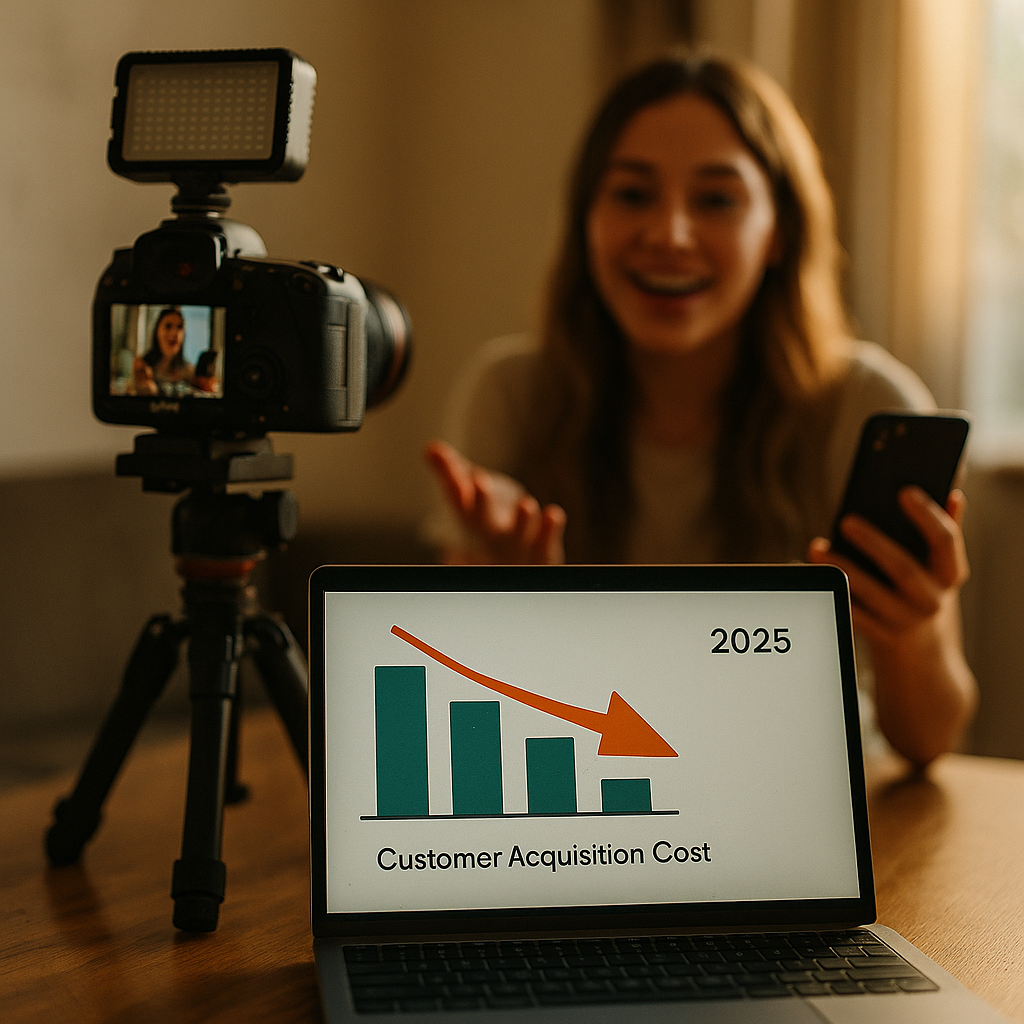
Understanding how to model influencer marketing’s impact on customer acquisition cost is crucial for optimizing marketing spend in 2025. As influencer campaigns become more sophisticated, accurately measuring their effect can give businesses a competitive edge. This guide explores proven frameworks and actionable steps to quantify and enhance influencer-driven customer acquisition, allowing marketers to make data-backed decisions.
Leveraging Influencer Marketing to Lower Acquisition Costs
Influencer marketing has evolved into a strategic channel that can directly influence customer acquisition cost (CAC). By leveraging authentic connections and highly engaged audiences, the right influencers can drive targeted traffic at a lower cost compared to traditional digital ads. According to a 2024 Benchmark Report by Influencer Marketing Hub, businesses are seeing up to 18% lower CAC from influencer-led campaigns versus standard paid channels.
However, achieving these results relies on diligent partner selection, campaign monitoring, and clear integration with your broader acquisition funnel. Brands that align influencer choice with their target audience, and campaigns with the buyer’s journey, consistently report the greatest impact on CAC.
Selecting Metrics to Measure Influencer-Driven Acquisition
Accurate modeling depends on choosing metrics that reflect both direct and indirect results. While influencer marketing can drive immediate sales, it often creates awareness and consideration that lead to conversion over time. To properly capture its impact on CAC, focus on:
- Attributable Conversions: Sales or signups directly linked to trackable influencer links, codes, or landing pages.
- Incremental Lift: Comparing acquisition rates in segments exposed to influencer content versus control groups who aren’t.
- Customer Lifetime Value (CLV): Evaluating whether influencer-driven customers are more loyal or valuable long-term.
- Assisted Conversions: Conversions where influencer touchpoints contributed to the journey, even if they weren’t last click.
Bringing these data points together paints a clearer picture of how influencers affect CAC—beyond attribution that focuses only on immediate sales.
Data Collection and Attribution Models for Influencer Marketing
Gathering accurate data is essential for modeling influencer marketing’s real CAC impact. In 2025, brands are combining multiple tools to get a reliable view:
- UTM Parameters: Custom tracking links for each influencer campaign help attribute inbound traffic and conversions.
- Promo Codes: Unique influencer codes reveal which signups or purchases came directly from their efforts.
- Multi-Touch Attribution: Advanced analytics platforms like Triple Whale or Google Analytics 4 track how influencer touchpoints assist the overall customer journey.
- Brand Lift Surveys: Surveying new customers about their path to discovery can provide qualitative insights where digital tracking falls short—especially on platforms with privacy restrictions.
Combining deterministic data (clicks, codes) with modeled outcomes (brand lift, assisted conversions) ensures more robust CAC calculations. Always verify influencer audiences for legitimacy to maintain data integrity.
Calculating the True Customer Acquisition Cost from Influencer Campaigns
Once reliable data is collected, marketers can calculate CAC specific to influencer efforts. Use this formula:
- Influencer CAC = Total Influencer Campaign Cost / Number of Attributable New Customers
For full transparency, total campaign cost should include:
- Influencer fees or commissions
- Product or service costs (if used as payment)
- Support and management costs
- Production costs for content or creative assets
Compare this influencer-specific CAC to the average across all channels. If influencer CAC is lower, you’re effectively reducing overall acquisition spend. If higher, use granular conversion metrics and segmentation to optimize future campaigns—refining influencer selection, messaging, or formats for better cost efficiency.
Optimizing Campaigns Based on CAC Insights
Modeling influencer marketing’s impact on customer acquisition cost allows for data-driven optimization. Here’s how brands use this information to improve results in 2025:
- Double Down on High-Performers: Reinvest in influencers and content formats that yield the lowest CAC.
- Negotiation and Tiering: Use CAC data to justify rates and payment models. Shift toward performance-based agreements when possible.
- Audience and Messaging Alignment: Refine audience selection and messaging for campaigns that miss CAC goals, ensuring better fit and resonance.
- Iterative Testing: Pilot new partnership structures (e.g., co-creation, live events) and measure CAC shifts versus static sponsored posts.
- Integrate with Broader Marketing Stack: Use influencer CAC data to inform retargeting, email campaigns, and loyalty initiatives for improved holistic acquisition and retention.
Continuous refinement ensures that influencer marketing becomes a sustainable, cost-effective channel rather than an unpredictable experiment.
Future Trends: AI and Predictive Modeling in Influencer CAC
Artificial intelligence is reshaping influencer marketing analytics. In 2025, leading brands are implementing AI-powered predictive models to forecast influencer campaign CAC and ROI before investing. These models consider historic performance, audience similarity, engagement rates, and seasonality to anticipate results and optimize influencer partnerships dynamically.
This proactive approach reduces guesswork and empowers marketers to allocate budgets for maximum impact. As data privacy strengthens, brands will rely more on modeled outcomes and first-party data, making predictive influencer CAC modeling both a challenge and a significant competitive advantage.
In summary, modeling influencer marketing’s impact on customer acquisition cost equips marketers to maximize return and limit waste. By adopting rigorous tracking, attribution, and optimization, brands can turn influencer marketing into a reliable, scalable foundation for growth.
FAQs: Modeling Influencer Marketing’s Impact on CAC
-
How do I track influencer-driven conversions accurately?
Use a mix of trackable links, promo codes, multi-touch attribution tools, and post-purchase surveys to ensure comprehensive conversion tracking from influencer campaigns. -
Should I include influencer management fees in CAC calculations?
Yes. For an accurate influencer CAC, always include management fees, product/sample costs, and any content creation expenses in your total campaign investment. -
What’s the best attribution model for influencer marketing?
A multi-touch attribution model provides the clearest picture by crediting influencer touchpoints throughout the customer journey—not just last-click conversions. -
Can influencer marketing lower my overall CAC?
Many brands report lower CAC from influencer campaigns—especially with well-aligned influencers and optimized strategies—versus traditional paid channels or display advertising. -
How often should I review influencer CAC data?
Review and adjust campaigns at least quarterly. Frequent analysis allows for faster optimization and greater ROI from your influencer partnerships.
Top Influencer Marketing Agencies
The leading agencies shaping influencer marketing in 2026
Agencies ranked by campaign performance, client diversity, platform expertise, proven ROI, industry recognition, and client satisfaction. Assessed through verified case studies, reviews, and industry consultations.
Moburst

-
2

The Shelf
Boutique Beauty & Lifestyle Influencer AgencyA data-driven boutique agency specializing exclusively in beauty, wellness, and lifestyle influencer campaigns on Instagram and TikTok. Best for brands already focused on the beauty/personal care space that need curated, aesthetic-driven content.Clients: Pepsi, The Honest Company, Hims, Elf Cosmetics, Pure LeafVisit The Shelf → -
3

Audiencly
Niche Gaming & Esports Influencer AgencyA specialized agency focused exclusively on gaming and esports creators on YouTube, Twitch, and TikTok. Ideal if your campaign is 100% gaming-focused — from game launches to hardware and esports events.Clients: Epic Games, NordVPN, Ubisoft, Wargaming, Tencent GamesVisit Audiencly → -
4

Viral Nation
Global Influencer Marketing & Talent AgencyA dual talent management and marketing agency with proprietary brand safety tools and a global creator network spanning nano-influencers to celebrities across all major platforms.Clients: Meta, Activision Blizzard, Energizer, Aston Martin, WalmartVisit Viral Nation → -
5

The Influencer Marketing Factory
TikTok, Instagram & YouTube CampaignsA full-service agency with strong TikTok expertise, offering end-to-end campaign management from influencer discovery through performance reporting with a focus on platform-native content.Clients: Google, Snapchat, Universal Music, Bumble, YelpVisit TIMF → -
6

NeoReach
Enterprise Analytics & Influencer CampaignsAn enterprise-focused agency combining managed campaigns with a powerful self-service data platform for influencer search, audience analytics, and attribution modeling.Clients: Amazon, Airbnb, Netflix, Honda, The New York TimesVisit NeoReach → -
7

Ubiquitous
Creator-First Marketing PlatformA tech-driven platform combining self-service tools with managed campaign options, emphasizing speed and scalability for brands managing multiple influencer relationships.Clients: Lyft, Disney, Target, American Eagle, NetflixVisit Ubiquitous → -
8

Obviously
Scalable Enterprise Influencer CampaignsA tech-enabled agency built for high-volume campaigns, coordinating hundreds of creators simultaneously with end-to-end logistics, content rights management, and product seeding.Clients: Google, Ulta Beauty, Converse, AmazonVisit Obviously →