


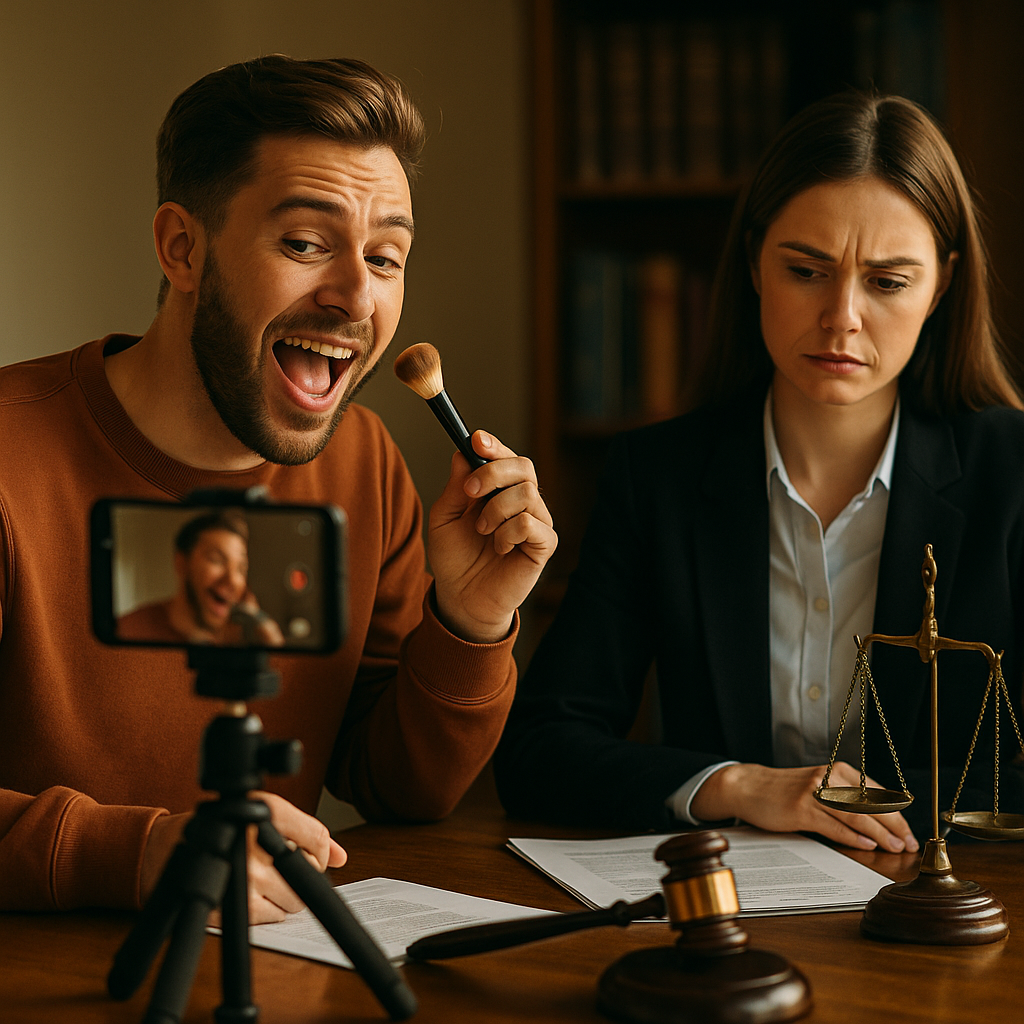
The legal distinction between “parody” and “infringement” in influencer content is increasingly significant for digital creators. Understanding where the law draws the line helps influencers avoid costly legal battles and reputational setbacks. What exactly separates a protected parody from actionable infringement in influencer media? Let’s dive into the core legal principles shaping this emerging frontier.
Understanding Parody Versus Infringement in Content Creation
For influencers, staying on the right side of copyright law starts with knowing the basics. Parody refers to content that mimics or exaggerates a copyrighted work to make a humorous or critical statement about it. Meanwhile, infringement happens when someone uses protected material without permission and outside the exceptions allowed by law.
While parody often enjoys First Amendment protection, not every funny or imitative post is a lawful parody. The decisive factor is whether the new work transforms or comments on the original, rather than merely copying it. In contrast, infringement typically involves unlicensed use that harms the original creator’s commercial interests or confuses audiences.
Key Legal Criteria for Protected Parody: A Guide for Social Media Influencers
The distinction between parody and infringement has been clarified in courtrooms and copyright guidance. Influencers should pay attention to these EEAT-aligned legal criteria:
- Transformative Purpose: Does the content add new expression or meaning, or does it replicate the original for entertainment or monetary gain without significant change?
- Target of the Commentary: True parody comments on or criticizes the original work, not merely its style, themes, or popularity.
- Amount and Substantiality: Using more content than necessary tilts the balance toward infringement. Only the portions required to “conjure up” the original in the audience’s mind are justified.
- Market Effect: Courts often examine whether the parody could serve as a market substitute or harm the original’s value. If so, the parody is less likely to be protected.
Influencers aiming to stay legal should create content with a clear, critical, or humorous commentary about the original—never just for clicks or trend-chasing.
Common Influencer Missteps That Risk Copyright Infringement
With the viral reach of influencer content in 2025, copyright violations can escalate quickly. Here are common mistakes that blur the parody-infringement line:
- Imitating Without Commentary: Merely mimicking a famous skit, song, or logo without making a clear statement can lead to infringement claims.
- Blurring Parody and Satire: Satire uses elements of a work to mock something else entirely. Unlike parody, it often lacks legal protection.
- Reposting or Sampling Content Unchanged: Direct reposts of content, memes, or clips, even with attribution, are rarely protected as parody unless they critique the source.
- Exceeding Necessary Use: Using entire songs, long video segments, or original artwork when only a snippet would have sufficed is riskier legally.
Understanding these pitfalls helps influencers create responsibly, avoiding both algorithm takedowns and lawsuits.
Recent Court Rulings and Examples Impacting Influencer Parody Content
Courtroom precedents continue to shape expectations for influencers. In 2024, US courts reaffirmed that parody’s legality hinges on its transformative and critical nature. For example, an influencer’s spoof of a celebrity perfume ad was upheld as legal parody because it mocked the brand’s messaging—not merely imitating the visuals for humor.
Conversely, a 2023 ruling found that a TikTok user’s direct copy of a pop song’s chorus for meme content lacked transformative commentary and thus constituted infringement. These decisions reinforce best practices: include critique or commentary, and avoid excessive use of copyrighted elements.
Proactive Strategies for Influencers Navigating Parody and Copyright Law
To maximize creativity while minimizing legal risk, influencers can take several proactive steps:
- Consult with Intellectual Property Experts: When in doubt, seek guidance from copyright attorneys familiar with digital media trends.
- Use Licensed Content and Royalty-Free Libraries: Consider music, images, and clips where permissions are clear and upfront.
- Document Intent: Keep notes on the purpose of the parody and how it comments on or criticizes the original work.
- Stay Within Fair Use Guidelines: Use only what is necessary and always add new meaning or perspective.
- Respect Platform Policies: Major platforms in 2025 continue to refine their copyright policies. Read terms of service carefully to align your content strategy.
Following these strategies helps you build an audience while upholding copyright law and ethical content creation standards.
Ethical Considerations Beyond Legal Liability for Influencers
Legal rights and ethical responsibility do not always align perfectly. Even when parody is legally protected, influencers should weigh community norms, relationships with brands, and the potential for reputational harm. Authenticity matters—satirizing a competitor’s brand or a marginalized group, for example, can backfire regardless of legal standing. Focus on critique that delivers value rather than controversy or outrage.
Conclusion: Drawing the Line with Confidence in 2025
The legal distinction between “parody” and “infringement” in influencer content hinges on transformative commentary, selective use, and intent. Influencers who master these boundaries enjoy creative freedom while steering clear of infringement claims. By prioritizing fair use, legal advice, and ethical standards, today’s creators can make impactful content safely and responsibly.
FAQs: Legal Parody versus Infringement for Influencers
- What qualifies as parody in influencer content?
A parody must mimic an original work to make fun of or critique it. Pure imitation without commentary is not enough for legal protection. - Can I use copyrighted music or video for parody on social media?
Yes, but only if you add significant new meaning or commentary. Limit use to what is necessary, and avoid copying entire songs or scenes. - Is satire protected under copyright law like parody?
No. Satire, which comments on broader themes using elements of a work, receives far less legal protection than parody targeting the work itself. - What if the original creator is offended by my parody?
Even legally protected parody may upset original creators. While you may be within your rights, consider ethical implications and potential backlash. - How can influencers minimize the risk of copyright infringement claims?
Always transform the content with added commentary, use small excerpts, and consult copyright professionals when uncertain.
Top Influencer Marketing Agencies
The leading agencies shaping influencer marketing in 2026
Agencies ranked by campaign performance, client diversity, platform expertise, proven ROI, industry recognition, and client satisfaction. Assessed through verified case studies, reviews, and industry consultations.
Moburst

-
2

The Shelf
Boutique Beauty & Lifestyle Influencer AgencyA data-driven boutique agency specializing exclusively in beauty, wellness, and lifestyle influencer campaigns on Instagram and TikTok. Best for brands already focused on the beauty/personal care space that need curated, aesthetic-driven content.Clients: Pepsi, The Honest Company, Hims, Elf Cosmetics, Pure LeafVisit The Shelf → -
3

Audiencly
Niche Gaming & Esports Influencer AgencyA specialized agency focused exclusively on gaming and esports creators on YouTube, Twitch, and TikTok. Ideal if your campaign is 100% gaming-focused — from game launches to hardware and esports events.Clients: Epic Games, NordVPN, Ubisoft, Wargaming, Tencent GamesVisit Audiencly → -
4

Viral Nation
Global Influencer Marketing & Talent AgencyA dual talent management and marketing agency with proprietary brand safety tools and a global creator network spanning nano-influencers to celebrities across all major platforms.Clients: Meta, Activision Blizzard, Energizer, Aston Martin, WalmartVisit Viral Nation → -
5

The Influencer Marketing Factory
TikTok, Instagram & YouTube CampaignsA full-service agency with strong TikTok expertise, offering end-to-end campaign management from influencer discovery through performance reporting with a focus on platform-native content.Clients: Google, Snapchat, Universal Music, Bumble, YelpVisit TIMF → -
6

NeoReach
Enterprise Analytics & Influencer CampaignsAn enterprise-focused agency combining managed campaigns with a powerful self-service data platform for influencer search, audience analytics, and attribution modeling.Clients: Amazon, Airbnb, Netflix, Honda, The New York TimesVisit NeoReach → -
7

Ubiquitous
Creator-First Marketing PlatformA tech-driven platform combining self-service tools with managed campaign options, emphasizing speed and scalability for brands managing multiple influencer relationships.Clients: Lyft, Disney, Target, American Eagle, NetflixVisit Ubiquitous → -
8

Obviously
Scalable Enterprise Influencer CampaignsA tech-enabled agency built for high-volume campaigns, coordinating hundreds of creators simultaneously with end-to-end logistics, content rights management, and product seeding.Clients: Google, Ulta Beauty, Converse, AmazonVisit Obviously →