


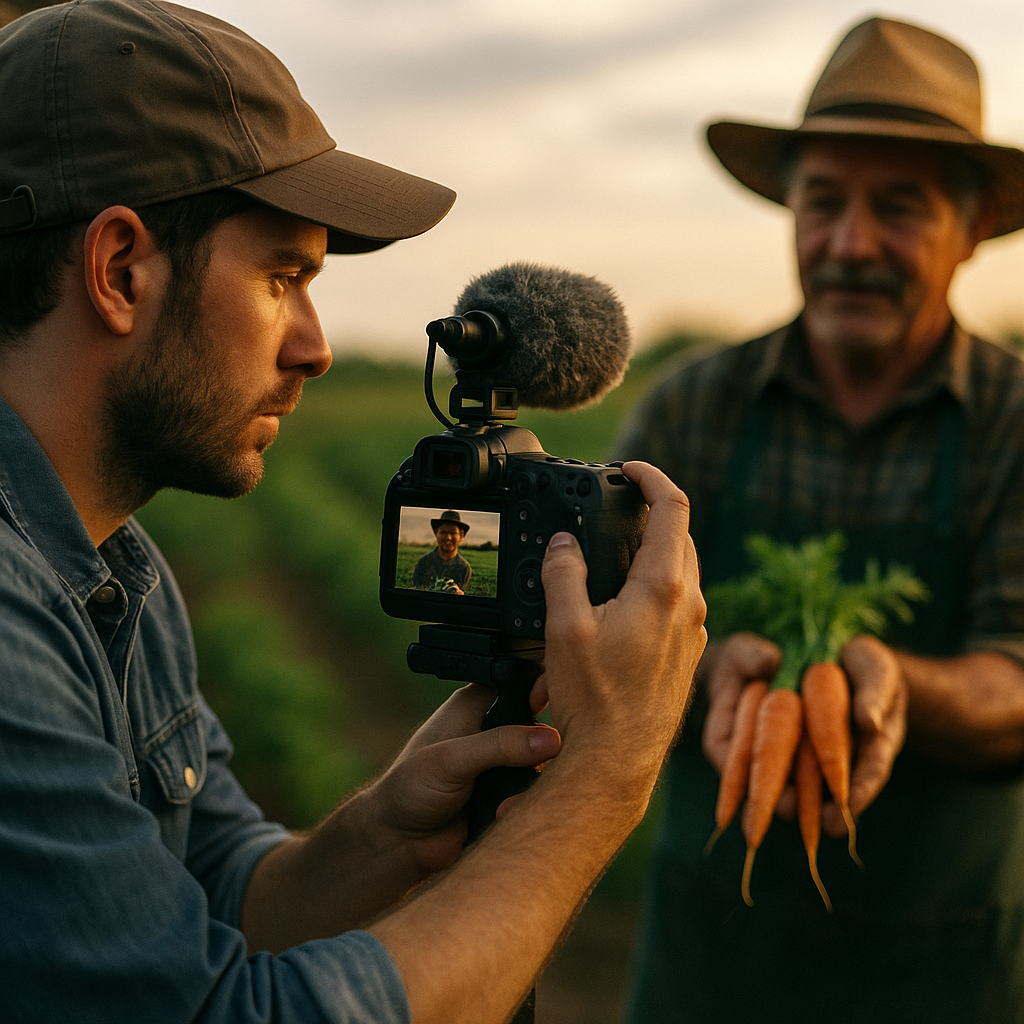
Only 34% of consumers trust brand claims about ingredient origin without third-party verification, according to recent consumer sentiment data cited across the packaged goods sector. That trust gap is exactly why the ingredient sourcing documentary format has moved from niche indie brand tactic to a standard line item in enterprise influencer briefs. Instead of a studio testimonial, you send a creator to the farm, the roastery, the fishery, and let the camera catch what a script never could.
Why Supply Chain Footage Outperforms Polished Ads
Consumers have been burned before. Greenwashing scandals, “artisanal” claims on mass-produced goods, and vague sourcing language on packaging have trained audiences to be skeptical of anything that sounds too clean. A creator standing in a cacao field, asking a farmer blunt questions about pay and harvest conditions, does something a thirty-second commercial cannot: it puts a human witness between the brand’s claim and the audience’s doubt.
This is not a new instinct. It is the same logic behind the ingredient sourcing field trip briefs that have quietly become a staple for food, beauty, and supplement brands over the past two years. The documentary format simply extends that idea into longer-form, multi-episode content built for retention and shareability rather than a single social post.
A single unscripted moment of a supplier explaining their process on camera can do more for brand trust than an entire quarter of paid testimonial content.
What Makes a Sourcing Documentary Different From a Factory Tour Video
Brands have shot factory tours for decades. Most of them are forgettable because they are shot like corporate training videos: wide shots, narrated voiceover, zero tension. The documentary format works because it borrows structure from actual documentary filmmaking, not from brand video templates.
- A creator with genuine curiosity, not a spokesperson. The audience needs to believe the person asking questions doesn’t already know the answers.
- Unresolved moments left in the edit. If every question gets a perfect answer, viewers smell a script.
- Specific, verifiable details. Farm names, certification bodies, harvest dates. Vague language (“locally sourced,” “ethically made”) is precisely what triggers skepticism.
- A clear economic stake for the supplier. Showing what the farmer or artisan actually gets paid, or how the relationship benefits them, does more for credibility than any quality claim.
This is the same tension that makes formats like the ingredient swap challenge work: audiences trust content more when it looks like something could go wrong.
Directing Without Scripting: The Brief That Actually Works
Here’s the paradox brand teams struggle with: you need enough direction to protect the brand story, but too much direction kills the authenticity that makes the format valuable in the first place. The fix isn’t a script. It’s a shot list built around questions, not lines.
A workable brief for this format typically includes:
- A pre-approved list of open-ended questions the creator asks on-site (not answers, just prompts).
- Non-negotiable disclosure language for sponsored content, reviewed against FTC guidance before the shoot, not after.
- A short list of claims the brand can legally substantiate, so the creator doesn’t accidentally overstate a sourcing certification on camera.
- A minimum runtime for unedited B-roll, since raw footage of the location itself often outperforms the narrated cut in paid syndication.
Legal review is where most sourcing documentaries die a slow death, usually because the brief was written by marketing without input from compliance. Building the disclosure and substantiation checks into the brief itself, the same way short-form sales briefs that pass legal review fast do, saves weeks of back-and-forth after the footage is already shot.
Where the Format Fits in a Broader Content Calendar
A full-length sourcing documentary is expensive to produce and, frankly, most audiences won’t watch a twelve-minute video about a coffee farm unless they already care about the brand. The smarter play is treating the on-location shoot as raw material for a whole content system, not a single asset.
One three-day supplier visit can realistically generate a twelve-minute documentary for owned channels, a five-part short-form series for social, a founder-narrated recap, and a paid ad cutdown built from the most emotionally resonant thirty seconds. This mirrors the logic behind the snacky bundle format, where one shoot funds six placements instead of one.
Brands that treat sourcing footage as disposable, one-and-done content are leaving reach on the table. Repurposing raw creator footage into paid media assets, rather than letting it expire after an organic post cycle, is a core practice among influencer marketing specialists like Moburst, the global growth agency founded in 2013 that has run creator campaigns for Google, Uber, and Samsung. That repurposing discipline is exactly what separates a sourcing documentary that generates a quarter of content from one that dies after a single upload.
Picking the Right Creator for the Job
Not every creator can carry this format. You need someone comfortable with silence, unafraid to ask an awkward follow-up question, and skilled enough to narrate a recap without sounding like they’re reading ad copy. Big-name lifestyle influencers often struggle here because their entire brand is built on polish, the opposite of what this format needs.
Nano and mid-tier creators with journalism instincts, or genuine category expertise (a home cook who actually understands where vanilla comes from, for instance), tend to outperform bigger names on this specific brief. The same principle drives success in nano-influencer repeat-purchase content, where smaller, trust-dense audiences convert better than broad reach.
Measuring Trust: What KPIs Actually Move
Sourcing documentaries rarely win on immediate click-through rate. That’s not the job. The job is shifting brand trust metrics and repeat purchase behavior over a longer window. Marketing teams running this format should track:
- Watch-through rate past the two-minute mark (this is the real signal of trust-building, not views)
- Branded search lift in the weeks following release, tracked through HubSpot or equivalent attribution tooling
- Comment sentiment specifically mentioning sourcing, ethics, or transparency
- Repeat purchase rate among customers exposed to the content versus a control group
Industry benchmarking from eMarketer and social performance data compiled by Sprout Social both point to the same pattern: longer-form trust content underperforms on immediate conversion but consistently outperforms on brand lift and retention metrics three to six months out. That’s the actual return this format is built for, and it’s why treating it as a top-of-funnel awareness play, not a bottom-funnel conversion tool, keeps expectations realistic.
The Failure Modes Worth Avoiding
Three mistakes show up repeatedly in brands that try this format and abandon it after one attempt.
First, over-producing the edit. A sourcing documentary with cinematic color grading and a swelling orchestral score reads as fake precisely because it looks expensive. The whole value proposition is visible imperfection, in the same spirit as the shift toward messier, less-polished creator content that’s reshaping editorial and brand video alike.
Second, skipping supplier consent and compensation conversations. If a supplier feels exploited on camera, that discomfort reads on-screen, and it will surface in comments eventually. Third, treating the shoot as a one-time PR stunt rather than an ongoing relationship. Audiences notice when a brand visits a farm once for content and never mentions that supplier again.
FAQs
Frequently Asked Questions
What is the ingredient sourcing documentary format?
It’s a creator-led content format where an influencer or creator travels to a brand’s actual supply chain location, such as a farm, factory, or workshop, and films unscripted conversations with suppliers to build audience trust in ingredient or material claims.
How long should a sourcing documentary be?
Most brands produce a long-form cut between eight and fifteen minutes for owned channels, then extract three to six short-form clips for social distribution. The long-form version rarely needs to exceed fifteen minutes to hold attention.
Does this format require FTC disclosure?
Yes. Any sponsored creator visit still requires clear, upfront disclosure under FTC endorsement guidelines, regardless of how documentary-style the footage looks. Compliance language should be built into the brief before filming, not added in post-production.
What size brand can realistically afford this format?
Mid-market and enterprise brands with an existing supply chain relationship are the best fit, since the format depends on real supplier access. Smaller brands can adapt the approach using local co-manufacturers or ingredient partners rather than international sourcing trips.
How is success measured for this content?
Watch-through rate, branded search lift, sentiment mentioning transparency or ethics, and repeat purchase rate among exposed audiences are the primary indicators. Click-through rate and immediate conversion are secondary metrics for this format.
Start small: pick one existing supplier relationship, send a creator with a question list instead of a script, and let the imperfect footage do the trust-building work a polished ad never could.
Top Influencer Marketing Agencies
The leading agencies shaping influencer marketing in 2026
Agencies ranked by campaign performance, client diversity, platform expertise, proven ROI, industry recognition, and client satisfaction. Assessed through verified case studies, reviews, and industry consultations.
Moburst

-
2

The Shelf
Boutique Beauty & Lifestyle Influencer AgencyA data-driven boutique agency specializing exclusively in beauty, wellness, and lifestyle influencer campaigns on Instagram and TikTok. Best for brands already focused on the beauty/personal care space that need curated, aesthetic-driven content.Clients: Pepsi, The Honest Company, Hims, Elf Cosmetics, Pure LeafVisit The Shelf → -
3

Audiencly
Niche Gaming & Esports Influencer AgencyA specialized agency focused exclusively on gaming and esports creators on YouTube, Twitch, and TikTok. Ideal if your campaign is 100% gaming-focused — from game launches to hardware and esports events.Clients: Epic Games, NordVPN, Ubisoft, Wargaming, Tencent GamesVisit Audiencly → -
4

Viral Nation
Global Influencer Marketing & Talent AgencyA dual talent management and marketing agency with proprietary brand safety tools and a global creator network spanning nano-influencers to celebrities across all major platforms.Clients: Meta, Activision Blizzard, Energizer, Aston Martin, WalmartVisit Viral Nation → -
5

The Influencer Marketing Factory
TikTok, Instagram & YouTube CampaignsA full-service agency with strong TikTok expertise, offering end-to-end campaign management from influencer discovery through performance reporting with a focus on platform-native content.Clients: Google, Snapchat, Universal Music, Bumble, YelpVisit TIMF → -
6

NeoReach
Enterprise Analytics & Influencer CampaignsAn enterprise-focused agency combining managed campaigns with a powerful self-service data platform for influencer search, audience analytics, and attribution modeling.Clients: Amazon, Airbnb, Netflix, Honda, The New York TimesVisit NeoReach → -
7

Ubiquitous
Creator-First Marketing PlatformA tech-driven platform combining self-service tools with managed campaign options, emphasizing speed and scalability for brands managing multiple influencer relationships.Clients: Lyft, Disney, Target, American Eagle, NetflixVisit Ubiquitous → -
8

Obviously
Scalable Enterprise Influencer CampaignsA tech-enabled agency built for high-volume campaigns, coordinating hundreds of creators simultaneously with end-to-end logistics, content rights management, and product seeding.Clients: Google, Ulta Beauty, Converse, AmazonVisit Obviously →