


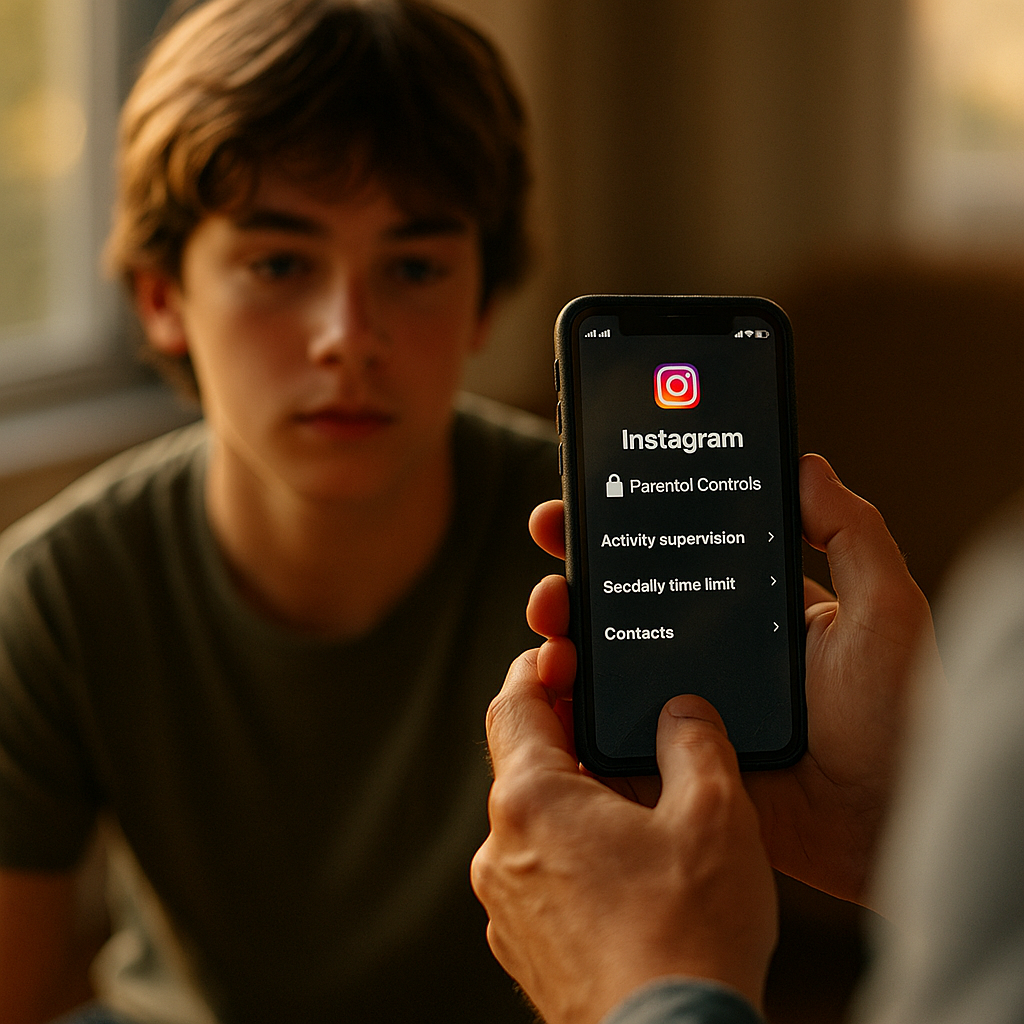
Nearly 40 million teen accounts on Instagram now sit inside Meta’s supervised-teen framework, and every one of them touches your influencer campaign differently than it did two years ago. If your youth-adjacent brand strategy still treats Instagram like an open channel, you’re already exposed. Instagram parental supervision isn’t a footnote anymore. It’s the operating system for how brands reach anyone under 18 on the platform.
This shift didn’t happen overnight, but it accelerated fast. What started as opt-in “Teen Accounts” in 2024 has become the default state for new minor accounts, with locked-down DM settings, content sensitivity filters, and parent-visible activity dashboards baked in from signup. For brands running ambassador programs, gifting campaigns, or UGC contests aimed at Gen Z and Gen Alpha, that means your funnel now runs through a parent’s phone, whether you planned for it or not.
Why This Matters More Than Another Platform Update
Marketers love to treat platform policy changes as technical footnotes. This one isn’t. Teen Accounts restrict who can DM a minor by default, limit discoverability in search and recommendations, and require parental approval for privacy setting changes for users under 16. Meta has published data showing tens of millions of teens are already inside these settings, and regulatory pressure (state age-verification laws, the UK’s Online Safety Act enforcement, ongoing FTC scrutiny) means the defaults are only getting stricter.
The FTC has made clear that influencer disclosure and children’s privacy enforcement are not separate issues anymore. If your campaign creative reaches a 15-year-old through a creator’s Reels, and that creator’s DMs funnel into a giveaway entry, you’re now operating inside two overlapping compliance regimes: advertising disclosure and youth data protection.
Teen Accounts default to private, restrict DMs to existing connections, and require parental permission for older teens to loosen these settings, which means brand outreach that once worked through direct messages now hits a wall by design.
What Actually Changed in the DM Defaults
Here’s the practical breakdown marketers need, stripped of Meta’s PR language:
- Message requests are off by default. Teens under 16 can’t receive DMs from accounts they don’t follow, full stop. Brand or creator accounts trying to slide into a teen’s inbox for a code redemption or contest entry simply won’t land.
- Parental approval gates setting changes. A 14-year-old can’t unilaterally open their account to public DMs or loosen content filters. A parent has to approve it inside Family Center.
- Sensitive content is filtered harder. Teen accounts see a more restrictive content control setting automatically, which affects how branded content, especially anything touching beauty, wellness, or body image, gets surfaced.
- Time and usage visibility. Parents can see who their teen follows, message frequency (not content), and daily usage. That visibility changes household conversations about which brands and creators a teen engages with.
None of this kills youth-adjacent marketing. It just means the mechanics of reach have moved. Organic discovery, creator trust, and parent-legible transparency now matter more than direct outreach tactics ever did.
The Compliance Gap Most Brands Haven’t Closed
Ask your agency partners this question: does our influencer contract language account for the possibility that our target audience includes minors, regardless of intended targeting? Most don’t. Campaign briefs still say “18-34” as if platform algorithms respect stated targeting parameters. They don’t. A skincare brand targeting young adults routinely reaches 15- and 16-year-olds through creator content, hashtag drift, and algorithmic recommendation, even when ad targeting excludes minors.
This is where legal exposure quietly builds. The FTC’s endorsement guidance applies regardless of who’s viewing the content. If your creator’s audience skews younger than your media plan assumes, and their captions or DM funnels violate platform teen protections, you inherit that risk contractually and reputationally.
A practical fix: build audience-age auditing into your creator vetting process, not just follower count and engagement rate. Platforms like Sprout Social and native Meta Business Suite analytics can surface audience age brackets at the account level. If a creator’s audience skews 13-17 more than your brief assumes, that’s a red flag worth pricing into the deal, not ignoring.
Rebuilding Your Influencer Brief for the Supervised-Teen Era
Campaign briefs written for 2023-era Instagram are functionally obsolete for anything touching youth audiences. Here’s what needs to change:
- Remove DM-based CTAs for youth-adjacent content. “DM us for your discount code” doesn’t work when the target demo has DMs locked to existing follows. Shift to link-in-bio, comment-triggered automation, or Broadcast Channels instead, similar to how brands are already using broadcast channels for restock alerts to route engagement through parent-visible, public-facing mechanics.
- Front-load disclosure in the caption, not the comments. Teen Account content filtering can deprioritize posts with heavy comment-thread activity before the disclosure is visible. Keep #ad or #sponsored in the first two lines.
- Audit creator content history for sensitivity flags. If a creator’s account gets algorithmically deprioritized in teen feeds due to content sensitivity settings, your branded content inherits that suppression. Vet creators the same way you’d vet for algorithm-favored authenticity signals, because sanitized, over-produced content now underperforms in more ways than one.
- Document parental-visibility scenarios in your risk assessment. If Family Center gives parents visibility into who their teen follows, assume every brand partnership is one dinner-table conversation away from public scrutiny. Draft your creator content as if a parent will screenshot it.
Where the Opportunity Actually Sits
It’s easy to read all this as friction. It’s also an opening. Brands willing to build transparent, parent-legible campaigns are positioned to win trust that competitors squandered chasing DM-funnel tactics that no longer function.
Consider how local and community-based influencer strategies are already outperforming national creator buys on trust metrics; the same logic in local ambassador programs applies here. Smaller, more transparent creator relationships build the kind of household-level trust that survives parental oversight, because there’s nothing to hide.
Some practical plays worth testing:
- Public-first campaign mechanics. Contests and giveaways run through public comments or Stories stickers, not DMs, sidestep the message-request wall entirely and read as more legitimate to supervising parents.
- Co-branded content with visible parental context. Family-inclusive UGC (think “ask a parent” framing) performs better under content sensitivity filters and builds the kind of trust signal Meta’s algorithm now rewards.
- Shift budget toward platforms with clearer youth governance. If Instagram’s teen restrictions make a campaign mechanic unworkable, YouTube’s long-form and Shorts ecosystem, with its own parental controls but different DM architecture, might be the better fit. The trust-building approach outlined in long-form YouTube content translates well to a supervised-audience strategy.
None of this requires abandoning Instagram. It requires accepting that the platform’s default settings are now doing compliance work for you, whether your legal team asked for it or not.
Building the Internal Playbook
If you run brand safety, influencer ops, or legal review for a youth-adjacent category (toys, gaming, beauty, fashion, education), you need a living document that gets updated quarterly, not a policy PDF from two years ago. At minimum, it should cover:
creator audience-age verification thresholds, DM-dependent CTA prohibitions, disclosure placement standards specific to teen-feed algorithmic behavior, and an escalation path for when a campaign unexpectedly reaches a younger audience than planned.
Benchmark your data collection practices against HubSpot’s guidance on consent-based marketing, and cross-reference platform-specific rules with Meta Business tools built for advertiser compliance. If your campaigns touch UK audiences, factor in ICO guidance on children’s data, which is stricter than most US state frameworks and increasingly used as the de facto global benchmark.
The brands treating this as a one-time policy update will get caught flat when the next default shifts. The ones building a durable governance process, reviewed alongside every new creator brief, will barely notice the next platform change.
The Bottom Line for Budget Owners
Update your creator vetting checklist this quarter to include audience-age verification and DM-dependent CTA audits, then rebrief any active youth-adjacent campaign that still routes conversions through direct messages. That single change closes your biggest compliance gap before the next platform update makes it a bigger problem.
FAQs
What are Instagram’s Teen Accounts and how do they affect brand campaigns?
Teen Accounts are Meta’s default privacy and safety settings applied automatically to users under 18. They restrict who can send direct messages, limit content discoverability, and apply stricter content sensitivity filters. Brands running campaigns that rely on DM-based CTAs or broad discoverability for youth audiences need to rebuild those mechanics around public, parent-visible engagement instead.
Can brands still DM teen users on Instagram for promotions or contests?
Generally, no. Teen accounts under 16 have message requests disabled by default, meaning only existing connections can DM them. Brand or creator accounts without an existing follow relationship can’t reach teens through direct messages, which makes public-facing contest and promotion mechanics far more effective now.
Do parental controls apply to all Instagram users under 18?
Parental supervision features apply broadly to Teen Accounts, but the level of restriction varies by age. Users under 16 generally need parental approval to loosen privacy or messaging settings, while 16- and 17-year-olds have more autonomy but still operate inside the Teen Account framework by default.
How does this affect influencer disclosure requirements?
FTC endorsement guidance applies regardless of a campaign’s intended audience. If youth-adjacent content reaches minors through algorithmic distribution, disclosure standards still apply in full, and brands should place disclosures early in captions since teen-feed content filtering can affect visibility of comment-based disclosures.
What should brands prioritize first when auditing youth-adjacent campaigns?
Start with creator audience-age data, since follower demographics often skew younger than campaign briefs assume. Then audit every campaign mechanic that depends on direct messaging, since those will underperform or fail outright under current teen DM defaults.
Visible FAQ Recap
Instagram parental supervision settings have permanently changed how youth-adjacent campaigns need to be built, prioritizing public, transparent, parent-legible engagement over DM-dependent funnels.
Top Influencer Marketing Agencies
The leading agencies shaping influencer marketing in 2026
Agencies ranked by campaign performance, client diversity, platform expertise, proven ROI, industry recognition, and client satisfaction. Assessed through verified case studies, reviews, and industry consultations.
Moburst

-
2

The Shelf
Boutique Beauty & Lifestyle Influencer AgencyA data-driven boutique agency specializing exclusively in beauty, wellness, and lifestyle influencer campaigns on Instagram and TikTok. Best for brands already focused on the beauty/personal care space that need curated, aesthetic-driven content.Clients: Pepsi, The Honest Company, Hims, Elf Cosmetics, Pure LeafVisit The Shelf → -
3

Audiencly
Niche Gaming & Esports Influencer AgencyA specialized agency focused exclusively on gaming and esports creators on YouTube, Twitch, and TikTok. Ideal if your campaign is 100% gaming-focused — from game launches to hardware and esports events.Clients: Epic Games, NordVPN, Ubisoft, Wargaming, Tencent GamesVisit Audiencly → -
4

Viral Nation
Global Influencer Marketing & Talent AgencyA dual talent management and marketing agency with proprietary brand safety tools and a global creator network spanning nano-influencers to celebrities across all major platforms.Clients: Meta, Activision Blizzard, Energizer, Aston Martin, WalmartVisit Viral Nation → -
5

The Influencer Marketing Factory
TikTok, Instagram & YouTube CampaignsA full-service agency with strong TikTok expertise, offering end-to-end campaign management from influencer discovery through performance reporting with a focus on platform-native content.Clients: Google, Snapchat, Universal Music, Bumble, YelpVisit TIMF → -
6

NeoReach
Enterprise Analytics & Influencer CampaignsAn enterprise-focused agency combining managed campaigns with a powerful self-service data platform for influencer search, audience analytics, and attribution modeling.Clients: Amazon, Airbnb, Netflix, Honda, The New York TimesVisit NeoReach → -
7

Ubiquitous
Creator-First Marketing PlatformA tech-driven platform combining self-service tools with managed campaign options, emphasizing speed and scalability for brands managing multiple influencer relationships.Clients: Lyft, Disney, Target, American Eagle, NetflixVisit Ubiquitous → -
8

Obviously
Scalable Enterprise Influencer CampaignsA tech-enabled agency built for high-volume campaigns, coordinating hundreds of creators simultaneously with end-to-end logistics, content rights management, and product seeding.Clients: Google, Ulta Beauty, Converse, AmazonVisit Obviously →