


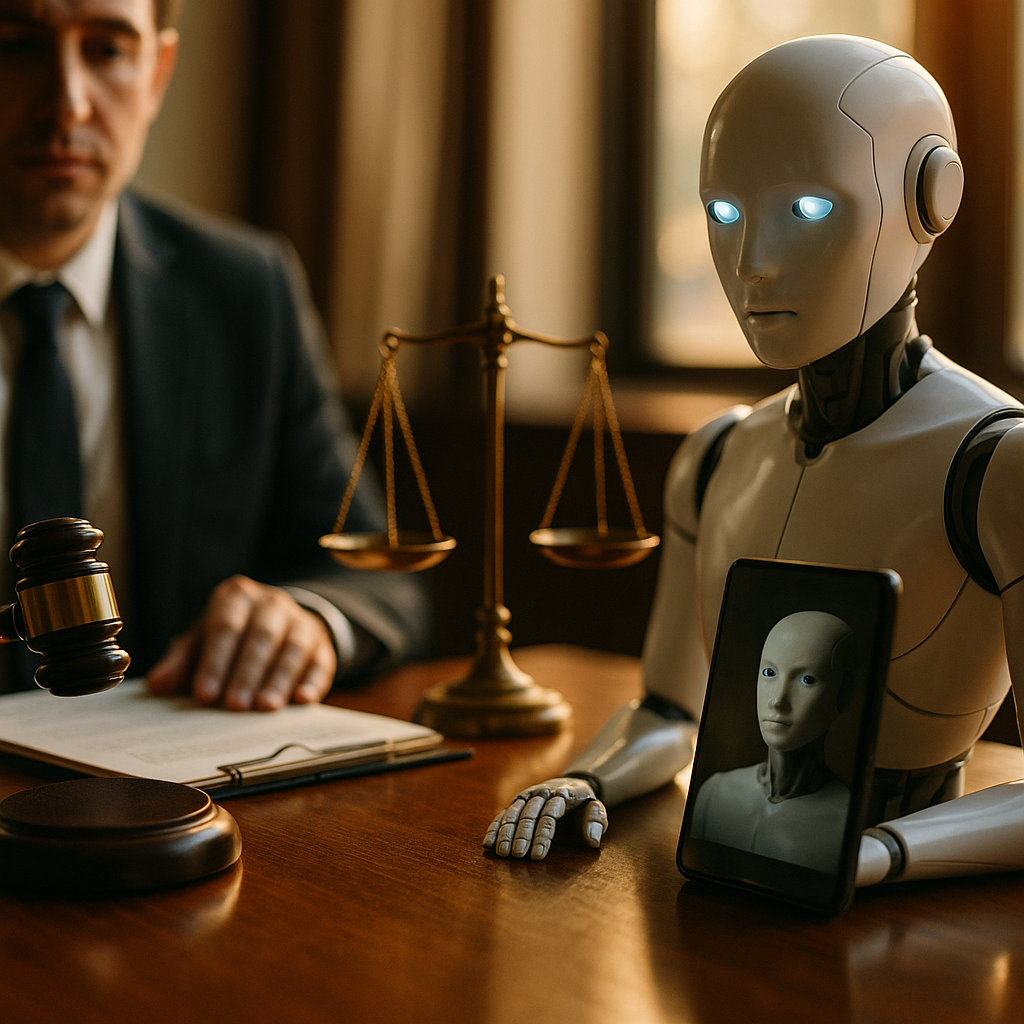
As autonomous systems increasingly speak, sell, and support on behalf of companies, understanding legal liabilities for autonomous AI brand representatives has become a board-level priority. These tools can drive efficiency and scale, but they also create exposure in advertising, privacy, contract, and consumer protection law. The core question is simple: when AI acts, who is legally responsible?
AI brand ambassador legal risks: why liability starts with the company
Autonomous AI brand representatives include chatbots, voice agents, AI sales assistants, virtual influencers, and automated customer support systems that interact directly with the public under a company’s brand. In 2026, regulators and courts generally do not treat these systems as independent legal persons. That means liability usually flows back to the business that designed, deployed, trained, approved, or benefited from the AI’s conduct.
From a practical legal perspective, most organizations cannot avoid responsibility by claiming the system “acted on its own.” If an AI agent makes a misleading product statement, collects data without proper consent, discriminates in an offer, or forms a contract outside approved terms, the company behind it may still be accountable. Agencies, vendors, and developers may share responsibility, but brand owners remain the first target because they control the customer relationship and hold the economic benefit.
Several legal theories can apply at once:
- Vicarious liability: a business may be responsible for actions taken on its behalf, even when automated.
- Negligence: failure to test, monitor, or limit a foreseeable AI risk can support a claim.
- Misrepresentation: false or misleading claims made by AI can trigger consumer, competitor, or investor actions.
- Product liability: where AI is embedded in a product or service, defects in design, warnings, or safeguards may create exposure.
- Breach of statutory duties: privacy, accessibility, consumer, employment, sector-specific, and marketing regulations can apply directly.
Executives often ask whether clear disclaimers solve the problem. Usually, no. A notice that “responses are AI-generated” may help set expectations, but it rarely overrides mandatory legal duties. If the system acts as a branded representative, regulators will focus on the substance of the interaction, not the label alone.
Autonomous AI compliance: advertising, consumer protection, and disclosure duties
One of the highest-risk areas is advertising and consumer protection. AI brand representatives can generate personalized claims at scale, which magnifies legal exposure. A human marketer might make one unsupported statement. An autonomous AI agent can make thousands before anyone notices.
Key issues include:
- Deceptive claims: AI must not overstate product performance, pricing, guarantees, or availability.
- Omissions: leaving out material limitations can be as risky as making a false statement.
- Dark patterns: AI should not manipulate users into subscriptions, purchases, or disclosures they did not intend.
- Endorsement transparency: if a virtual influencer or AI persona promotes a product, material connections and sponsorships may need clear disclosure.
- Special audience protections: extra caution applies when interacting with children, vulnerable users, or regulated customer groups.
The legal standard is not whether the AI “meant” to deceive. The question is whether a reasonable consumer was likely to be misled. That is why compliance teams need to approve claims libraries, prohibited topics, fallback rules, and escalation protocols before launch.
Another common issue is pricing. If an AI agent gives inconsistent quotes, hidden fees, or unauthorized discounts, the business may face false advertising claims, breach disputes, or regulatory inquiries. The same goes for promotional terms. If the system says “cancel anytime” while the actual process is restrictive, that mismatch creates risk regardless of how the error happened.
To reduce exposure, companies should build advertising controls into the model environment itself. Helpful measures include constrained generation, retrieval only from approved sources, mandatory disclosure triggers, and logging for every customer-facing claim. Legal review should not be a one-time signoff. It should be an ongoing control cycle tied to system updates and campaign changes.
AI data privacy liability: consent, profiling, and cross-border data risks
Privacy law is central to autonomous AI governance because brand representatives routinely collect names, emails, purchase history, location data, voice recordings, and behavioral signals. They may also infer sensitive attributes from conversations. In 2026, that combination raises significant compliance obligations across major jurisdictions.
Organizations should assume that any customer-facing AI system processing personal data needs a clear lawful basis, a precise notice, and documented governance. Common privacy risk points include:
- Insufficient consent: especially for voice recording, biometrics, marketing communications, or sensitive data processing.
- Purpose creep: using conversation data for model training, personalization, or analytics beyond what users were told.
- Excessive collection: capturing more data than necessary for the transaction or support request.
- Automated profiling: using AI to segment, prioritize, or influence customers in ways that trigger legal rights or fairness concerns.
- Cross-border transfers: moving data between regions without valid transfer mechanisms or safeguards.
Privacy liability becomes more serious when a brand representative appears conversational and trustworthy, because users often disclose more than they would in a static form. That creates a design duty: the interface should minimize unnecessary collection, avoid prompting for restricted data, and provide a clear route to a human when needed.
Security also matters. If prompt injection, data leakage, or poor access controls expose customer information, the organization may face breach notification duties, contractual penalties, and regulatory scrutiny. Companies should document how data enters the system, where it is stored, which vendors process it, and whether it is used to fine-tune or improve future outputs.
A useful internal test is this: could your privacy team explain, in plain language, exactly what your AI representative collects, why it collects it, how long it keeps it, and who can access it? If not, your legal exposure is likely higher than leadership realizes.
AI contract law issues: when autonomous agents make promises or bind the brand
Autonomous AI brand representatives do not just answer questions. They negotiate refunds, offer discounts, recommend products, schedule demos, and sometimes accept terms. That raises a difficult issue in contract law: when does an AI interaction create a binding obligation?
In many cases, ordinary contract principles still apply. If the system appears authorized to act for the company, and the customer reasonably relies on that apparent authority, the business may be bound by what the AI communicated. The exact outcome depends on interface design, terms of service, local law, and the nature of the transaction, but apparent authority remains a major risk.
Common examples include:
- Unauthorized discounts or refunds that the customer accepts in reliance on the AI’s statement.
- Incorrect product specifications that become material to a purchase decision.
- Acceptance of cancellations, renewals, or service changes not properly reflected in backend systems.
- Assurances about compliance, security, or warranties beyond approved contractual language.
Terms and conditions can help limit exposure, but they are not automatic shields. If the customer-facing AI behaves like a real agent and makes a concrete promise, a buried disclaimer may not be enough. Companies should align front-end AI permissions with actual operational authority. If the AI cannot approve a refund over a certain amount, the system should be technically incapable of offering it.
This is also where recordkeeping becomes critical. Detailed logs of prompts, outputs, retrieval sources, timestamps, user identity signals, and escalation steps can determine whether a dispute is defensible. Without that evidence, a company may struggle to prove what the AI actually said or whether the customer reasonably relied on it.
Businesses should also review vendor contracts. If a third-party platform powers your autonomous representative, your agreement should address indemnity, audit rights, performance standards, data handling, incident response, intellectual property, and model change notifications. External providers can share liability, but only if the contract meaningfully allocates risk.
Algorithmic accountability for AI agents: discrimination, accessibility, and sector rules
Not every legal claim against an AI brand representative involves a false statement or privacy failure. Some of the most serious cases arise from unfair treatment. If an AI system gives better offers to some users, steers others away from products, or responds differently based on protected traits or proxies, discrimination laws may come into play.
Risk can arise even when protected attributes are not explicitly collected. Models can infer or proxy sensitive characteristics through language patterns, zip codes, device data, browsing history, or purchasing behavior. That means fairness testing should go beyond obvious fields and look at outcomes across groups.
Accessibility is another underappreciated legal issue. A brand representative that cannot be used effectively by people with disabilities may create exposure under accessibility and anti-discrimination frameworks, especially if it serves as a primary customer service channel. Voice-only interactions, poor screen reader compatibility, missing captions, or inaccessible verification flows can all trigger complaints.
Sector-specific rules add another layer. If an AI representative touches healthcare, financial services, insurance, employment, education, or housing, the compliance burden is much higher. In these contexts, a “helpful assistant” can quickly become a regulated decision-support tool or a source of unlawful advice.
Strong algorithmic accountability typically includes:
- Pre-deployment impact assessments focused on fairness, accessibility, and foreseeable misuse.
- Role-based guardrails that restrict the AI from answering regulated or high-risk questions beyond approved content.
- Human review pathways for edge cases, complaints, and adverse outcomes.
- Ongoing audits using representative test sets and real-world monitoring.
- Governance ownership across legal, security, product, and customer operations teams.
Regulators increasingly expect proof, not promises. Saying your AI is “ethical” has little value unless you can show testing methods, remediation steps, and measurable controls.
AI governance framework 2026: practical steps to reduce legal exposure
The safest approach is to treat autonomous AI brand representatives as high-impact systems that need legal, technical, and operational controls from day one. Companies that wait for complaints or regulator questions are usually documenting risk after the fact.
A practical 2026 governance framework should include:
- Define the AI’s authority. Specify what the system can say, offer, approve, collect, and escalate. Limit high-risk actions by design.
- Create approved knowledge sources. Use controlled retrieval, versioned policy content, and prohibited claim libraries.
- Run legal risk assessments. Review advertising, privacy, IP, contract, accessibility, and sector obligations before launch.
- Implement logging and audit trails. Preserve interaction records, system changes, and evidence of user disclosures.
- Test for harmful outcomes. Evaluate hallucinations, bias, prompt injection, data leakage, and inconsistent commitments.
- Disclose appropriately. Tell users when they are interacting with AI when required or materially relevant, and make escalation to a human easy.
- Train internal teams. Marketing, support, compliance, and product teams should know what the AI can and cannot do.
- Review vendors carefully. Conduct due diligence on model providers, hosting providers, and integration partners.
- Plan incident response. Prepare for misleading outputs, privacy incidents, and public complaints with defined decision paths.
- Monitor continuously. Liability often emerges after updates, new campaigns, or expanded use cases, not just at launch.
Leadership should also assign a named owner for customer-facing AI risk. Without accountable ownership, governance fragments across departments and important issues fall between teams. The legal team does not need to run the product, but it does need visibility into how the system is trained, updated, and measured.
The broader takeaway is straightforward: autonomous brand representation is not just a technical deployment. It is a regulated business function. Companies that treat it that way are in a far stronger position to scale responsibly.
FAQs about legal liabilities for autonomous AI brand representatives
Who is legally responsible when an AI brand representative makes a mistake?
Usually the company deploying the AI is the primary responsible party, especially if the AI acted under the brand, served customers directly, or generated business value for the company. Developers, agencies, and software vendors may also share liability depending on contracts and facts.
Can a company avoid liability by stating that the chatbot is experimental?
No. Disclaimers may help clarify expectations, but they do not usually eliminate duties under consumer protection, privacy, accessibility, or anti-discrimination law. If users reasonably rely on the AI, the business still faces legal risk.
Can an AI agent legally bind a company to a contract?
Potentially yes. If the AI appears authorized to make offers, accept terms, approve refunds, or confirm changes, a customer may argue that the company is bound through apparent authority or reliance. Controls should match actual authority.
What are the biggest privacy risks with autonomous AI representatives?
The biggest risks include collecting too much personal data, using conversation data for undisclosed purposes, failing to obtain valid consent, insecure storage or transfers, and profiling users in ways that trigger legal rights or fairness concerns.
Are virtual influencers and AI personas subject to advertising rules?
Yes. If an AI persona promotes products or services, advertising and endorsement rules can apply. Sponsored content, material connections, and commercial intent may need clear and conspicuous disclosure.
How often should companies audit customer-facing AI systems?
There is no universal schedule, but audits should occur before launch, after significant model or prompt changes, when new markets or products are added, and on a regular ongoing basis. High-risk sectors may require more frequent review.
What evidence helps defend an AI-related legal claim?
Useful evidence includes interaction logs, approved knowledge sources, disclosure records, testing results, incident reports, escalation histories, model change records, and vendor documentation. Good documentation often determines whether a claim can be contained.
Do small businesses face the same risks as large enterprises?
Yes, although the scale differs. A smaller company may have fewer interactions, but it can still face lawsuits, chargebacks, regulator attention, and reputational damage if its AI representative makes false claims or mishandles customer data.
Autonomous AI brand representatives can create real value, but they also create real legal responsibility. In 2026, the safest assumption is that companies remain accountable for what these systems say, collect, and promise. Clear authority limits, privacy controls, testing, documentation, and human oversight are the practical safeguards. If AI speaks for your brand, governance must speak first.
Top Influencer Marketing Agencies
The leading agencies shaping influencer marketing in 2026
Agencies ranked by campaign performance, client diversity, platform expertise, proven ROI, industry recognition, and client satisfaction. Assessed through verified case studies, reviews, and industry consultations.
Moburst

-
2

The Shelf
Boutique Beauty & Lifestyle Influencer AgencyA data-driven boutique agency specializing exclusively in beauty, wellness, and lifestyle influencer campaigns on Instagram and TikTok. Best for brands already focused on the beauty/personal care space that need curated, aesthetic-driven content.Clients: Pepsi, The Honest Company, Hims, Elf Cosmetics, Pure LeafVisit The Shelf → -
3

Audiencly
Niche Gaming & Esports Influencer AgencyA specialized agency focused exclusively on gaming and esports creators on YouTube, Twitch, and TikTok. Ideal if your campaign is 100% gaming-focused — from game launches to hardware and esports events.Clients: Epic Games, NordVPN, Ubisoft, Wargaming, Tencent GamesVisit Audiencly → -
4

Viral Nation
Global Influencer Marketing & Talent AgencyA dual talent management and marketing agency with proprietary brand safety tools and a global creator network spanning nano-influencers to celebrities across all major platforms.Clients: Meta, Activision Blizzard, Energizer, Aston Martin, WalmartVisit Viral Nation → -
5

The Influencer Marketing Factory
TikTok, Instagram & YouTube CampaignsA full-service agency with strong TikTok expertise, offering end-to-end campaign management from influencer discovery through performance reporting with a focus on platform-native content.Clients: Google, Snapchat, Universal Music, Bumble, YelpVisit TIMF → -
6

NeoReach
Enterprise Analytics & Influencer CampaignsAn enterprise-focused agency combining managed campaigns with a powerful self-service data platform for influencer search, audience analytics, and attribution modeling.Clients: Amazon, Airbnb, Netflix, Honda, The New York TimesVisit NeoReach → -
7

Ubiquitous
Creator-First Marketing PlatformA tech-driven platform combining self-service tools with managed campaign options, emphasizing speed and scalability for brands managing multiple influencer relationships.Clients: Lyft, Disney, Target, American Eagle, NetflixVisit Ubiquitous → -
8

Obviously
Scalable Enterprise Influencer CampaignsA tech-enabled agency built for high-volume campaigns, coordinating hundreds of creators simultaneously with end-to-end logistics, content rights management, and product seeding.Clients: Google, Ulta Beauty, Converse, AmazonVisit Obviously →