


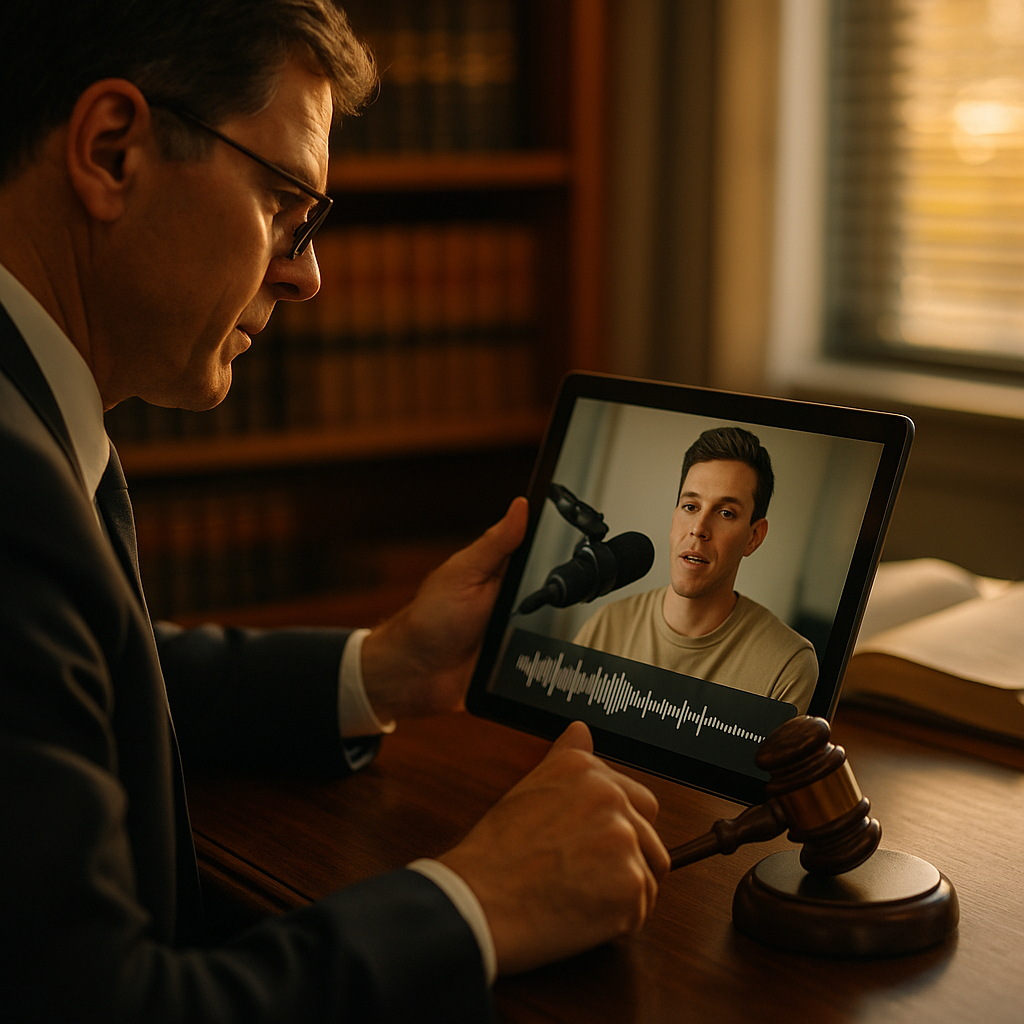
One AI-dubbed ad, cloned into fourteen languages, can trigger fourteen different legal exposures before anyone in legal even sees the script. That’s the quiet risk behind the industry’s rush to scale creator content globally with synthetic voice. A legal review gate for creator content using AI voice cloning isn’t bureaucratic overhead anymore. It’s the only thing standing between your dubbing pipeline and a regulatory mess spanning three continents.
Brands are moving fast on voice cloning because the economics are irresistible. Why reshoot a creator in Berlin, Manila, and São Paulo when you can clone one performance and dub it everywhere? But speed without a checkpoint is how legal teams end up firefighting instead of preventing.
Why Voice Cloning Broke the Old Approval Workflow
Traditional creator content review assumed a human said the words, in one language, once. Legal checked the script, checked the disclosure, checked the claims. Done.
AI voice cloning shatters that assumption in three ways. First, the “speaker” in the dubbed version isn’t the person who agreed to say it, at least not literally. Second, one piece of source content now spawns dozens of derivative assets, each subject to different national laws on consent, likeness, and advertising disclosure. Third, the review has to happen before localization multiplies, not after, because catching a problem in language number nine means you’ve already shipped it in languages one through eight.
A single cloned voice asset can trigger publicity rights claims, consent law violations, and FTC-style disclosure failures simultaneously, in markets your legal team may not routinely monitor.
This is the same lesson brands learned the hard way with AI-generated ad assets more broadly. The pre-flight checklist for AI-generated assets exists precisely because catching issues after production wastes budget and burns timelines. Voice cloning just raises the stakes because it touches a real person’s identity, not just their content.
What Actually Needs to Sit Behind the Gate
A review gate isn’t one lawyer eyeballing a script. It’s a structured checkpoint with defined inputs, defined owners, and a clear pass/fail outcome. For AI-dubbed creator content, the gate should evaluate five things before any asset moves to localization vendors.
- Consent scope. Did the creator’s contract explicitly authorize voice cloning for dubbing, or just for the original language? Silence is not consent. Ambiguity in the original agreement is the single most common failure point.
- Jurisdictional likeness law. Tennessee’s ELVIS Act, California’s expanded publicity rights, and the EU’s approach to biometric data under GDPR all treat a cloned voice differently. What’s fine in one market is a lawsuit in another.
- AI disclosure requirements. Does the target market require an on-screen or verbal disclosure that the voice is synthetic? The EU AI Act’s transparency obligations for synthetic audio are stricter than most US state rules, and platforms are layering their own labeling requirements on top.
- Claims consistency across languages. A dubbed script isn’t always a literal translation. Localization teams sometimes “adapt” copy for cultural fit, which can quietly introduce unsubstantiated claims that never went through substantiation review.
- Platform-specific AI labels. TikTok, Meta, and YouTube each have their own synthetic media disclosure tools, and they don’t always align with what your FTC-facing disclosure says. That mismatch is its own liability category.
Each of these is a distinct legal question with a distinct answer, and none of them can be waved through by a single generalist reviewer working from memory.
The Consent Clause Problem, Specifically
Here’s where most brands get burned. Standard creator contracts, even ones drafted in the last year or two, often authorize “use of Creator’s likeness in the Content” without specifying voice cloning, dubbing, or derivative synthetic audio. Legal teams assumed “likeness” covered it. Courts and regulators increasingly disagree, especially where biometric or voice-specific statutes exist.
The fix isn’t a full contract renegotiation for every campaign. It’s a standing clause that explicitly scopes AI voice cloning rights, including which markets, which languages, and whether the creator can revoke that consent. This dovetails directly with the broader synthetic performer disclosure work brands are already doing. If you haven’t updated your standard agreement, the synthetic performer disclosure clause built for NY, CA, and EU AI Act compliance is a reasonable template to adapt for voice-specific consent.
Building the Gate: Who Sits Where
A review gate only works if it has teeth and a clear owner. Here’s a structure that’s held up across multi-market campaigns:
- Intake owner (brand marketing ops). Logs every asset requesting AI dubbing, tags the target markets, and flags whether it’s a first-time use of that creator’s cloned voice.
- Consent verifier (legal, contracts specialist). Confirms the creator agreement covers voice cloning for the specific markets in scope. No sign-off, no clone.
- Regulatory reviewer (legal or outside counsel). Checks jurisdiction-specific rules: EU AI Act transparency, US state likeness statutes, and any local ad-disclosure equivalents to FTC guidance.
- Claims reviewer (compliance). Confirms the localized script hasn’t drifted from the substantiated claims in the original.
- Final release approver (senior legal or GC designee). Signs off once all four boxes are checked, and owns the record if a regulator ever asks.
This mirrors the sign-off matrix approach that’s already proving effective for AI-touched creator contracts generally. If your team has implemented something similar, extending it to cover voice cloning specifically is a smaller lift than building from scratch. Worth reviewing the sign-off matrix for AI creator contracts as a starting framework, and adjusting for the dubbing-specific consent question.
Should every dubbed asset go through all five steps? Not necessarily. Low-risk markets with a creator who’s granted broad, explicit cloning rights can move through an expedited lane. But the gate structure should exist for every asset, even if some pass through in minutes rather than days.
Where This Intersects With FTC and Platform Disclosure Rules
The FTC hasn’t issued voice-cloning-specific guidance yet, but its existing endorsement guidance principles apply cleanly: if the “person” speaking in the ad isn’t actually the person whose voice it sounds like, and a reasonable consumer would be misled about who’s endorsing the product, that’s a disclosure problem. The agency has been explicit that AI-generated content doesn’t get a pass just because it’s synthetic. Check the FTC’s guidance on endorsements for the baseline principles your dubbing disclosures need to satisfy.
Layer platform rules on top and things get messier. TikTok and Meta both require labeling for AI-generated or AI-modified content in certain contexts, and their definitions of “synthetic” don’t always match the FTC’s disclosure framework. This is the exact tension explored in how AI labels clash with FTC disclosure, and it applies just as much to a dubbed voice as it does to a fully synthetic avatar. Your legal gate needs a reviewer who checks both layers, not just one.
International expansion adds the EU AI Act’s transparency obligations, which specifically call out synthetic voice and deepfake-adjacent content. If you’re already assessing whether your creator matching or targeting tools are high-risk under that regulation, the same regulatory muscle applies here. Worth cross-referencing against how creator tools get classified under the EU AI Act to understand how enforcement bodies are likely to treat synthetic audio labeling.
The Operational Cost of Skipping This
Let’s talk numbers, because that’s what gets budget approved. Localization vendors report that AI dubbing cuts language-expansion costs by 60-80% compared to reshoots or human dubbing actors, which is exactly why brands are adopting it aggressively. But every dollar saved on production gets eaten, and then some, by a single takedown, contract dispute, or regulatory inquiry in a market you expanded into without a compliance check.
Marketing teams tracking creator program growth through platforms like eMarketer’s creator economy research are seeing international dubbing spend rise faster than domestic creator budgets. That’s the trend. The risk grows proportionally, and most legal teams aren’t staffed to review at that velocity without a structured gate.
The brands getting burned aren’t the ones using AI voice cloning. They’re the ones scaling it across markets faster than their legal review process can keep up.
There’s also a data dimension here that often gets missed. Voice cloning requires processing biometric-adjacent data, the creator’s actual voice pattern, which triggers data processing obligations under GDPR and similar frameworks. If your creator data agreements weren’t built with this in mind, it’s worth revisiting a creator data processing agreement covering UK, EU, and US law before your next dubbing cycle, not after.
A Faster Path That Doesn’t Skip Steps
None of this needs to slow campaigns to a crawl. The brands doing this well have pre-cleared “consent templates” by market, so the regulatory reviewer isn’t starting from scratch every time. They’ve built a library of pre-approved disclosure language for each platform and jurisdiction. And they’ve trained intake teams to flag high-risk markets (anywhere with active likeness litigation, or the EU) for priority legal attention, while routing lower-risk markets through a lighter check.
The gate isn’t there to stop AI dubbing. It’s there to make sure the version of the creator’s voice appearing in Jakarta or Warsaw was actually authorized, disclosed, and legally sound, the same as the original. Skip that, and the cost savings from AI dubbing evaporate the first time a regulator or a creator’s attorney asks a question nobody prepared an answer for.
Set the gate up once, staff it properly, and it becomes a two-day checkpoint instead of a legal fire drill. That’s the actual ROI conversation worth having with your CMO.
Frequently Asked Questions
Does standard creator contract language cover AI voice cloning for dubbing?
Usually not. Most existing agreements authorize use of a creator’s “likeness” broadly but don’t specifically address voice cloning, synthetic audio, or dubbing rights by market. Brands need an explicit clause covering AI voice replication, scoped to specific languages and territories, with clear revocation terms.
Which laws apply to AI-cloned voices in international ad dubbing?
It depends on the market. US states increasingly have voice-specific likeness statutes (Tennessee’s ELVIS Act is the strongest example), the EU AI Act imposes transparency requirements for synthetic audio, and GDPR treats voice data with biometric-adjacent sensitivity. There’s no single global standard, which is exactly why a jurisdiction-by-jurisdiction legal review gate matters.
Who should own the legal review gate for AI-dubbed creator content?
A cross-functional structure works best: marketing ops for intake, a contracts specialist to verify consent scope, legal or outside counsel for jurisdictional review, compliance for claims consistency, and a senior legal approver for final release. No single person should have sign-off authority alone.
How does FTC guidance apply to dubbed AI voices?
The FTC’s endorsement guidance principles apply regardless of whether the voice is synthetic. If a reasonable consumer could be misled about who is actually endorsing the product, disclosure is required. AI-generated or cloned voices don’t get an exemption from this standard.
Can this review process be automated?
Parts of it can. Intake logging, market tagging, and pre-approved disclosure language can be templated and automated. But consent verification and jurisdictional legal review still require human judgment, especially as laws around synthetic voice continue evolving across different countries.
Frequently Asked Questions
Does standard creator contract language cover AI voice cloning for dubbing?
Usually not. Most existing agreements authorize use of a creator’s “likeness” broadly but don’t specifically address voice cloning, synthetic audio, or dubbing rights by market. Brands need an explicit clause covering AI voice replication, scoped to specific languages and territories, with clear revocation terms.
Which laws apply to AI-cloned voices in international ad dubbing?
It depends on the market. US states increasingly have voice-specific likeness statutes (Tennessee’s ELVIS Act is the strongest example), the EU AI Act imposes transparency requirements for synthetic audio, and GDPR treats voice data with biometric-adjacent sensitivity. There’s no single global standard, which is exactly why a jurisdiction-by-jurisdiction legal review gate matters.
Who should own the legal review gate for AI-dubbed creator content?
A cross-functional structure works best: marketing ops for intake, a contracts specialist to verify consent scope, legal or outside counsel for jurisdictional review, compliance for claims consistency, and a senior legal approver for final release. No single person should have sign-off authority alone.
How does FTC guidance apply to dubbed AI voices?
The FTC’s endorsement guidance principles apply regardless of whether the voice is synthetic. If a reasonable consumer could be misled about who is actually endorsing the product, disclosure is required. AI-generated or cloned voices don’t get an exemption from this standard.
Can this review process be automated?
Parts of it can. Intake logging, market tagging, and pre-approved disclosure language can be templated and automated. But consent verification and jurisdictional legal review still require human judgment, especially as laws around synthetic voice continue evolving across different countries.
Top Influencer Marketing Agencies
The leading agencies shaping influencer marketing in 2026
Agencies ranked by campaign performance, client diversity, platform expertise, proven ROI, industry recognition, and client satisfaction. Assessed through verified case studies, reviews, and industry consultations.
Moburst

-
2

The Shelf
Boutique Beauty & Lifestyle Influencer AgencyA data-driven boutique agency specializing exclusively in beauty, wellness, and lifestyle influencer campaigns on Instagram and TikTok. Best for brands already focused on the beauty/personal care space that need curated, aesthetic-driven content.Clients: Pepsi, The Honest Company, Hims, Elf Cosmetics, Pure LeafVisit The Shelf → -
3

Audiencly
Niche Gaming & Esports Influencer AgencyA specialized agency focused exclusively on gaming and esports creators on YouTube, Twitch, and TikTok. Ideal if your campaign is 100% gaming-focused — from game launches to hardware and esports events.Clients: Epic Games, NordVPN, Ubisoft, Wargaming, Tencent GamesVisit Audiencly → -
4

Viral Nation
Global Influencer Marketing & Talent AgencyA dual talent management and marketing agency with proprietary brand safety tools and a global creator network spanning nano-influencers to celebrities across all major platforms.Clients: Meta, Activision Blizzard, Energizer, Aston Martin, WalmartVisit Viral Nation → -
5

The Influencer Marketing Factory
TikTok, Instagram & YouTube CampaignsA full-service agency with strong TikTok expertise, offering end-to-end campaign management from influencer discovery through performance reporting with a focus on platform-native content.Clients: Google, Snapchat, Universal Music, Bumble, YelpVisit TIMF → -
6

NeoReach
Enterprise Analytics & Influencer CampaignsAn enterprise-focused agency combining managed campaigns with a powerful self-service data platform for influencer search, audience analytics, and attribution modeling.Clients: Amazon, Airbnb, Netflix, Honda, The New York TimesVisit NeoReach → -
7

Ubiquitous
Creator-First Marketing PlatformA tech-driven platform combining self-service tools with managed campaign options, emphasizing speed and scalability for brands managing multiple influencer relationships.Clients: Lyft, Disney, Target, American Eagle, NetflixVisit Ubiquitous → -
8

Obviously
Scalable Enterprise Influencer CampaignsA tech-enabled agency built for high-volume campaigns, coordinating hundreds of creators simultaneously with end-to-end logistics, content rights management, and product seeding.Clients: Google, Ulta Beauty, Converse, AmazonVisit Obviously →