


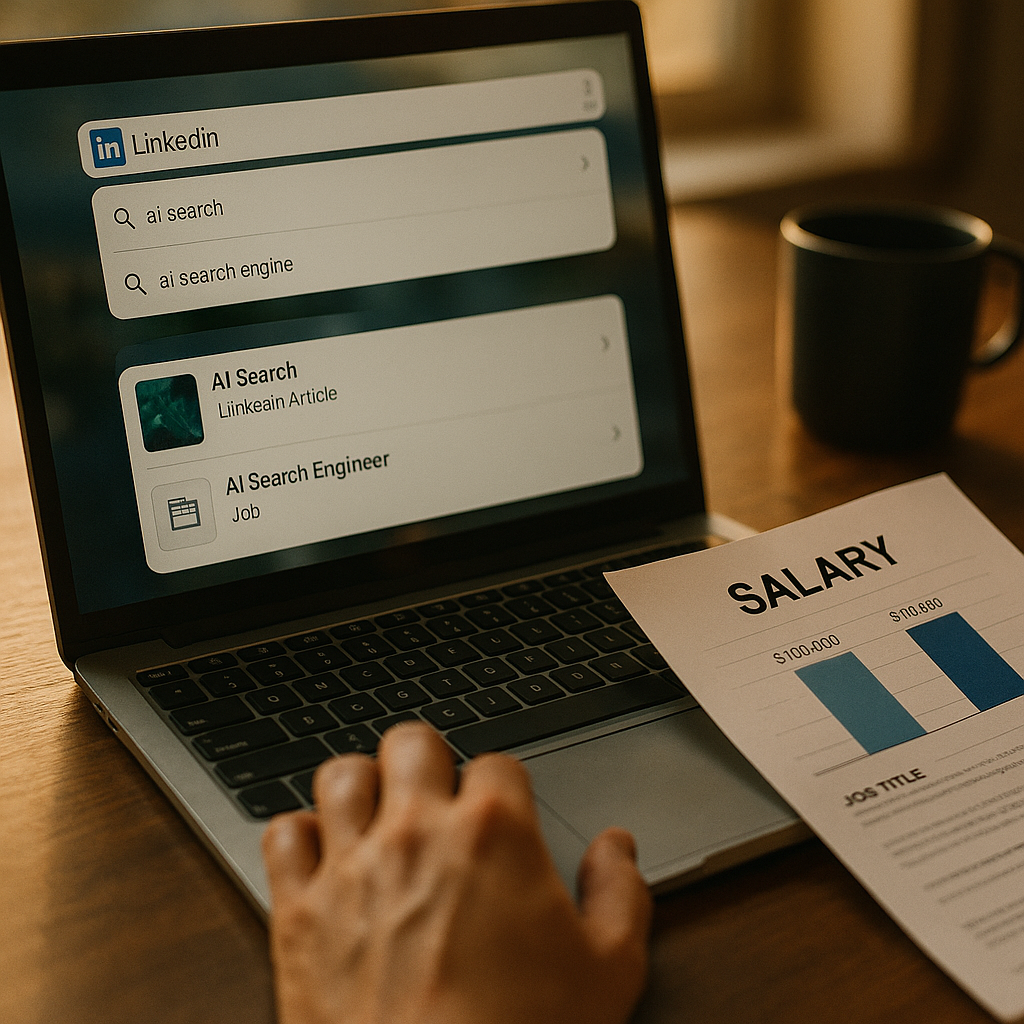
LinkedIn’s AI-enhanced search now surfaces salary data alongside job listings, company pages, and even sponsored content — and most B2B marketing teams have no idea it’s happening. If your brand runs recruitment marketing, employer branding, or thought leadership on the platform, the rules just changed twice over: how you get found, and what you’re legally required to disclose. Ignore either one, and you’re either invisible or exposed.
This isn’t a minor UX tweak. LinkedIn’s push toward AI-driven semantic search, combined with expanding pay transparency laws across US states, the EU, and UK sector guidance, means B2B brands are navigating a compliance-and-discovery collision. Get it right, and you win better talent pipelines and sharper content distribution. Get it wrong, and you’re looking at regulatory fines and content that never surfaces.
Why LinkedIn’s Search Overhaul Actually Matters to Marketers
LinkedIn has quietly rebuilt its search stack around large language models rather than pure keyword matching. That means the algorithm now interprets intent — “marketing ops lead near Chicago” returns results based on semantic meaning, not literal string matches. For brand pages, sponsored content, and newsletter placements, this shifts what “optimization” even means.
Keyword-stuffed headlines that worked in 2021 now read as noise to a model trained on context. LinkedIn’s AI weighs entity relationships: who works where, what skills cluster together, which companies are searched alongside which roles. A brand page optimized for old-school SEO but thin on structured data — job titles, verified skills, consistent naming — will simply rank lower in these new AI-mediated results.
LinkedIn’s own data shows AI-powered search features have measurably increased job seeker engagement with listings that include complete, structured information — including pay ranges. Incomplete listings are the new penalty box.
This mirrors what’s happening across other platforms. Just as Instagram’s AI discovery changes forced brands to rethink Reels structure, LinkedIn’s search shift forces B2B teams to rethink how company and job content gets built from the ground up. The common thread: platforms are rewarding structured, complete, verifiable data over clever copywriting.
What “AI-Enhanced” Actually Changes in Practice
- Search results now favor profiles and pages with complete, verified fields over sparse ones with heavy keyword density.
- Job postings with salary ranges, benefits detail, and skill tags surface higher in both search and AI-generated recommendation feeds.
- Collaborative content and thought leadership pieces get pulled into AI Overview-style summaries, meaning your framing needs to answer questions directly, not just rank for terms.
- Company pages tied to consistent, structured employee data (titles, skills, tenure) appear more often in “people also viewed” and talent discovery modules.
Sound familiar? It’s the same pattern Google’s search products are following. Our team broke down the parallel shift in AI Mode and Ask Ad Manager — the throughline across platforms is that structured, transparent data now outperforms keyword tricks.
The Salary Range Mandate Isn’t Optional Anymore
Here’s the part that should worry compliance and legal teams as much as marketing: LinkedIn now requires or strongly nudges pay range disclosure on job postings in jurisdictions where salary transparency laws apply — and that list keeps growing. Colorado started it. New York, California, Washington, and Illinois followed. The EU’s Pay Transparency Directive requires member states to implement disclosure rules, with enforcement dates rolling out across the bloc.
For B2B brands running recruitment marketing or employer branding through LinkedIn, this means every sponsored job post, every “we’re hiring” LinkedIn Live, every collaborative article mentioning open roles needs a compliance check before it goes live. Not after. Before.
Why does this matter beyond legal risk? Because LinkedIn’s algorithm is now using pay-range completeness as a ranking signal. A job post without a salary range doesn’t just risk a fine in a covered jurisdiction — it also underperforms in discovery, full stop. Compliance and visibility have become the same lever.
Brands treating salary disclosure as a legal checkbox are missing the bigger picture: pay transparency is now a discoverability input, not just a risk-avoidance measure.
Where Brands Get This Wrong
Three recurring mistakes show up across B2B marketing teams:
- Treating salary ranges as a one-time template. Ranges need to reflect actual, current pay bands per role and location — not a generic placeholder copied across postings. Regulators in states like California have specifically flagged “good faith range” violations where the posted range didn’t match what was actually offered.
- Assuming remote postings dodge the rules. If a remote role can be filled by someone in a covered state or EU country, the disclosure requirement often still applies. Geography-blind hiring doesn’t mean geography-blind compliance.
- Letting agency partners post without oversight. If your recruitment marketing agency or employer branding partner manages your LinkedIn job content, you still own the compliance risk. Audit their posting workflow the same way you’d audit an influencer contract for FTC disclosure — because functionally, it’s the same exposure.
Regulatory guidance on this continues to evolve; the FTC and state labor departments are the authoritative sources, and legal counsel should sign off on templates before any wide rollout.
Building the Compliance-and-Discovery Playbook
So how does a mid-size or enterprise B2B brand actually operationalize this? Start by treating LinkedIn content — job posts, company updates, sponsored articles, newsletter placements — as a single governed workflow rather than separate marketing and HR silos.
Step one: audit your current LinkedIn footprint. Pull every active job posting, sponsored content piece, and newsletter sponsorship. Check which ones mention compensation, benefits, or role scope. Flag anything vague or missing a range in a covered jurisdiction.
Step two: build a structured data template. This isn’t just a legal document — it’s an SEO asset now. Include role title (standardized against LinkedIn’s skill taxonomy), location, salary band, key skills, and a plain-language summary answering “what does this job actually do.” AI search rewards clarity over cleverness.
Step three: centralize sign-off between legal, HR, and marketing. The days of marketing publishing employer brand content without HR/legal review are over. Build a lightweight approval gate — even a shared checklist — so nothing goes live without a compliance pass.
Step four: extend the audit to collaborative and sponsored content. If your brand contributes to LinkedIn Collaborative Articles or sponsors a newsletter that touches hiring, compensation, or career topics, those pieces need the same scrutiny. We’ve covered how to structure this kind of content in our collaborative articles playbook and in the broader AI search and collaborative content guide.
Step five: monitor performance by structured-data completeness, not just engagement. Track which postings with complete salary/skill data outperform sparse ones in impressions and applicant quality. Use that data internally to make the compliance case to leadership — it’s not just risk mitigation, it’s a performance lever.
Sponsored Content and Newsletters Face the Same Scrutiny
It’s not just job postings. LinkedIn’s AI search increasingly indexes sponsored newsletters and thought leadership the same way it indexes profiles — by structured relevance signals. If your brand runs a sponsored newsletter touching career growth, compensation trends, or hiring practices, expect the same discoverability logic to apply. Our newsletter sponsorship playbook for finance brands and the parallel general B2B newsletter guide both flag compensation-adjacent content as a growing compliance touchpoint, not just a content category.
Third-party data backs up the stakes here. eMarketer has tracked rising B2B ad spend on LinkedIn even as CPMs climb, meaning brands can’t afford to have content quietly deprioritized by algorithm changes they didn’t budget for. Meanwhile, platforms like Sprout Social report growing employer-brand engagement tied directly to transparency signals — pay ranges, benefits clarity, DEI data — reinforcing that this is now a two-front issue: legal exposure and content performance.
Risk Mitigation Checklist Before You Post
- Confirm which jurisdictions your target candidates or audience sit in, and check current disclosure requirements for each.
- Verify salary ranges reflect actual current pay bands, reviewed within the last quarter.
- Standardize job titles against LinkedIn’s taxonomy to improve AI search matching.
- Require legal/HR sign-off on any sponsored content, newsletter, or collaborative article referencing compensation or hiring.
- Document your review process — regulators and platform audits both favor brands that can show a consistent workflow, not ad hoc fixes.
None of this needs to be complicated. It needs to be consistent, documented, and owned by someone specific — not split across three teams hoping the others caught it.
For deeper background on LinkedIn’s platform mechanics, LinkedIn for Business publishes updated guidance as features roll out, and it’s worth checking before every quarterly content plan.
The Bottom Line for Brand Teams
Treat LinkedIn’s AI search and salary disclosure rules as one workflow, not two separate compliance chores. Build the audit now, assign clear ownership, and you’ll turn a regulatory headache into a discoverability advantage before competitors catch up.
FAQs
Does LinkedIn require salary ranges on all job postings?
No. LinkedIn requires or strongly encourages salary range disclosure based on the jurisdiction where the role is located or where a remote candidate could be based, following state and regional pay transparency laws. Brands should check current requirements for each jurisdiction before posting, since rules vary and continue to expand.
How does LinkedIn’s AI search actually affect content ranking?
LinkedIn’s AI search interprets semantic intent and structured data rather than relying solely on keyword matching. Job posts, company pages, and sponsored content with complete, verified information — including salary ranges, standardized titles, and skill tags — tend to surface higher in search and recommendation modules than sparse or keyword-stuffed listings.
Who is responsible for compliance if an agency manages our LinkedIn job postings?
The hiring brand typically retains legal responsibility for compliance, even when an agency or employer branding partner manages the posting workflow. Brands should audit agency processes and build sign-off checkpoints into contracts, similar to how influencer disclosure compliance is managed.
Does this affect sponsored content and newsletters, not just job listings?
Yes. LinkedIn’s AI-driven discovery increasingly applies similar structured-data logic to sponsored newsletters, collaborative articles, and thought leadership touching hiring or compensation topics. These formats should go through the same compliance review as direct job postings.
What’s the first step for a brand that hasn’t audited its LinkedIn compliance yet?
Start by pulling every active job posting, sponsored piece, and newsletter placement that references compensation, benefits, or hiring. Flag anything missing a salary range in a covered jurisdiction, then build a standardized template reviewed jointly by legal, HR, and marketing before republishing.
Top Influencer Marketing Agencies
The leading agencies shaping influencer marketing in 2026
Agencies ranked by campaign performance, client diversity, platform expertise, proven ROI, industry recognition, and client satisfaction. Assessed through verified case studies, reviews, and industry consultations.
Moburst

-
2

The Shelf
Boutique Beauty & Lifestyle Influencer AgencyA data-driven boutique agency specializing exclusively in beauty, wellness, and lifestyle influencer campaigns on Instagram and TikTok. Best for brands already focused on the beauty/personal care space that need curated, aesthetic-driven content.Clients: Pepsi, The Honest Company, Hims, Elf Cosmetics, Pure LeafVisit The Shelf → -
3

Audiencly
Niche Gaming & Esports Influencer AgencyA specialized agency focused exclusively on gaming and esports creators on YouTube, Twitch, and TikTok. Ideal if your campaign is 100% gaming-focused — from game launches to hardware and esports events.Clients: Epic Games, NordVPN, Ubisoft, Wargaming, Tencent GamesVisit Audiencly → -
4

Viral Nation
Global Influencer Marketing & Talent AgencyA dual talent management and marketing agency with proprietary brand safety tools and a global creator network spanning nano-influencers to celebrities across all major platforms.Clients: Meta, Activision Blizzard, Energizer, Aston Martin, WalmartVisit Viral Nation → -
5

The Influencer Marketing Factory
TikTok, Instagram & YouTube CampaignsA full-service agency with strong TikTok expertise, offering end-to-end campaign management from influencer discovery through performance reporting with a focus on platform-native content.Clients: Google, Snapchat, Universal Music, Bumble, YelpVisit TIMF → -
6

NeoReach
Enterprise Analytics & Influencer CampaignsAn enterprise-focused agency combining managed campaigns with a powerful self-service data platform for influencer search, audience analytics, and attribution modeling.Clients: Amazon, Airbnb, Netflix, Honda, The New York TimesVisit NeoReach → -
7

Ubiquitous
Creator-First Marketing PlatformA tech-driven platform combining self-service tools with managed campaign options, emphasizing speed and scalability for brands managing multiple influencer relationships.Clients: Lyft, Disney, Target, American Eagle, NetflixVisit Ubiquitous → -
8

Obviously
Scalable Enterprise Influencer CampaignsA tech-enabled agency built for high-volume campaigns, coordinating hundreds of creators simultaneously with end-to-end logistics, content rights management, and product seeding.Clients: Google, Ulta Beauty, Converse, AmazonVisit Obviously →