


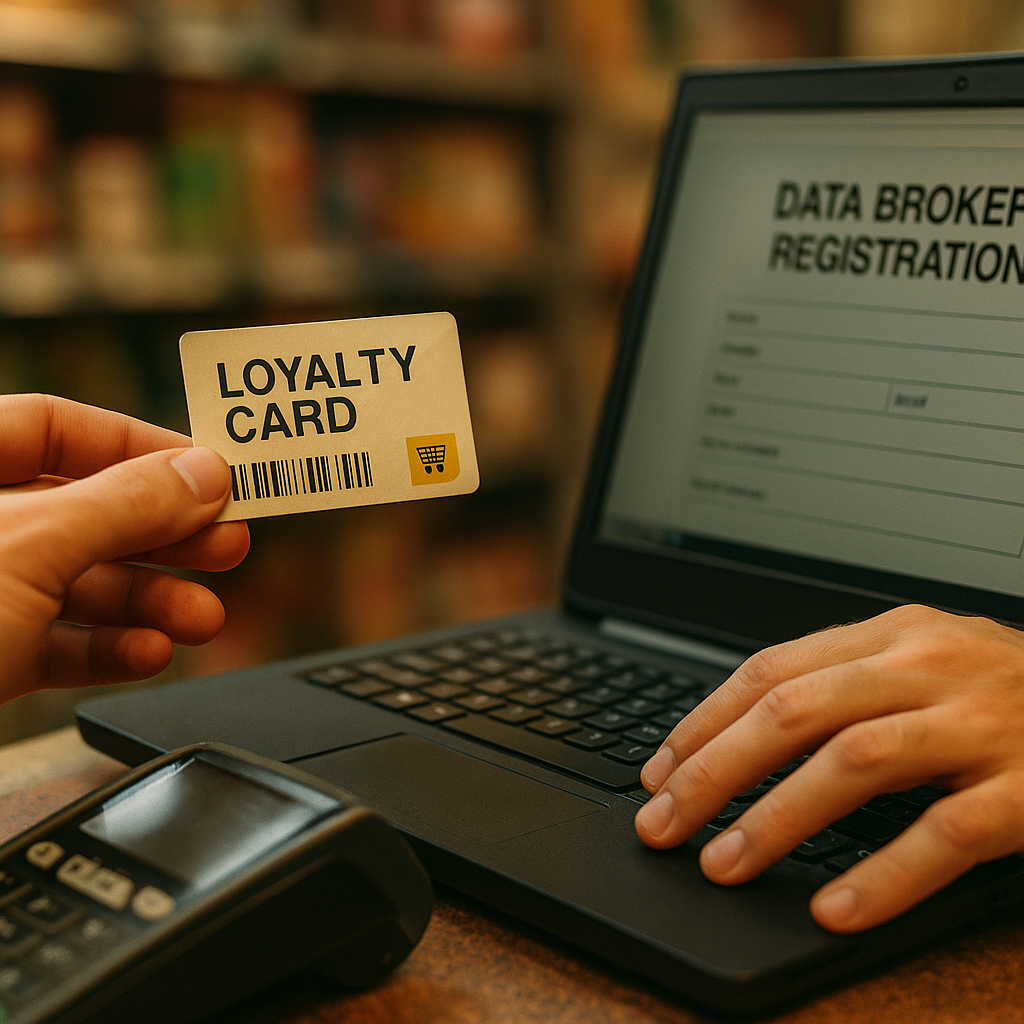
Vermont, California, Oregon, and a growing list of states now require companies that sell consumer data to register as data brokers, with penalties running into six figures for non-compliance. If your loyalty program hands member profiles to creator affiliate platforms for lookalike targeting or reward personalization, you may already qualify. Most brand and legal teams have never checked.
That gap is the subject of this piece: how loyalty program data sharing with creator affiliate platforms intersects with state data broker registration laws, and why the audit trail almost nobody has built could become a serious liability.
The Overlooked Intersection Nobody Budgeted For
Loyalty programs and creator affiliate platforms live in different departments. Loyalty sits with CRM or retention marketing. Affiliate and influencer programs sit with performance marketing or brand. The data broker question falls into the gap between them, and that’s exactly why it gets missed.
Here’s the mechanic that triggers exposure. A brand’s loyalty platform (think Salesforce Loyalty Management, Annex Cloud, or a custom stack) holds purchase history, tier status, email, and behavioral data. To power affiliate attribution or influencer-driven personalization, that data — or a derivative of it, like a hashed audience segment — gets pushed to a creator affiliate platform such as ShareASale, Impact, or a TikTok Shop affiliate integration. If the affiliate platform uses that data for its own purposes (model training, cross-brand targeting, resale to sub-networks), and money or something “of value” changes hands, several states now say that’s a data broker relationship. Full stop.
California’s Delete Act and Vermont’s data broker statute both define “sale” broadly enough to capture data transfers that marketers would never describe as a sale internally — including data shared “for consideration” like discounted platform fees or preferred placement.
Vermont was first, back in 2018. California followed with its own registry under the CCPA framework, then tightened it further with the Delete Act, which folds broker registration into a centralized deletion mechanism effective in the current compliance cycle. Oregon, Texas, and a handful of others have since passed similar statutes, each with slightly different thresholds for what counts as a “broker” and what counts as a “sale.” Nobody has harmonized these laws. That’s the whole problem.
What Counts as “Selling” Loyalty Data, Exactly?
Marketers tend to assume “selling data” means literally auctioning off a spreadsheet. The statutes don’t work that way. Under California’s framework and most copycat laws, “sale” includes disclosing personal information to a third party for monetary or other valuable consideration. That “other valuable consideration” clause is where loyalty-to-affiliate data flows get caught.
- Discounted platform fees in exchange for data access — if your creator affiliate platform reduces its take rate because you let it use loyalty segments for targeting, that’s consideration.
- Co-op marketing credits tied to data-sharing terms in the platform’s vendor agreement.
- Enhanced attribution modeling where the platform trains its matching algorithm on your loyalty behavioral data and reuses insights across its client base.
- Audience syndication for lookalike creator targeting, even if the data is hashed or pseudonymized — most state definitions of personal information still capture hashed identifiers tied to a real person.
None of that sounds like “selling data” in a boardroom deck. Legally, it can be exactly that.
Why Creator Affiliate Platforms Are a Uniquely Risky Vector
Loyalty data shared with a payment processor or an email service provider usually stays inside a tightly scoped processing agreement. Creator affiliate platforms are different animals. They exist to match brand data with creator audiences, often across dozens of client brands simultaneously. That’s the business model — network effects from aggregated data.
Which means the same platform holding your loyalty segment might be holding a competitor’s too, blending signals to improve creator-audience matching for everyone on the network. That’s standard practice for many affiliate and influencer marketplaces. It’s also precisely the kind of cross-client data reuse that data broker statutes were written to catch.
If you’ve already run a loyalty program compliance review for FTC and privacy law purposes, you’ve done half the work. The data broker angle is the piece most of those reviews skip, because broker registration is a state-level statute, not a federal privacy regime, and it gets filed under “corporate compliance” rather than “marketing compliance.” Different owner, different checklist, same underlying data flow.
Building the Audit: A Five-Step Framework
You don’t need outside counsel to run the first pass. You need a data flow map and about two weeks of dedicated time from someone who understands both the loyalty tech stack and the affiliate contract terms.
- Map every data flow from loyalty platform to affiliate/creator vendor. Include API integrations, batch exports, pixel-based sharing, and any “audience match” features baked into the affiliate platform’s dashboard. Don’t forget sub-processors — many affiliate networks route data through secondary attribution vendors.
- Pull the vendor contract and find the consideration clause. Look for reduced fee tiers, revenue share adjustments, or “enhanced service levels” tied to data access. This is your evidence of consideration, which is the trigger most teams miss.
- Check each state’s registration threshold against your data volume. Vermont has no minimum record threshold. California and Oregon apply broader “sale” definitions but focus enforcement on scale. Texas requires registration for any entity that meets its data broker definition, regardless of size, with limited exemptions.
- Cross-reference against existing DPAs. If your data processing addendum with the affiliate platform explicitly limits use to “providing services to the brand” and prohibits cross-client reuse, you may have a stronger defense. If it’s silent or permissive, that silence is your exposure. This mirrors the work outlined in our DPA guidance for affiliate commission data, which applies just as directly to loyalty contexts.
- Document a remediation path before you register (or decide not to). Registration itself isn’t the scary part — most states charge a modest annual fee. The scary part is retroactive exposure if you should have registered two years ago and didn’t. Legal teams generally want a documented rationale either way.
The real risk isn’t the registration fee. It’s the retroactive penalty exposure and the reputational fallout of a state AG inquiry landing on a loyalty program that was supposed to be your safest, most trusted customer touchpoint.
Where the Contracts Usually Fail You
Most creator affiliate platform agreements were drafted for a simpler world: brand pays commission, platform tracks clicks, everyone moves on. Data broker exposure wasn’t on anyone’s radar when these master service agreements were templated five or six years ago.
That means the standard affiliate platform contract rarely includes broker-specific indemnification, rarely restricts cross-client data reuse in writing, and almost never obligates the platform to notify you if it registers (or should register) as a broker in a way that implicates your shared data. This is the same structural blind spot we’ve flagged in vendor due-diligence work for AI-driven marketing tools generally: the contract lags the actual data behavior by years.
Push for three specific additions during your next renewal cycle:
- A clause requiring the affiliate platform to disclose any cross-client aggregation or resale of loyalty-derived data.
- An indemnification provision covering state data broker penalties tied to the platform’s use of shared data beyond the scope of your engagement.
- An audit right, allowing your compliance team to review the platform’s data handling practices at a defined cadence.
Affiliate platforms will push back on the audit right especially. Hold the line anyway. It’s a standard ask in enterprise SaaS contracts and shouldn’t be controversial for a vendor that’s serious about compliance.
The Enforcement Reality Check
Nobody has been publicly fined yet for a loyalty-to-creator-affiliate data broker violation specifically. That’s not comfort, it’s a lag. State AG offices in California and Texas have both signaled increased enforcement staffing for data broker statutes, and FTC commentary on data broker practices has grown sharper over the past two enforcement cycles. Plaintiffs’ attorneys, meanwhile, have gotten faster at spotting novel statutory theories, particularly in states with private right of action provisions.
The pattern across other creator economy compliance failures — undisclosed AI use, disclosure gaps, cross-border tax mishandling — has consistently been the same: enforcement starts slow, then a single high-profile case triggers a wave of copycat scrutiny. We’ve tracked that pattern in areas like undisclosed AI scriptwriting and whitelisted creator ad audits. Data broker registration for loyalty-affiliate data sharing looks like it’s sitting exactly where those risks sat eighteen months before enforcement caught up.
Industry data on this specific overlap is thin, which is itself telling. eMarketer and Statista both track loyalty program spend and creator affiliate market growth as separate categories; nobody’s cross-tabbing the compliance overlap yet. That’s an opportunity for brands willing to get ahead of it, and a gap for the ones who won’t notice until a subpoena arrives.
Practical Next Step
Assign one owner, this quarter, to map every loyalty-to-affiliate data flow and cross-check it against the consideration clause in your vendor contracts. If you find even one instance of data sharing tied to fee discounts or enhanced targeting, get outside counsel to assess registration exposure in Vermont, California, Oregon, and Texas before your next contract renewal locks you in for another cycle.
Frequently Asked Questions
Does sharing loyalty program data with a creator affiliate platform automatically make my brand a “data broker”?
Not automatically. It depends on whether the data transfer involves monetary or other valuable consideration and whether your brand meets the specific state’s definition of a data broker, which often includes revenue thresholds or the proportion of business derived from data sales. A contract audit is the only way to know for certain.
What states currently require data broker registration?
Vermont, California, Oregon, and Texas have active registration requirements as of the current compliance cycle, with other states considering similar legislation. Each defines “broker” and “sale” slightly differently, so multi-state brands need a state-by-state review rather than a single national policy.
Is hashed or pseudonymized loyalty data still a compliance risk?
Generally yes. Most state statutes define personal information broadly enough to include hashed identifiers that can be linked back to an individual, especially when combined with other data points the affiliate platform holds. Hashing reduces some privacy risk but rarely eliminates broker registration exposure entirely.
What penalties apply if a brand should have registered as a data broker and didn’t?
Penalties vary by state but can include daily fines for continued non-registration, retroactive assessments, and in some states, private rights of action that open the door to consumer litigation. The financial exposure often exceeds the modest annual registration fee by a wide margin.
How does this connect to existing loyalty program compliance work?
Data broker registration is usually a blind spot in loyalty program compliance reviews, which tend to focus on FTC disclosure rules and general privacy law rather than state-specific broker statutes. Brands that have already completed a loyalty program compliance audit should treat this as a targeted add-on, not a duplicate effort.
Frequently Asked Questions
Does sharing loyalty program data with a creator affiliate platform automatically make my brand a “data broker”?
Not automatically. It depends on whether the data transfer involves monetary or other valuable consideration and whether your brand meets the specific state’s definition of a data broker, which often includes revenue thresholds or the proportion of business derived from data sales. A contract audit is the only way to know for certain.
What states currently require data broker registration?
Vermont, California, Oregon, and Texas have active registration requirements as of the current compliance cycle, with other states considering similar legislation. Each defines “broker” and “sale” slightly differently, so multi-state brands need a state-by-state review rather than a single national policy.
Is hashed or pseudonymized loyalty data still a compliance risk?
Generally yes. Most state statutes define personal information broadly enough to include hashed identifiers that can be linked back to an individual, especially when combined with other data points the affiliate platform holds. Hashing reduces some privacy risk but rarely eliminates broker registration exposure entirely.
What penalties apply if a brand should have registered as a data broker and didn’t?
Penalties vary by state but can include daily fines for continued non-registration, retroactive assessments, and in some states, private rights of action that open the door to consumer litigation. The financial exposure often exceeds the modest annual registration fee by a wide margin.
How does this connect to existing loyalty program compliance work?
Data broker registration is usually a blind spot in loyalty program compliance reviews, which tend to focus on FTC disclosure rules and general privacy law rather than state-specific broker statutes. Brands that have already completed a loyalty program compliance audit should treat this as a targeted add-on, not a duplicate effort.
Top Influencer Marketing Agencies
The leading agencies shaping influencer marketing in 2026
Agencies ranked by campaign performance, client diversity, platform expertise, proven ROI, industry recognition, and client satisfaction. Assessed through verified case studies, reviews, and industry consultations.
Moburst

-
2

The Shelf
Boutique Beauty & Lifestyle Influencer AgencyA data-driven boutique agency specializing exclusively in beauty, wellness, and lifestyle influencer campaigns on Instagram and TikTok. Best for brands already focused on the beauty/personal care space that need curated, aesthetic-driven content.Clients: Pepsi, The Honest Company, Hims, Elf Cosmetics, Pure LeafVisit The Shelf → -
3

Audiencly
Niche Gaming & Esports Influencer AgencyA specialized agency focused exclusively on gaming and esports creators on YouTube, Twitch, and TikTok. Ideal if your campaign is 100% gaming-focused — from game launches to hardware and esports events.Clients: Epic Games, NordVPN, Ubisoft, Wargaming, Tencent GamesVisit Audiencly → -
4

Viral Nation
Global Influencer Marketing & Talent AgencyA dual talent management and marketing agency with proprietary brand safety tools and a global creator network spanning nano-influencers to celebrities across all major platforms.Clients: Meta, Activision Blizzard, Energizer, Aston Martin, WalmartVisit Viral Nation → -
5

The Influencer Marketing Factory
TikTok, Instagram & YouTube CampaignsA full-service agency with strong TikTok expertise, offering end-to-end campaign management from influencer discovery through performance reporting with a focus on platform-native content.Clients: Google, Snapchat, Universal Music, Bumble, YelpVisit TIMF → -
6

NeoReach
Enterprise Analytics & Influencer CampaignsAn enterprise-focused agency combining managed campaigns with a powerful self-service data platform for influencer search, audience analytics, and attribution modeling.Clients: Amazon, Airbnb, Netflix, Honda, The New York TimesVisit NeoReach → -
7

Ubiquitous
Creator-First Marketing PlatformA tech-driven platform combining self-service tools with managed campaign options, emphasizing speed and scalability for brands managing multiple influencer relationships.Clients: Lyft, Disney, Target, American Eagle, NetflixVisit Ubiquitous → -
8

Obviously
Scalable Enterprise Influencer CampaignsA tech-enabled agency built for high-volume campaigns, coordinating hundreds of creators simultaneously with end-to-end logistics, content rights management, and product seeding.Clients: Google, Ulta Beauty, Converse, AmazonVisit Obviously →