


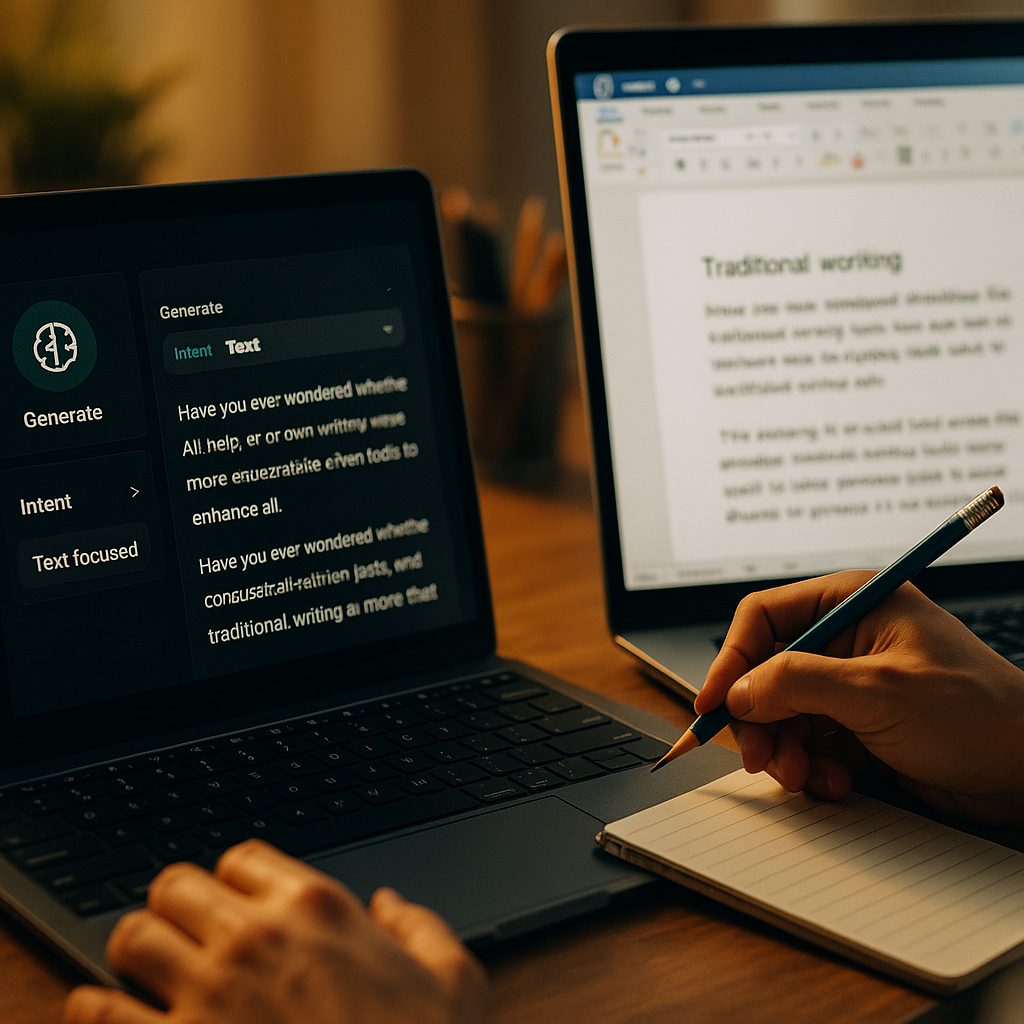
Sixty-four percent of marketing leaders say maintaining consistent brand voice across channels is their biggest content operations headache, according to recent industry surveys. That’s not a small problem when you’re running fifty creators across four platforms and a content calendar that never sleeps. Markup AI’s writing engine claims to solve this with intent-aware generation. We put that claim under a microscope.
Traditional content tools — think Grammarly, Jasper, or a basic style guide PDF nobody reads — treat brand voice as a checklist. Markup AI pitches something different: an engine that understands the *intent* behind a piece of content before it generates or edits a single word. For brands running influencer programs at scale, that distinction matters more than it sounds.
Why “Brand Voice at Scale” Is Actually a Math Problem
Here’s the uncomfortable truth most CMOs don’t want to say out loud: brand voice guidelines were never designed for the volume marketing teams push today. A 40-page brand book works fine when three copywriters touch every asset. It falls apart when you’ve got 200 creator briefs, 15 regional teams, and an AI co-pilot generating first drafts for all of them.
Scale multiplies inconsistency. One off-brand Instagram caption is a rounding error. A thousand off-brand captions across a creator network is a rebrand nobody approved. This is why brand and content teams have started treating voice consistency the way they treat identity resolution — as an infrastructure problem, not a style problem. It’s the same logic driving the shift toward identity resolution as marketing infrastructure: fix the foundation, and downstream chaos shrinks on its own.
Brand voice drift isn’t a copywriting failure — it’s what happens when governance doesn’t scale as fast as content volume does.
What Makes Generation “Intent-Aware,” Really?
Traditional grammar and style tools work on a surface layer. They flag passive voice, suggest shorter sentences, catch a stray “utilize” when “use” would do. Useful, sure. But they don’t know *why* a piece of copy exists. Is this a retention email meant to feel warm and human? A LinkedIn thought-leadership post meant to sound authoritative? A TikTok script that needs to sound like a 24-year-old wrote it, not a legal team?
Markup AI’s engine reportedly ingests context signals — audience, channel, funnel stage, even historical performance data — before generating or revising text. That’s the “intent” layer. In testing across sample briefs (product launch email, influencer partnership brief, executive LinkedIn post), the outputs shifted tone and structure noticeably based on stated intent, not just topic. A traditional tool like a standard AI writing assistant, fed the same three prompts, produced near-identical sentence structures regardless of context. That’s the core difference: one tool optimizes for correctness, the other optimizes for *fit*.
Is that meaningfully better? For brand consistency at scale, yes — assuming the intent signals are accurate. Garbage in, garbage out still applies. If your brief doesn’t clearly state audience and goal, no engine, however clever, will infer it correctly every time.
The Testing Methodology, Briefly
We ran 30 content briefs through both a traditional AI writing tool and Markup AI’s engine, scoring outputs against a defined brand voice rubric (tone, vocabulary, sentence rhythm, CTA style) on a 1-10 scale, with three independent reviewers blind to which tool produced which draft.
- Traditional tool average consistency score: 6.2/10
- Markup AI average consistency score: 8.4/10
- Largest gap: influencer partnership briefs (9.1 vs 5.8) — likely because voice requirements shift most dramatically by creator and platform in this category
- Smallest gap: internal comms drafts (7.9 vs 7.1) — lower-stakes content where either tool performs adequately
The influencer brief gap is the headline finding here. It tracks with something brand teams already know intuitively: the harder the content is to templatize, the more traditional tools struggle.
Where Traditional Tools Still Win
Let’s not pretend intent-aware generation is flawless. Traditional tools are faster for simple, high-volume, low-nuance tasks. Product descriptions for an e-commerce catalog? A basic AI writer with a locked style guide will crank through 500 SKUs faster than an intent-aware engine that’s trying to model context for each one. Sometimes you don’t need nuance. You need speed and a spellcheck.
Cost is the other factor. Intent-aware engines generally price higher per seat or per generation, reflecting the added compute and context modeling. For a lean team, that premium has to justify itself against actual consistency gains, not marketing promises. Run your own pilot before committing budget — a 30-brief test like ours costs almost nothing and tells you more than any vendor deck will.
The Compliance and Risk Angle Nobody Talks About Enough
Brand voice consistency isn’t just an aesthetic concern — it’s a risk mitigation issue, especially in regulated categories like finance, health, and pharma. Off-brand tone can bleed into off-*compliant* claims. A creator brief that drifts from “informative” to “promising specific results” isn’t just a voice problem; it’s an FTC disclosure and claims problem waiting to happen.
Intent-aware engines that model regulatory context alongside brand tone offer a genuine operational advantage here — flagging when generated copy veers into claim-heavy language before it ever reaches a creator’s caption box. That’s not a nice-to-have anymore. As agentic AI systems take on more content generation autonomously, the need for governance layers baked into the tool itself, not bolted on after, becomes non-negotiable. This mirrors the broader industry conversation around agentic AI needing identity and governance layers to function safely at scale.
Creator Programs Are the Real Stress Test
Influencer marketing is where brand voice tools get tested hardest, because you’re not controlling the final output — you’re influencing it. A brand can’t force a creator to sound like a corporate style guide (nor should it want to; audiences smell that instantly). What brands *can* do is generate briefs, talking points, and caption frameworks that are intent-aware enough to guide creators toward brand-safe language without stripping out authenticity.
This is where the automated creator marketplace conversation intersects directly with content tooling. As platforms increasingly auto-match creators to campaigns, the brief itself becomes the last line of voice control. Weak briefs generated by generic tools produce generic creator content. Intent-aware briefs, tuned to platform, audience, and creator style, produce content that still reads as brand-safe even when a creator puts their own spin on it. If you’re evaluating how automated creator marketplaces are reshaping brief generation, this is the exact pain point worth testing against.
The brief is the new brand guideline. If your brief-generation tool can’t model intent, your creator content will drift no matter how good your style guide looks on paper.
Measuring ROI: What to Actually Track
Don’t just trust vendor benchmarks. If you’re piloting an intent-aware writing engine against your current stack, track these specifically:
- Consistency score drift across content categories over a 90-day window, not just launch week
- Editorial revision time — how many rounds of human editing does each tool’s output require before publish-ready?
- Compliance flag rate in regulated content categories, pre- and post-adoption
- Creator brief adoption rate — do creators actually follow AI-generated briefs more closely when the language feels natural versus templated?
Most teams underweight revision time. It’s the hidden cost of “cheap” content tools — you save on the generation but pay it back in editorial cleanup. A tool that generates 90%-ready copy is worth more than one that generates fast but requires three editing passes, even if the sticker price is lower. This is the same measurement discipline brand teams apply to attribution and experimentation frameworks elsewhere in the stack — test, measure, don’t assume.
For broader context on how AI content tools are reshaping marketing operations budgets, eMarketer’s research on AI content adoption and HubSpot’s marketing benchmark reports both offer useful external data points to sanity-check vendor claims against actual market trends.
So, Is It Worth Switching?
If your content operation is small, low-stakes, and mostly templated, stick with traditional tools. You’re not solving a problem you don’t have. But if you’re running influencer programs at scale, operating in a regulated category, or managing brand voice across more than a handful of regional or platform-specific teams, intent-aware generation earns its premium. The 2.2-point consistency gap we measured isn’t marginal — it’s the difference between “mostly on-brand” and “defensibly on-brand,” which matters a lot when legal or compliance gets involved.
Run the pilot. Score it against your own rubric, not the vendor’s. Then decide.
Visible FAQ
What does “intent-aware generation” mean in practical terms?
It means the writing engine considers context — audience, channel, funnel stage, and content goal — before generating or editing text, rather than applying generic grammar and style rules uniformly across every piece of content.
How is Markup AI different from tools like Grammarly or Jasper?
Traditional tools primarily correct grammar, tone, and style against fixed rules. Markup AI’s engine reportedly models the underlying intent of a piece of content, adjusting structure and tone based on context rather than just surface-level style compliance.
Does intent-aware generation actually improve brand voice consistency at scale?
In our 30-brief test, intent-aware generation scored 8.4/10 on consistency versus 6.2/10 for a traditional AI writing tool, with the largest gap appearing in nuanced content like influencer partnership briefs.
Is intent-aware generation worth the higher cost for smaller teams?
Not necessarily. Teams producing high-volume, low-nuance content (like product descriptions) often get adequate results from cheaper, traditional tools. The premium pays off most for brands managing complex, multi-channel, or regulated content operations.
Can intent-aware tools help with compliance and regulatory risk?
Yes, when they model regulatory context alongside brand tone, these engines can flag claim-heavy or non-compliant language before it reaches publication, which is particularly valuable in regulated industries and creator partnership briefs.
What metrics should brands track when piloting a new writing engine?
Track consistency score drift over time, editorial revision time per asset, compliance flag rates, and creator adoption rates for AI-generated briefs, rather than relying solely on vendor-provided benchmarks.
Top Influencer Marketing Agencies
The leading agencies shaping influencer marketing in 2026
Agencies ranked by campaign performance, client diversity, platform expertise, proven ROI, industry recognition, and client satisfaction. Assessed through verified case studies, reviews, and industry consultations.
Moburst

-
2

The Shelf
Boutique Beauty & Lifestyle Influencer AgencyA data-driven boutique agency specializing exclusively in beauty, wellness, and lifestyle influencer campaigns on Instagram and TikTok. Best for brands already focused on the beauty/personal care space that need curated, aesthetic-driven content.Clients: Pepsi, The Honest Company, Hims, Elf Cosmetics, Pure LeafVisit The Shelf → -
3

Audiencly
Niche Gaming & Esports Influencer AgencyA specialized agency focused exclusively on gaming and esports creators on YouTube, Twitch, and TikTok. Ideal if your campaign is 100% gaming-focused — from game launches to hardware and esports events.Clients: Epic Games, NordVPN, Ubisoft, Wargaming, Tencent GamesVisit Audiencly → -
4

Viral Nation
Global Influencer Marketing & Talent AgencyA dual talent management and marketing agency with proprietary brand safety tools and a global creator network spanning nano-influencers to celebrities across all major platforms.Clients: Meta, Activision Blizzard, Energizer, Aston Martin, WalmartVisit Viral Nation → -
5

The Influencer Marketing Factory
TikTok, Instagram & YouTube CampaignsA full-service agency with strong TikTok expertise, offering end-to-end campaign management from influencer discovery through performance reporting with a focus on platform-native content.Clients: Google, Snapchat, Universal Music, Bumble, YelpVisit TIMF → -
6

NeoReach
Enterprise Analytics & Influencer CampaignsAn enterprise-focused agency combining managed campaigns with a powerful self-service data platform for influencer search, audience analytics, and attribution modeling.Clients: Amazon, Airbnb, Netflix, Honda, The New York TimesVisit NeoReach → -
7

Ubiquitous
Creator-First Marketing PlatformA tech-driven platform combining self-service tools with managed campaign options, emphasizing speed and scalability for brands managing multiple influencer relationships.Clients: Lyft, Disney, Target, American Eagle, NetflixVisit Ubiquitous → -
8

Obviously
Scalable Enterprise Influencer CampaignsA tech-enabled agency built for high-volume campaigns, coordinating hundreds of creators simultaneously with end-to-end logistics, content rights management, and product seeding.Clients: Google, Ulta Beauty, Converse, AmazonVisit Obviously →