


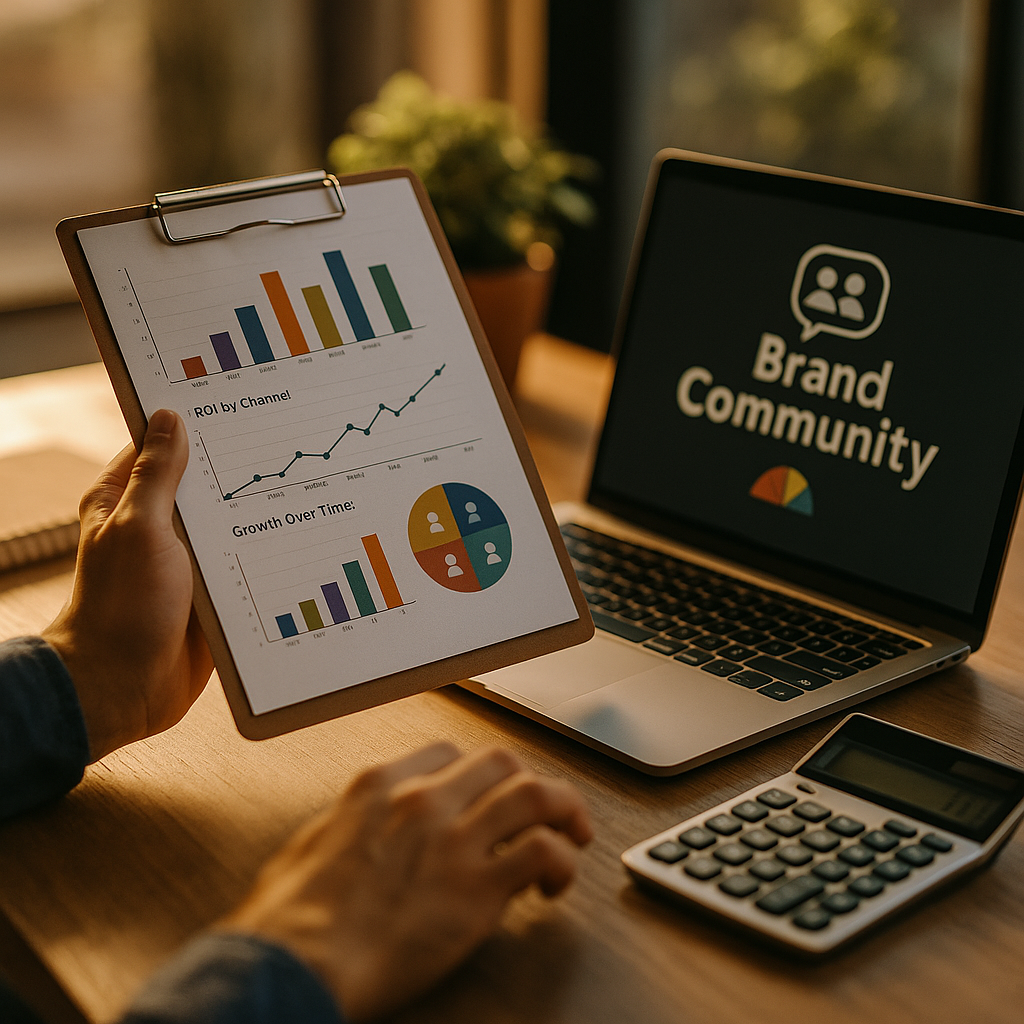
Measuring the ROI of a brand community program is crucial for justifying investments and guiding strategic decisions in 2025. But with intangibles like loyalty and engagement in play, quantifying impact isn’t always simple. This article introduces a proven framework that empowers marketers and community managers to confidently evaluate and optimize their brand community’s true value.
Why Measuring Brand Community ROI Matters in 2025
As brands invest more heavily in cultivating engaged online communities, proving their tangible business value has moved from a “nice-to-have” to an imperative. In 2025, businesses are reporting up to 23% higher retention from active brand communities (Brand Community Benchmarking, 2024). Stakeholders increasingly demand data-driven justifications for these investments, making rigorous ROI measurement essential.
Beyond financial accountability, measuring ROI helps you:
- Identify which community initiatives drive real business outcomes
- Secure continued executive support and budget
- Spot optimization opportunities and allocate resources wisely
- Demonstrate the unique contributions brand communities make to loyalty and advocacy
Core Metrics for Brand Community Impact Assessment
No single metric captures a brand community’s performance. A holistic impact assessment combines quantitative and qualitative indicators that map to your broader marketing and customer experience goals. In 2025, brands typically track:
- Engagement Rate: Active participation, contributions, and event attendance
- Retention & Churn Reduction: Percentage of community members with repeat purchases or longer customer lifespan
- Net Promoter Score (NPS): Advocacy levels compared to non-members
- User-Generated Content Volume: Product reviews, discussions, and problem-solving threads
- Referral and Upsell Rates: Community-driven lead generation or expanded purchases
Blend these with qualitative data, such as member testimonials and sentiment analysis, to present a well-rounded picture.
A Step-by-Step Framework for Measuring ROI in Brand Communities
Evaluating brand community program ROI demands a rigorous yet adaptable framework. Follow these steps to ensure your approach aligns with business goals and delivers credible results:
- Define Business Objectives: Tie community activities to concrete business outcomes, such as increased retention, reduced support costs, or greater brand advocacy.
- Select Key Performance Indicators (KPIs): Choose metrics that directly align with your objectives. For example, if reducing churn is a goal, track customer lifespan and renewal rates among community members.
- Establish Benchmarks: Gather baseline data from before your community program’s launch or from similar customer segments with no community involvement. This isolates genuine impact.
- Track Both Quantitative and Qualitative Results: Use analytics platforms and member feedback surveys to gather comprehensive data over time.
- Measure Incremental Impact: Compare the performance of community members against non-members or previous periods. Use A/B tests or cohort analysis for rigorous insights.
- Calculate ROI: Deduct community program costs (platform, staffing, incentives) from the quantified impact (increased sales, saved support hours, reduced churn).
This iterative approach enables you to refine tactics, demonstrate progress, and attribute results clearly.
Attributing Revenue and Cost Savings to Community Programs
One of the greatest challenges lies in linking community activities directly to revenue or cost-saving outcomes. In 2025, companies use sophisticated attribution models, often blending linear, time decay, or first/last-touch methods for accuracy. Specifically:
- Revenue Attribution: Tag members in your CRM and track their purchase journey from community participation to conversion or upsell. Analyze member CLVs versus the general customer base.
- Cost Saving Attribution: Quantify cases where peer-to-peer support resolved issues that would have otherwise required a customer service agent, then calculate average cost-per-ticket avoided.
Sophisticated analytics platforms allow for automated tracking and reporting, helping you present clear business cases at the executive level. Cross-reference quantitative results with qualitative benefits, such as improved brand sentiment or crisis resilience, to deliver a more complete ROI narrative.
Optimizing Brand Community Programs for Maximum ROI
Measuring ROI is only valuable when it fuels continuous improvement. Use your findings to spot program strengths and pain points:
- Double down on high-performing content formats, events, or challenges that foster engagement
- Address drop-off points or periods of stagnant participation
- Gather direct feedback from members to shape future initiatives
- Regularly refresh benchmarks as your community and business goals evolve in 2025
Best-in-class brands treat ROI measurement as an ongoing part of their brand community strategy. This keeps the program accountable, agile, and precisely tuned for ever-greater business impact.
Harnessing Third-Party Tools and Expert Insights to Strengthen Measurement
Leverage reputable third-party community management and analytics tools to ensure robust, unbiased measurement. Modern platforms like CMX Hub and Higher Logic offer integrated ROI dashboards, benchmarking features, and reporting tailored for brand communities in 2025. Consult with community management thought leaders or certified strategists to validate your methodology and keep your measurement practices current as the field evolves.
Incorporate learnings from recent industry research and published case studies to calibrate your expectations and discover innovative ways to push your community’s ROI even higher.
Conclusion: The Path to Higher Brand Community ROI Starts with Rigorous Measurement
Effective ROI measurement is the engine behind high-impact brand community programs. By combining robust frameworks, targeted KPIs, and advanced attribution methods, you’ll reveal—and multiply—the business value your community delivers. Take a proactive, data-driven stance to optimize investments, boost retention, and position your brand community as an essential pillar for growth in 2025.
FAQs on Measuring the ROI of Brand Community Programs
-
How often should I assess brand community ROI?
Measure ROI quarterly to capture meaningful trends, align with business cycles, and ensure timely action on insights. -
What’s the most important metric for brand community ROI?
There’s no single “most important” metric—combine engagement data, qualitative feedback, and business outcomes (like retention or sales) for a full view. -
Can small companies benefit from measuring community ROI?
Absolutely—even smaller communities can use these frameworks to optimize resources, justify spend, and foster organic growth. -
What tools help automate ROI measurement?
Platforms like Higher Logic, Vanilla Forums, and Salesforce Communities provide integrated analytics, reporting, and benchmarking for brand community managers. -
How do I link community engagement to revenue?
Tag users in your CRM, track activity and conversion patterns, and compare purchase behavior between engaged members and non-members.
Top Influencer Marketing Agencies
The leading agencies shaping influencer marketing in 2026
Agencies ranked by campaign performance, client diversity, platform expertise, proven ROI, industry recognition, and client satisfaction. Assessed through verified case studies, reviews, and industry consultations.
Moburst

-
2

The Shelf
Boutique Beauty & Lifestyle Influencer AgencyA data-driven boutique agency specializing exclusively in beauty, wellness, and lifestyle influencer campaigns on Instagram and TikTok. Best for brands already focused on the beauty/personal care space that need curated, aesthetic-driven content.Clients: Pepsi, The Honest Company, Hims, Elf Cosmetics, Pure LeafVisit The Shelf → -
3

Audiencly
Niche Gaming & Esports Influencer AgencyA specialized agency focused exclusively on gaming and esports creators on YouTube, Twitch, and TikTok. Ideal if your campaign is 100% gaming-focused — from game launches to hardware and esports events.Clients: Epic Games, NordVPN, Ubisoft, Wargaming, Tencent GamesVisit Audiencly → -
4

Viral Nation
Global Influencer Marketing & Talent AgencyA dual talent management and marketing agency with proprietary brand safety tools and a global creator network spanning nano-influencers to celebrities across all major platforms.Clients: Meta, Activision Blizzard, Energizer, Aston Martin, WalmartVisit Viral Nation → -
5

The Influencer Marketing Factory
TikTok, Instagram & YouTube CampaignsA full-service agency with strong TikTok expertise, offering end-to-end campaign management from influencer discovery through performance reporting with a focus on platform-native content.Clients: Google, Snapchat, Universal Music, Bumble, YelpVisit TIMF → -
6

NeoReach
Enterprise Analytics & Influencer CampaignsAn enterprise-focused agency combining managed campaigns with a powerful self-service data platform for influencer search, audience analytics, and attribution modeling.Clients: Amazon, Airbnb, Netflix, Honda, The New York TimesVisit NeoReach → -
7

Ubiquitous
Creator-First Marketing PlatformA tech-driven platform combining self-service tools with managed campaign options, emphasizing speed and scalability for brands managing multiple influencer relationships.Clients: Lyft, Disney, Target, American Eagle, NetflixVisit Ubiquitous → -
8

Obviously
Scalable Enterprise Influencer CampaignsA tech-enabled agency built for high-volume campaigns, coordinating hundreds of creators simultaneously with end-to-end logistics, content rights management, and product seeding.Clients: Google, Ulta Beauty, Converse, AmazonVisit Obviously →