


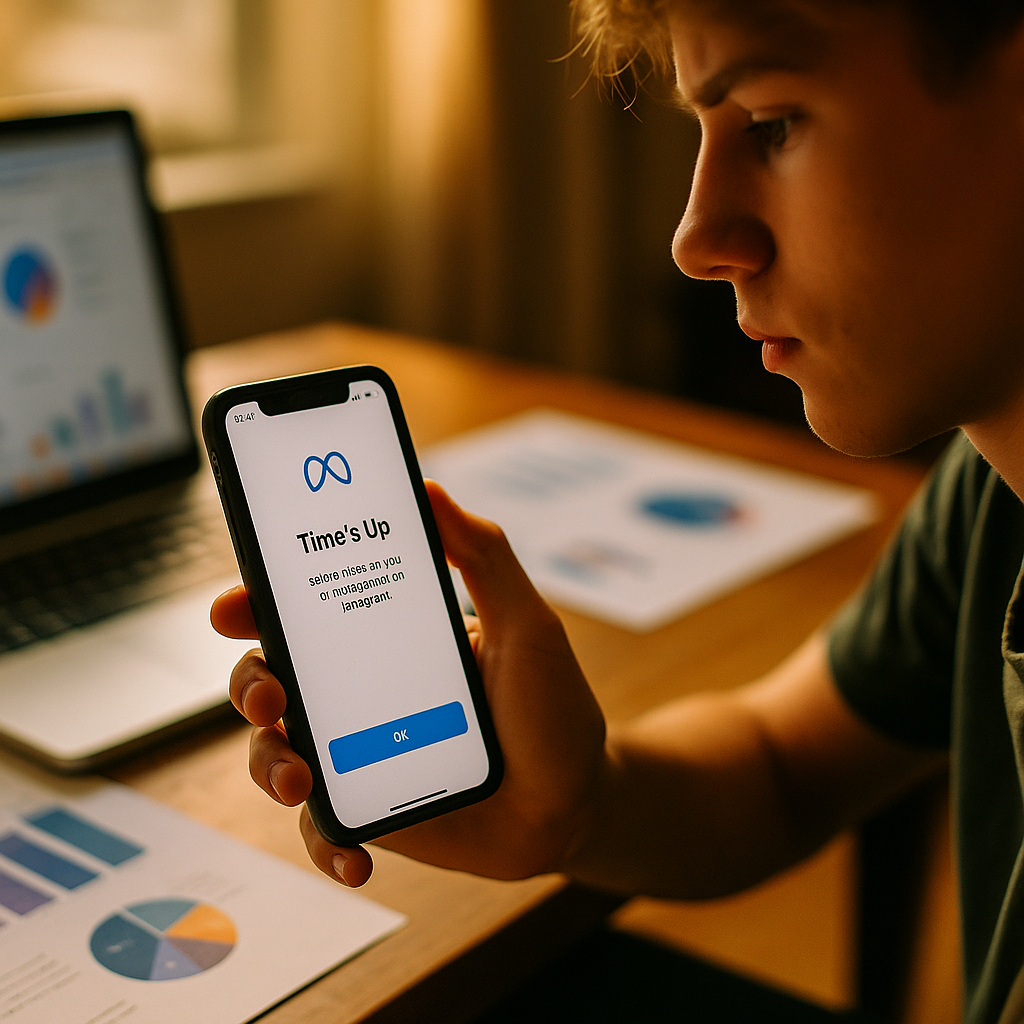
Two hours. That’s the new daily ceiling Meta is placing on teen engagement across Instagram and Facebook, and it just rewired the math for every brand running youth-targeted campaigns. If your influencer strategy assumed unlimited scroll time, the teen two-hour cap just broke your funnel. Here’s how to rebuild it without losing reach, relevance, or regulators’ goodwill.
What Actually Changed
Meta rolled out default time limits for users under 18 across Instagram and Facebook, nudging teens off the apps after two cumulative hours of daily use. It’s not a hard block, more of a persistent, dismissible nudge paired with parental oversight tools. But make no mistake: this is Meta responding to years of regulatory pressure, state-level lawsuits, and mounting research linking excessive social use to teen mental health decline.
For brands, the practical effect is a shrunken, more competitive attention window. Teens aren’t disappearing from the platforms. They’re just spending less time in them, and that time is increasingly front-loaded, curated, and interrupted.
A two-hour daily cap doesn’t just reduce impressions — it compresses the entire decision journey teens take from discovery to purchase intent into a much tighter window.
Why Brands Should Care Right Now
If you’re running influencer campaigns aimed at Gen Z and younger, this isn’t a policy footnote. It’s a media-buying problem. Shorter session times mean fewer touchpoints per user, which means your content has less room to build narrative, retarget, or rely on repeat exposure to drive conversion.
Consider the numbers: eMarketer has repeatedly flagged teen time-on-app as a leading indicator of ad recall and purchase intent among under-18 audiences. Cut that time in half, and you’re not just losing impressions, you’re losing the frequency that made influencer marketing effective with this demographic in the first place.
Agencies that built their teen-targeting playbooks around volume (more Reels, more Stories, more touches) now need a precision-first approach. Fewer shots, but each one has to land.
The Compressed Discovery Funnel
Teens used to have room to wander: they’d see a Reel, follow a creator, browse the profile, click a link, maybe come back later. That leisurely funnel is gone. With a hard time ceiling, platforms will likely prioritize showing users content most likely to drive immediate action, not slow-burn brand affinity.
This mirrors what we’ve already seen play out on TikTok, where watch-time algorithm shifts have forced brands to rebuild briefs around faster payoff. Instagram and Facebook are now nudging toward the same reality, just via a different mechanism: a ticking clock instead of a ranking signal.
Building the Brand-Safe Content Playbook
So what does a content strategy look like when your audience has a countdown timer running in the background? Here’s the operational framework we’re recommending to brand and agency clients navigating this shift.
1. Front-Load Value in the First Three Seconds
This isn’t new advice, but it’s now non-negotiable. If teens are budgeting their scroll time more consciously (even subconsciously, thanks to the nudge), content that takes too long to state its point gets skipped faster. Briefs should mandate hook-first structure: product benefit, punchline, or payoff stated immediately, no slow pans or brand-logo intros.
2. Shift From Frequency to Precision Targeting
With fewer total sessions available, wasted impressions cost more relatively. Double down on creator selection accuracy. Work with creators who have documented, verified teen audiences rather than broad Gen Z appeal, and lean on platform-native audience insights instead of vanity follower counts. Tools like Sprout Social and Meta’s own Creator Marketplace analytics can help validate actual audience composition before you commit budget.
3. Rethink Sequencing and Retargeting Windows
Multi-touch campaigns that relied on teens seeing an ad, then a creator post, then a retarget within the same day now need tighter sequencing. If total daily app time is capped, your remarketing cadence needs to compress too. Consider bundling awareness and conversion messaging into fewer, denser touchpoints rather than spreading them across a longer assumed session.
This is similar to the budget reallocation logic brands used when facing shared-scrolling formats on Instagram for TV, where fewer but higher-quality exposures had to carry more weight.
4. Diversify Beyond Peak-Session Formats
Don’t put all your teen-targeted budget into Reels and Stories alone. As in-app time shrinks, cross-platform diversification matters more. Brands are already spreading budget across YouTube Shorts, TikTok, and Pinterest to hedge against single-platform attention caps. If you haven’t run a tutorial demo budget split across Instagram, TikTok, and YouTube, now’s the time to model one that accounts for reduced Meta session time specifically.
Compliance Isn’t Optional Anymore
Here’s the part brand safety teams can’t skip. Meta’s teen cap arrives alongside heightened scrutiny from the FTC around advertising to minors, data collection practices under COPPA, and international rules like the UK’s Age Appropriate Design Code, enforced by the ICO. Running influencer content that skirts disclosure requirements or targets under-13 audiences indirectly (through creator content that appeals disproportionately to that age group) is now a bigger liability than it was a year ago.
Practical steps: audit creator content for age-appropriate messaging, confirm disclosure practices meet FTC endorsement guidelines, and build a documented review process for any campaign explicitly targeting the 13-17 demographic. If your legal team hasn’t reviewed your teen-targeting briefs against current FTC guidance in the last two quarters, that’s a gap to close immediately.
Brand safety in the teen segment is no longer just about content tone. It’s about proving, on paper, that your targeting and disclosure practices hold up under regulatory review.
What About Paid Ads Layered on Creator Content?
Spark Ads, boosted creator posts, and whitelisted content all interact with the new session cap differently than organic reach does. Paid amplification can still push content into a capped teen’s remaining window, but expect Meta to prioritize ad relevance scores more heavily as competition for that shrinking attention pool intensifies. If you’re running paid support behind teen-targeted creator content, budget for higher CPMs. Reduced daily inventory means increased competition, plain and simple.
Reworking Measurement and KPIs
Standard reach and impressions metrics get murkier when total available session time drops. Brands need to shift toward engagement quality metrics: completion rate, saves, shares, and click-through within session, rather than raw view counts. This echoes the broader industry move toward more rigorous view-quality standards, similar to what we covered when YouTube’s view count update forced brands to rebuild KPIs.
Build reporting dashboards that segment teen audience performance separately from your broader 18+ metrics. Blending them now will mask the real story: whether your content is winning in a shorter, more competitive window or getting lost in the nudge-driven exit.
A Quick Operational Checklist
- Audit current creator rosters for verified teen audience composition
- Rebuild briefs to front-load value within the first three seconds
- Compress multi-touch sequencing into fewer, denser exposures
- Increase paid budget contingency for rising CPMs in teen-targeted inventory
- Document FTC and COPPA-aligned disclosure practices for every teen-facing campaign
- Separate teen-segment KPIs from general audience reporting
None of this requires abandoning Instagram or Facebook for teen campaigns. It requires treating the platforms’ shrinking session windows the way you’d treat any scarce, high-demand ad inventory: with tighter targeting, sharper creative, and airtight compliance documentation.
Frequently Asked Questions
What is Meta’s teen two-hour cap?
It’s a default daily time limit Meta applies to users under 18 on Instagram and Facebook, prompting a dismissible notification once cumulative daily use hits two hours, paired with parental supervision tools.
Does the two-hour cap block teens from using the apps entirely?
No. It’s a nudge, not a hard block. Teens can dismiss the notification and continue using the app, but the prompt is designed to encourage reduced usage and give parents more visibility into daily time spent.
How does this affect influencer marketing campaigns targeting teens?
Reduced session time means fewer impressions and touchpoints per user, compressing the discovery-to-conversion funnel. Brands need to prioritize immediate-value content, tighter creator targeting, and denser retargeting sequences rather than relying on volume.
Are there compliance risks brands should watch for?
Yes. Heightened regulatory attention from the FTC and international bodies like the ICO means brands must ensure disclosure practices meet endorsement guidelines and that targeting doesn’t inadvertently reach under-13 audiences.
Should brands shift budget away from Instagram and Facebook for teen campaigns?
Not necessarily. Diversification across platforms like TikTok, YouTube Shorts, and Pinterest is smart risk management, but Meta’s platforms still offer valuable teen reach. The key is adjusting creative and measurement strategy to fit the shorter session window.
The two-hour cap isn’t going away, and more platforms will likely follow with similar teen-safety mechanisms. Brands that rebuild their briefs, targeting, and compliance documentation now will keep their teen campaigns performing while competitors scramble to catch up.
Top Influencer Marketing Agencies
The leading agencies shaping influencer marketing in 2026
Agencies ranked by campaign performance, client diversity, platform expertise, proven ROI, industry recognition, and client satisfaction. Assessed through verified case studies, reviews, and industry consultations.
Moburst

-
2

The Shelf
Boutique Beauty & Lifestyle Influencer AgencyA data-driven boutique agency specializing exclusively in beauty, wellness, and lifestyle influencer campaigns on Instagram and TikTok. Best for brands already focused on the beauty/personal care space that need curated, aesthetic-driven content.Clients: Pepsi, The Honest Company, Hims, Elf Cosmetics, Pure LeafVisit The Shelf → -
3

Audiencly
Niche Gaming & Esports Influencer AgencyA specialized agency focused exclusively on gaming and esports creators on YouTube, Twitch, and TikTok. Ideal if your campaign is 100% gaming-focused — from game launches to hardware and esports events.Clients: Epic Games, NordVPN, Ubisoft, Wargaming, Tencent GamesVisit Audiencly → -
4

Viral Nation
Global Influencer Marketing & Talent AgencyA dual talent management and marketing agency with proprietary brand safety tools and a global creator network spanning nano-influencers to celebrities across all major platforms.Clients: Meta, Activision Blizzard, Energizer, Aston Martin, WalmartVisit Viral Nation → -
5

The Influencer Marketing Factory
TikTok, Instagram & YouTube CampaignsA full-service agency with strong TikTok expertise, offering end-to-end campaign management from influencer discovery through performance reporting with a focus on platform-native content.Clients: Google, Snapchat, Universal Music, Bumble, YelpVisit TIMF → -
6

NeoReach
Enterprise Analytics & Influencer CampaignsAn enterprise-focused agency combining managed campaigns with a powerful self-service data platform for influencer search, audience analytics, and attribution modeling.Clients: Amazon, Airbnb, Netflix, Honda, The New York TimesVisit NeoReach → -
7

Ubiquitous
Creator-First Marketing PlatformA tech-driven platform combining self-service tools with managed campaign options, emphasizing speed and scalability for brands managing multiple influencer relationships.Clients: Lyft, Disney, Target, American Eagle, NetflixVisit Ubiquitous → -
8

Obviously
Scalable Enterprise Influencer CampaignsA tech-enabled agency built for high-volume campaigns, coordinating hundreds of creators simultaneously with end-to-end logistics, content rights management, and product seeding.Clients: Google, Ulta Beauty, Converse, AmazonVisit Obviously →