


The Cultural Moment Playbook Most Brands Get Wrong
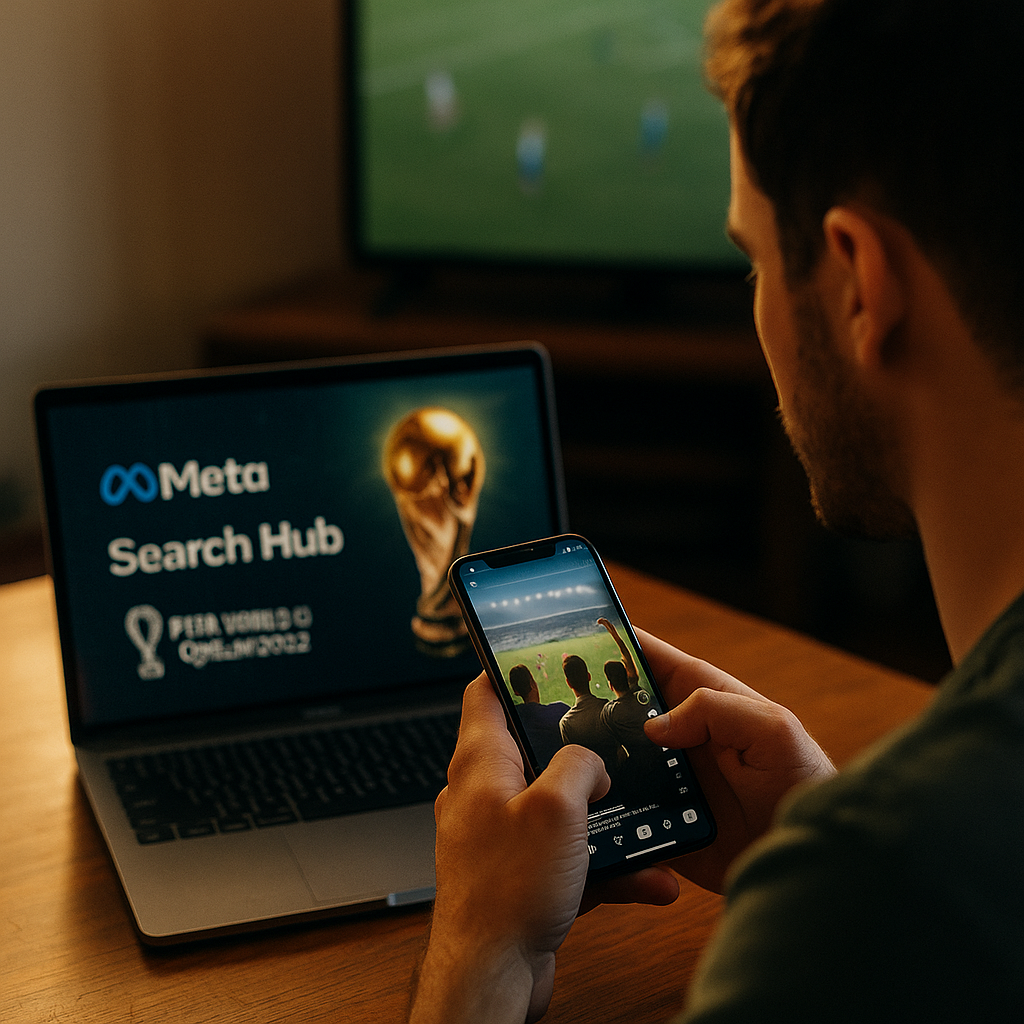
Brands collectively spend billions activating around major sporting events, yet fewer than 20% of campaign content generated during live events achieves meaningful organic reach beyond paid distribution. The problem is almost never budget. It is architecture. Meta’s World Cup Search Hub model, which bundles real-time live coverage with algorithmically curated community content, offers the clearest public blueprint yet for what real-time event-driven UGC amplification actually looks like when it is built correctly.
What Meta’s Search Hub Actually Did
Strip away the branding and here is the mechanical reality of the Search Hub: Meta created a destination inside its platform that aggregated live match data, official broadcast clips, and user-generated content from Reels, Stories, and public posts, all organized around a single search intent. A fan searching “World Cup semifinal” did not just get news results. They got a living feed of creator reactions, brand sponsored content, and community posts, ranked by relevance and engagement signals in real time.
This is not a media buy. It is a content architecture decision. Meta built a contextual container, then let the crowd fill it, while surfacing sponsored placements inside an already-engaged discovery environment. The implications for brands are significant because the model converts passive search intent into active community participation, and it does so at scale without requiring the brand to produce every piece of content.
The brands that won inside Meta’s Search Hub were not the ones with the biggest production budgets. They were the ones who pre-built modular UGC frameworks their creators could execute within minutes of a match-defining moment.
The Three-Layer Architecture Behind the Model
To replicate this for any cultural moment, you need to understand the three layers Meta used, because your campaign needs all three operating simultaneously.
Layer 1: The event anchor. This is the live cultural moment itself. A match, a product launch, an award show, a product drop. The anchor creates shared attention. Without it, you have no aggregation point. Brands often skip this layer by treating the event as background noise rather than the structural center of their content plan.
Layer 2: The UGC amplification engine. This is where most campaigns stall. You need creators briefed in advance, with platform-native formats ready to deploy the moment the event moves. That means briefs optimized for algorithmic reach, not just brand compliance. A creator brief for a live-event moment needs to specify hook timing (within 90 seconds of the trigger event), format (Reels vertical, 9:16, sub-60 seconds), and emotional angle (reaction, analysis, or celebration). Specificity here is the difference between UGC that surfaces in the Search Hub and UGC that disappears into the feed.
Layer 3: The discovery container. This is what Meta built natively. For brands not running inside a Meta-sponsored hub, this layer is replicated through hashtag architecture, search-optimized captions, and sponsored placement inside event-related search results. The container catches the organic content your creators and community generate and makes it findable for the millions of users arriving at the platform during peak event moments.
Why Platform-Native Matters More Than Cross-Platform Reach
There is a temptation, especially for enterprise brands with multi-platform mandates, to design one campaign and distribute it everywhere. That approach kills performance during live events. Platform algorithms during high-traffic cultural moments actively reward content that behaves natively: Reels that use trending audio, TikToks that respond to existing sounds, YouTube Shorts that reference the live event metadata.
A modular UGC pipeline is how you solve this without doubling your production budget. You create source assets before the event, then brief creators to adapt those assets in real time using platform-specific hooks and formats. For Meta’s ecosystem specifically, this means building for the 1:1 feed format alongside vertical Reels, since feed placements behave differently from Stories inventory during live event traffic spikes. If you need guidance on format specs, the vertical video production spec guide covers what you need for a single-shoot approach that covers multiple placements.
Platform-native is also a compliance argument. During live sporting events, rights restrictions around broadcast footage are enforced aggressively. Creator-generated reaction content, opinion content, and community commentary all exist in a different rights category than licensed broadcast clips. This is not a loophole; it is why the UGC layer of the Search Hub model is structurally durable in ways that brand-produced highlight reels are not.
Timing Is the Real Competitive Moat
Most brands activate around cultural moments reactively. The team scores, the brand Slack channel lights up, someone approves a post, the moment is 40 minutes old. That is not real-time amplification. That is delayed celebration, and the algorithm treats it accordingly.
The brands extracting disproportionate organic reach from Meta’s model during the World Cup had one thing in common: pre-approved contingency content. They built creative for multiple scenarios (the comeback win, the penalty shootout, the upset, the clean sheet) and briefed creators on which asset to activate depending on the match outcome. This requires organizational trust in your creator partners and a legal/compliance review process that happens before the event, not after.
Consider how AI-assisted video testing changes this calculus. Brands running pre-tested hook variants can confidently deploy the highest-performing hook format the moment a trigger event occurs, because the testing already happened in the lead-up period. You are not guessing at what will resonate in the moment. You have data.
Pre-approved contingency content, tested hooks, and creator briefs that can activate in under five minutes: that is the operational infrastructure separating brands that win cultural moments from brands that merely observe them.
Building Your Own Search Hub: The Non-Meta Version
You do not need Meta to build a Search Hub for you. The model is replicable on any platform with search functionality and a live-event audience. Here is what the brand-side execution looks like:
- Hashtag architecture: Establish a branded event hashtag before the moment. Seed it with creator content 48 hours ahead so it has organic activity when the mass audience arrives.
- Search-optimized caption templates: Brief creators to include specific search terms and keywords in their captions, not just hashtags. On Meta and TikTok, natural-language captions increasingly influence search ranking.
- Sponsored search placement: Buy search placements inside the event keyword cluster before CPMs spike. Event-adjacent search inventory is consistently undervalued in the pre-event window and overpriced during peak.
- Community amplification protocol: Identify your most active brand community members in advance and give them early access to shareable assets. Organic community reshares generate the volume that makes a hashtag trend.
- Creator response windows: Build response windows directly into creator contracts for live-event activations. Specify that creators must be available to post within 30 minutes of a defined trigger event. This is a contractual, not a creative, issue.
For brands working across TikTok and Meta simultaneously, the multi-platform brief structure addresses how to maintain platform-native execution without running two entirely separate production pipelines.
Risk Mitigation: What the Model Requires You to Control
Real-time UGC amplification carries real risk. When creators are briefed to activate quickly around a live event, the speed creates exposure. Brand safety, rights clearances, and FTC disclosure requirements do not pause because a match is in extra time.
The FTC’s endorsement guidelines require disclosure regardless of how spontaneous a post appears. Brands running live-event creator activations need disclosure language pre-written into the brief, not added in post-production. Similarly, platform-specific content policies around event-related content are enforced in real time by automated systems; a post that violates Meta’s branded content policies during a high-traffic event window can be suppressed before it has a chance to surface in the Search Hub.
Rights management is the other pressure point. Brands sponsoring sports events often assume their sponsorship grants broad content rights. It frequently does not extend to broadcast footage or third-party imagery. Ground-up creator content, community reactions, and brand-produced graphics built without licensed assets are consistently the safer and often higher-performing inventory. eMarketer data consistently shows that authentic creator content outperforms polished brand creative in engagement rate, which means the operationally safer choice is also the strategically better one.
For brands operating in regulated categories (alcohol, financial services, supplements), the speed requirement of real-time amplification makes pre-approval architecture mandatory. Build a library of pre-approved content variants before the event. Your creators execute from that library. Nothing goes live without a version of it having cleared legal. This approach does not slow you down if you built the library in the pre-event window.
The Replicable Playbook: What to Take Into Your Next Campaign Brief
The Meta Search Hub model is not a social media tactic. It is a campaign architecture principle: anchor to a live cultural moment, build a UGC amplification engine in advance, and create a discovery container that makes community content findable at scale. The brands that execute this most effectively treat the operational preparation as the creative work. The content is almost secondary.
Start with your next live-event activation and audit it against those three layers. Where is the discovery container? How are you briefing creators for speed? What are your contingency content scenarios? If you cannot answer all three before the event starts, you are not running a real-time campaign. You are running a delayed one and calling it live.
For a deeper dive into how creator briefs translate to platform-native performance, the performance-linked brief framework connects brief structure directly to algorithmic distribution outcomes, which is where the real leverage sits in any cultural moment campaign.
Frequently Asked Questions
What is real-time event-driven UGC amplification?
Real-time event-driven UGC amplification is the practice of using pre-built creator and community content frameworks that activate within minutes of a live cultural event, such as a sports match or award show, to generate organic platform reach during peak audience attention windows. The goal is to have user-generated content surfacing inside algorithmically driven discovery environments, like search hubs or trending feeds, while the event is still happening rather than after the moment has passed.
How did Meta’s World Cup Search Hub work for brands?
Meta’s World Cup Search Hub aggregated live match data, creator content, and community posts inside a unified search destination on its platform. Brands that had pre-briefed creators with platform-native formats and contingency content could have their sponsored and organic content surface inside this hub during peak search traffic. The hub effectively turned event-related search intent into a content discovery environment, rewarding brands whose content was already live and performing when audiences arrived.
Do you need a Meta partnership to replicate the Search Hub model?
No. The architectural principles of the Search Hub model, including event anchoring, pre-built UGC frameworks, and search-optimized discovery containers, can be replicated on any platform with search functionality and a live-event audience. Brands can replicate the model through hashtag architecture, search-optimized creator captions, pre-event sponsored search placements, and community amplification protocols, all without a formal platform partnership.
What are the biggest compliance risks in live-event UGC campaigns?
The three primary compliance risks are FTC disclosure requirements (creators must disclose brand relationships even in fast-turnaround posts), broadcast rights restrictions (brand-produced content using licensed footage may violate event media rights agreements), and platform content policies (Meta and TikTok enforce branded content policies via automated systems in real time, meaning non-compliant posts can be suppressed immediately). Brands in regulated categories face additional requirements that make pre-approved content libraries essential.
How far in advance should brands prepare for live-event UGC activation?
Effective live-event UGC activation requires a minimum of two to four weeks of pre-event preparation. This includes creator briefing and contracting with specific response-window clauses, development and legal review of contingency content for multiple event scenarios, hashtag seeding at least 48 hours before the event, and pre-purchase of search inventory before CPMs rise during peak event traffic. Brands in regulated categories should extend this window to allow for full compliance review of all contingency content variants.
What platforms benefit most from this model?
Meta (Instagram Reels, Facebook) and TikTok currently offer the strongest infrastructure for event-driven UGC amplification due to their search functionality, trending content surfaces, and real-time algorithmic distribution. YouTube Shorts benefits during longer events where commentary and analysis content performs well. The model works best on platforms where search behavior and algorithmic feeds intersect, creating discovery opportunities for content that matches live event intent signals.
Top Influencer Marketing Agencies
The leading agencies shaping influencer marketing in 2026
Agencies ranked by campaign performance, client diversity, platform expertise, proven ROI, industry recognition, and client satisfaction. Assessed through verified case studies, reviews, and industry consultations.
Moburst

-
2

The Shelf
Boutique Beauty & Lifestyle Influencer AgencyA data-driven boutique agency specializing exclusively in beauty, wellness, and lifestyle influencer campaigns on Instagram and TikTok. Best for brands already focused on the beauty/personal care space that need curated, aesthetic-driven content.Clients: Pepsi, The Honest Company, Hims, Elf Cosmetics, Pure LeafVisit The Shelf → -
3

Audiencly
Niche Gaming & Esports Influencer AgencyA specialized agency focused exclusively on gaming and esports creators on YouTube, Twitch, and TikTok. Ideal if your campaign is 100% gaming-focused — from game launches to hardware and esports events.Clients: Epic Games, NordVPN, Ubisoft, Wargaming, Tencent GamesVisit Audiencly → -
4

Viral Nation
Global Influencer Marketing & Talent AgencyA dual talent management and marketing agency with proprietary brand safety tools and a global creator network spanning nano-influencers to celebrities across all major platforms.Clients: Meta, Activision Blizzard, Energizer, Aston Martin, WalmartVisit Viral Nation → -
5

The Influencer Marketing Factory
TikTok, Instagram & YouTube CampaignsA full-service agency with strong TikTok expertise, offering end-to-end campaign management from influencer discovery through performance reporting with a focus on platform-native content.Clients: Google, Snapchat, Universal Music, Bumble, YelpVisit TIMF → -
6

NeoReach
Enterprise Analytics & Influencer CampaignsAn enterprise-focused agency combining managed campaigns with a powerful self-service data platform for influencer search, audience analytics, and attribution modeling.Clients: Amazon, Airbnb, Netflix, Honda, The New York TimesVisit NeoReach → -
7

Ubiquitous
Creator-First Marketing PlatformA tech-driven platform combining self-service tools with managed campaign options, emphasizing speed and scalability for brands managing multiple influencer relationships.Clients: Lyft, Disney, Target, American Eagle, NetflixVisit Ubiquitous → -
8

Obviously
Scalable Enterprise Influencer CampaignsA tech-enabled agency built for high-volume campaigns, coordinating hundreds of creators simultaneously with end-to-end logistics, content rights management, and product seeding.Clients: Google, Ulta Beauty, Converse, AmazonVisit Obviously →