


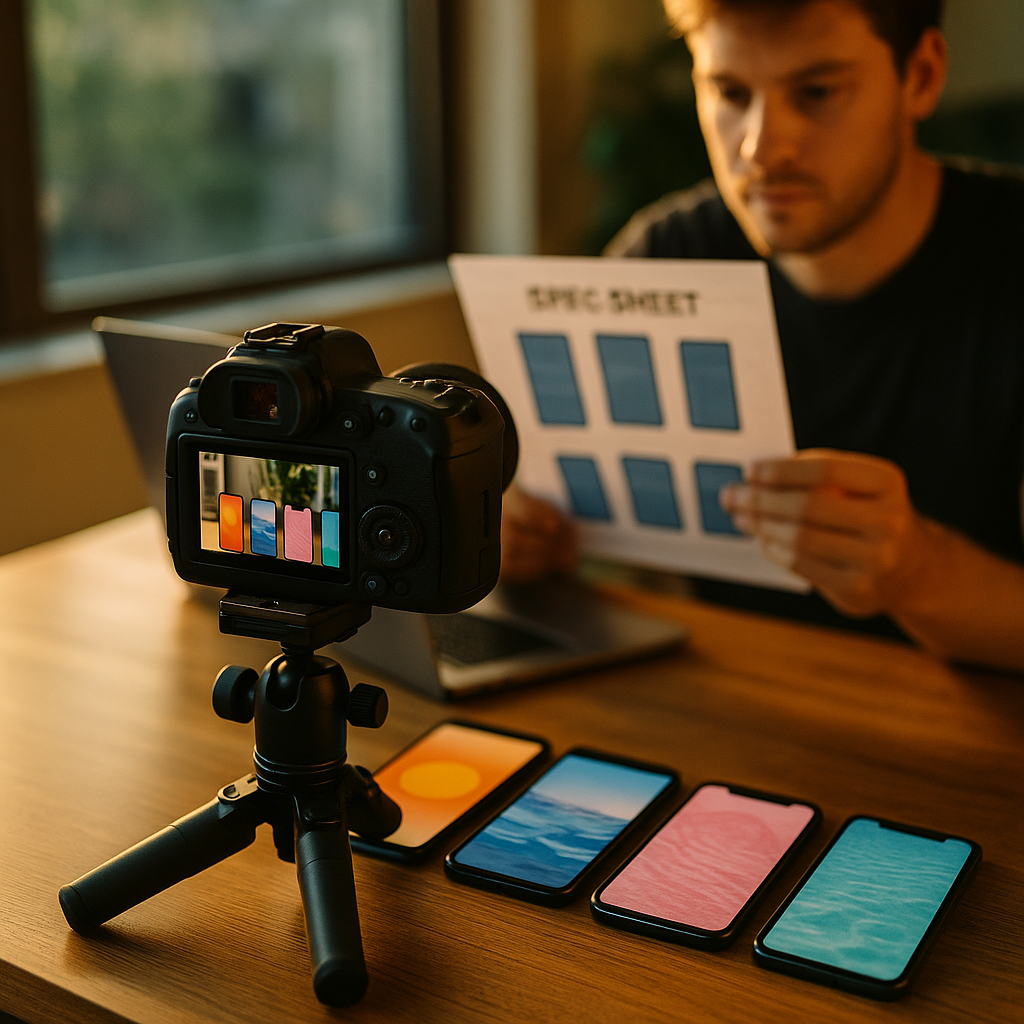
Brands running separate productions for social and OTT are burning budget. Streaming partner creator content distribution has matured to the point where a single vertical video shoot, structured correctly, can satisfy the technical and editorial requirements of TikTok’s feed, Instagram Reels, YouTube Shorts, and programmatic OTT ad inventory simultaneously. Most brand teams still don’t know how to engineer that overlap.
Why the Social-OTT Gap Is Narrowing Faster Than Most Teams Realize
Connected TV ad spend crossed $30 billion in the US market and is still climbing, according to data tracked by eMarketer. At the same time, platforms like Peacock, Paramount+, and Amazon’s Freevee have aggressively expanded their short-form ad slot formats, including vertical and square pre-roll units designed to accommodate the exact content creators are already making for social. This isn’t coincidence. It reflects deliberate platform strategy to capture creator-economy budgets.
The practical implication: if you brief a creator for TikTok only, you are leaving OTT inventory on the table. But if you brief them for OTT only, you’ll get polished content that tanks on social because it lacks the native tension and pacing that feeds reward. The solution is a dual-standard production brief, not two separate briefs.
A single vertical video shoot, structured with dual-standard specs from day one, can generate social feed content and OTT ad inventory without a second production call or a dollar more in shoot costs.
The Technical Specs That Actually Overlap
Start here before any creative conversation. The good news: the overlap is larger than most media buyers assume.
- Aspect ratio: 9:16 vertical is now accepted across TikTok, Reels, YouTube Shorts, and the major AVOD platforms. Lock 9:16 as your master frame.
- Resolution: 1080×1920 at minimum. Most OTT platforms require this floor; social platforms reward it algorithmically.
- File formats: MP4 (H.264 or H.265) works universally. Brief your creator or production team to export in H.264 for social delivery and H.265 for OTT submission — same source file, two renders.
- Duration: The critical constraint. TikTok’s top-performing ad inventory clusters between 21-34 seconds. OTT pre-roll slots commonly run 15 or 30 seconds. Brief to a hard 28-second cut as your hero version, then extract a 15-second cut in post. Both work across channels.
- Safe zones: OTT platforms enforce strict safe zones for text and graphics (typically 10% border on all sides). Brief creators to keep faces, supers, and product shots within this boundary. This also prevents UI cropping on social.
- Audio: OTT requires broadcast-ready audio, typically -14 LUFS. Social tolerates wider variance, but -14 LUFS on social will never hurt performance. Set one audio standard and use it everywhere.
The place most brands fall apart is the safe zone briefing. A creator who holds product close to the bottom third looks great on mobile but gets cropped on a Roku home screen. Fix this in the brief, not in post.
Editorial Structure: Where Social and OTT Briefs Diverge (and How to Bridge Them)
Technical specs are the easy part. The harder problem is narrative structure.
Social feeds are unforgiving. The algorithm demands a hook in the first 1.5 seconds, authentic vocal delivery, and pacing that competes with organic content. OTT audiences are leaning back, not leaning in. They’re watching on a 65-inch screen, not a phone, and they tolerate a slightly longer brand build before the product moment. These are real tensions that a single script has to resolve.
The structural solution that works: front-load the hook for social, build the body for OTT.
Frame 0-1.5 seconds as a pure pattern interrupt — a provocative statement, an unexpected visual, or a question. This satisfies TikTok’s FYP requirements. Seconds 2-20 should build product context with enough visual storytelling to work on a large screen without audio (yes, OTT viewers mute too). Seconds 20-28 close with a verbal and visual CTA that clears compliance on both channel types. When you pull the 15-second OTT pre-roll cut, trim seconds 8-20, keeping the hook and the close.
For creators who need a structured starting point, cross-platform brief frameworks designed for exactly this overlap can accelerate the briefing process significantly. If you want to go deeper on getting the first-second hook right specifically for feed placement, the guidance on hook structures for TikTok and Reels covers the mechanics in detail.
Compliance and Brand Safety Across Two Regulatory Environments
Here’s where brand and legal teams need to be in the room. OTT and social carry different disclosure requirements, and a single asset has to satisfy both.
The FTC’s endorsement guidelines require clear and conspicuous disclosure regardless of channel. On social, this typically means an on-screen text overlay (“Ad” or “Paid Partnership”) and a verbal mention. On OTT, programmatic platforms layer their own disclosure overlays, but you cannot rely on this alone. Brief creators to include a verbal disclosure within the first three seconds. This satisfies both environments without requiring different content.
Music licensing is another trap. A track cleared for social use (often a platform-specific license through TikTok’s Commercial Music Library or Meta’s Sound Collection) is not automatically cleared for OTT broadcast. Either clear music for all channels upfront, or brief creators to use royalty-free music from a source like Epidemic Sound that covers broadcast rights. Discovering a licensing gap after an OTT campaign has gone live is expensive and embarrassing.
Production Workflow: How to Brief Once and Deliver Everywhere
The operational model that eliminates redundancy looks like this:
- Single shoot brief specifying dual-standard specs (9:16, 1080×1920, safe zones, -14 LUFS, broadcast music clearance).
- Hero cut at 28 seconds as the master deliverable.
- Post-production extraction of a 15-second OTT cut and a 6-second bumper for YouTube pre-roll, all from the same footage.
- Platform-specific metadata and tagging applied at distribution, not at production — captions for TikTok/Reels, companion banner assets for OTT buys.
- Compliance review against both social platform policies and OTT network standards before trafficking.
Teams looking to scale this across multiple creators without losing quality control should consider modular production frameworks. A modular UGC pipeline with pre-built hook libraries and AI-assisted distribution can handle variant generation at a speed that manual workflows can’t match. The same logic applies to testing: running AI-powered hook and CTA variant testing across social placements gives you optimization data that can directly inform which OTT cuts get prioritized in your media buy.
Music licensing cleared only for social use will kill your OTT campaign. Secure broadcast rights at brief stage, not post-production.
Measurement: Connecting Social and OTT Performance in One View
You’ve built the asset. Now you need to know if it’s working across both channels without drowning in disconnected dashboards.
The practical approach: define a shared creative performance KPI set before the campaign launches. View-through rate (VTR) at 50% and 100% exists as a comparable metric on both social and OTT platforms. Brand lift survey capability is available through TikTok’s measurement suite, Meta’s Brand Lift product, and OTT platform partners like Roku’s OneView platform. Running a unified brand lift study across both channel types on the same creative gives you legitimate cross-channel attribution data, not inference.
Cost-per-completed-view is another shared metric. OTT historically delivers higher completion rates (often 90%+ on non-skippable pre-roll) at higher CPMs. Social delivers lower CPMs with higher creative variance. Knowing the blended CPCV across channels helps you optimize budget allocation in-flight without changing the creative.
If your team is moving toward performance-linked creator arrangements, tying creator compensation partly to cross-channel completion rates is a workable structure. Performance-linked briefs designed for algorithmic reach can be adapted for this dual-channel model with relatively minor modifications to the payment trigger definitions.
One more measurement note: OTT platforms require VAST or VPAID tags for programmatic delivery. Confirm your ad server generates these and that your tracking pixels fire correctly in a CTV environment before campaign launch. Pixel-based attribution that relies on mobile browser cookies will not work on a smart TV. Use an identity-agnostic measurement provider that supports CTV attribution, such as IAB-compliant solutions built for cross-screen environments.
Your next step is practical: pull your last creator brief, cross-reference it against the dual-standard spec checklist above, and identify the three gaps most likely to block OTT delivery. Fix those before your next production call and you’ll have a campaign that earns reach on social and scales into streaming inventory without a single additional shoot day.
Frequently Asked Questions
What aspect ratio works for both social feeds and OTT streaming ads?
9:16 vertical (1080×1920 pixels) is the single aspect ratio accepted by TikTok, Instagram Reels, YouTube Shorts, and major AVOD/OTT platforms including Peacock, Paramount+, and Amazon’s streaming ad inventory. Locking this as your master frame from brief stage eliminates the need for separate productions.
How long should a creator video be to qualify for both social and OTT ad slots?
Brief creators to a 28-second hero cut. This performs within TikTok’s optimal ad duration range and can be trimmed to a 15-second OTT pre-roll cut in post-production from the same footage. A 6-second bumper for YouTube can also be extracted from the same shoot without additional creator time.
Do FTC disclosure rules apply differently on OTT vs. social platforms?
The FTC’s clear and conspicuous disclosure requirement applies to all channels. On social, a text overlay and verbal mention in the first three seconds satisfies this. On OTT, programmatic platforms add their own overlays, but brands should still brief creators to include a verbal disclosure at the open because you cannot rely solely on the platform overlay to satisfy compliance.
Can a music track licensed for TikTok or Instagram be used in OTT ads?
No. Platform-specific music licenses through TikTok’s Commercial Music Library or Meta’s Sound Collection do not cover OTT or broadcast distribution. You must clear broadcast rights upfront, either through your music licensing agreement or by using a provider like Epidemic Sound that explicitly includes broadcast rights in its licensing tiers.
How do you measure performance across social and OTT from the same creative asset?
Use view-through rate (VTR) at 50% and 100% as your cross-channel comparable metric, available on both social and OTT platforms. Running a unified brand lift study across both channel types on the same creative provides legitimate cross-channel attribution. For programmatic OTT, ensure your ad server generates VAST tags and that your measurement provider supports CTV attribution, since cookie-based pixel tracking does not function on smart TVs.
Top Influencer Marketing Agencies
The leading agencies shaping influencer marketing in 2026
Agencies ranked by campaign performance, client diversity, platform expertise, proven ROI, industry recognition, and client satisfaction. Assessed through verified case studies, reviews, and industry consultations.
Moburst

-
2

The Shelf
Boutique Beauty & Lifestyle Influencer AgencyA data-driven boutique agency specializing exclusively in beauty, wellness, and lifestyle influencer campaigns on Instagram and TikTok. Best for brands already focused on the beauty/personal care space that need curated, aesthetic-driven content.Clients: Pepsi, The Honest Company, Hims, Elf Cosmetics, Pure LeafVisit The Shelf → -
3

Audiencly
Niche Gaming & Esports Influencer AgencyA specialized agency focused exclusively on gaming and esports creators on YouTube, Twitch, and TikTok. Ideal if your campaign is 100% gaming-focused — from game launches to hardware and esports events.Clients: Epic Games, NordVPN, Ubisoft, Wargaming, Tencent GamesVisit Audiencly → -
4

Viral Nation
Global Influencer Marketing & Talent AgencyA dual talent management and marketing agency with proprietary brand safety tools and a global creator network spanning nano-influencers to celebrities across all major platforms.Clients: Meta, Activision Blizzard, Energizer, Aston Martin, WalmartVisit Viral Nation → -
5

The Influencer Marketing Factory
TikTok, Instagram & YouTube CampaignsA full-service agency with strong TikTok expertise, offering end-to-end campaign management from influencer discovery through performance reporting with a focus on platform-native content.Clients: Google, Snapchat, Universal Music, Bumble, YelpVisit TIMF → -
6

NeoReach
Enterprise Analytics & Influencer CampaignsAn enterprise-focused agency combining managed campaigns with a powerful self-service data platform for influencer search, audience analytics, and attribution modeling.Clients: Amazon, Airbnb, Netflix, Honda, The New York TimesVisit NeoReach → -
7

Ubiquitous
Creator-First Marketing PlatformA tech-driven platform combining self-service tools with managed campaign options, emphasizing speed and scalability for brands managing multiple influencer relationships.Clients: Lyft, Disney, Target, American Eagle, NetflixVisit Ubiquitous → -
8

Obviously
Scalable Enterprise Influencer CampaignsA tech-enabled agency built for high-volume campaigns, coordinating hundreds of creators simultaneously with end-to-end logistics, content rights management, and product seeding.Clients: Google, Ulta Beauty, Converse, AmazonVisit Obviously →