


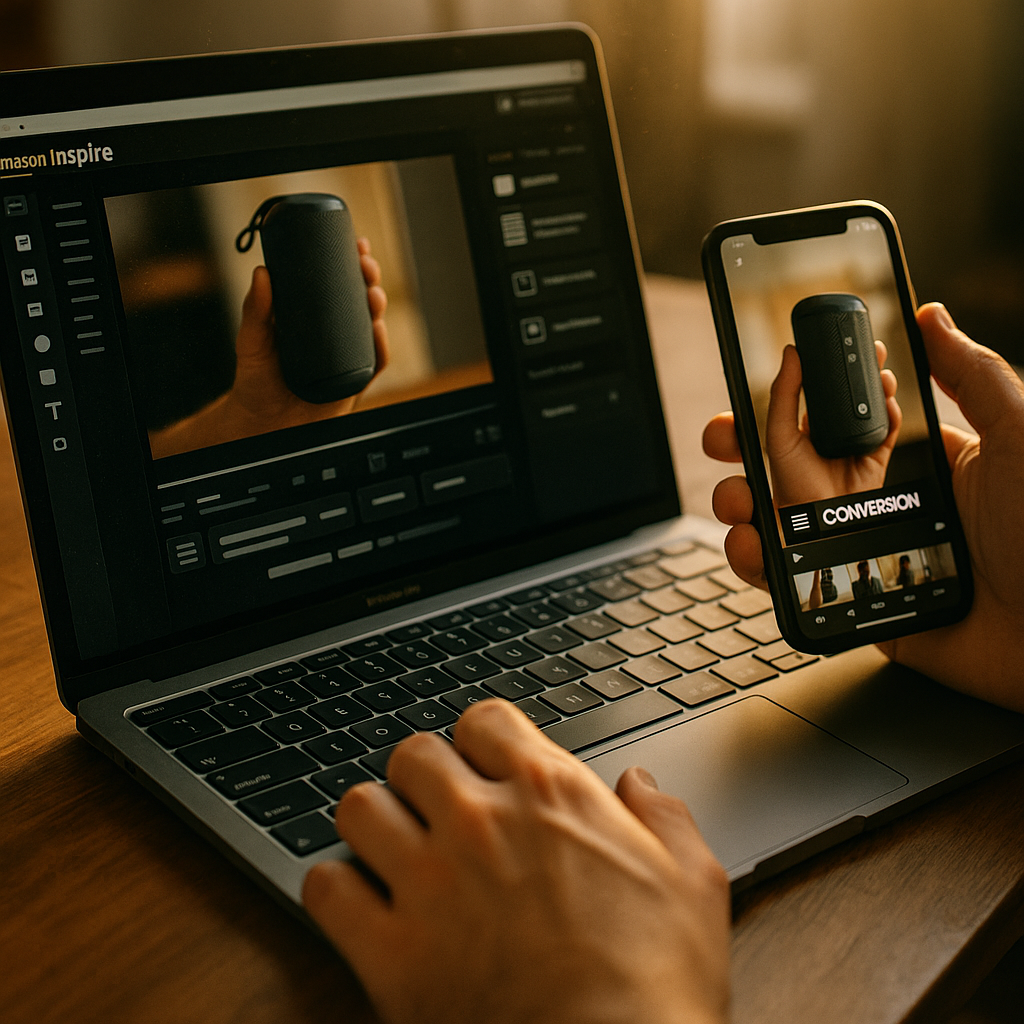
Amazon quietly turned its shopping app into a scroll feed, and most brands are still uploading content built for someone else’s platform. Amazon Inspire now surfaces short-form video directly inside the shopping journey, which means the old “repurpose the TikTok” approach is leaving discovery traffic on the table. If your product listings aren’t feeding Inspire’s algorithm on its own terms, you’re invisible in a feed that sits one tap from checkout.
Why Inspire Isn’t Just Amazon’s TikTok Clone
It’s tempting to dismiss Inspire as Amazon copying a format. That misses what makes it structurally different. Every video lives inside a commerce environment where the viewer already has a cart, a purchase history, and Prime shipping expectations baked in. There’s no context-switch between “watching content” and “buying something.” The tap-to-cart action is the whole point.
That changes the creative math. On TikTok or Instagram, a strong hook earns a follow or a save. On Inspire, a strong hook needs to earn a click into a product detail page that’s already optimized to convert. You’re not building an audience — you’re feeding a funnel that’s three steps from a completed order.
Inspire content isn’t judged by watch time alone. It’s judged by whether the viewer converts on the same session, which makes product-first framing non-negotiable.
The Discovery Mechanics Brands Keep Getting Wrong
Amazon’s recommendation system for Inspire weighs a mix of signals: completion rate, add-to-cart actions taken directly from the video, follows on the brand’s storefront, and — critically — how closely the video’s metadata matches active shopping queries. Brands that treat Inspire like a broadcast channel (post once, hope for reach) consistently underperform brands that treat it like a listing optimization exercise.
Think of Inspire content less like an ad and more like an extension of your product listing. Amazon’s own retail media data shows shoppable video formats driving meaningfully higher conversion than static creative across major retail platforms, and Inspire is Amazon’s bet that the same holds true at scale on-platform.
A few structural mistakes show up again and again:
- Uploading vertical video with no product tags, relying on the caption alone to drive discovery
- Using influencer content shot for a different platform’s aspect ratio or pacing
- Ignoring the first two seconds, where Inspire’s algorithm decides whether to keep serving the clip
- Failing to link multiple SKUs in a single video, which caps the content’s earning potential per view
Structuring the Hook for a Shopping-Intent Audience
Here’s the uncomfortable truth: Inspire viewers are not passive scrollers in the way TikTok users are. They opened Amazon to buy something, or at least to consider buying something. That means your hook doesn’t need to entertain first — it needs to signal relevance to a shopping decision within the first beat.
Compare two openings for a kitchen gadget video. One starts with a joke about Sunday meal prep. The other opens with the product mid-use, solving a visible problem, text overlay reading “stop doing this the hard way.” The second wins on Inspire almost every time, because it front-loads the purchase logic instead of the entertainment logic.
This is a different discipline than the one most creator briefs are written for. It’s closer to what we outlined in TikTok Discovery Over Reach, Why Brands Must Rebrief Content — platforms are increasingly rewarding intent-matched content over generically viral content, and Inspire takes that logic to its extreme because the intent is explicit: the person is already shopping.
Tagging, Metadata, and the Boring Work That Actually Moves the Needle
Nobody wants to talk about metadata. It’s not glamorous. But Inspire’s discovery layer leans hard on structured data — product tags, category alignment, keyword-rich captions — to decide which shopping queries a video should surface against.
Brands running Inspire well are doing three things consistently:
- Tagging every SKU shown on screen, not just the hero product. A video featuring three items in a bathroom counter routine should tag all three, multiplying the paths to purchase.
- Matching captions to real search language, pulling from Amazon’s own autosuggest and from tools like emarketer’s retail media research to understand what shoppers actually type before they buy.
- Refreshing metadata post-launch based on which tags are driving add-to-carts, rather than setting it once and walking away.
This mirrors a pattern we’ve seen across other commerce-adjacent formats. The TikTok Shop category templates approach works for the same reason: structured, repeatable tagging outperforms ad hoc listing every time, because the algorithm has more to work with.
Briefing Creators for Amazon’s Environment, Not Yours
Agencies love to hand creators a generic influencer brief and swap out the platform name. That doesn’t work for Inspire. Creators need explicit guidance on pacing, product framing, and what “success” looks like inside a shopping app.
Here’s what a workable Inspire creator brief should specify:
- Product must appear on-screen within the first three seconds, in use, not just displayed
- No platform-specific slang or meme formats that assume a social-native audience
- Clear verbal or on-screen call-to-action that references “shop this” language Amazon’s UI already uses
- Video length capped tighter than typical social short-form — Amazon’s own guidance favors under 60 seconds for most product categories
- At least one variant shot for multi-SKU tagging, if the content features more than one product
Brands that skip this step end up with content that looks native to Instagram Reels and dies quietly on Inspire. It’s the same lesson from YouTube Shorts briefs for the commerce discovery row: platform-specific commerce surfaces reward platform-specific briefs, full stop.
Measurement: What Counts as Winning Here?
Engagement metrics that matter on social platforms — likes, shares, comments — are secondary signals on Inspire. The metrics that actually determine whether a brand should keep investing are:
- View-to-cart rate, the percentage of viewers who tap a product tag
- Cart-to-purchase rate, tracked at the SKU level through Amazon’s seller dashboard
- Follower growth on brand storefronts, a proxy for repeat-purchase potential
- Content half-life, since Inspire content can keep surfacing weeks after posting if it maintains conversion velocity
A video with modest views but a high view-to-cart rate is worth more to a brand’s Inspire strategy than a viral clip that never converts — treat these as separate KPIs, not interchangeable success metrics.
This distinction matters for budget conversations with finance teams who are used to reach-based reporting. Inspire forces a shift toward conversion-first attribution, which — frankly — is a healthier conversation for brand teams to be having anyway, and one we’ve flagged in adjacent contexts like Instagram’s shift toward saves and DMs over likes.
Where This Fits in a Broader Retail Media Strategy
Inspire shouldn’t run in isolation. Brands seeing the strongest returns are pairing Inspire content with sponsored product placements and A+ content updates, creating a closed loop where discovery video feeds directly into optimized listings. Treat Inspire as the top of a funnel that Amazon itself controls end-to-end — a rare situation where the platform, the storefront, and the payment rail are all the same system.
For compliance-minded teams, this also simplifies disclosure requirements somewhat, since Amazon’s own influencer program has clearer built-in labeling than platforms without native shopping integration. Still, brands running paid creator partnerships should keep FTC endorsement guidance front of mind, since paid Inspire placements featuring creators still fall under standard disclosure rules regardless of the platform’s native shopping features.
Next Step
Audit your last five Inspire uploads against three questions: does the hook show the product in use within three seconds, are all visible SKUs tagged, and does the caption match real shopper search language? If any answer is no, you’re leaving discovery traffic on the table that a same-day metadata fix could recover.
FAQs
What is Amazon Inspire, and how is it different from social video feeds?
Amazon Inspire is a shoppable short-form video feed built into the Amazon app, letting users discover and buy products directly from video content without leaving the shopping environment. Unlike social platforms, viewers arrive with active purchase intent, so discovery ranking weighs conversion signals like add-to-cart actions alongside watch time.
Do I need a separate video shoot for Inspire, or can I repurpose social content?
Repurposed content generally underperforms because it’s paced and framed for entertainment-first audiences. Inspire rewards videos that show the product in use within the first few seconds and use shopping-oriented language, which usually requires at least a re-edit, if not a fresh shoot.
How does Amazon’s algorithm decide which Inspire videos to surface?
Ranking factors include completion rate, product tag clicks, metadata alignment with active shopping queries, and historical conversion performance from the brand’s storefront. Strong SEO-style tagging and caption keywords play a larger role than on typical social platforms.
What creator disclosure rules apply to Inspire content?
Paid partnerships featured on Inspire still fall under standard FTC endorsement guidelines, requiring clear disclosure regardless of Amazon’s built-in shopping features. Brands should treat Inspire creator briefs with the same compliance rigor applied to any paid social placement.
What metrics should brands prioritize when evaluating Inspire performance?
View-to-cart rate and cart-to-purchase rate matter more than raw view counts or likes. Content half-life is also worth tracking, since well-tagged Inspire videos can keep converting for weeks after the initial post.
Top Influencer Marketing Agencies
The leading agencies shaping influencer marketing in 2026
Agencies ranked by campaign performance, client diversity, platform expertise, proven ROI, industry recognition, and client satisfaction. Assessed through verified case studies, reviews, and industry consultations.
Moburst

-
2

The Shelf
Boutique Beauty & Lifestyle Influencer AgencyA data-driven boutique agency specializing exclusively in beauty, wellness, and lifestyle influencer campaigns on Instagram and TikTok. Best for brands already focused on the beauty/personal care space that need curated, aesthetic-driven content.Clients: Pepsi, The Honest Company, Hims, Elf Cosmetics, Pure LeafVisit The Shelf → -
3

Audiencly
Niche Gaming & Esports Influencer AgencyA specialized agency focused exclusively on gaming and esports creators on YouTube, Twitch, and TikTok. Ideal if your campaign is 100% gaming-focused — from game launches to hardware and esports events.Clients: Epic Games, NordVPN, Ubisoft, Wargaming, Tencent GamesVisit Audiencly → -
4

Viral Nation
Global Influencer Marketing & Talent AgencyA dual talent management and marketing agency with proprietary brand safety tools and a global creator network spanning nano-influencers to celebrities across all major platforms.Clients: Meta, Activision Blizzard, Energizer, Aston Martin, WalmartVisit Viral Nation → -
5

The Influencer Marketing Factory
TikTok, Instagram & YouTube CampaignsA full-service agency with strong TikTok expertise, offering end-to-end campaign management from influencer discovery through performance reporting with a focus on platform-native content.Clients: Google, Snapchat, Universal Music, Bumble, YelpVisit TIMF → -
6

NeoReach
Enterprise Analytics & Influencer CampaignsAn enterprise-focused agency combining managed campaigns with a powerful self-service data platform for influencer search, audience analytics, and attribution modeling.Clients: Amazon, Airbnb, Netflix, Honda, The New York TimesVisit NeoReach → -
7

Ubiquitous
Creator-First Marketing PlatformA tech-driven platform combining self-service tools with managed campaign options, emphasizing speed and scalability for brands managing multiple influencer relationships.Clients: Lyft, Disney, Target, American Eagle, NetflixVisit Ubiquitous → -
8

Obviously
Scalable Enterprise Influencer CampaignsA tech-enabled agency built for high-volume campaigns, coordinating hundreds of creators simultaneously with end-to-end logistics, content rights management, and product seeding.Clients: Google, Ulta Beauty, Converse, AmazonVisit Obviously →