


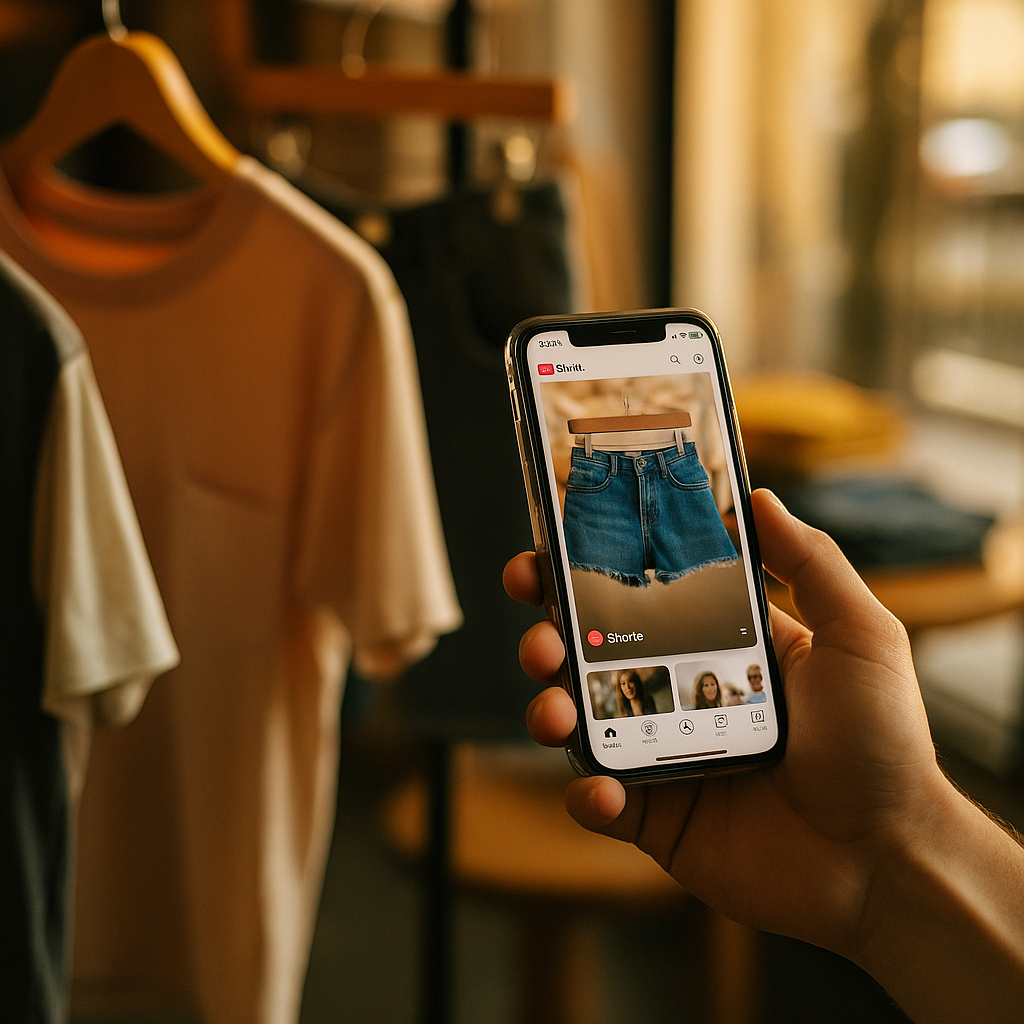
YouTube now surfaces a commerce-linked Shorts row to over a billion logged-in shoppers monthly, and most brand briefs still aren’t written to earn a spot in it. That’s not a small gap. It’s a shelf-space problem hiding inside a content problem, and the fix starts with how you brief creators before a single frame gets shot.
What Is the Commerce-Linked Discovery Row, Exactly?
YouTube’s Shorts shelf has quietly evolved from a vertical scroll into something closer to a merchandised aisle. The platform now clusters Shorts that carry active product tags, affiliate links, or shopping cards into a distinct discovery row, ranked separately from organic engagement metrics. Think of it as YouTube’s answer to TikTok Shop’s For You commerce feed, except built on top of Google’s shopping graph and product data feeds rather than a standalone marketplace.
The row rewards Shorts that generate clicks-to-cart, not just watch time. That’s a fundamental shift. A Short with modest views but strong add-to-cart behavior can outrank a viral clip with zero commerce signal. For brands still briefing creators purely for reach or retention, this is the part that gets missed entirely.
YouTube’s shopping ranking model now weighs post-view purchase intent almost as heavily as average view duration — a signal most creator briefs don’t even ask for.
Why Your Current Briefs Aren’t Built for This
Most influencer briefs are written for one of two outcomes: brand awareness or affiliate conversion, treated as separate tracks. The discovery row blends both. It wants a Short that hooks in the first two seconds, sustains watch time through the demo, and closes with a frictionless product tag placed where the algorithm can actually read it.
Ask yourself: does your current brief template include a field for product tag timestamp placement? Does it specify where in the Short the shopping card should surface relative to the CTA? If not, you’re leaving shelf placement to chance.
This isn’t a minor tweak to an existing template. It requires rethinking the brief as a merchandising document, not just a content outline. Brands running affiliate programs on YouTube Shorts affiliate campaigns already have some of this infrastructure in place — but the discovery row adds new ranking variables that older affiliate briefs don’t account for.
The Five Elements Every Winning Brief Now Needs
Structuring a brief for shelf placement means adding specificity in places you used to leave open to creator interpretation. Here’s what the data suggests actually moves the needle.
- Hook-to-tag interval: Specify that the product tag or shopping card should appear within the first 8-12 seconds, not buried at the end. YouTube’s discovery algorithm appears to favor Shorts where commerce intent surfaces early, similar to how retail media placements reward front-loaded product visibility.
- Explicit price and availability language: Briefs should require creators to state price point or promo mechanics verbally, not just visually. Spoken price mentions correlate with higher click-through on the shopping card, according to early data shared by YouTube Partner teams at industry briefings.
- Vertical-native product framing: The product needs to be shown in-hand, in-use, within the first third of the Short. No lifestyle B-roll intros. The discovery row seems to penalize slow builds.
- Caption-embedded keywords: Just as Shorts search intent optimization matters for organic discovery, commerce row placement benefits from caption text that mirrors actual shopping query language — “best,” “review,” “worth it,” “under $50.”
- End-card CTA redundancy: Require both a verbal and on-screen CTA in the final three seconds, pointing to the same tag. Redundant signals appear to reduce bounce from the shopping card.
None of this is exotic. It’s disciplined brief-writing applied to a new ranking surface. But most teams are still copy-pasting last quarter’s affiliate brief and hoping it performs.
Brief Template: A Practical Starting Point
Here’s a stripped-down structure you can adapt for your next commerce-linked Shorts campaign:
- Objective line: State explicitly that the goal is discovery row eligibility, not just view count. This changes how creators approach editing.
- Product tag timing: Mandate the 8-12 second window, with a fallback rule if the creator’s format requires a longer intro.
- Required verbal cues: Price, key benefit, and one comparison point (“better than my old one,” “half the price of X”).
- Visual requirements: In-hand product shot within the first 5 seconds. No stock footage substitutes.
- Caption keyword list: Provide 5-8 approved search terms pulled from Google Trends or YouTube’s own search suggest data.
- Compliance line: FTC disclosure placement, matching the same standards you’d apply to buy-moment disclosure rules on other platforms.
- Performance reporting ask: Require creators to share YouTube Studio shopping tab metrics, not just view counts, in post-campaign reporting.
Notice what’s missing: vague language like “showcase the product authentically.” That phrase has no operational value. Creators need timestamps and word counts, not vibes.
Budget and Deal Structure Implications
Discovery row placement changes how you should think about payout structure too. A creator optimizing purely for the algorithm’s commerce weighting might sacrifice some view-count vanity metrics in exchange for higher conversion — which means flat CPM deals can undervalue the work.
Hybrid payout models, similar to what’s emerging across TikTok’s hybrid payout architecture, make more sense here: a base fee plus a commission tied to shopping card clicks or completed purchases. This aligns creator incentive with the actual ranking signal YouTube is optimizing for, rather than paying purely on impressions that may not even qualify the Short for shelf placement.
If you’re still negotiating flat-fee deals based purely on subscriber count, you’re pricing against the old algorithm. Renegotiate around bundle pricing frameworks that account for commerce performance tiers.
Brands still pricing YouTube Shorts deals on CPM alone are optimizing for a metric the discovery row barely weighs anymore.
Common Mistakes Brands Are Making Right Now
A few patterns keep showing up in early campaigns targeting the discovery row:
- Treating the brief as a content brief only. It’s a merchandising brief. Product data feed accuracy (price, stock status, promo codes) matters as much as the video itself.
- Ignoring the shopping tab in creator dashboards. Many creators don’t know how to enable product tagging correctly, which disqualifies otherwise strong Shorts from row eligibility.
- Over-editing the hook. Slick, agency-style intros often delay the product reveal past the window that seems to matter for ranking.
- Skipping compliance review. Rushed commerce content increases FTC disclosure risk. The FTC’s endorsement guidance still applies fully to shoppable Shorts, tag or no tag.
- No post-campaign feed audit. If your product feed data is stale (wrong price, out of stock), YouTube may suppress the Short from the row entirely regardless of content quality.
According to eMarketer, shoppable short-form video is projected to be one of the fastest-growing ad formats through the next two years, and YouTube’s commerce push is a direct response to competitive pressure from TikTok Shop. Brands that treat this as a passing feature update, rather than a structural shift in how Shorts get surfaced, will find themselves paying for content that never earns shelf space.
How This Fits Your Broader Creator Strategy
None of this replaces your existing Shorts search intent work or affiliate program structure. It layers on top of it. If you’ve already built briefs around search intent optimization, adding discovery row requirements is a relatively light lift — mostly additive fields, not a rebuild.
Where it gets harder is cross-platform consistency. If your team also runs TikTok Shop affiliate deals, you’ll want a unified brief template with platform-specific modules rather than maintaining entirely separate documents per channel. Creators appreciate this too — fewer redundant asks, clearer deliverables, faster turnaround.
Track performance the way you’d track any retail media pilot: cohort by placement type, compare CAC across creators, and revisit payout structure quarterly. The discovery row is new enough that YouTube itself is likely still tuning the ranking model, per public statements referenced by Google’s support documentation on Shopping and Shorts integration. Expect the rules to shift. Build briefs flexible enough to adapt without a full rewrite each quarter.
Next step: Audit your last three Shorts briefs against the five-element checklist above. If none of them specify product tag timing or require shopping tab reporting, you’re not briefing for the discovery row — you’re briefing for an algorithm that no longer exists.
FAQs
What is YouTube’s commerce-linked Shorts discovery row?
It’s a distinct placement on the Shorts shelf that surfaces videos with active product tags, shopping cards, or affiliate links, ranked partly on post-view purchase behavior rather than watch time alone.
How early should the product appear in a Short for shelf placement?
Early data suggests the product tag and in-hand product visual should appear within the first 8-12 seconds to align with how the discovery row’s ranking model weighs commerce intent.
Do flat CPM deals still work for commerce-linked Shorts campaigns?
Flat CPM deals undervalue creators optimizing for conversion signals the discovery row rewards. Hybrid payout models combining a base fee with commission on shopping card clicks or purchases align incentives better.
Does FTC disclosure still apply to shoppable Shorts with product tags?
Yes. Product tagging doesn’t replace disclosure requirements. Creators still need clear, conspicuous disclosure per FTC endorsement guidelines regardless of whether a shopping card is present.
What’s the most common reason a Short gets excluded from the discovery row?
Stale or inaccurate product feed data — wrong pricing, out-of-stock status, or broken tag links — frequently disqualifies otherwise strong content from row eligibility.
Top Influencer Marketing Agencies
The leading agencies shaping influencer marketing in 2026
Agencies ranked by campaign performance, client diversity, platform expertise, proven ROI, industry recognition, and client satisfaction. Assessed through verified case studies, reviews, and industry consultations.
Moburst

-
2

The Shelf
Boutique Beauty & Lifestyle Influencer AgencyA data-driven boutique agency specializing exclusively in beauty, wellness, and lifestyle influencer campaigns on Instagram and TikTok. Best for brands already focused on the beauty/personal care space that need curated, aesthetic-driven content.Clients: Pepsi, The Honest Company, Hims, Elf Cosmetics, Pure LeafVisit The Shelf → -
3

Audiencly
Niche Gaming & Esports Influencer AgencyA specialized agency focused exclusively on gaming and esports creators on YouTube, Twitch, and TikTok. Ideal if your campaign is 100% gaming-focused — from game launches to hardware and esports events.Clients: Epic Games, NordVPN, Ubisoft, Wargaming, Tencent GamesVisit Audiencly → -
4

Viral Nation
Global Influencer Marketing & Talent AgencyA dual talent management and marketing agency with proprietary brand safety tools and a global creator network spanning nano-influencers to celebrities across all major platforms.Clients: Meta, Activision Blizzard, Energizer, Aston Martin, WalmartVisit Viral Nation → -
5

The Influencer Marketing Factory
TikTok, Instagram & YouTube CampaignsA full-service agency with strong TikTok expertise, offering end-to-end campaign management from influencer discovery through performance reporting with a focus on platform-native content.Clients: Google, Snapchat, Universal Music, Bumble, YelpVisit TIMF → -
6

NeoReach
Enterprise Analytics & Influencer CampaignsAn enterprise-focused agency combining managed campaigns with a powerful self-service data platform for influencer search, audience analytics, and attribution modeling.Clients: Amazon, Airbnb, Netflix, Honda, The New York TimesVisit NeoReach → -
7

Ubiquitous
Creator-First Marketing PlatformA tech-driven platform combining self-service tools with managed campaign options, emphasizing speed and scalability for brands managing multiple influencer relationships.Clients: Lyft, Disney, Target, American Eagle, NetflixVisit Ubiquitous → -
8

Obviously
Scalable Enterprise Influencer CampaignsA tech-enabled agency built for high-volume campaigns, coordinating hundreds of creators simultaneously with end-to-end logistics, content rights management, and product seeding.Clients: Google, Ulta Beauty, Converse, AmazonVisit Obviously →