


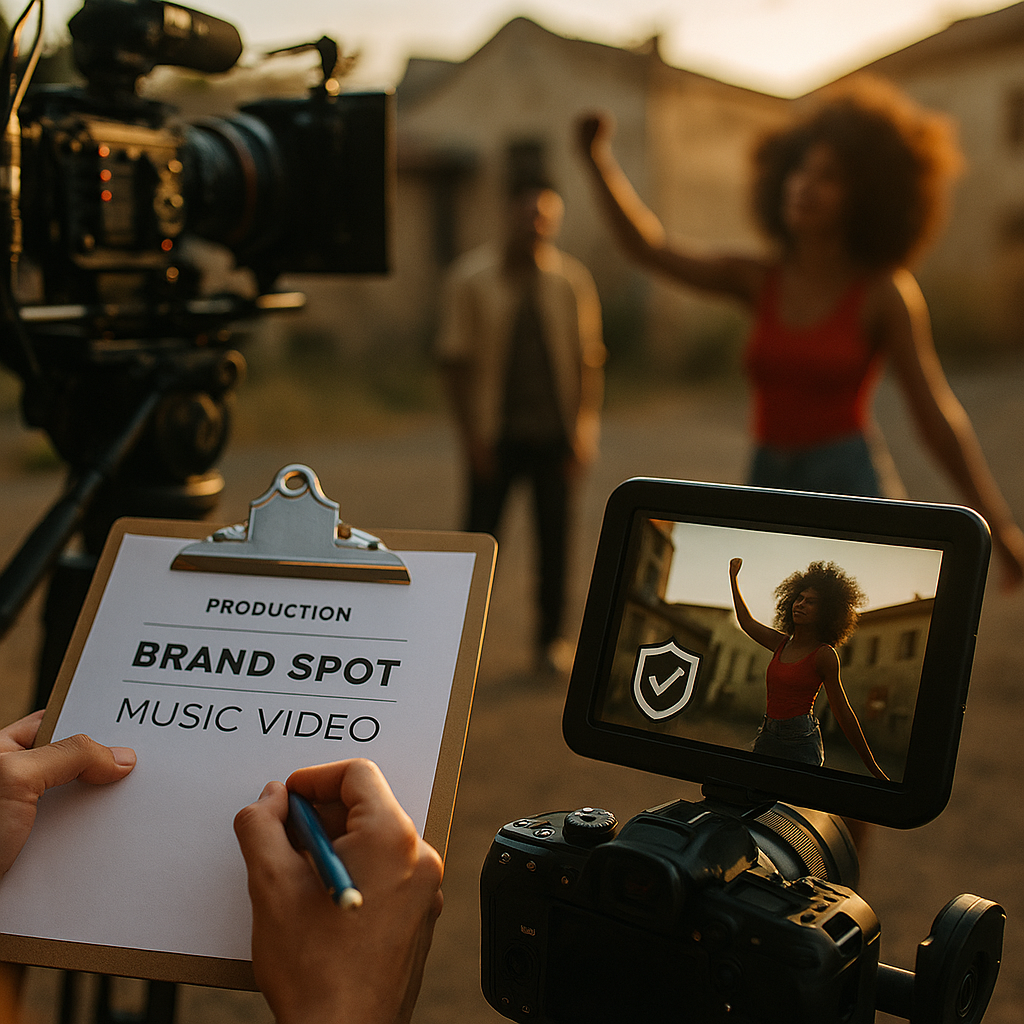
Most Branded Content Briefs Are Written Backwards
Brands spend 70% of their brief writing on compliance guardrails and 30% on the actual creative direction. Then they wonder why their “entertainment-first” ads feel like legal disclaimers with a soundtrack. The music-video brand spot brief fixes that ratio — but only if you know how to structure it.
What the Revival Models Are Actually Teaching Us
Gap’s 2024 “Spring Into It” campaign, Hawaiian Tropic’s sun-drenched lifestyle revival, and Lume Deodorant’s unapologetically weird long-form spots share one structural trait: they lead with a feeling, not a product feature. Each of these campaigns was built on a production brief that prioritized emotional momentum over message hierarchy. The brand mention arrives after the viewer is already hooked.
That’s the core mechanic. Not “product first, story second.” Invert it. This is what separates a music-video brand spot from a traditional creator integration.
Gap’s campaign in particular revived the music-video-as-ad format that peaked in the early 2000s, running creator-adjacent talent through choreographed sequences that felt editorial, not promotional. Hawaiian Tropic leaned into a retro aesthetic that made the brand feel discovered rather than sold. Lume went the opposite direction — chaotic, conversational, almost anti-production — but the brief structure underneath was the same: establish a world, live in it for 80% of the runtime, then land the brand.
Entertainment-first doesn’t mean brand-last. It means the brand earns its placement by being native to the world the creative builds around it.
If you’re sourcing talent through creator-adjacent casting — micro or mid-tier creators with aesthetic followings rather than traditional actors — this brief structure becomes even more critical. Creators default to their own content instincts. A weak brief produces a creator video with a logo slapped on it. A strong brief produces something that genuinely blurs the line between content and commerce. For a deeper dive on the format mechanics, see this primer on music video format revival and how it intersects with influencer strategy.
Anatomy of the Music-Video Brand Spot Brief
There are six components that separate a functional brief from a generative one in this format. Not five. Not eight. Six.
1. The World Statement. Before you write a single production note, define the world the spot lives in. This is not the brand story. It’s the aesthetic universe: color temperature, energy level, cultural reference point, and emotional register. Gap’s Spring campaign world: “mid-century American optimism, filtered through Gen Z spontaneity.” That’s a world. “Modern and fresh” is not.
2. The Sonic Spine. In a music-video brand spot, the track is not background. It’s structural. Your brief must specify whether the track is licensed, original, or creator-generated, and it must define how the edit serves the music (not the other way around). Include tempo range, genre reference, and whether lyrics carry any brand message. This is where most briefs fail — they treat music as a post-production decision when it’s a pre-production anchor.
3. The Visual Language Map. Three to five visual references, annotated. Not a Pinterest mood board link. Annotated references that explain why each image is relevant. “Reference A: the color grading, not the composition.” “Reference B: the energy of the blocking, not the wardrobe.” This precision is what allows creators to execute on aesthetic intent without mimicry.
4. The Brand Integration Window. Define the exact moment (or range of moments) where the brand enters the narrative. Is it a prop? A set element? A wardrobe piece? A direct-to-camera mention? Specify placement in time: “brand enters no earlier than 0:45 in a 60-second spot.” This protects the entertainment arc while giving legal and compliance a clear parameter to review against.
5. The Disclosure Architecture. This is where FTC compliance lives in the brief — not in a separate document, not in post-production, but embedded in the production direction itself. More on this below.
6. The Deliverable Matrix. Music-video brand spots almost always need to be cut across formats. Define aspect ratios, runtime variants, and platform-specific edits before production starts. A 9:16 cut for TikTok and a 16:9 cut for YouTube are not the same creative — they require different shoot planning. Briefs that ignore this create expensive reshoots. For a structured approach to multi-platform shoot planning, the multi-format creator shoot brief framework is a useful operational reference.
The FTC Problem Nobody Wants to Write Into Their Creative Brief
Here’s the tension: FTC guidelines require clear and conspicuous disclosure of material connections. “Clear and conspicuous” means the disclosure can’t be buried in a caption, hidden in hashtags, or placed in a way that viewers are likely to miss. In a music-video format where the brand integration is intentionally subtle, this creates a real creative problem.
The solution is not to treat disclosure as a compliance checkbox you apply after the creative is done. It’s to design the disclosure into the entertainment arc.
Lume’s spots are instructive here. The creator (often the brand’s founder) breaks the fourth wall in a way that feels intentional and comedic — the disclosure moment becomes part of the entertainment value rather than an interruption of it. The viewer is in on the joke. That’s not an accident. That’s a brief that specified: “disclosure delivered in-character, within the first 10 seconds, framed as self-aware humor.”
For creator-adjacent talent specifically, your brief should include a Disclosure Direction section that specifies: placement (start, mid, or end), format (verbal, on-screen text, or both), exact language or approved language variants, and character-voice guidance so the disclosure doesn’t break the creative register. The entertainment commerce creator brief format covers shoppable adjacent contexts well and offers a transferable disclosure framework.
Production Direction Language That Actually Works
Most briefs say “authentic feel.” What does that mean on set? Nothing actionable. Replace vague adjectives with specific production parameters:
- Instead of “candid and natural,” write: “handheld, no tripod, minimal lighting correction in post, talent blocking should feel self-directed rather than choreographed.”
- Instead of “cinematic,” write: “anamorphic lens preferred, shallow depth of field throughout, color grade references provided.”
- Instead of “high energy,” write: “cuts every 1.5-2 seconds during movement sequences, edit locked to the downbeat of the track.”
This level of specificity is what separates a brief that generates consistent output from one that produces five wildly different interpretations depending on who shows up on set. It also protects the brand during the approval process — if the creator delivers something off-brief, you have specific parameters to point to, not aesthetic arguments.
For formats that span short-form and long-form simultaneously, the hook and CTA architecture changes significantly. The short-form video hook strategy resource covers how to build opening sequences that work regardless of where the content is distributed.
Vague adjectives in a brief are a production liability. Every undefined “authentic” or “cinematic” is a scope dispute waiting to happen.
Creator-Adjacent Casting and What It Changes About Your Brief
Creator-adjacent talent — creators used for their aesthetic credibility rather than their audience reach — behave differently on set than traditional talent. They’re accustomed to being their own directors. Your brief needs to account for this by building in structured creative latitude: defined moments where the creator can improvise within a set of parameters, rather than a fully locked script.
Define the improvisation zones explicitly. “Scene 2: creator moves through the space, interacts with the product naturally, no scripted dialogue — but the product must be visible and the brand name spoken once.” That’s latitude with a guardrail. It’s also much easier to approve in post because the parameters were pre-agreed.
This also affects how you handle hybrid music-video briefs when the creator is also contributing to the sonic direction. If the talent has a musical identity that maps to the brand world, lean into it — but specify the collaboration boundaries in the brief, not in a conversation on set.
Platform Distribution and the Brief’s Final Job
A music-video brand spot brief isn’t done when it covers production. It needs to specify distribution context because the platform affects how the FTC disclosure lands. A verbal disclosure that works in a 60-second TikTok may not satisfy requirements on YouTube, where on-screen text conventions differ. FTC enforcement has been explicit that platform-native disclosure formats don’t automatically satisfy the “clear and conspicuous” standard across all environments.
Your brief should specify primary and secondary distribution platforms and note any platform-specific disclosure requirements. For YouTube upfront inventory specifically, the YouTube music video ad brief framework covers the additional layer of pre-roll and mid-roll placement requirements that affect where disclosures need to appear.
Reference Google’s ad policies for YouTube-specific branded content requirements, and confirm TikTok’s branded content tool requirements at TikTok for Business before locking your brief. These are not static — platform policy updates regularly outpace brief templates.
The Influencer Marketing Hub’s 2026 benchmark data shows that branded entertainment content (defined as content where the brand integration is non-interruptive) drives 2.3x higher completion rates than standard sponsored content on short-form platforms. That’s the business case for writing a harder brief. The production lift is real, but so is the performance differential.
For brands operating at scale across multiple creator partners, consider how the one-shoot, multi-platform repurposing model can reduce per-asset production costs while maintaining the brief’s entertainment standards across each format variant.
Start your next music-video brand spot brief by writing the World Statement and the Sonic Spine before you write a single compliance note. Get the creative architecture right first, then build the disclosure direction into it. The brief that earns the best creative output is the one that treats FTC compliance as a production design challenge, not a legal afterthought.
Frequently Asked Questions
What is a music-video brand spot brief?
A music-video brand spot brief is a production direction document that frames a brand advertisement within an entertainment-first, music-video format. Unlike traditional creative briefs, it prioritizes emotional and aesthetic world-building before brand messaging, specifying sonic direction, visual language, brand integration timing, and FTC-compliant disclosure architecture as integrated creative elements rather than separate compliance layers.
How do you include FTC disclosure in an entertainment-first ad without breaking the creative?
The key is to design the disclosure into the creative arc during brief writing rather than appending it in post-production. This means specifying in the brief exactly when the disclosure appears, in what format (verbal, on-screen text, or both), and how the talent’s character voice should deliver it so it fits the tone of the spot. Lume’s approach of using self-aware, comedic disclosure within the first 10 seconds is a proven model for making compliance feel intentional rather than disruptive.
What makes creator-adjacent talent different from traditional talent in this format?
Creator-adjacent talent are creators selected for their aesthetic credibility and cultural fit rather than their audience size. They typically have strong creative instincts and are accustomed to self-directing. A good music-video brand spot brief accounts for this by building structured improvisation zones into the script, defining where creative latitude is permitted and what non-negotiable brand requirements exist within those zones, so the output feels authentic without being off-brand.
How should the brief handle multi-platform delivery?
The brief should specify primary and secondary distribution platforms before production begins, because aspect ratio, runtime, and disclosure format requirements differ across TikTok, YouTube, Instagram, and CTV. A 9:16 TikTok cut and a 16:9 YouTube cut require different shoot planning. FTC disclosure requirements also vary in application by platform, so the brief should note platform-specific disclosure formats for each deliverable rather than assuming one approach satisfies all environments.
What are the six components of a music-video brand spot brief?
The six components are: (1) the World Statement, which defines the aesthetic universe and emotional register; (2) the Sonic Spine, which establishes the music track’s role as a structural element; (3) the Visual Language Map, which provides annotated creative references; (4) the Brand Integration Window, which defines when and how the brand enters the narrative; (5) the Disclosure Architecture, which embeds FTC-compliant disclosure direction into the production plan; and (6) the Deliverable Matrix, which specifies format variants for each distribution platform.
Top Influencer Marketing Agencies
The leading agencies shaping influencer marketing in 2026
Agencies ranked by campaign performance, client diversity, platform expertise, proven ROI, industry recognition, and client satisfaction. Assessed through verified case studies, reviews, and industry consultations.
Moburst

-
2

The Shelf
Boutique Beauty & Lifestyle Influencer AgencyA data-driven boutique agency specializing exclusively in beauty, wellness, and lifestyle influencer campaigns on Instagram and TikTok. Best for brands already focused on the beauty/personal care space that need curated, aesthetic-driven content.Clients: Pepsi, The Honest Company, Hims, Elf Cosmetics, Pure LeafVisit The Shelf → -
3

Audiencly
Niche Gaming & Esports Influencer AgencyA specialized agency focused exclusively on gaming and esports creators on YouTube, Twitch, and TikTok. Ideal if your campaign is 100% gaming-focused — from game launches to hardware and esports events.Clients: Epic Games, NordVPN, Ubisoft, Wargaming, Tencent GamesVisit Audiencly → -
4

Viral Nation
Global Influencer Marketing & Talent AgencyA dual talent management and marketing agency with proprietary brand safety tools and a global creator network spanning nano-influencers to celebrities across all major platforms.Clients: Meta, Activision Blizzard, Energizer, Aston Martin, WalmartVisit Viral Nation → -
5

The Influencer Marketing Factory
TikTok, Instagram & YouTube CampaignsA full-service agency with strong TikTok expertise, offering end-to-end campaign management from influencer discovery through performance reporting with a focus on platform-native content.Clients: Google, Snapchat, Universal Music, Bumble, YelpVisit TIMF → -
6

NeoReach
Enterprise Analytics & Influencer CampaignsAn enterprise-focused agency combining managed campaigns with a powerful self-service data platform for influencer search, audience analytics, and attribution modeling.Clients: Amazon, Airbnb, Netflix, Honda, The New York TimesVisit NeoReach → -
7

Ubiquitous
Creator-First Marketing PlatformA tech-driven platform combining self-service tools with managed campaign options, emphasizing speed and scalability for brands managing multiple influencer relationships.Clients: Lyft, Disney, Target, American Eagle, NetflixVisit Ubiquitous → -
8

Obviously
Scalable Enterprise Influencer CampaignsA tech-enabled agency built for high-volume campaigns, coordinating hundreds of creators simultaneously with end-to-end logistics, content rights management, and product seeding.Clients: Google, Ulta Beauty, Converse, AmazonVisit Obviously →