


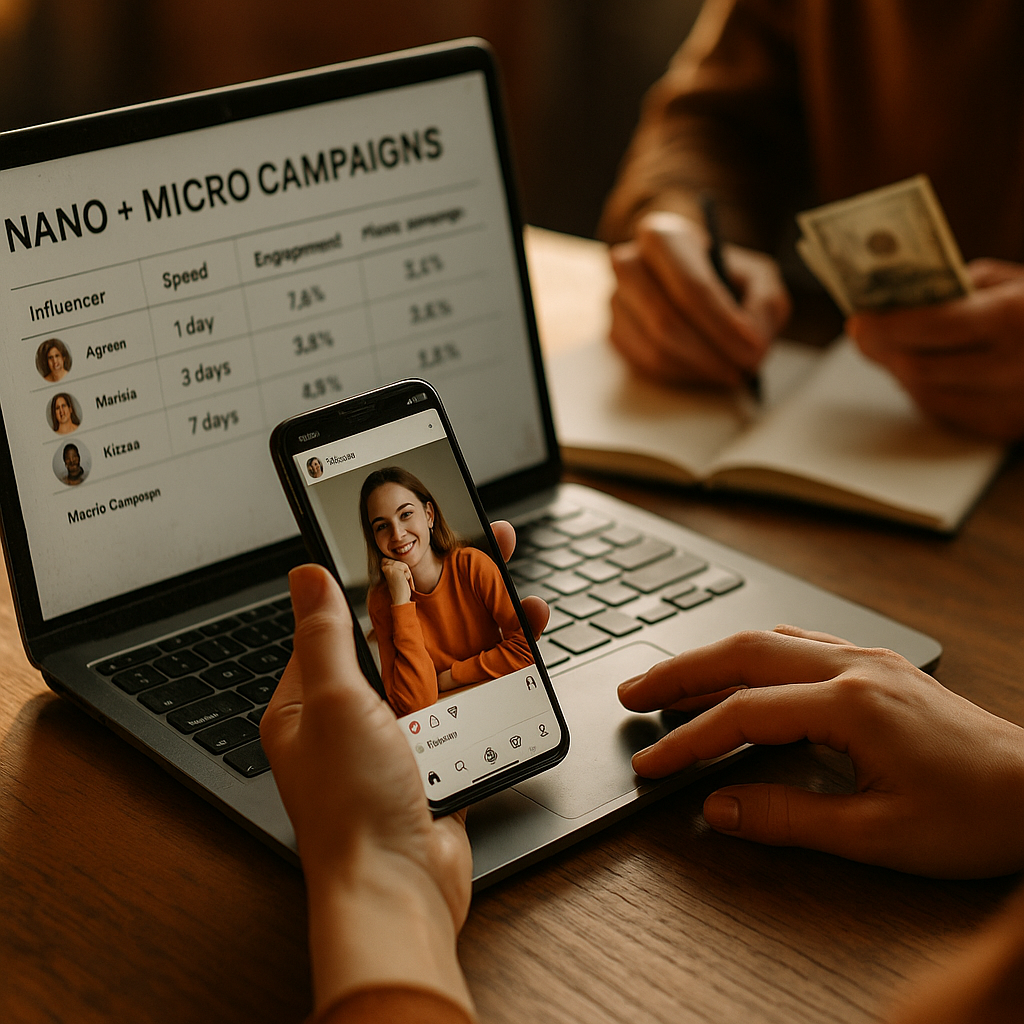
Macro influencer deals used to be the fast lane. Not anymore. Brands running side-by-side tests in late 2026 are finding that nano and micro-influencer content clears legal, brand safety, and client approval in a fraction of the time macro deals take, and it’s out-engaging the big names on a per-dollar basis too. If your influencer program still routes budget toward six-figure creators first, the data says you’re optimizing for the wrong variable.
The Approval Speed Gap Nobody Budgeted For
Macro and celebrity-tier deals carry legal weight that nano deals simply don’t. A creator with two million followers triggers full contract review, usage rights negotiation, exclusivity clauses, and often a compliance pass tied to endorsement guidance from the FTC. That process alone can eat two to three weeks before a single asset gets shot.
Nano and micro creators, by contrast, are increasingly onboarded through templated agreements built for volume. Many brands now run these deals through managed marketplaces or agency-built systems that pre-clear usage rights and disclosure language at the point of signup. There’s no legal back-and-forth because the terms were standardized before the creator ever pitched. That’s the entire premise behind the shift covered in managed services replacing software-only workflows: speed comes from process design, not from finding a “faster” creator.
Brands report micro-influencer content clearing legal and brand review in an average of three to five business days, versus two to four weeks for macro and celebrity talent, according to agency benchmarking shared across several creator marketplaces this year.
That gap compounds. A brand running quarterly campaigns with macro talent gets maybe four content cycles a year. A brand running weekly nano drops gets fifty-two. Volume plus speed is a compounding advantage that a single splashy macro deal can’t match, no matter how good the reach numbers look on a media plan.
Why Legal Teams Move Faster on Smaller Creators
It comes down to exposure. A macro influencer’s audience is broad, public, and often scrutinized by press. One misstep and it’s a headline. A nano creator’s audience is smaller, tighter, and the reputational blast radius if something goes wrong is contained. Legal teams know this, which is why review cycles for smaller creators get deprioritized in the good sense: less risk, less scrutiny, faster sign-off.
This is also why platform policy shifts hit macro deals harder. When Meta or TikTok tightens usage caps or youth safety rules, as detailed in the recent usage cap changes, it’s the high-visibility creator partnerships that get re-papered first. Nano deals, running on templated terms, absorb policy changes with a documentation update instead of a full renegotiation.
Engagement: The Numbers Behind the Claim
Reach was never the same thing as engagement, but for years brands treated it that way. Late 2026 benchmarking is making the gap impossible to ignore. Nano creators (typically under 10,000 followers) are posting engagement rates in the 5 to 8 percent range on platforms like Instagram and TikTok. Macro creators with audiences over 500,000 are frequently landing under 1.5 percent, according to industry tracking cited by Sprout Social and corroborated by eMarketer creator economy reports.
Why? Smaller audiences trust the creator more. There’s less algorithmic distance between the poster and the follower, and the content reads as a recommendation from a peer rather than an ad placement from a stranger. That trust dynamic is exactly what’s driving the broader pivot documented in micro-community campaigns outperforming mega-influencer buys by 25 percent ROI in APAC markets, and the pattern is now global, not regional.
Cost per engagement tells the same story from a different angle. A macro deal might run $30,000 to $75,000 for a single post reaching a million impressions at sub-1 percent engagement. That same budget can fund forty to sixty nano and micro placements, each converting at four to six times the engagement rate. The math isn’t close.
Organic Feel Still Wins Even in a Paid Placement
There’s a content-quality piece here too. Micro creators shoot on phones, in their actual homes, with actual lighting problems. It looks real because it is real. That’s the same organic-first logic explored in organic-first seeding beating paid amplification in recent media mix modeling. Audiences have gotten remarkably good at spotting overproduced sponsor content, and they scroll past it. A shaky ten-second clip from a creator with eight thousand followers doesn’t trigger that instinct.
The Economics Nobody Wants to Say Out Loud
Here’s the uncomfortable part for agencies built around big-name talent relationships: the fee structure for macro deals hasn’t kept pace with the declining engagement returns. Pricing friction in influencer fees means brands are frequently paying premium rates for names, not performance. Meanwhile rising CPMs across paid social, tracked in recent CPM data, are pushing budget away from paid amplification of any influencer content and toward organic reach and search-adjacent discovery.
Put those two forces together and you get a budget reallocation that favors volume over prestige. Brands aren’t choosing nano creators because they’re trendy. They’re choosing them because the unit economics work better in a market where CPMs are climbing and consumer trust in traditional ads is falling, a trend also flagged in coverage of AI personalization rising as ad trust falls.
A portfolio of fifty micro-creator deals now frequently outperforms a single macro placement on both speed to market and total engaged audience, at comparable total spend.
What This Means for Program Design
If your influencer strategy still centers on landing one or two marquee names per quarter, it’s worth stress-testing that model against a volume-based nano and micro approach. This doesn’t mean macro deals are dead. Awareness campaigns, product launches with mass-market ambitions, and brand halo plays still benefit from big-name reach. But for performance-driven programs where the KPI is engagement, conversion, or content velocity, the smaller-creator model is winning on every operational metric that matters.
- Build templated legal frameworks first. Speed comes from standardized contracts and pre-cleared usage rights, not from chasing “easier” creators.
- Shift budget from single big-name deals to creator portfolios. Spreading spend across dozens of nano and micro partners reduces both reputational risk and reliance on any single creator’s brand.
- Track cost per engagement, not cost per follower. This single metric shift changes almost every sourcing decision.
- Automate sourcing, keep vetting human. The AI divide between cheap sourcing and costly vetting is real. Volume-based programs need scalable discovery tools paired with actual human review of fit and authenticity.
Marketers researching this shift can also look at how HubSpot and Statista are tracking creator tier performance data, both of which now break out engagement benchmarks by follower cohort rather than treating “influencer” as a single monolithic category. That segmentation itself is a signal: the industry has stopped pretending all influencer deals are the same product.
Frequently Asked Questions
Why do nano and micro-influencer deals get approved faster than macro deals?
Nano and micro deals typically run on templated, pre-cleared contracts with standardized usage rights, so there’s minimal legal negotiation. Macro deals involve more complex terms, exclusivity clauses, and higher-scrutiny compliance review, which extends approval timelines to weeks instead of days.
Is engagement rate really higher for smaller creators, or is that a myth?
It’s consistently documented across platforms. Nano creators (under 10,000 followers) regularly post engagement rates several times higher than macro or celebrity-tier accounts, largely because audiences trust smaller creators as peers rather than as advertising channels.
Should brands stop working with macro influencers entirely?
No. Macro and celebrity deals still make sense for mass awareness plays and product launches where broad reach is the primary goal. But for engagement, conversion, or content-velocity KPIs, nano and micro portfolios generally deliver better returns per dollar spent.
How can legal and compliance teams speed up macro influencer approvals?
Building standardized contract templates in advance, aligning usage rights language with current platform policy, and pre-clearing disclosure requirements per FTC guidance can compress macro approval timelines significantly, even if they’ll rarely match nano-tier speed.
What’s the best way to manage dozens of micro-influencer relationships at once?
Most brands use managed marketplaces or agency-run systems that handle sourcing, contracting, and payment at scale, pairing automated discovery with human vetting to maintain quality and brand fit across a large creator portfolio.
Next step: audit your last two quarters of influencer spend by cost per engagement, not cost per follower, then reallocate at least 20 percent of your next macro budget line into a nano and micro creator portfolio and measure the approval timeline difference yourself.
Top Influencer Marketing Agencies
The leading agencies shaping influencer marketing in 2026
Agencies ranked by campaign performance, client diversity, platform expertise, proven ROI, industry recognition, and client satisfaction. Assessed through verified case studies, reviews, and industry consultations.
Moburst

-
2

The Shelf
Boutique Beauty & Lifestyle Influencer AgencyA data-driven boutique agency specializing exclusively in beauty, wellness, and lifestyle influencer campaigns on Instagram and TikTok. Best for brands already focused on the beauty/personal care space that need curated, aesthetic-driven content.Clients: Pepsi, The Honest Company, Hims, Elf Cosmetics, Pure LeafVisit The Shelf → -
3

Audiencly
Niche Gaming & Esports Influencer AgencyA specialized agency focused exclusively on gaming and esports creators on YouTube, Twitch, and TikTok. Ideal if your campaign is 100% gaming-focused — from game launches to hardware and esports events.Clients: Epic Games, NordVPN, Ubisoft, Wargaming, Tencent GamesVisit Audiencly → -
4

Viral Nation
Global Influencer Marketing & Talent AgencyA dual talent management and marketing agency with proprietary brand safety tools and a global creator network spanning nano-influencers to celebrities across all major platforms.Clients: Meta, Activision Blizzard, Energizer, Aston Martin, WalmartVisit Viral Nation → -
5

The Influencer Marketing Factory
TikTok, Instagram & YouTube CampaignsA full-service agency with strong TikTok expertise, offering end-to-end campaign management from influencer discovery through performance reporting with a focus on platform-native content.Clients: Google, Snapchat, Universal Music, Bumble, YelpVisit TIMF → -
6

NeoReach
Enterprise Analytics & Influencer CampaignsAn enterprise-focused agency combining managed campaigns with a powerful self-service data platform for influencer search, audience analytics, and attribution modeling.Clients: Amazon, Airbnb, Netflix, Honda, The New York TimesVisit NeoReach → -
7

Ubiquitous
Creator-First Marketing PlatformA tech-driven platform combining self-service tools with managed campaign options, emphasizing speed and scalability for brands managing multiple influencer relationships.Clients: Lyft, Disney, Target, American Eagle, NetflixVisit Ubiquitous → -
8

Obviously
Scalable Enterprise Influencer CampaignsA tech-enabled agency built for high-volume campaigns, coordinating hundreds of creators simultaneously with end-to-end logistics, content rights management, and product seeding.Clients: Google, Ulta Beauty, Converse, AmazonVisit Obviously →