


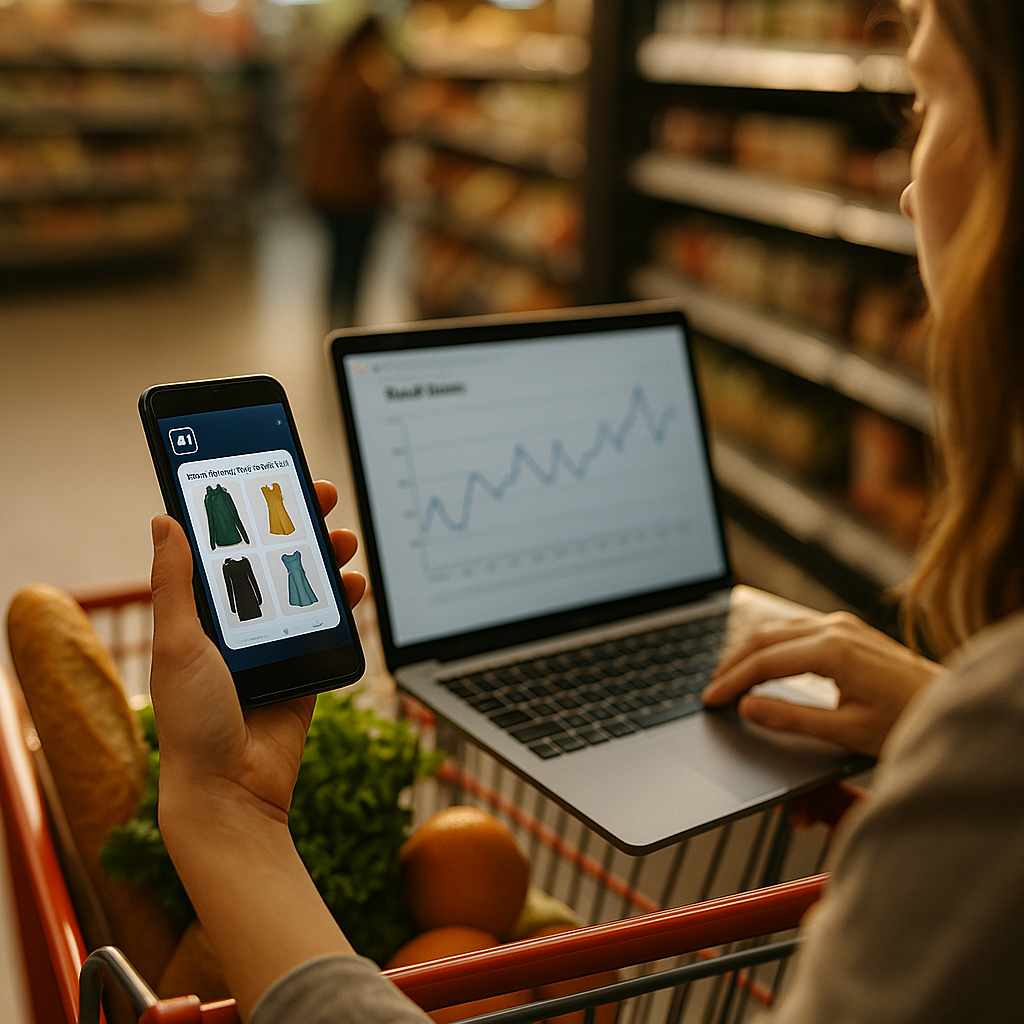
Zero clicks. That’s what most AI shopping assistants leave behind when they recommend a product, add it to a cart, and complete checkout on a shopper’s behalf. If your attribution stack still relies on last-click data, you’re already measuring a channel that’s disappearing. NIQ and Similarweb just launched a joint AI shopping measurement system built specifically to close that gap, and it’s forcing brand marketers to rethink what “visibility” even means.
What NIQ and Similarweb Actually Built
NIQ (formerly NielsenIQ) brings decades of retail sales panel data and point-of-sale measurement. Similarweb brings web and app traffic intelligence, plus a growing dataset on how consumers interact with AI assistants like ChatGPT, Gemini, and Perplexity before they buy. Combined, the two companies are positioning their new system as a way to trace the full path from an AI-generated product recommendation to an actual retail transaction, something neither company could do alone.
The pitch is simple: as agentic checkout tools handle more purchases without a human clicking through a traditional funnel, brands need a way to see which products got surfaced, why, and whether that visibility converted to sales. NIQ supplies the “did it sell” half. Similarweb supplies the “how did the AI find it” half.
The core problem this system addresses isn’t new. It’s the same attribution gap brands have fought for years, just moved one layer upstream into AI recommendation engines instead of search results.
Why Traditional Measurement Is Failing Brands Right Now
Ask any performance marketer how confident they are in their current attribution model, and you’ll get a nervous laugh. Multi-touch attribution was already shaky before generative AI entered the shopping journey. Now add a layer where a consumer asks ChatGPT for a “best budget blender under $80,” gets three options, and buys one through an embedded checkout flow. No referral URL. No UTM tag. No session data pointing back to the brand’s paid media or influencer content that originally built awareness.
This is the exact scenario covered in our piece on agentic checkout and lost creator credit, and it’s precisely what NIQ and Similarweb are trying to patch. Without a system like this, brands are flying blind on a growing share of transactions. Estimates vary, but industry researchers at eMarketer have flagged AI-assisted commerce as one of the fastest-growing influences on purchase decisions, even where the actual transaction still happens on a retailer’s own site.
So the failure isn’t just technical. It’s strategic. Brands that can’t measure AI-driven discovery can’t defend budget for the content, PR, and creator partnerships that feed those AI models in the first place.
How the System Tracks AI-Driven Shopping Journeys
Here’s the mechanics, stripped of vendor jargon. Similarweb’s panel and clickstream data identifies when a consumer session includes interaction with an AI shopping assistant, whether that’s a standalone chatbot, a browser-integrated agent, or a retailer’s own AI search feature. It captures which brands and products got mentioned, in what order, and with what framing (comparison, recommendation, direct answer).
NIQ then overlays retail sales data, point-of-sale scans, and e-commerce transaction records to determine whether those AI-surfaced products actually sold, and at what velocity compared to products that weren’t surfaced by AI at all. The result is a correlation model, not a perfect one-to-one attribution chain, but a meaningfully better signal than what most brands have today.
- Tracks AI mention frequency and sentiment by brand and SKU
- Maps mentions against actual retail sell-through data
- Segments by category, region, and AI platform
- Flags share-of-voice shifts before they show up in sales dips
This lines up with the broader shift we’ve covered in rebuilding KPIs for AI mentions. Mentions are becoming the new impressions. Brands that ignore them are essentially ignoring the top of a funnel that increasingly decides the bottom.
Where the Data Gaps Still Show Up
No system is complete, and this one isn’t either. Retailers that don’t share granular SKU-level data create blind spots. Private AI assistants (think enterprise procurement bots or closed retail apps) aren’t fully visible to Similarweb’s tracking. And correlation between AI mention and sale still isn’t causation, no matter how clean the dashboard looks. Treat the early outputs as directional, not gospel.
What This Means for Budget Allocation
If you’re a CMO or brand strategist staring at next year’s plan, this changes the conversation with finance. For years, marketing mix modeling has struggled to account for platform-level opacity, a problem we detailed in marketing mix modeling’s return amid platform trust collapse. AI shopping measurement gives MMM practitioners a new input variable: AI recommendation exposure as a media channel in its own right.
Practically, that means brands should start requesting AI-mention data alongside their standard paid and organic reports. It also means creator and PR investments that build the kind of structured, quotable brand content AI models favor deserve a harder look. Our analysis of how shopping bots pick brands over ads found that data quality and structured content, not ad spend, drove AI recommendation frequency. That’s a direct challenge to legacy media mix assumptions.
If AI assistants are recommending products based on structured data and earned content rather than paid placement, budget allocated purely to media buying is measuring the wrong lever.
The Compliance and Data Angle Brands Can’t Ignore
Every new measurement system built on consumer behavioral data raises the same question: how was that data collected, and is it defensible? NIQ and Similarweb both operate within established data governance frameworks, but brands adopting this measurement layer still need to vet how AI mention data is sourced and whether it complies with regional privacy expectations. The Federal Trade Commission has been increasingly active on AI-related consumer protection issues, and UK-based brands should keep an eye on guidance from the Information Commissioner’s Office as AI shopping measurement scales across markets.
There’s also an internal data hygiene issue. This system is only as useful as the product data feeding it. Brands with messy SKU taxonomies, inconsistent product naming, or incomplete retailer feeds will get noisy, unreliable outputs. This is the same lesson covered in clean first-party data deciding agentic recommendations: garbage in, garbage out applies just as much to AI shopping measurement as it does to any other data pipeline.
Getting Ready: Practical Steps for Marketing Teams
You don’t need to overhaul your entire measurement stack this quarter. But there are concrete moves worth making now, before this becomes table stakes and competitors have a year’s head start on the data.
- Audit your product data feeds for consistency across retailers, since fragmented SKU data will limit what NIQ and Similarweb can accurately measure for your brand.
- Ask your current analytics or MMM vendor whether they plan to integrate AI shopping mention data, and if not, why not.
- Start tracking AI mention share-of-voice manually using tools like Sprout Social or similar listening platforms as a stopgap while enterprise integrations roll out.
- Brief your creator and content teams on what makes brand information “AI-legible,” structured data, clear specs, and consistent naming, since that content is now doing double duty as both consumer-facing and machine-readable.
- Loop in legal and compliance early. Data-sharing agreements with retail partners may need updates to support this level of cross-referencing.
Teams already building AI attribution roadmaps have a head start here. Our piece on AI attribution adoption nearing 60 percent outlines the sequencing most enterprise marketing orgs are following, and this NIQ-Similarweb system slots neatly into that roadmap as a retail-specific measurement layer.
Frequently Asked Questions
What exactly does NIQ and Similarweb’s AI shopping measurement system track?
It tracks when consumers interact with AI shopping assistants and chatbots, which brands and products get recommended in those interactions, and then correlates that exposure with actual retail sales data to show whether AI-driven recommendations translate into purchases.
Is this system a replacement for traditional attribution tools like Google Analytics?
No. It’s a complementary layer designed specifically for AI-driven shopping journeys that traditional click-based attribution tools can’t see, such as recommendations made inside chatbots or agentic checkout flows where no referral link exists.
How accurate is the correlation between AI mentions and actual sales?
The system provides directional, correlation-based insight rather than precise one-to-one attribution. Data gaps exist where retailers don’t share granular sales data or where AI assistants operate in closed, non-trackable environments.
Do brands need to sign up separately with NIQ and Similarweb to access this data?
Yes, access typically requires existing or new enterprise relationships with one or both companies, since the measurement product combines proprietary panel and retail data from each firm.
What can brands do right now to prepare for AI shopping measurement?
Clean up product data feeds across retail partners, ensure consistent SKU naming and specs, and start manually tracking AI mention share-of-voice using existing social listening or web analytics tools while enterprise integrations become available.
The brands that win the next planning cycle won’t be the ones with the biggest media budgets. They’ll be the ones who can prove, with real retail data, that their AI visibility actually converts. Start the product data audit this week, not after your competitors already have a quarter of clean measurement in hand.
Top Influencer Marketing Agencies
The leading agencies shaping influencer marketing in 2026
Agencies ranked by campaign performance, client diversity, platform expertise, proven ROI, industry recognition, and client satisfaction. Assessed through verified case studies, reviews, and industry consultations.
Moburst

-
2

The Shelf
Boutique Beauty & Lifestyle Influencer AgencyA data-driven boutique agency specializing exclusively in beauty, wellness, and lifestyle influencer campaigns on Instagram and TikTok. Best for brands already focused on the beauty/personal care space that need curated, aesthetic-driven content.Clients: Pepsi, The Honest Company, Hims, Elf Cosmetics, Pure LeafVisit The Shelf → -
3

Audiencly
Niche Gaming & Esports Influencer AgencyA specialized agency focused exclusively on gaming and esports creators on YouTube, Twitch, and TikTok. Ideal if your campaign is 100% gaming-focused — from game launches to hardware and esports events.Clients: Epic Games, NordVPN, Ubisoft, Wargaming, Tencent GamesVisit Audiencly → -
4

Viral Nation
Global Influencer Marketing & Talent AgencyA dual talent management and marketing agency with proprietary brand safety tools and a global creator network spanning nano-influencers to celebrities across all major platforms.Clients: Meta, Activision Blizzard, Energizer, Aston Martin, WalmartVisit Viral Nation → -
5

The Influencer Marketing Factory
TikTok, Instagram & YouTube CampaignsA full-service agency with strong TikTok expertise, offering end-to-end campaign management from influencer discovery through performance reporting with a focus on platform-native content.Clients: Google, Snapchat, Universal Music, Bumble, YelpVisit TIMF → -
6

NeoReach
Enterprise Analytics & Influencer CampaignsAn enterprise-focused agency combining managed campaigns with a powerful self-service data platform for influencer search, audience analytics, and attribution modeling.Clients: Amazon, Airbnb, Netflix, Honda, The New York TimesVisit NeoReach → -
7

Ubiquitous
Creator-First Marketing PlatformA tech-driven platform combining self-service tools with managed campaign options, emphasizing speed and scalability for brands managing multiple influencer relationships.Clients: Lyft, Disney, Target, American Eagle, NetflixVisit Ubiquitous → -
8

Obviously
Scalable Enterprise Influencer CampaignsA tech-enabled agency built for high-volume campaigns, coordinating hundreds of creators simultaneously with end-to-end logistics, content rights management, and product seeding.Clients: Google, Ulta Beauty, Converse, AmazonVisit Obviously →