


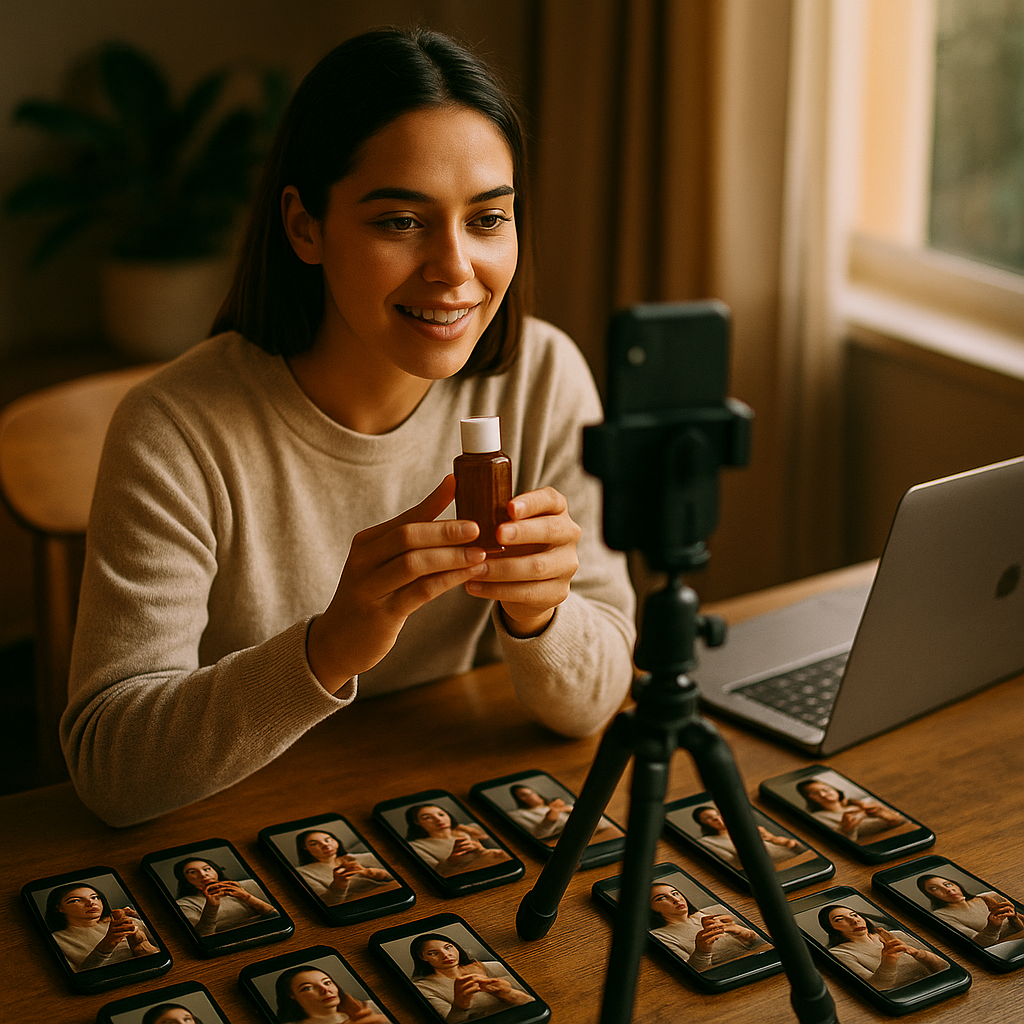
One brand shot a single UGC video last quarter and turned it into 14 distinct ad variants, each testing a different hook, pain point, and call to action, without booking a second creator session. That is the promise driving a quiet but significant shift in how performance marketing teams approach creative testing. The question isn’t whether AI can generate variations anymore. It’s whether your team is structured to actually use them.
The Math That Changed Creative Testing
For most of the past decade, creative testing meant a tradeoff. You could test broadly or test deeply, but rarely both, because every new angle required a new shoot, a new creator fee, and a new round of editing. A brand with a $15,000 monthly content budget might get three or four distinct creative concepts tested per quarter. Everything else was a variation of the same base asset with a different caption slapped on top.
AI changed the unit economics. Tools built for creative variation now take a single raw creator shoot (the talking head, the unboxing clip, the demo) and decompose it into reusable components: voice, gesture, product shot, background, pacing. From there, generative layers can recombine those components with new scripts, new hooks, new captions, and in some cases entirely new visual framing, producing a slate of ad variants that still feel native to the platform they’re running on.
Brands running AI-assisted creative variation report testing 3 to 5 times more angles per creator shoot, without a proportional increase in production spend.
That ratio matters because testing volume is still the single biggest lever in paid social performance. HubSpot’s own research on marketing benchmarks has repeatedly shown that creative fatigue, not targeting, is the leading cause of declining ad performance over time. More angles tested means more chances to find the one that resonates before the algorithm starts punishing a stale asset.
What “Ten Angles From One Shoot” Actually Looks Like
Let’s get concrete, because this phrase gets thrown around loosely. A single 20-minute creator shoot, properly briefed, typically yields enough raw footage, b-roll, and dialogue takes to support multiple creative directions. AI variation tools exploit that raw material in a few specific ways:
- Hook swapping. The first three seconds get regenerated with different openers (a question, a shock claim, a relatable complaint) while the body of the video stays intact.
- Pain point reframing. The same product demo gets re-scripted to speak to a different buyer anxiety, price sensitivity in one version, time savings in another, social proof in a third.
- Format remixing. One long-form creator video gets cut into a 6-second bumper, a 15-second feed ad, and a 30-second story sequence, each optimized for its placement rather than just trimmed down.
- Caption and CTA variation. Text overlays and end cards get tested independently of the video itself, letting teams isolate which copy element actually moved the needle.
- Tone shifting. AI voice and pacing tools adjust delivery from casual to urgent, or from aspirational to transactional, without re-recording the creator.
Stack those five levers and you don’t need ten separate creators to get ten meaningfully different ads. You need one well-briefed creator and a variation pipeline that knows what to do with the footage. This is similar in spirit to what we covered in how AI UGC generators extend a single shoot, though the creative variation layer goes a step further by targeting specific psychological angles rather than just visual formats.
Why This Isn’t Just a Production Cost Story
It’s tempting to file this under “cheaper content production,” and the cost savings are real. But the more important shift is strategic. When testing ten angles costs roughly the same as testing two, the bottleneck moves from budget to hypothesis quality. Marketing teams that used to ration their test slots now have to get good at generating smart hypotheses fast, because the production constraint that used to force prioritization is gone.
That’s a genuine operational change. Teams accustomed to running two or three creative tests a month now need a system for generating, prioritizing, and evaluating ten or more. Without that system, AI-generated variation just becomes noise. Generative creative variation tools that scale ads without losing brand voice solve the production problem, but they don’t solve the hypothesis problem. That’s still a human job, and arguably a more important one now than it was five years ago.
There’s also a scoring question that most teams underestimate. Generating ten variants is easy. Knowing which ones are worth paid spend before they burn through a testing budget is harder. This is where predictive scoring models, the kind that evaluate clip-level engagement signals before a dollar is spent, start to matter. AI UGC scoring that predicts which clips survive paid spend is becoming a necessary companion to variation tools, not an optional add-on.
Dynamic Creative Optimization Is the Delivery Layer
Generating ten angles only pays off if the distribution layer can actually test them efficiently. This is where dynamic creative optimization (DCO) on platforms like Meta and TikTok comes in. Meta’s own ad systems, detailed through Meta Business tools, already support automated combination testing across headlines, images, and video assets. Feed it ten AI-generated variants of a single creator shoot, and the platform’s algorithm handles the statistical heavy lifting of figuring out which combination performs best for which audience segment.
TikTok’s ad infrastructure, accessible through TikTok Ads Manager, works similarly, favoring native-feeling creative that doesn’t look like a traditional ad. That’s precisely why creator-originated footage, run through AI variation rather than replaced by it, tends to outperform purely synthetic AI video. The creator’s face, voice, and credibility stay intact across all ten versions. Only the message and framing shift.
We’ve written before about how AI dynamic creative optimization scales whitelisted ad testing, and the pattern holds here too. The brands getting the most out of this stack aren’t the ones with the flashiest generation tools. They’re the ones who’ve built a tight feedback loop between variant generation, platform-level testing, and a scoring system that kills underperformers fast.
Where Compliance and Disclosure Still Apply
Here’s the part teams skip, usually to their regret. Ten variants derived from one creator’s likeness and voice still require that creator’s consent for each distinct use case, especially if any version gets reframed in a way the creator didn’t originally approve (a different product claim, a different tone, a different implied endorsement). The FTC’s endorsement guidelines apply to every variant that runs as a paid ad, not just the original organic post.
This gets more complicated when AI reframes a creator’s original message into something they didn’t say on camera. If the AI-generated hook makes a claim the creator never actually stated, you’ve created a disclosure and accuracy problem that didn’t exist in the raw footage. Brands running high-volume variation programs need contract language that explicitly covers derivative and AI-modified use, not just the original asset. This is the same territory we explored in personalization tools testing creator disclosure rules, and it’s not going away as variation volume increases.
Rights management gets trickier too once a single shoot spawns ten paid assets across multiple platforms and geographies. Teams that haven’t already audited their creator contracts for derivative-use clauses should do that before scaling variation volume, not after a creator’s legal team sends a cease and desist. The operational parallel here is worth noting: agentic AI contract redlines still need human checkpoints, and the same logic applies to any automated system generating creative claims on a creator’s behalf.
What Separates Teams That Win With This From Teams That Waste Budget
Not every brand running AI creative variation sees a lift. The difference usually comes down to three things.
- A real briefing process. Teams that get ten useful angles brief the original creator shoot with variation in mind, capturing extra dialogue options, alternate expressions, and flexible b-roll upfront rather than hoping the AI can invent what wasn’t filmed.
- A kill criteria, set before launch. Winning teams decide in advance what “underperforming” means for a variant (CTR threshold, cost per result, hook retention rate) so low performers get cut within 48 to 72 hours instead of lingering and draining budget.
- Attribution data clean enough to trust. None of this works if your measurement stack can’t tell you which variant actually drove the result. This is a bigger problem than most teams admit. Industry research has found that only 21 percent of CRM data is ready for AI attribution, which means a lot of brands are running sophisticated variant tests on top of measurement foundations that can’t actually tell winners from losers.
That last point deserves emphasis. Scaling creative testing without scaling measurement rigor just means you’re making bad decisions faster. Ten variants tested against unreliable attribution data is arguably worse than three variants tested against clean data, because the false confidence compounds.
A Quick Gut Check Before You Scale This
Before rolling AI creative variation into a core workflow, ask three questions internally. Does your creator contract language cover derivative and AI-modified use? Does your team have a defined process for generating and prioritizing hypotheses, not just generating assets? And is your attribution stack clean enough to actually distinguish a winning variant from statistical noise? If the answer to any of those is no, the fix needs to happen before the variation volume scales, not after.
Next step: Pick one upcoming creator shoot and brief it for variation from the start, capturing three alternate hooks and two alternate pain points on camera, then run those through a scoring layer before any paid spend. That single change will tell you more about your team’s readiness for AI creative variation than any vendor demo.
FAQs
How many ad variants can realistically come from one creator shoot?
Most teams get between 6 and 14 meaningfully distinct variants from a single, well-briefed shoot, depending on how much alternate dialogue and b-roll the creator records. The number drops sharply if the original footage wasn’t captured with variation in mind.
Does AI creative variation replace the need for multiple creators?
No. It reduces how many shoots you need to test a given number of angles, but brand fit, audience overlap, and creator credibility still require working with multiple creators across a campaign. Variation tools multiply output per creator, they don’t replace creator diversity.
Do AI-generated variants need separate creator approval?
Generally yes, especially if the variant changes the claim, tone, or implied endorsement from what the creator originally said. Contracts should explicitly address derivative and AI-modified use rather than assuming the original agreement covers it.
What’s the biggest mistake brands make when scaling creative variation?
Scaling variant volume faster than their attribution and scoring systems can handle. Generating ten ads is easy. Knowing which ones actually drove results, and killing the underperformers quickly, is the part most teams underinvest in.
Which platforms support this kind of variant testing best?
Meta and TikTok both have mature dynamic creative optimization infrastructure that can test multiple variants against audience segments automatically, which pairs naturally with AI-generated creative variation at the asset level.
Top Influencer Marketing Agencies
The leading agencies shaping influencer marketing in 2026
Agencies ranked by campaign performance, client diversity, platform expertise, proven ROI, industry recognition, and client satisfaction. Assessed through verified case studies, reviews, and industry consultations.
Moburst

-
2

The Shelf
Boutique Beauty & Lifestyle Influencer AgencyA data-driven boutique agency specializing exclusively in beauty, wellness, and lifestyle influencer campaigns on Instagram and TikTok. Best for brands already focused on the beauty/personal care space that need curated, aesthetic-driven content.Clients: Pepsi, The Honest Company, Hims, Elf Cosmetics, Pure LeafVisit The Shelf → -
3

Audiencly
Niche Gaming & Esports Influencer AgencyA specialized agency focused exclusively on gaming and esports creators on YouTube, Twitch, and TikTok. Ideal if your campaign is 100% gaming-focused — from game launches to hardware and esports events.Clients: Epic Games, NordVPN, Ubisoft, Wargaming, Tencent GamesVisit Audiencly → -
4

Viral Nation
Global Influencer Marketing & Talent AgencyA dual talent management and marketing agency with proprietary brand safety tools and a global creator network spanning nano-influencers to celebrities across all major platforms.Clients: Meta, Activision Blizzard, Energizer, Aston Martin, WalmartVisit Viral Nation → -
5

The Influencer Marketing Factory
TikTok, Instagram & YouTube CampaignsA full-service agency with strong TikTok expertise, offering end-to-end campaign management from influencer discovery through performance reporting with a focus on platform-native content.Clients: Google, Snapchat, Universal Music, Bumble, YelpVisit TIMF → -
6

NeoReach
Enterprise Analytics & Influencer CampaignsAn enterprise-focused agency combining managed campaigns with a powerful self-service data platform for influencer search, audience analytics, and attribution modeling.Clients: Amazon, Airbnb, Netflix, Honda, The New York TimesVisit NeoReach → -
7

Ubiquitous
Creator-First Marketing PlatformA tech-driven platform combining self-service tools with managed campaign options, emphasizing speed and scalability for brands managing multiple influencer relationships.Clients: Lyft, Disney, Target, American Eagle, NetflixVisit Ubiquitous → -
8

Obviously
Scalable Enterprise Influencer CampaignsA tech-enabled agency built for high-volume campaigns, coordinating hundreds of creators simultaneously with end-to-end logistics, content rights management, and product seeding.Clients: Google, Ulta Beauty, Converse, AmazonVisit Obviously →