


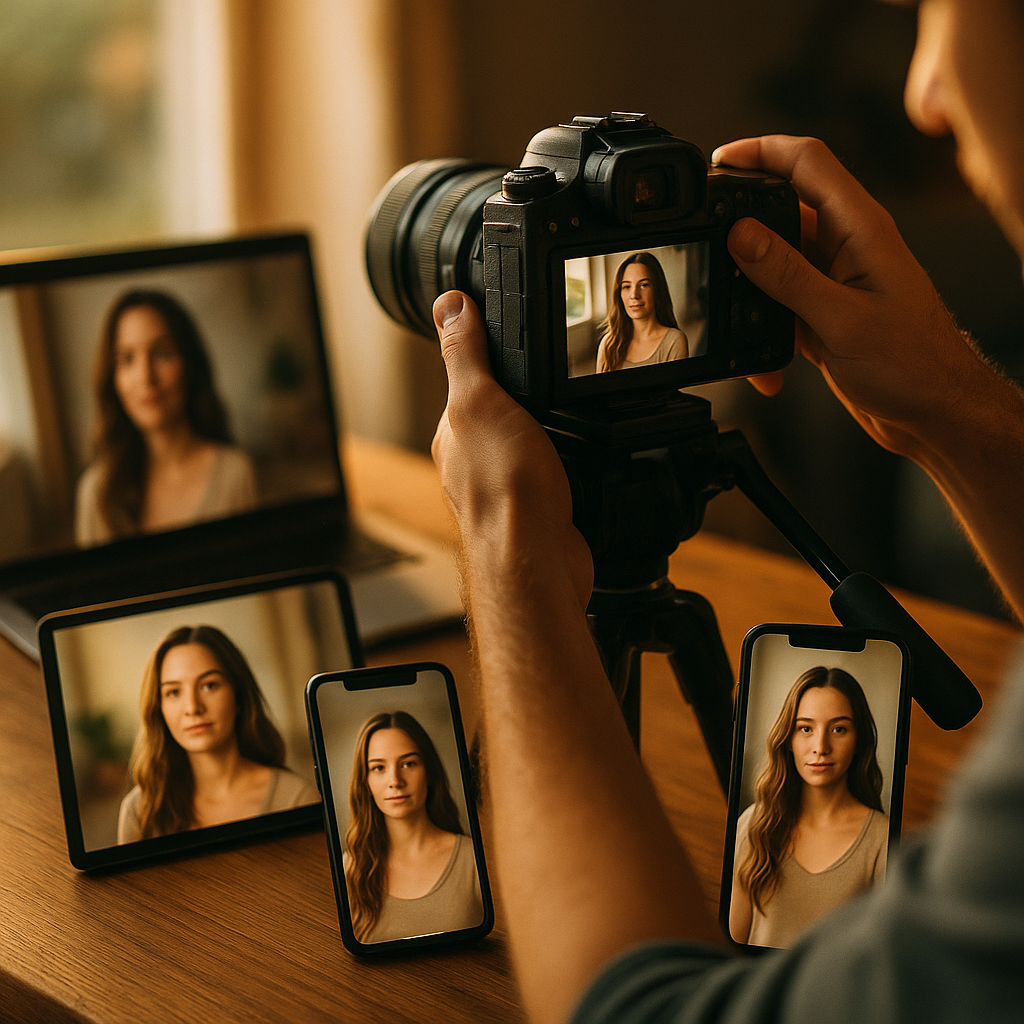
One Shoot, Five Formats: The Asset Library Strategy Every Brand Needs
Brands that repurpose a single creator video across platforms see 40-60% less engagement than those producing format-native content, according to TikTok’s business resources. The reason is straightforward: each algorithmic surface reads different signals — pacing, text placement, aspect ratio, audio usage, interaction prompts — and penalizes content that doesn’t speak its native language. Designing a multi-format creator asset library from a single production shoot isn’t about lazy resizing. It’s about architecting the shoot itself so every output carries the format signals needed to win distribution where it lands.
Why “Resize and Repost” Is Burning Your Budget
Let’s kill the myth that a 9:16 video is a 9:16 video. A TikTok that opens with a text hook overlay and uses trending audio behaves fundamentally differently in TikTok’s recommendation engine than the same footage reposted as an Instagram Reel with no native sticker interaction. YouTube Shorts prioritizes retention curves and re-watch loops. Instagram’s algorithm weighs saves and shares. Stories reward tap-forward pacing and poll completions.
When you simply crop and cross-post, you’re feeding each algorithm a version of content optimized for none of them. The result: suppressed reach, wasted creator fees, and a content library that looks voluminous on a spreadsheet but underperforms everywhere.
The real cost of cross-posting isn’t the reduced reach on any single asset — it’s the compounding opportunity cost across dozens of creators and hundreds of posts over a campaign lifecycle. One poorly structured shoot can waste 30-50% of your total production investment.
This is why the concept of a modular vertical video production approach has become essential. You need to plan the shoot around format divergence, not format convergence.
The Format Signal Map: What Each Platform Actually Reads
Before you write a single line of a creator brief, you need a format signal map. This is a reference document — shared with your creator, your editor, and your strategist — that codifies what each platform’s algorithm rewards. Here’s what we know works heading into the current cycle:
- TikTok: Native audio or trending sounds, text hook in first 0.5 seconds, pattern interrupts every 2-3 seconds, completion rate as the primary ranking signal. Green-screen and stitch formats get discovery boosts. See our deep dive on TikTok creator brief frameworks for more.
- Instagram Reels: Original audio increasingly rewarded over recycled TikTok sounds, heavy weighting on saves and shares, carousel-style Reels (multi-clip educational sequences) outperforming single-narrative arcs. Meta’s business tools confirm that Reels with native editing features get preferential distribution.
- YouTube Shorts: Retention curve is king. Re-watch loops (seamless endings that loop to the beginning) dramatically improve performance. Titles and descriptions matter more here than on TikTok. Shorts that drive subscriptions get algorithmic rewards.
- Instagram Carousels: Save rate is the dominant signal. Educational, swipeable content with a strong “save this for later” CTA consistently outranks single images. Text-heavy design with clear visual hierarchy wins.
- Stories (Instagram/Facebook): Tap-forward pacing (3-5 seconds per frame), interactive stickers (polls, quizzes, sliders), and sequential narrative arcs that hold viewers across multiple frames. Completion rate of the full story sequence is a key metric.
Each of these format signals must be designed into the shoot, not patched in post-production.
Architecting the Shoot: A Modular Production Framework
Here’s where operational efficiency meets creative strategy. The goal is to structure a single two-to-four-hour creator shoot so it yields five distinct asset types — each genuinely native to its destination platform. This isn’t theory. It’s a production workflow.
Phase 1: The Core Narrative Capture (60-90 minutes)
Shoot the primary content as a continuous, slightly over-long vertical video (aim for 90-120 seconds of usable footage). The creator delivers the key message — product demo, tutorial, opinion piece, whatever the campaign requires. But here’s the critical part: brief the creator to build in natural pause points every 15-20 seconds. These pauses become your edit points for platform-specific cuts.
Within this core capture, ensure the creator records:
- A punchy 0.5-second text hook moment (looking at camera, saying something provocative) — this becomes your TikTok open
- A seamless loop point where the ending visually connects to the beginning — this is your Shorts re-watch loop
- A clear “save this” moment where the creator summarizes key points — this feeds your Reels save-bait edit
- Three to five standalone “wisdom nugget” statements — these become carousel text slides and Story frames
If you’re running campaigns with multiple creators, this modular approach is the only way to scale without killing authenticity.
Phase 2: Format-Specific B-Roll and Interaction Captures (30-45 minutes)
This is the phase most brands skip entirely, and it’s the phase that makes or breaks format-native performance. After the core narrative, capture:
- Green-screen reaction setups: The creator reacting to their own content, a competitor’s product, or a trend. This gives you TikTok stitch/duet-style assets without needing a second creator.
- Static product shots and flat-lays: These become carousel slides and Story backgrounds. Shoot them on the same set with the same lighting for visual consistency.
- Audio-only takes: The creator re-recording key lines with slightly different energy — one version for voiceover-heavy Reels, one for the punchier TikTok cut.
- Interactive prompt captures: The creator asking a direct question to camera (“Which would you pick?”, “Am I wrong about this?”). These become Story poll frames and comment-bait hooks for Shorts.
Phase 3: The Carousel and Story Asset Session (20-30 minutes)
Carousels and Stories are fundamentally different beasts from short-form video, yet they can absolutely be sourced from the same shoot. Have the creator:
- Write or co-create 5-7 key points on cards or a whiteboard (photograph these for carousel slides)
- Record a sequential Story walkthrough — holding up products, pointing at features, asking poll questions — with deliberate 3-5 second segments that map to individual Story frames
- Capture a “swipe up” or “link” CTA moment that can be appended to the final Story frame
For deeper guidance on optimizing carousel content specifically, our carousel saved-post strategy guide breaks down the save-signal mechanics in detail.
Post-Production: Five Edits, Not Five Shoots
With the modular capture complete, your editor (or AI editing tool like Descript or CapCut’s batch features) now produces five distinct outputs:
- TikTok cut (15-45 sec): Opens with text hook overlay, uses trending or original audio, includes 2-3 pattern interrupts, ends with a comment prompt. Native captions burned in.
- Reels cut (30-60 sec): Slightly longer, opens with the “save this” value proposition, uses original audio, includes a share-worthy insight at the midpoint, ends with a CTA.
- Shorts cut (30-58 sec): Optimized for the re-watch loop, includes a subscribe prompt, uses a descriptive title and hashtags in the upload metadata.
- Carousel (7-10 slides): Text-overlay slides pulled from the creator’s key points, interspersed with product shots from the B-roll session, final slide with a clear CTA.
- Story sequence (5-8 frames): Mix of short video clips (3-5 sec each) and static frames with interactive stickers, ending with a swipe/link CTA.
The goal isn’t to create five versions of the same content. It’s to create five pieces of content that share DNA but are each algorithmically native to their platform. Shared DNA, distinct phenotypes.
Each output should also be tagged and organized in your digital asset management system with platform, format, campaign, creator, and usage-rights metadata. This is how you build a genuine multi-format creator asset library — not a Dropbox folder of random files.
Disclosure and Brand Safety Across Formats
One often-overlooked dimension: disclosure requirements and brand safety signals vary by format. A TikTok with a branded content toggle behaves differently in the algorithm than one without it. Story frames need disclosure in each frame where the brand is mentioned, not just the first. Carousel posts need FTC-compliant language visible without swiping.
Brief your creators explicitly on per-format disclosure — our breakdown of disclosure-compliant creator briefs covers this in operational detail. The FTC’s endorsement guidelines apply regardless of format, but the implementation differs with each one.
Measuring What Actually Matters
Stop comparing raw view counts across platforms. A YouTube Short with 50,000 views and a 78% retention rate is doing vastly more algorithmic work than a TikTok with 200,000 views and 12% completion. Your measurement framework for a multi-format asset library should track:
- Platform-native engagement signals: Saves on Reels and carousels, completion on TikTok, retention on Shorts, poll completions on Stories
- Cost per format-native asset: Divide total shoot cost by five (or however many outputs), not by one
- Algorithmic distribution rate: What percentage of views came from recommendation/explore vs. followers?
- Cross-platform content velocity: How quickly can you go from shoot to published across all five formats? Best-in-class teams are hitting 48-72 hours.
When you track these metrics, you’ll find that the modular shoot approach often delivers 3-5x the cost-per-engagement efficiency of single-format production. That’s the ROI case your CFO needs to hear.
Your next step: Audit your last three creator shoots. Count how many platform-native assets each one actually produced versus how many were resized reposts. That gap is your immediate efficiency opportunity — and the business case for restructuring every future production around format-native modular capture.
FAQs
How long should a modular creator shoot take to produce five format-native assets?
A well-planned modular shoot typically takes two to four hours of on-set time, including core narrative capture, format-specific B-roll, and carousel and Story asset sessions. Post-production adds another four to eight hours depending on whether you use AI editing tools or manual editing workflows. Total turnaround from shoot to published assets across all five formats should target 48 to 72 hours.
Can AI editing tools reliably produce format-native outputs from a single shoot?
AI tools like Descript, CapCut, and Opus Clip can accelerate the editing process significantly, especially for generating initial cuts and auto-captioning. However, they still require human oversight to ensure each output carries the specific format signals — like re-watch loops for Shorts or save-bait structures for Reels — that algorithms reward. Use AI for speed, but keep a strategist in the approval loop for format-native optimization.
What is the biggest mistake brands make when building multi-format creator asset libraries?
The most common and costly mistake is treating multi-format output as a post-production problem rather than a pre-production planning exercise. If you do not design the shoot itself around format divergence points — pause points, loop moments, interaction prompts, standalone statements for carousels — no amount of editing can compensate. The format signals need to be captured on set, not manufactured in post.
How do disclosure requirements differ across Reels, TikToks, Shorts, carousels, and Stories?
Each format has distinct disclosure implementation needs. TikTok and Instagram offer branded content toggles that should be activated. Story sequences require visible disclosure in every frame where the brand is mentioned or shown, not just the first frame. Carousels need FTC-compliant language on the first visible slide without requiring a swipe. Shorts should include disclosure in both the video itself and the description text. Brands should brief creators on per-format disclosure specifics to maintain compliance everywhere.
How should I measure ROI on a multi-format creator asset library?
Move beyond comparing raw view counts across platforms. Track platform-native engagement signals such as saves on Reels, completion rates on TikTok, retention curves on Shorts, and poll completions on Stories. Calculate cost per format-native asset by dividing total shoot cost by the number of distinct outputs. Also measure algorithmic distribution rate — the percentage of views from recommendation and explore feeds versus follower feeds — to gauge how well each asset is winning distribution on its respective surface.
Top Influencer Marketing Agencies
The leading agencies shaping influencer marketing in 2026
Agencies ranked by campaign performance, client diversity, platform expertise, proven ROI, industry recognition, and client satisfaction. Assessed through verified case studies, reviews, and industry consultations.
Moburst

-
2

The Shelf
Boutique Beauty & Lifestyle Influencer AgencyA data-driven boutique agency specializing exclusively in beauty, wellness, and lifestyle influencer campaigns on Instagram and TikTok. Best for brands already focused on the beauty/personal care space that need curated, aesthetic-driven content.Clients: Pepsi, The Honest Company, Hims, Elf Cosmetics, Pure LeafVisit The Shelf → -
3

Audiencly
Niche Gaming & Esports Influencer AgencyA specialized agency focused exclusively on gaming and esports creators on YouTube, Twitch, and TikTok. Ideal if your campaign is 100% gaming-focused — from game launches to hardware and esports events.Clients: Epic Games, NordVPN, Ubisoft, Wargaming, Tencent GamesVisit Audiencly → -
4

Viral Nation
Global Influencer Marketing & Talent AgencyA dual talent management and marketing agency with proprietary brand safety tools and a global creator network spanning nano-influencers to celebrities across all major platforms.Clients: Meta, Activision Blizzard, Energizer, Aston Martin, WalmartVisit Viral Nation → -
5

The Influencer Marketing Factory
TikTok, Instagram & YouTube CampaignsA full-service agency with strong TikTok expertise, offering end-to-end campaign management from influencer discovery through performance reporting with a focus on platform-native content.Clients: Google, Snapchat, Universal Music, Bumble, YelpVisit TIMF → -
6

NeoReach
Enterprise Analytics & Influencer CampaignsAn enterprise-focused agency combining managed campaigns with a powerful self-service data platform for influencer search, audience analytics, and attribution modeling.Clients: Amazon, Airbnb, Netflix, Honda, The New York TimesVisit NeoReach → -
7

Ubiquitous
Creator-First Marketing PlatformA tech-driven platform combining self-service tools with managed campaign options, emphasizing speed and scalability for brands managing multiple influencer relationships.Clients: Lyft, Disney, Target, American Eagle, NetflixVisit Ubiquitous → -
8

Obviously
Scalable Enterprise Influencer CampaignsA tech-enabled agency built for high-volume campaigns, coordinating hundreds of creators simultaneously with end-to-end logistics, content rights management, and product seeding.Clients: Google, Ulta Beauty, Converse, AmazonVisit Obviously →